 EN
Executive Summary & B2B Formulation Guidance
CoQ10 stability depends on redox form, oxygen, light, heat, moisture, package, and handling. Build a real shelf-life plan before printing expiry dates.
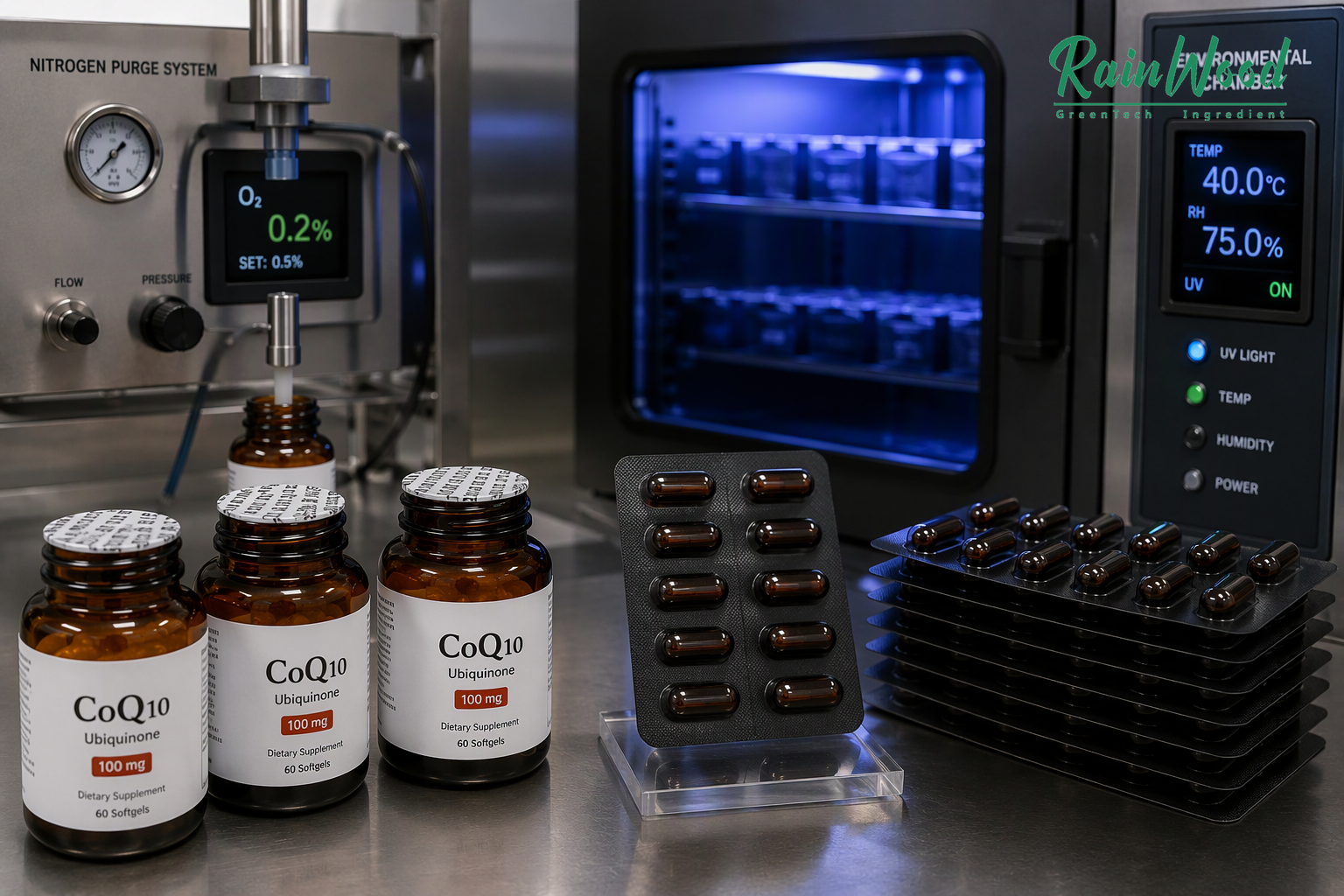
Figure 1: CoQ10 Packaging Barrier Evaluation: Induction Foil Sealed Amber Glass Bottles and Nitrogen-Purged Blister Packs
The batch passes at factory release. It fails after a hot shipment, or the color changes after the customer opens the bottle repeatedly. The raw-material COA was not necessarily wrong; the stability plan may have ignored the real exposure route. CoQ10 products need a shelf-life decision that follows the material from weighing to consumer use.
Stability is a chain, not one test
CoQ10 stability can involve active content, redox balance, oxidation products, color, odor, moisture, fill uniformity, shell integrity, and package condition. Ubiquinol requires particular attention to conversion into ubiquinone, while ubiquinone can also degrade or change under storage conditions. A total-content result alone may not describe the property your label sells.
Start with the [INTERNAL LINK -> CoQ10 Ingredient Identity Review] and define the critical quality attributes. Then connect each attribute to a method, acceptance limit, time point, package, and storage condition.
Raw powder stability does not prove finished-product stability
A sealed drum can have one exposure profile; a softgel bottle, tablet blister, or sachet has another. The finished package may include headspace oxygen, a desiccant, a barrier film, a light-protective bottle, or repeated opening. The manufacturing process can add heat, air, mixing time, and transfer loss.
Request stability in the intended finished format. If the product will be sold in a daily-dose sachet, test the sachet. If it will be sold in a bottle opened for 90 days, include an opening simulation. If the product uses a softgel, test shell, fill, leakage, and redox content together.
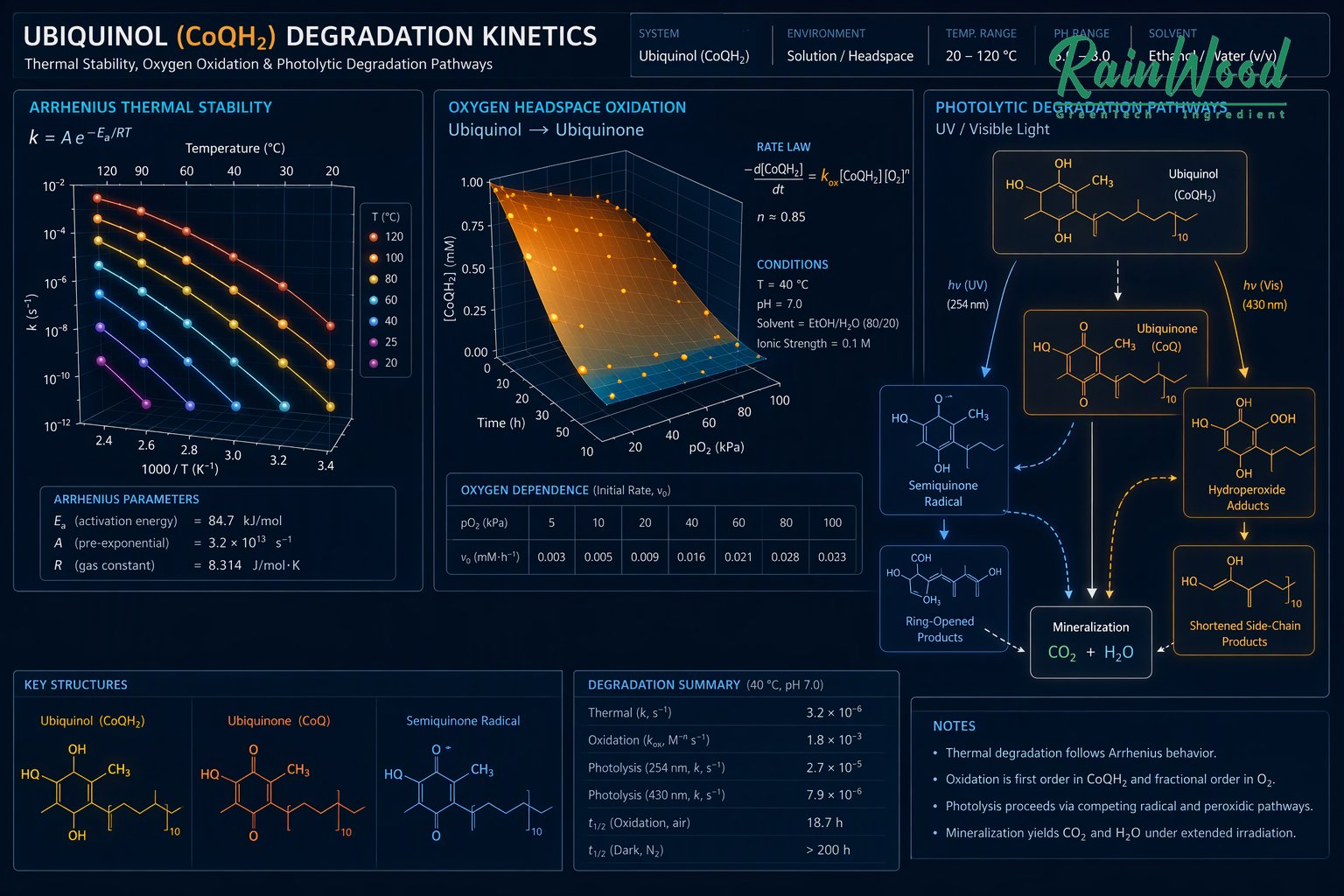
Figure 2: 3D Kinetic Degradation Modeling: Arrhenius Temperature Curves, Headspace Oxygen Oxidation, and Photolytic Decay
Oxygen and headspace need a measurable plan
Oxygen can enter during weighing, transfer, blending, filling, sealing, or repeated opening. A package may look closed while the headspace contains enough oxygen to affect a sensitive formulation over time. Nitrogen flushing can be a useful control in some projects, but it should be specified and verified rather than assumed.
Ask for closure integrity, oxygen or moisture barrier information, headspace strategy, and storage limits. If the supplier offers a nitrogen-flushed bottle, ask how the process is monitored and how the finished package is released. Do not convert a packaging feature into a universal stability claim.
Light and heat exposures are often logistics problems
CoQ10 may be exposed to light in a transparent bottle, warehouse, retail shelf, or customer kitchen. Heat may occur during blending, softgel drying, sea freight, truck transport, or a container delay. The study should include conditions that resemble the real route, not only ideal room temperature.
Map the route: factory storage, inland transport, port, sea or air shipment, importer warehouse, filling site, retailer, and consumer. Define an excursion rule for temperature and humidity. Use retained units from the same lot and package. The [INTERNAL LINK -> CoQ10 Packaging and Excursion Control Blog] should be part of the logistics file.
Stability methods must answer the label question
If the label says ubiquinol, test the reduced form or a justified redox profile. If the label says CoQ10, define whether total content is the controlling attribute. If the product is a dispersible powder, test dispersion and active recovery after storage. If it is a softgel, include content uniformity, fill weight, seam, and leakage.
Record method version, standard, sample preparation, storage, time point, and result. A change in analytical method can create a false trend. If two laboratories produce different results, compare their methods before declaring a stability failure.
Overage cannot repair a weak package
A brand may add overage to protect the expiry claim, but overage does not stop oxygen, light, moisture, or heat. It can also increase cost, capsule size, and label risk. First identify the cause of loss, then decide whether package, process, formulation, or specification changes are needed.
Use accelerated data as a tool for development, not as a substitute for real-time confirmation. Document the relationship between accelerated conditions and the intended shelf life. If the package changes, reopen the stability assessment rather than carrying the old expiry forward.
How RainwoodBio can support stability planning
RainwoodBio publishes production control, testing and release, packaging, logistics, warehousing, and traceability management. For CoQ10, the buyer should request a stability map that identifies raw material, finished format, package, route, storage, and test attributes. The exact product and batch evidence still need to be reviewed before a printed expiry is approved.
RainwoodBio lists softgels, capsules, tablets, and sachets. Use the [INTERNAL LINK -> RainwoodBio OEM Format Options] and [INTERNAL LINK -> RainwoodBio Quality and Release Process] to compare the stability burden of each format.
Shelf-life decision gate
Before approving expiry, confirm:
- redox form and controlling assay;
- active content and oxidation-related attributes;
- package barrier, closure, and headspace;
- temperature, humidity, and light conditions;
- raw and finished-product stability time points;
- opening or in-use exposure;
- shipping excursion and complaint procedure;
- method comparability and sample retention;
- change-control triggers for formula or package.
Send the COA, package design, target expiry, shipment route, format, and market to RainwoodBio for a [INTERNAL LINK -> CoQ10 Stability and Shelf-Life Review]. The output should show which evidence supports the expiry and which assumptions still need testing.
Define the expiry owner
The brand, manufacturer, and supplier should agree who owns the shelf-life decision and who updates it after a package or formula change. Keep the raw-material expiry, finished-product expiry, and in-use period separate. If a distributor stores the product outside the tested range, the team needs a documented escalation path rather than an informal promise.
Review stability data at launch, after the first commercial lot, and after meaningful changes. Record the package version, storage condition, test method, lot, and reviewer. This record gives customer service a defensible answer when a customer reports color, odor, leakage, or reduced performance.
Send the package specification, COA, target expiry, shipment route, format, market, and current stability data for a [INTERNAL LINK -> CoQ10 Stability Contact Us Page] review. Include the planned opening period after delivery and whether storage may occur outside the preferred range. Add the intended retailer warehouse and consumer instruction so the stress points match the real route. Include the final package artwork version as well. Record the approved storage instruction and review date for every market.
Frequently asked questions
Does refrigeration solve every CoQ10 stability problem?
No. It may reduce some exposure but does not replace package, process, assay, and handling controls.
Can a raw COA prove the product will last 24 months?
No. Finished-product stability in the intended package is needed.
Is an amber bottle enough?
Not necessarily. Oxygen, closure, headspace, moisture, temperature, and repeated opening also matter.
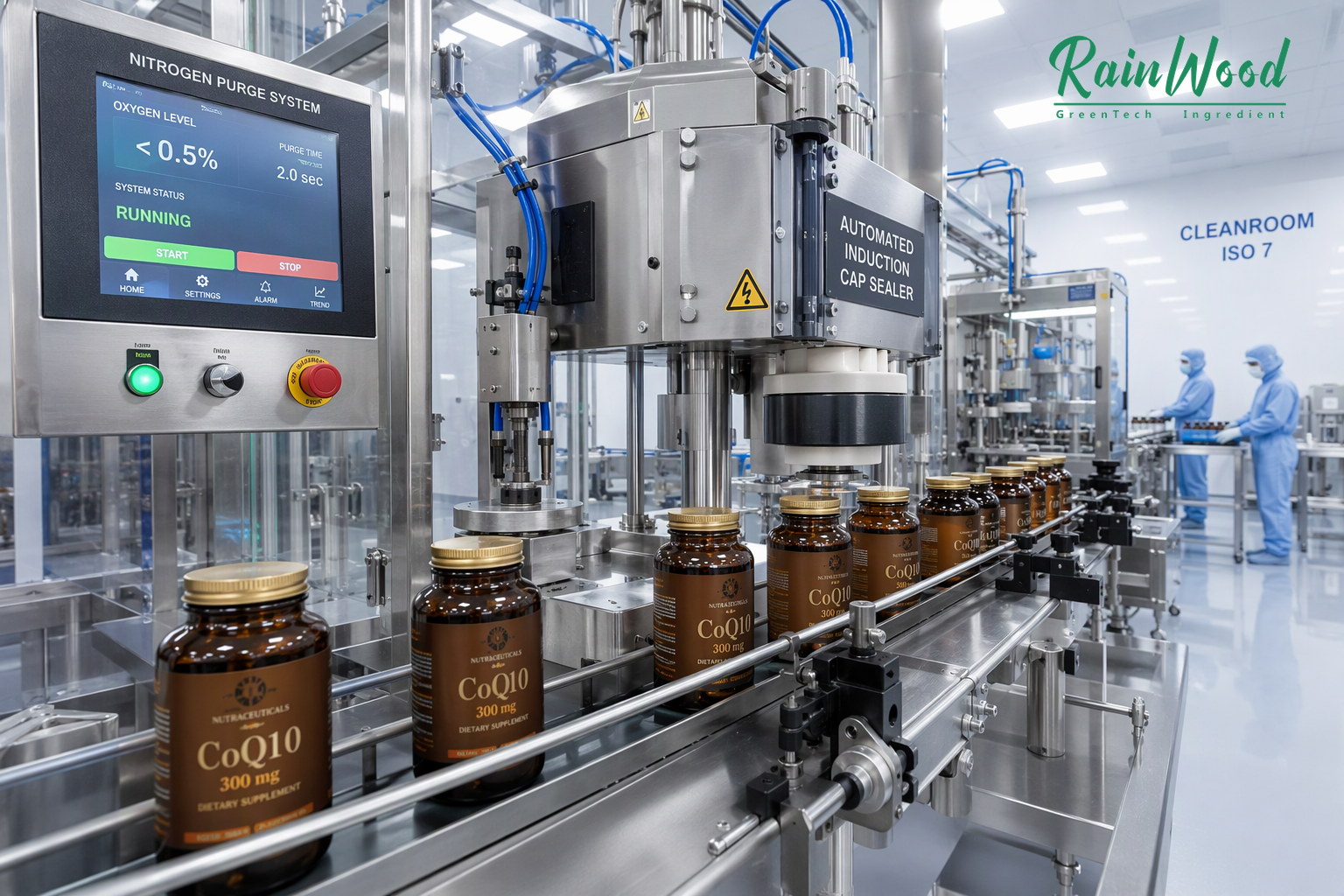
Figure 3: Automated High-Speed Nitrogen Purging and Induction Foil Cap Sealing Line for CoQ10 Supplement Packaging
References
- Stability of Reduced and Oxidized CoQ10 in Finished Products: https://pubmed.ncbi.nlm.nih.gov/33673604/
- The Cocrystal of Ubiquinol: Improved Stability and Bioavailability: https://pmc.ncbi.nlm.nih.gov/articles/PMC10610044/
- Bioavailability and Absorption Overview: https://pmc.ncbi.nlm.nih.gov/articles/PMC7278738/
- RainwoodBio homepage: https://www.rainwoodbio.com/
*This article is for B2B procurement and educational purposes. Product identity, stability, analytical, safety, labeling, and regulatory requirements must be confirmed for the exact ingredient, finished product, and destination market.*
Explore RainwoodBio CoQ10 & Custom Formulation Capabilities
- Custom CoQ10 Hard Capsules & High-Potency Blends – Precision cGMP encapsulation for CoQ10 with PQQ, L-Carnitine, and Vitamin E co-factors.
- High-Absorption CoQ10 Softgels & Lipid Suspensions – MCT/Olive oil carrier systems with natural tocopherol stabilization.
- Water-Soluble CoQ10 Micro-Encapsulated Powders & Stick Packs – Enhanced bioavailability single-serve sachets and beverage-grade premixes.
- OEM / ODM Contract Manufacturing Services – End-to-end formulation development, pilot batch scaling, and US/EU regulatory compliance dossiers.
- Contact RainwoodBio Technical Sales – Request CoA, HPLC analytical protocols, pilot stability samples, or commercial quotation.
Table of Contents
- Stability is a chain, not one test
- Raw powder stability does not prove finished-product stability
- Oxygen and headspace need a measurable plan
- Light and heat exposures are often logistics problems
- Stability methods must answer the label question
- Overage cannot repair a weak package
- How RainwoodBio can support stability planning
- Shelf-life decision gate
- Define the expiry owner
- Frequently asked questions
- References