 EN

Executive Summary & B2B Formulation Guidance
Compare nattokinase capsules, tablets, and powder stick packs by FU dose, activity protection, taste, packaging, and OEM economics.
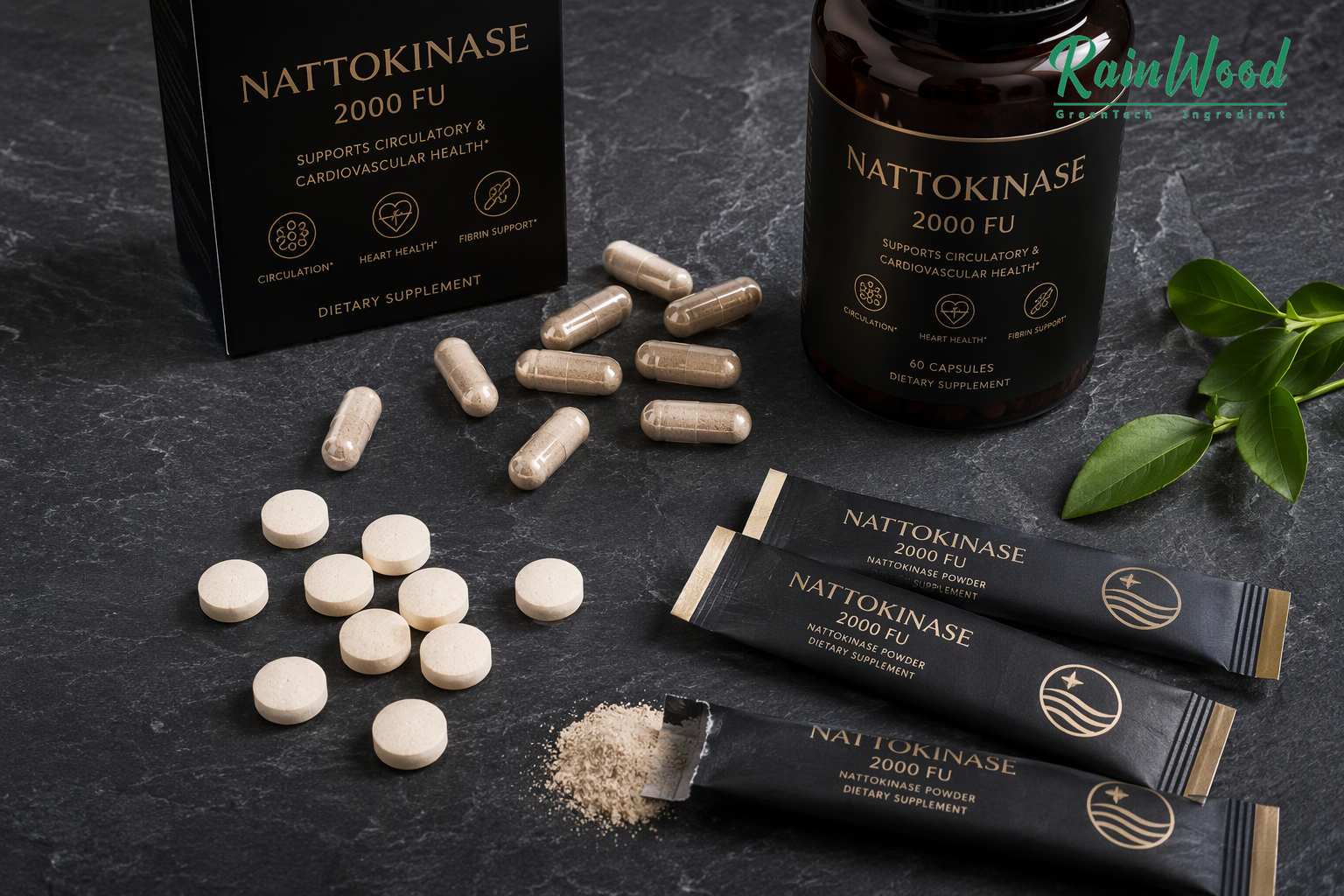
Figure 1: Commercial Presentation of Finished Nattokinase Dosage Formats: Enteric Capsules, Film-Coated Tablets, and Sachet Stick Packs
The dosage form determines more than customer convenience
Nattokinase is commonly sold in capsules, but a brand may consider tablets, sachets, or powder stick packs to stand out. The correct format depends on activity per serving, enzyme stability, taste and odor, package, filling process, customer use, and market claims. A product can contain the correct raw material and still be commercially wrong for the selected format.
Capsules protect taste but limit capacity
Capsules can hide natto odor and simplify the customer routine. They also impose fill-weight and shell-size limits. The buyer must calculate FU per capsule, capsules per serving, powder density, excipient weight, and bottle days of supply. A higher activity raw material may reduce capsule count, but only if the method and stability are comparable.
Tablets add compression and coating questions
Tablets can create a compact format, but compression pressure, heat, moisture, and disintegration may affect enzyme activity or release. A coated tablet adds another process and needs coating uniformity, dissolution, and activity recovery. Do not assume a capsule powder can be compressed directly into a stable tablet.
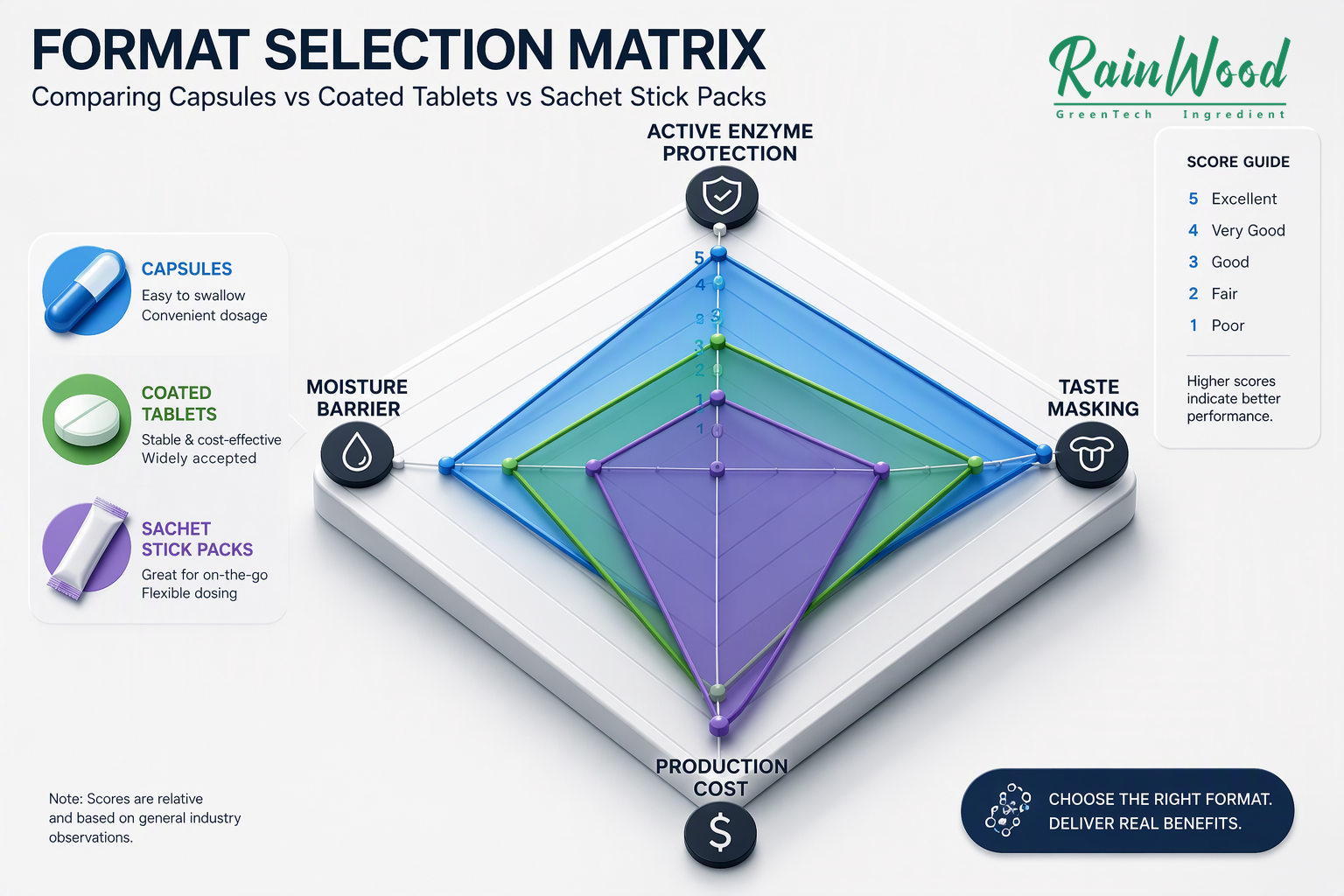
Figure 2: 3D Format Selection Radar Matrix: Comparing Capsules vs Tablets vs Sachet Stick Packs across Active Protection and Cost
Powder stick packs create a daily-use story
Stick packs can deliver a larger powder amount and create a convenient routine. They also expose the product to flavor, odor, moisture, seal contamination, flow, and single-dose uniformity. A high-FU claim per stick must be supported by finished-unit testing. The [INTERNAL LINK -> Nattokinase Stability Blog] addresses moisture and storage risk.
Compare real format economics
Include capsule shells, tablet tooling, coating, film, flavor, filling yield, package, testing, shipping, storage, and complaint risk. Compare cost per released daily FU, not cost per kilogram. Include the activity target at expiry and the number of units per serving.
Use [INTERNAL LINK -> Nattokinase Dose Calculation Blog] for activity math and [INTERNAL LINK -> Nattokinase Format Feasibility Blog] for process and package questions.
The buyer loss from format-first design
If the brand chooses a format before confirming activity and stability, the product may need more units, a stronger package, or a new label. Changing format after cartons and listings are approved creates rework and a delayed launch. The wrong format can also create poor taste, odor, leakage, or customer-use complaints.
Pilot the actual format
Use the approved enzyme lot, excipients, coating, film, and equipment. Test activity before and after processing, unit weight, uniformity, appearance, odor, dissolution, package integrity, and stability. Retain units from the beginning, middle, and end of production. A laboratory sample in a different package is not a commercial pilot.
How RainwoodBio can support multi-format development
RainwoodBio publishes OEM formats including hard capsules, tablets, powders, and powder stick packs, plus requirement confirmation, sample development, process control, testing and release, and traceability. This can support a format comparison before final commitment. Product-specific activity and stability evidence still need confirmation.
Format approval gate
Ask:
- How much FU must each unit deliver?
- What processing step may reduce activity?
- Which format protects odor and moisture?
- What is the cost per released daily serving?
- What claims and instructions fit the format?
Request a [INTERNAL LINK -> Nattokinase Format Comparison] [INTERNAL LINK -> Contact Us Page] with the target FU, formula, market, package, and monthly quantity.
Build a format scorecard before the quotation
Score each format for activity per unit, capsule or stick count, taste and odor, moisture exposure, process recovery, testing, package, MOQ, lead time, shipping weight, and complaint risk. Add a buyer-use score for opening, swallowing, mixing, storage, and daily completion. This shows why a format with a higher unit cost may still have a better margin if it reduces returns and creates a clearer serving.
Run the pilot with the intended enzyme lot and package. Do not choose a stick pack using a flavored placebo or choose a tablet using a non-enzyme powder. The processing step can change activity, flow, odor, and stability. Record the result in the product brief before artwork.
Ask which problem the format is solving
Capsules may solve taste and odor but create a unit-count problem. Tablets may solve packaging volume but create compression and disintegration questions. Stick packs may solve daily convenience but create film, seal, moisture, flavor, and single-dose controls. Write the problem each format solves and the new risks it creates.
Then link the format to the buyer's channel. A subscription customer may prefer capsules, a practitioner brand may want a technical powder, and a travel-focused product may benefit from sticks. The product should still use the same identity and activity discipline in every format. A new format is a new finished-product qualification, not only a new package design.
Track complaints by format. Odor complaints, clumping, broken tablets, leaking sticks, and capsule count confusion reveal different process or instruction problems. Use the data to refine the next pilot and the product page.
Build the format decision before printed packaging
Create a scorecard with active FU per unit, units per serving, taste and odor, package barrier, filling or compression risk, testing, stability, MOQ, lead time, shipping weight, and expected complaint type. Ask the intended buyer to rank convenience, price, unit count, and preparation effort. Then run a pilot with the actual enzyme and package.
If the brand later changes from capsule to stick pack, reopen the formula, claims, instructions, and stability review. The new format may change the activity exposure and customer interpretation. A format change is a product change, not a cosmetic update.
Match the format to the quality system
Capsules need a clear fill-weight and activity-uniformity plan. Tablets need compression, disintegration, friability, and post-compression activity checks. Stick packs need dose-weight control, seal integrity, film barrier, and protection against clumping during filling. These are different manufacturing risks, so one generic raw-material COA cannot qualify all three formats.
The commercial brief should show the daily unit count and the testing cost beside the selling price. A low-cost capsule may require more units per serving; a stick pack may reduce customer counting but increase film and flavor work. Ask the supplier for a pilot using the intended activity lot, package, and equipment before making a channel promise. That pilot provides better evidence than a sample photograph or a competitor's serving panel.
Frequently asked questions
Are capsules always the best nattokinase format?
No. They may be practical, but the correct format depends on dose, activity, stability, and buyer use.
Can powder stick packs use the same activity claim as capsules?
Only when the active amount, assay, stability, and finished-unit evidence support the same claim.
Is a tablet more stable than a capsule?
Not automatically. The process and package determine stability.
Should a brand launch multiple formats?
Only when each format has its own controlled specification, evidence, and demand case.
Conclusion
Choose the nattokinase format that delivers the intended FU consistently and economically. Capsules, tablets, and stick packs each solve one problem and create another; a pilot reveals which trade-off your buyer will accept.
Disclaimer: This article is for B2B formulation and procurement information. It is not medical advice and does not establish that nattokinase treats, prevents, or cures disease.

Figure 3: High-Speed Rotary Tablet Press and Multi-Lane Sachet Stick Pack Vertical Form-Fill-Seal Packaging Machinery in cGMP Factory
References
- https://pubmed.ncbi.nlm.nih.gov/17520440/
- https://pmc.ncbi.nlm.nih.gov/articles/PMC9312984/
- https://www.rainwoodbio.com/oem
Explore RainwoodBio Nattokinase & Cardiovascular OEM Solutions
- Custom Nattokinase Enteric & Delayed-Release Capsules – Gastric-acid protection preserving 2,000~20,000 FU/g enzyme activity for optimal systemic absorption.
- Nattokinase Lipid Softgels & Cardiovascular Blends – Synergistic co-formulations with CoQ10, Phytosterols, Garlic Oil, and Vitamin K2-free options.
- Nattokinase Sachet Stick Packs & Functional Powders – Convenient single-serve sachet stick packs with premium taste masking and high moisture barrier.
- OEM / ODM Contract Manufacturing Services – cGMP certified high-potency blending, blister packaging, and US/EU/Amazon regulatory compliance dossiers.
- Contact RainwoodBio Technical Sales – Request Nattokinase CoA (FU/g assay certificates), stability test protocols, pilot samples, or custom quotation.
Table of Contents
- The dosage form determines more than customer convenience
- Capsules protect taste but limit capacity
- Tablets add compression and coating questions
- Powder stick packs create a daily-use story
- Compare real format economics
- The buyer loss from format-first design
- Pilot the actual format
- How RainwoodBio can support multi-format development
- Format approval gate
- Build a format scorecard before the quotation
- Ask which problem the format is solving
- Build the format decision before printed packaging
- Match the format to the quality system
- Frequently asked questions
- Conclusion
- References