 EN
Executive Summary & B2B Formulation Guidance
How to evaluate nattokinase fermentation source, organism, soy controls, purification, traceability, and batch consistency.
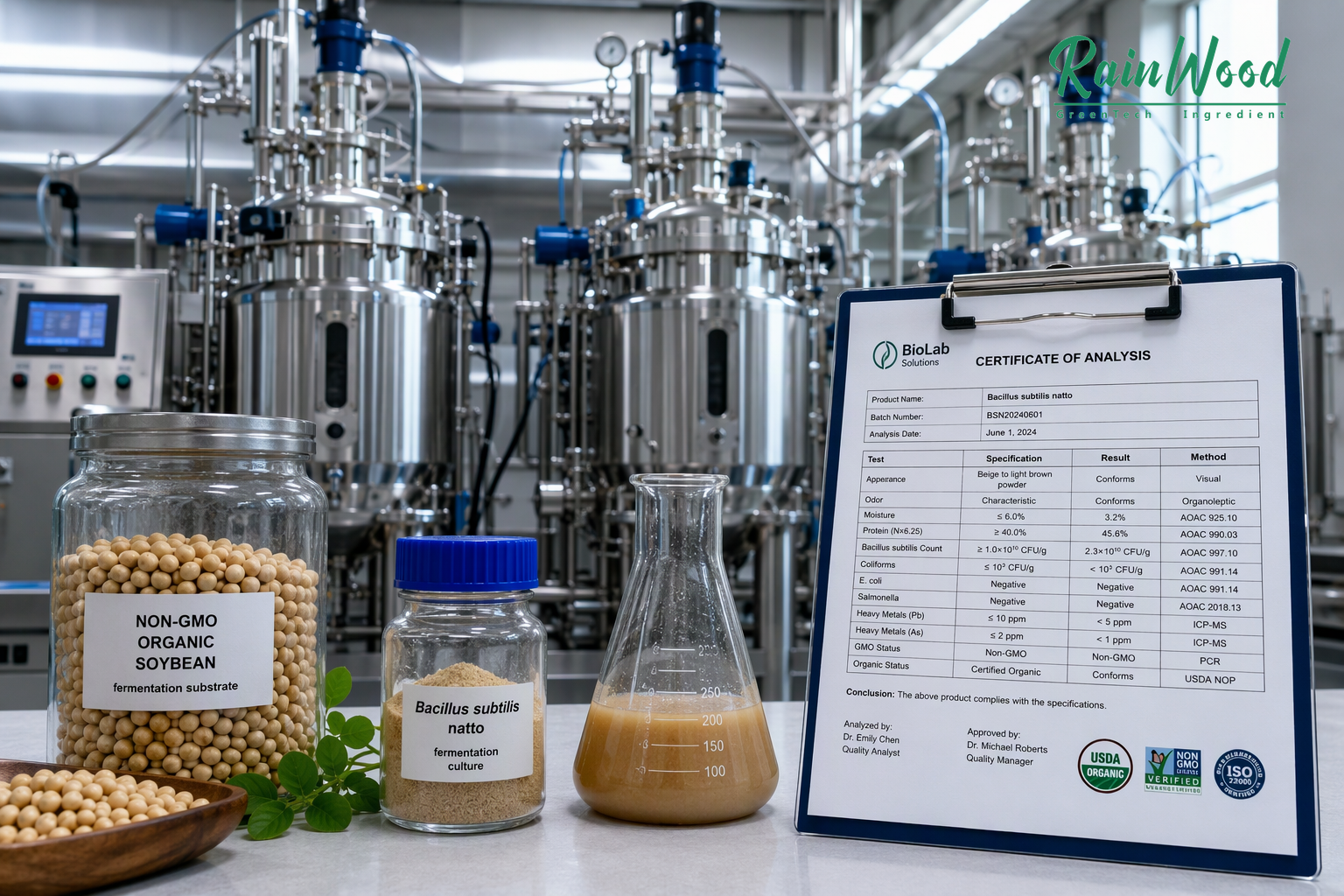
Figure 1: Industrial Bacillus subtilis natto Microbial Fermentation Bioreactors with Non-GMO Soybean Substrate and Analytical Test Sheets
“Made from natto” is not a complete source specification
A product page says nattokinase is made from fermented soybeans. The buyer assumes the source and process are controlled. But the commercial file may not identify the production organism, fermentation parameters, purification steps, soy allergen controls, or the point at which activity is measured.
Source information matters because nattokinase is an enzyme produced in a fermentation context. The source affects the impurity profile, odor, color, solids, activity, and traceability. It does not automatically make one supplier superior. It tells the buyer what questions to ask.
Source and process can change the product
Different strains, media, fermentation times, temperatures, pH conditions, harvest steps, and drying processes can produce different activity and impurity patterns. A purified enzyme and a natto extract may begin with a similar story but have different finished specifications. The buyer should ask whether the supplier's source description applies to the exact material being quoted.
Soy also creates an allergen and label-control question. The ingredient may contain soy-derived components or use soy in a process. The finished product may need allergen wording, supplier statements, and cleaning controls depending on the target market and format.
Use the [INTERNAL LINK -> Nattokinase Identity Blog] to align source language with exact material identity.
The buyer loss from an incomplete source file
If the source changes without notification, the brand may see activity, odor, color, moisture, or flow differences. A finished capsule can pass net weight but fail the expected FU target. The brand then faces a retest, a stability investigation, or replacement inventory.
The brand may also make a source claim it cannot support. A distributor or retailer can ask for a fermentation statement, soy documentation, or traceability record. If the supplier only has a sales description, the launch may pause while the file is rebuilt.
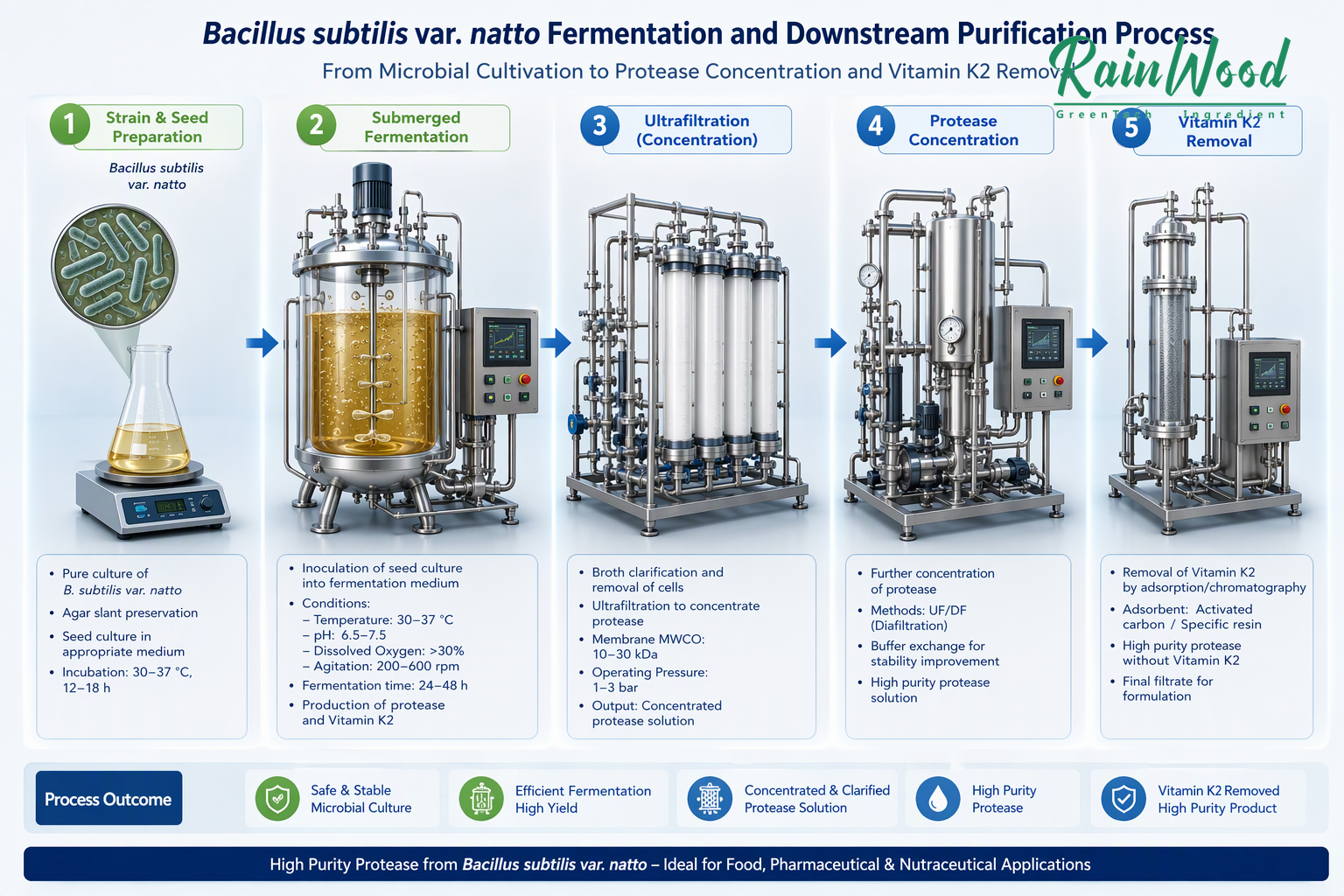
Figure 2: 3D Biotechnology Fermentation and Purification Flowchart: Submerged Fermentation, Ultrafiltration, and Vitamin K2 Extraction
What to request from the supplier
Ask for source organism description, fermentation and downstream-process summary, purification or concentration steps, soy and allergen statement, raw-material controls, activity specification, moisture, microbiology, contaminants, storage, and change-control policy. Request a lot-linked COA and a retained sample.
The buyer does not need a secret process recipe. It needs enough information to connect source risks to the release specification. Ask which attributes are controlled at incoming material, in-process, and finished-product stages.
Source claims and market language
“Traditional natto fermentation,” “natural enzyme,” and “soy-derived” may have different meanings in different markets. Review whether the wording describes the starting material, the process, the final purified enzyme, or a finished formula. Do not imply that a source story proves efficacy, safety, or a specific FU level.
The public NIH label database shows that commercial nattokinase labels may identify natto as the source and include soy and medication precautions. That is market context, not a universal claim template. The [INTERNAL LINK -> Nattokinase Safety and Warning Blog] covers the warning-file questions.
How RainwoodBio can support source traceability
RainwoodBio publishes raw-material procurement and supplier management, requirement confirmation, quality testing and release, compliance documentation, warehousing, logistics, and traceability. These controls are relevant when a brand needs source changes to be visible. Product-level evidence is still required for the exact nattokinase grade, source, lot, and finished format.
Source approval gate
Before using a source claim, ask:
- Is the source statement attached to the exact material?
- Is the organism or fermentation route described sufficiently?
- Are soy and allergen controls documented?
- Which process attributes affect FU and purity?
- What change requires buyer approval?
Request a [INTERNAL LINK -> Nattokinase Source and Traceability Review] [INTERNAL LINK -> Contact Us Page] with the supplier source statement, COA, specification, market, and target format.
Connect source records to commercial lots
Request a source-change notification procedure. The supplier should explain what happens when the organism, fermentation medium, soybean source, purification step, drying condition, site, or packaging changes. The buyer can then decide whether to request a new sample, repeat identity and activity testing, or open a new stability study.
Keep the source description with the lot COA and finished batch record. If a complaint arises, the brand should be able to identify the source and process route without searching through sales messages. This record also helps an importer answer a retailer's allergen and traceability questions.
Do not turn a source story into a superiority claim. Use it to define controls and to explain why the supplier's documentation matters. A controlled source with a clear specification is commercially stronger than a vague “traditional” description.
Source verification questions for importers
Ask who owns the fermentation record, who releases the enzyme after purification, and how the lot is linked to the finished product. Request a source statement that distinguishes starting soy material from the final enzyme grade. If the product is purified, ask which residual soy components are controlled and what evidence supports the allergen statement.
Review whether the activity result is generated before or after drying. A fermentation broth, a wet concentrate, and a dried powder can have different activity bases. The buyer should know which form is being purchased and how the activity is normalized. If a supplier uses a carrier, record its identity and amount.
When switching suppliers, compare source, method, activity, moisture, odor, color, flow, contaminants, and package. A new source may be acceptable, but the equivalence decision should be documented before the next commercial lot arrives.
Use a source-change decision tree
When the supplier proposes a source or process change, compare identity, activity, moisture, impurities, soy statement, odor, color, flow, package, and shelf life. If any critical attribute moves outside the approved range, require a new sample and pilot. If the change affects the activity method or target-market claim, repeat the method or label review.
Keep a source reference with the original purchase order and finished-product batch. This helps the brand explain a color or odor difference to a distributor and helps quality teams decide whether a new lot is equivalent. Source transparency is not a marketing luxury; it is part of continuity planning.
Separate fermentation evidence from enzyme evidence
Fermentation records can explain how the material was made, but they do not replace the release specification for the enzyme powder. Ask for the lot's activity basis, identity evidence, residual moisture, microbial results, contaminant controls, and carrier disclosure. If the raw material is described as “fermented natto powder,” confirm whether the declared FU belongs to the powder as a whole or to an extracted enzyme fraction.
For soy-sensitive markets, ask how the allergen statement was generated and whether the supplier has a change-control trigger when soybean source or processing changes. Do not accept a generic soy-free statement when the manufacturing route begins with soy unless the process and test evidence support the exact claim. Put the question, answer, and document version into the approval file.
Frequently asked questions
Does natto fermentation guarantee high activity?
No. Activity depends on strain, process, purification, assay, and storage.
Is soy documentation necessary for every market?
Requirements vary, but the buyer should understand the source and allergen implications for the destination market.
Can a supplier change fermentation source without notice?
It should be controlled and communicated because the change may affect identity, activity, impurities, and claims.
Does a source claim prove the material is pure nattokinase?
No. Identity and purity require separate evidence.
Conclusion
The fermentation story becomes commercially useful only when it connects to source control, soy documentation, activity, impurities, and traceability. Ask for evidence attached to the exact lot before you build a premium claim around natto.
Disclaimer: This article is for B2B procurement and formulation planning. It is not medical advice and does not establish that nattokinase treats, prevents, or cures disease.
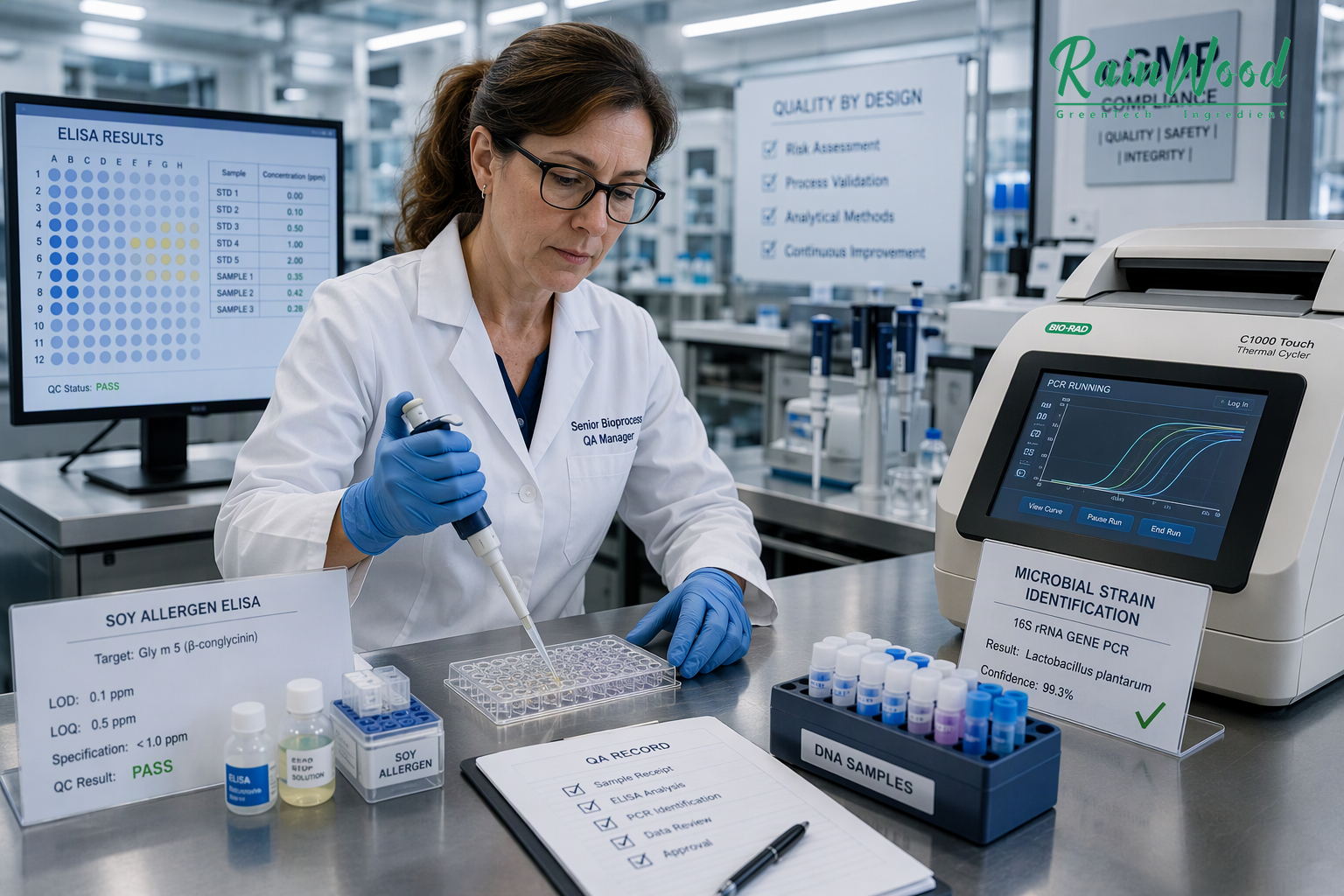
Figure 3: Senior Bioprocess QA Manager Conducting ELISA Soy Allergen Testing and Microbial Strain PCR Identification in cGMP Lab
References
- https://dsld.od.nih.gov/label/82020
- https://pmc.ncbi.nlm.nih.gov/articles/PMC9312984/
- https://www.rainwoodbio.com/
Explore RainwoodBio Nattokinase & Cardiovascular OEM Solutions
- Custom Nattokinase Enteric & Delayed-Release Capsules – Gastric-acid protection preserving 2,000~20,000 FU/g enzyme activity for optimal systemic absorption.
- Nattokinase Lipid Softgels & Cardiovascular Blends – Synergistic co-formulations with CoQ10, Phytosterols, Garlic Oil, and Vitamin K2-free options.
- Nattokinase Sachet Stick Packs & Functional Powders – Convenient single-serve sachet stick packs with premium taste masking and high moisture barrier.
- OEM / ODM Contract Manufacturing Services – cGMP certified high-potency blending, blister packaging, and US/EU/Amazon regulatory compliance dossiers.
- Contact RainwoodBio Technical Sales – Request Nattokinase CoA (FU/g assay certificates), stability test protocols, pilot samples, or custom quotation.
Table of Contents
- “Made from natto” is not a complete source specification
- Source and process can change the product
- The buyer loss from an incomplete source file
- What to request from the supplier
- Source claims and market language
- How RainwoodBio can support source traceability
- Source approval gate
- Connect source records to commercial lots
- Source verification questions for importers
- Use a source-change decision tree
- Separate fermentation evidence from enzyme evidence
- Frequently asked questions
- Conclusion
- References