 EN

Executive Summary & B2B Formulation Guidance
Build a nattokinase market-entry dossier with identity, FU activity, warnings, stability, claims, labels, and supplier records.
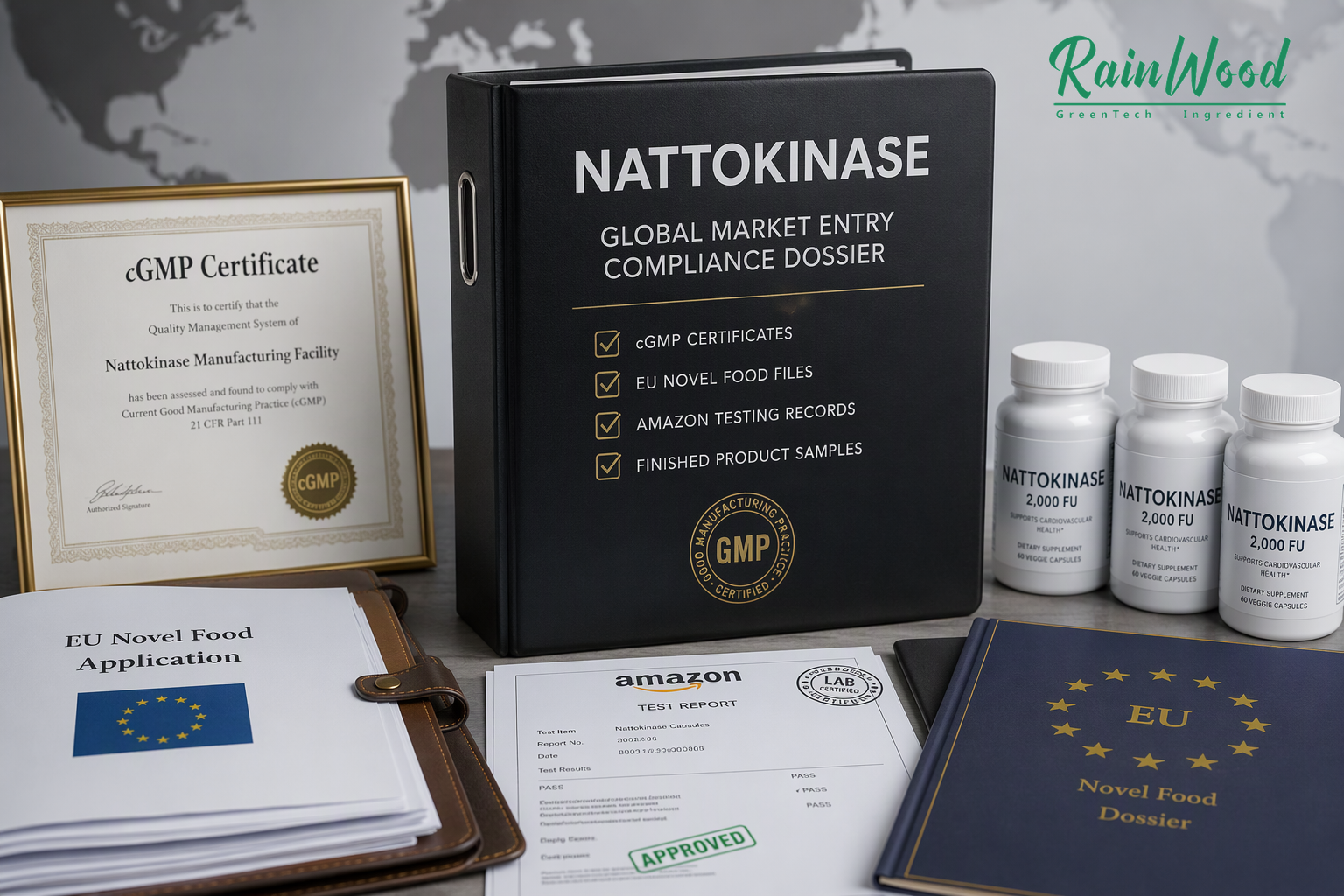
Figure 1: Global Market-Entry Compliance Dossier Binder for Nattokinase: cGMP Files, EU Novel Food, and Amazon Testing
A nattokinase listing needs more than a high FU number
Nattokinase products are visible in wellness and cardiovascular categories, which can tempt brands to move directly from a supplier COA to an Amazon listing. The hard questions arrive later: What does one FU mean? Is the activity method comparable? Does the label use disease language? Are medication and soy warnings adequate? Does the finished capsule retain activity through shelf life?
The answer depends on the exact product, dosage form, target country, claim language, responsible entity, and sales channel. Build the dossier before the listing.
Start with exact identity and activity
Name the material as purified nattokinase, natto extract, or another defined product. State activity per gram, per serving, and per daily use. Include assay method and basis. Do not let “nattokinase 2,000 FU” stand alone without defining the serving and activity evidence.
The [INTERNAL LINK -> Nattokinase Identity Blog] and [INTERNAL LINK -> Nattokinase FU Guide] provide the technical starting point.
Build the raw and finished-product file
The raw-material file should include source, specification, lot COA, activity and identity methods, moisture, contaminants, soy status, storage, and shelf life. The finished-product file should add master formula, batch record, activity per unit, package, stability, label review, lot coding, complaint handling, and traceability.
A raw COA does not prove the finished capsule or tablet. A package that protects the powder may not protect the finished product after repeated opening. The [INTERNAL LINK -> Nattokinase Stability Blog] explains the missing link.
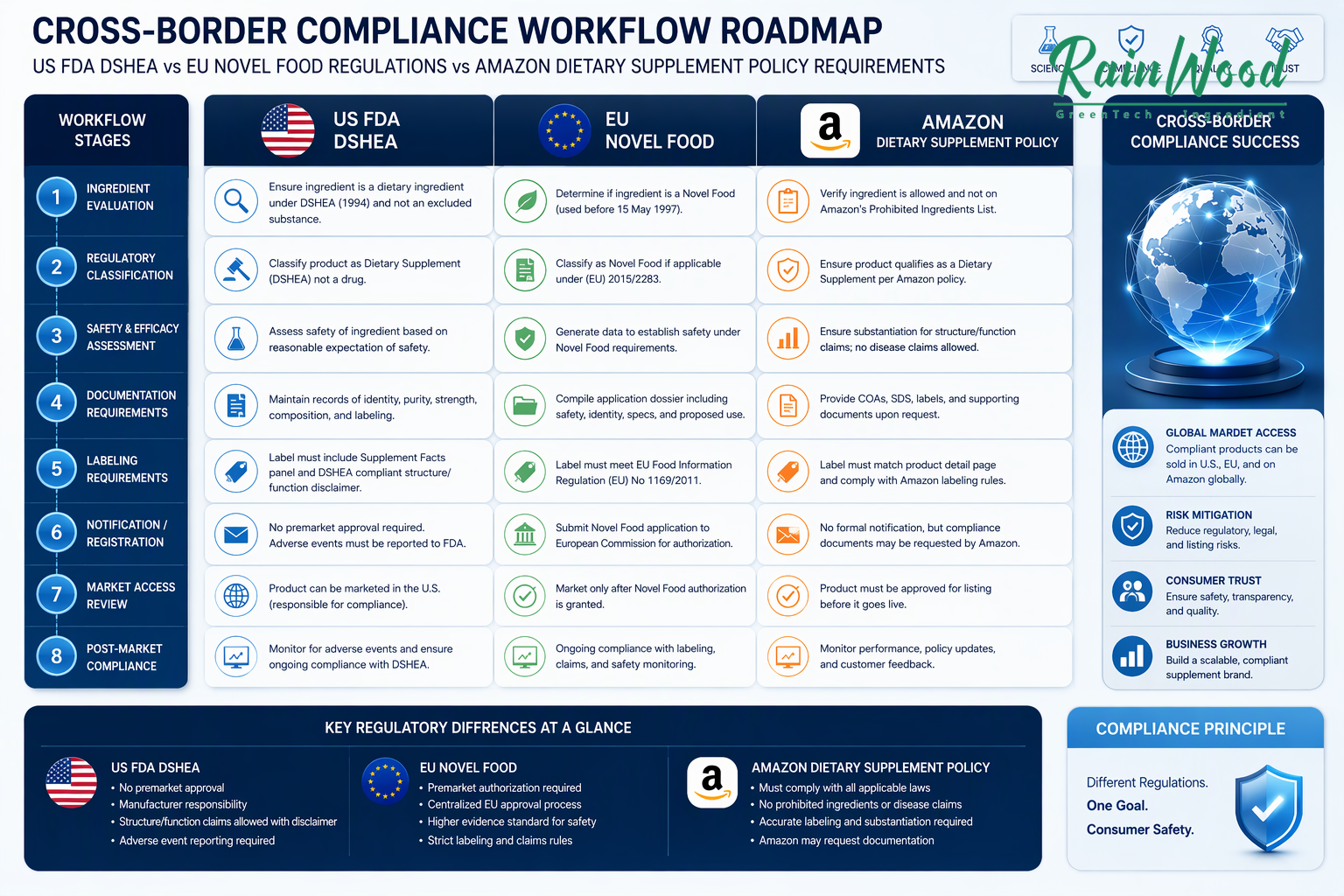
Figure 2: 3D Cross-Border Regulatory Workflow: US FDA DSHEA vs EU Novel Food Directive vs Amazon Supplement Policy
Market and platform requirements differ
The United States, European Union, and Amazon may request different labels, warnings, claims, notifications, language, and documentation. A US dietary-supplement label does not automatically make the product EU-ready. An Amazon product page may be challenged because of imagery, testimonials, or “blood thinner” language even when the raw material is legally sold.
Create a market matrix with country, legal category, form, activity, serving, warnings, claims, responsible party, document owner, and required evidence. Have a qualified reviewer assess the actual product and channel.
Claim and warning review
Separate fibrinolytic activity, human biomarker studies, general circulation language, and disease or treatment claims. The long-term randomized trial cited earlier did not find an effect on subclinical atherosclerosis progression in healthy low-risk adults. That does not eliminate the category; it means a brand should not promise outcomes its product and evidence cannot support.
Review title, bullets, images, testimonials, FAQ, influencer scripts, and search terms together. The [INTERNAL LINK -> Nattokinase Claim Blog] provides a claim-to-evidence framework.
The buyer loss from launching before the file is ready
The brand may remove a listing, revise printed packaging, refund customers, or delay retailer onboarding. A platform can request documents at the exact moment a lot is already blended. If the supplier's documents use different FU methods or product names, the brand may not be able to answer quickly.
How RainwoodBio can support market preparation
RainwoodBio publishes requirement confirmation, compliance assessment, raw-material supplier management, quality testing and release, product registration and compliance documentation, and traceability. It also publishes OEM formats including capsules, tablets, powders, and stick packs. These capabilities support a market-entry project; product-specific activity, warning, stability, and claim evidence still require confirmation.
Market-entry approval gate
Before publishing, confirm:
- exact material and activity basis;
- method and lot COA;
- finished-product activity and stability;
- soy and medication warning review;
- market-specific labels and claims;
- package, lot coding, and traceability;
- document owner and version control.
Request a [INTERNAL LINK -> Nattokinase Market Dossier Review] [INTERNAL LINK -> Contact Us Page] with the draft label, formula, COA, target countries, format, and channel.
Prepare an evidence index for platform questions
Create an index with the exact material identity, supplier, lot, FU method, activity result, finished formula, package, stability, label version, warning review, and claim decision. Store the documents with controlled dates and owners. If a platform asks for proof of the activity number or the product category, the team should be able to answer without sending unrelated screenshots.
Review the listing against the index after every change. A copywriter can accidentally replace “supports healthy circulation” with “prevents clots,” or a designer can remove a soy warning from an image. A document index and final listing check catch those changes before they create a platform escalation.
For a new market, ask the supplier which documents are company-level context and which are specific to the product and batch. The [INTERNAL LINK -> Nattokinase Supplier Checklist] can be used to assign responsibility.
Prepare for retailer and platform evidence requests
Keep a controlled package containing the ingredient specification, lot COA, FU method, identity evidence, finished-product COA, stability, package, soy statement, warnings, label review, and manufacturing records. Assign a person to answer requests and a version number to every document. A platform review is easier when the file is coherent and product-specific.
Do not send a generic GMP certificate as if it proves the exact nattokinase batch. Separate company context, site evidence, product evidence, batch evidence, and finished-product evidence. This protects the brand from overclaiming and helps the reviewer understand what each document actually proves.
Create a release-to-listing workflow
Start with the approved ingredient specification and market matrix. Confirm the supplier and lot, then release the raw material. Approve the formula and format, test the finished unit, and approve the package and claims. Only after those steps should the product page and advertisements go live. Each stage should have a document, an owner, and a version.
This workflow protects against a common launch failure: the marketing page is written from a supplier brochure, while production uses a different grade or activity method. It also helps when a platform requests a document after launch. The brand can show the chain from the purchased batch to the finished product and explain what each document proves.
Ask the supplier to provide a change notice before source, method, package, or formula changes. If the change affects FU, warnings, or label language, reopen the market review rather than updating a single product-page line.
Keep the dossier specific to the SKU
One supplier may offer several nattokinase grades, activity methods, capsule sizes, or branded forms. The market file should identify the exact SKU and lot rather than rely on a general company folder. If the brand launches a new activity, package, or blend, create a new document version and repeat the relevant review.
For Amazon or retailer requests, answer with a short index explaining what each document proves. A COA proves the reported result for a lot under a method; a certificate may describe a site or system; a stability report supports a time and condition; a label review addresses wording. Keeping those evidence levels separate builds trust.
Frequently asked questions
Can one COA satisfy US, EU, and Amazon?
It may support core quality review, but the full document and claim requirements can differ.
Is a 2,000 FU claim enough for a listing?
No. The serving, method, identity, warnings, label, and finished-product evidence also matter.
Can the page say blood thinner?
Do not assume so. The wording may imply a drug effect and requires qualified review.
Is a raw-material stability study enough?
Not automatically. The finished format and package need their own evidence.
Conclusion
Market entry is a dossier project before it is a keyword project. Lock activity, identity, package, stability, warnings, claims, and document ownership before the product is listed.
Disclaimer: This article is general commercial information, not legal, regulatory, or medical advice. It does not establish that nattokinase treats, prevents, or cures disease.
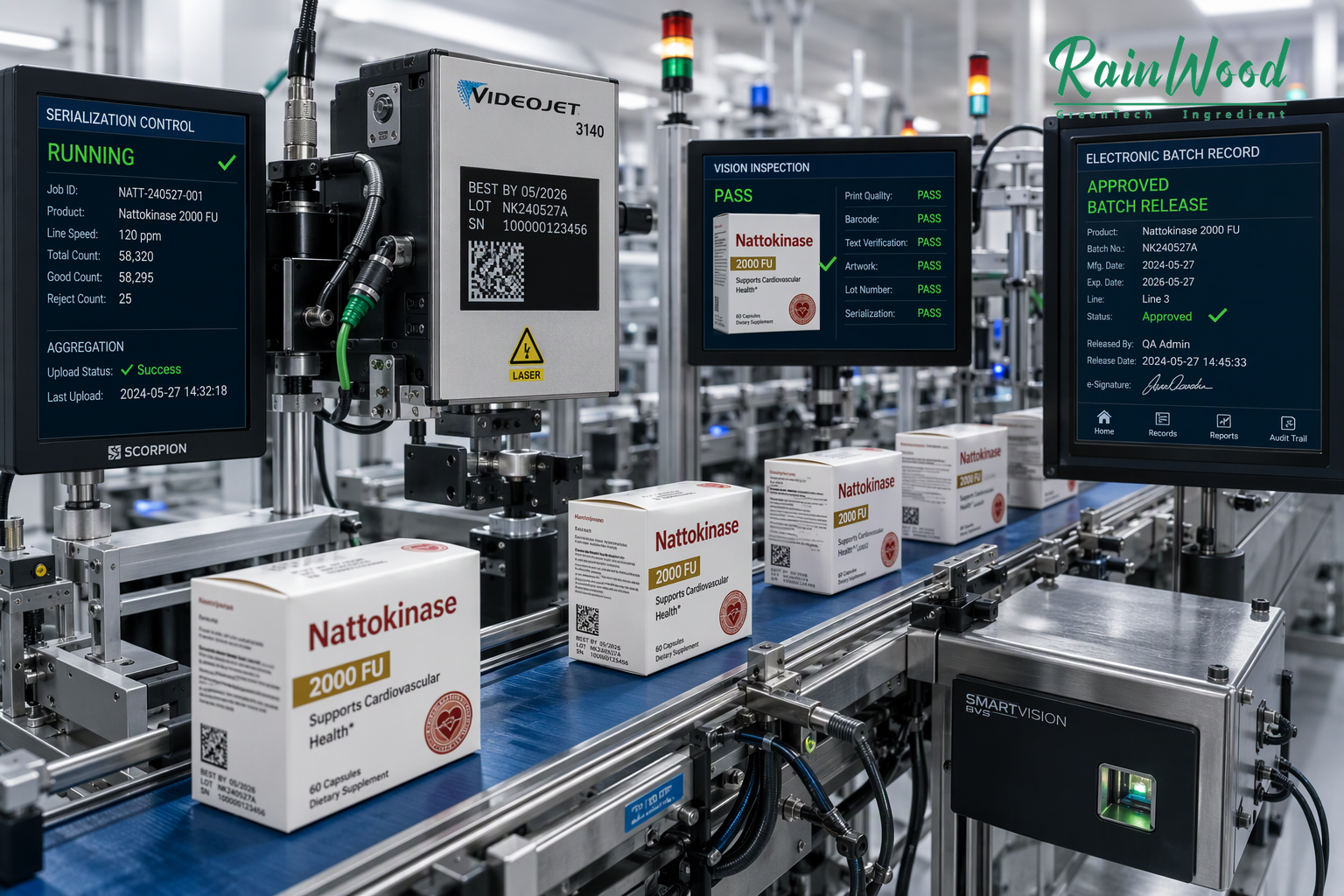
Figure 3: Automated Packaging Line with Lot Barcode Serialization, Laser Verification, and Electronic QA Batch Release
References
- https://pubmed.ncbi.nlm.nih.gov/33843667/
- https://dsld.od.nih.gov/label/82020
- https://www.fda.gov/food/dietary-supplements-guidance-documents-regulatory-information/dietary-supplement-labeling-guide
- https://www.rainwoodbio.com/
Explore RainwoodBio Nattokinase & Cardiovascular OEM Solutions
- Custom Nattokinase Enteric & Delayed-Release Capsules – Gastric-acid protection preserving 2,000~20,000 FU/g enzyme activity for optimal systemic absorption.
- Nattokinase Lipid Softgels & Cardiovascular Blends – Synergistic co-formulations with CoQ10, Phytosterols, Garlic Oil, and Vitamin K2-free options.
- Nattokinase Sachet Stick Packs & Functional Powders – Convenient single-serve sachet stick packs with premium taste masking and high moisture barrier.
- OEM / ODM Contract Manufacturing Services – cGMP certified high-potency blending, blister packaging, and US/EU/Amazon regulatory compliance dossiers.
- Contact RainwoodBio Technical Sales – Request Nattokinase CoA (FU/g assay certificates), stability test protocols, pilot samples, or custom quotation.
Table of Contents
- A nattokinase listing needs more than a high FU number
- Start with exact identity and activity
- Build the raw and finished-product file
- Market and platform requirements differ
- Claim and warning review
- The buyer loss from launching before the file is ready
- How RainwoodBio can support market preparation
- Market-entry approval gate
- Prepare an evidence index for platform questions
- Prepare for retailer and platform evidence requests
- Create a release-to-listing workflow
- Keep the dossier specific to the SKU
- Frequently asked questions
- Conclusion
- References