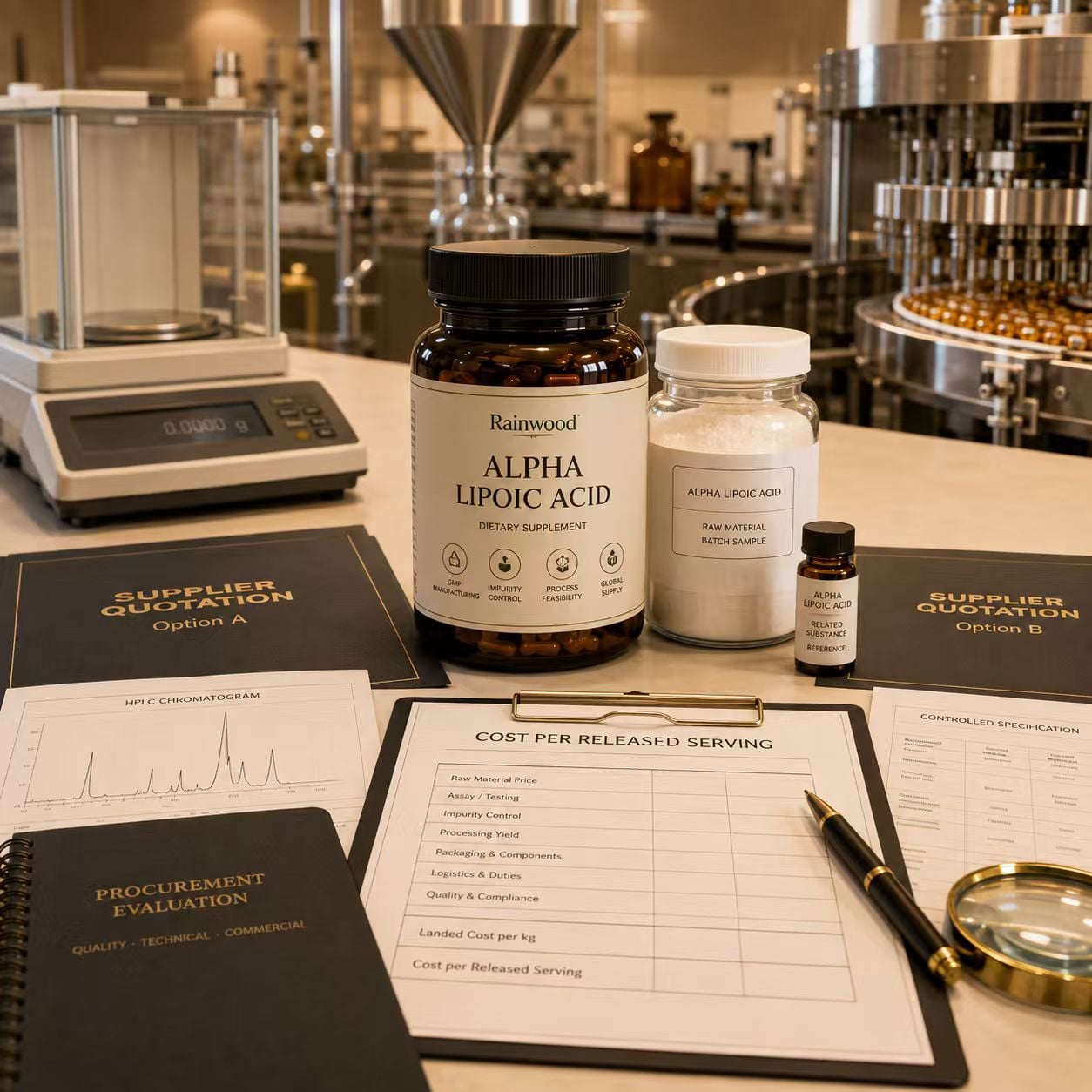
Supplier A quotes alpha lipoic acid 18% below Supplier B. Both show “99% HPLC.” The saving looks obvious—until incoming powder agglomerates, the laboratory asks for a related-substance method, and marketing discovers that the cheape...
VIEW MORE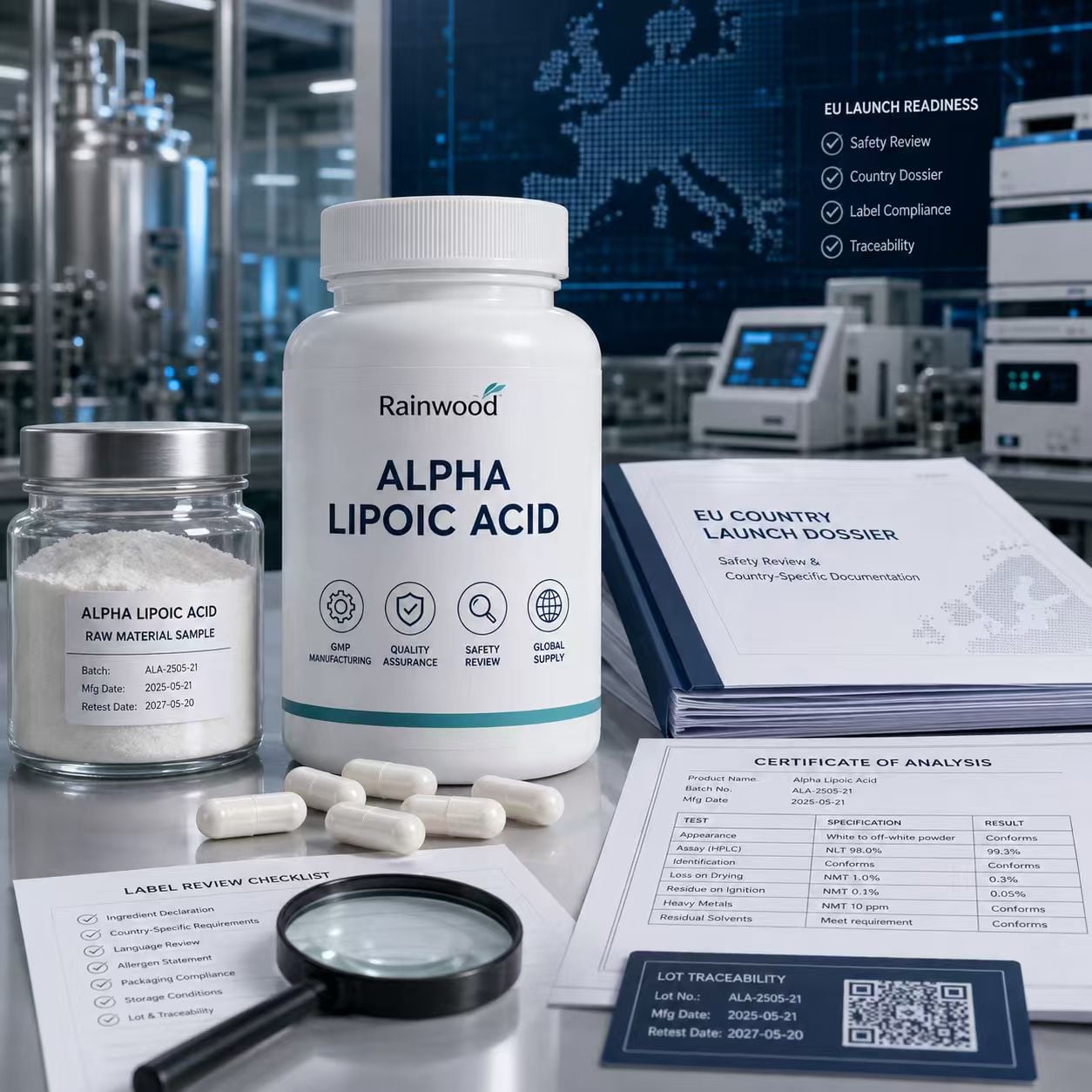
Your ALA formula sells in North America. The distributor asks for an EU label. The easy answer is to translate the bottle. That answer ignores the hardest European question: how has the product addressed the EFSA opinion linking supplemental alpha li...
VIEW MORE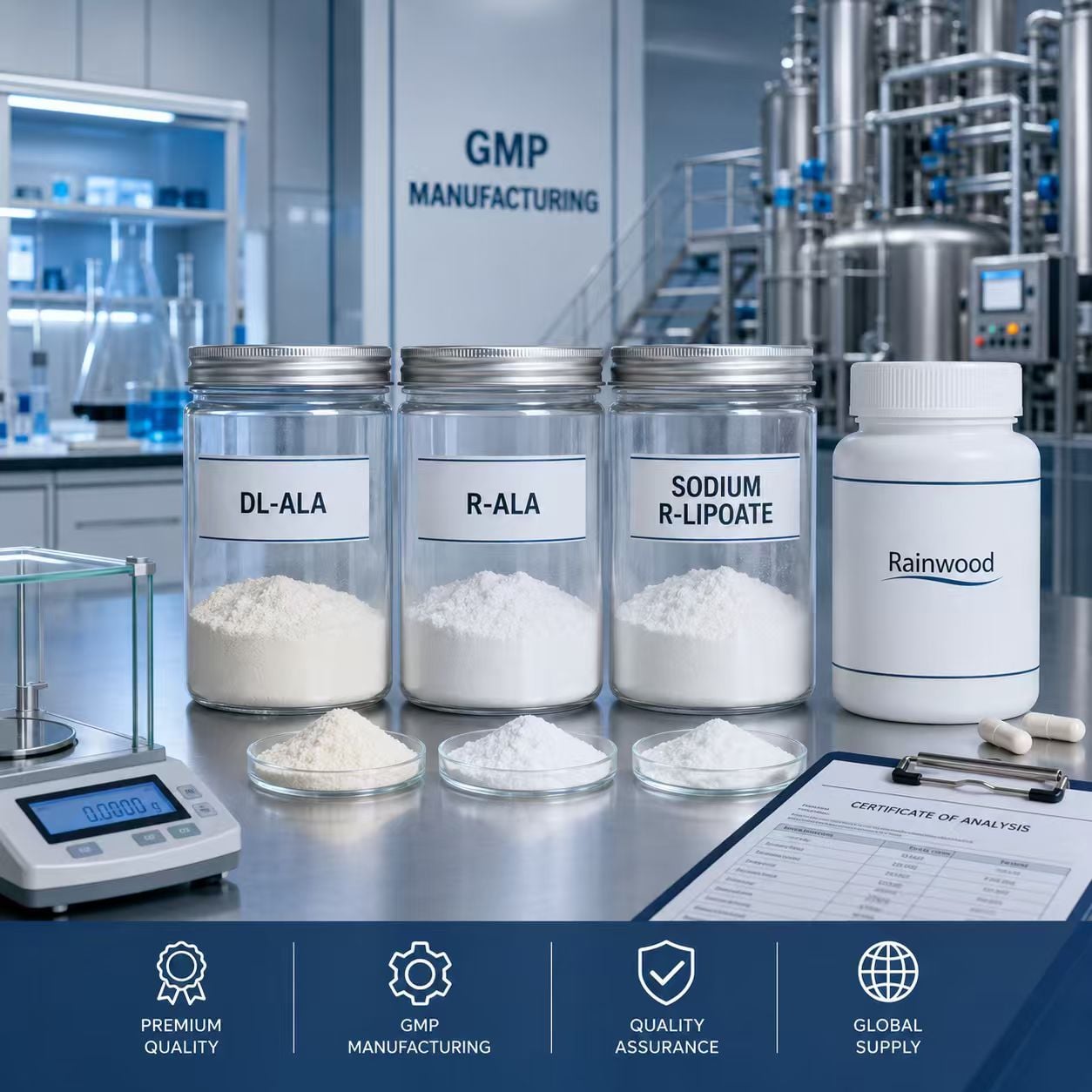
Three suppliers quote “alpha lipoic acid 300 mg.” One offers racemic DL-ALA, one offers R-ALA free acid, and one offers sodium R-lipoate. The sales sheets make them look interchangeable. They are not one material with three spellings. If ...
VIEW MORE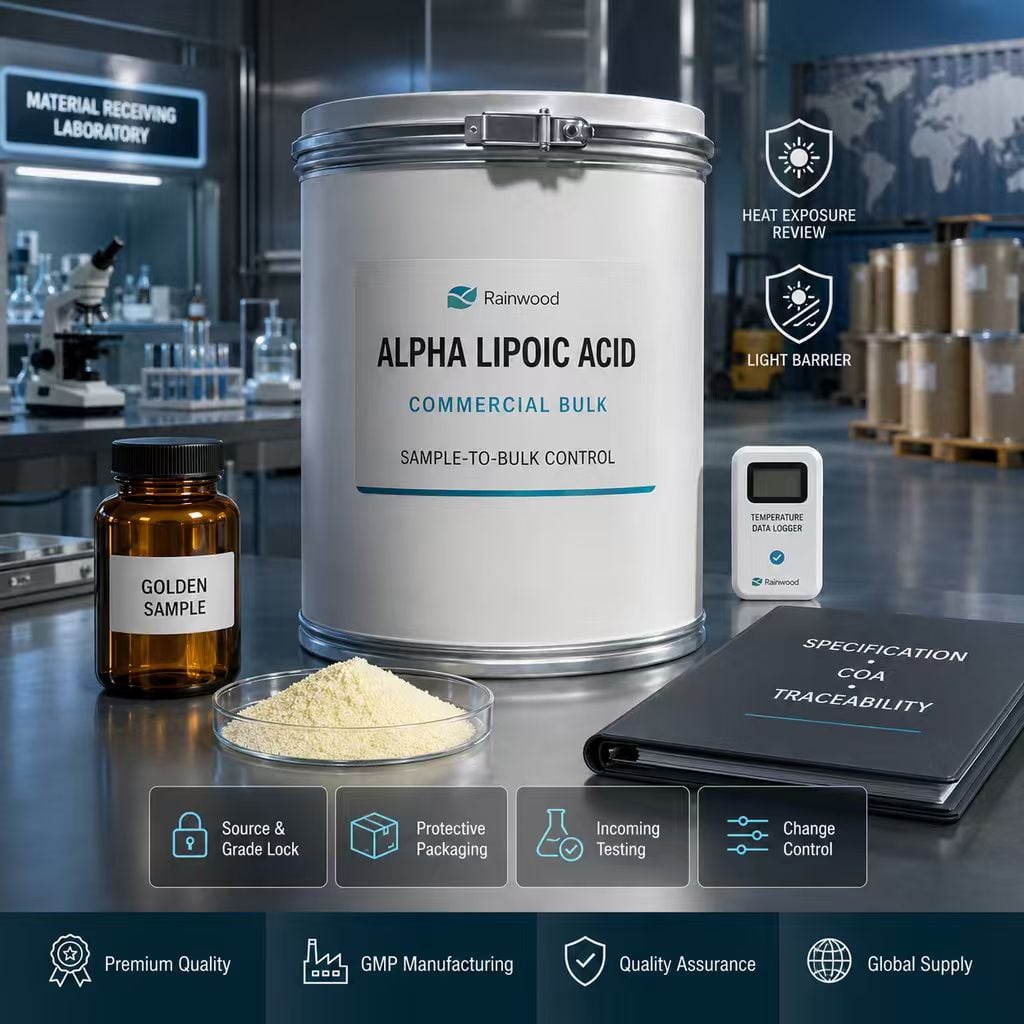
The 100-gram ALA sample arrives as a clean, free-flowing yellow powder. Six months later, the commercial drums reach the factory after a hot transit and the material is agglomerated, difficult to screen, and slow to fill. That scenario does not prove...
VIEW MORE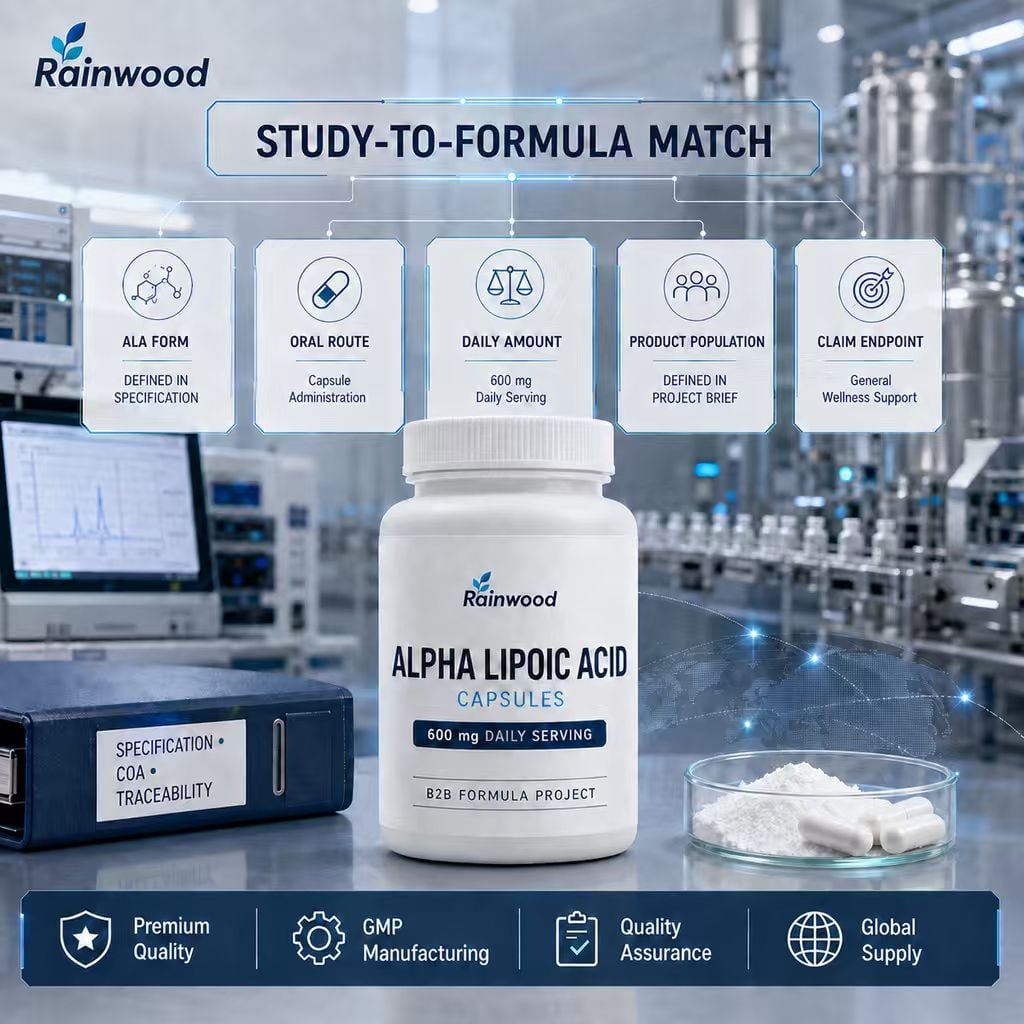
Your ALA supplement delivers 600 mg per day. The literature folder contains studies using 600 mg. Marketing concludes: “clinically studied dose.” The number matches. The intervention may not. Some research used oral racemic ALA; some used...
VIEW MORE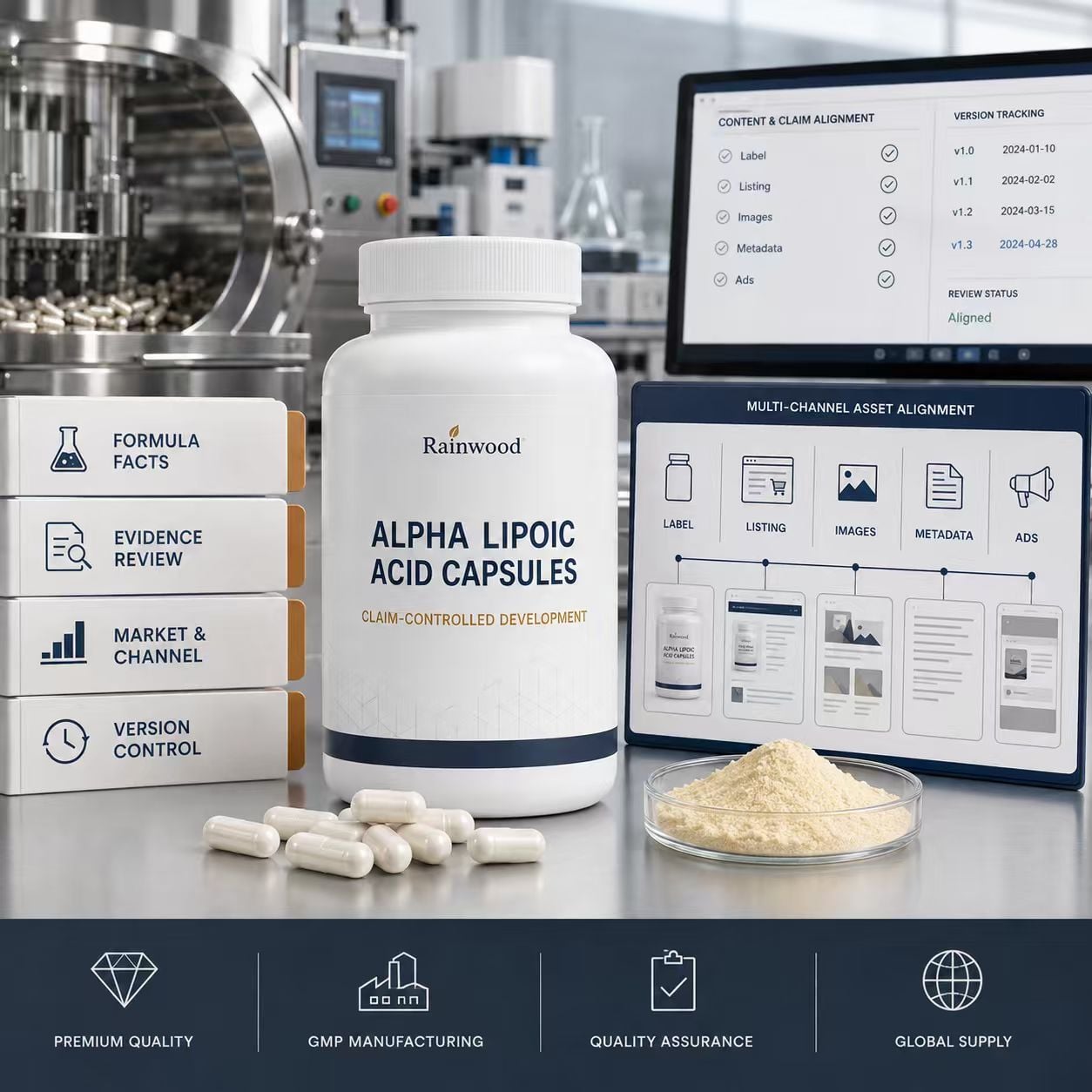
The label says “antioxidant support.” The marketplace title says “diabetic neuropathy relief.” The image shows a damaged nerve becoming healthy. A featured review says the capsules replaced medication. The bottle did not chang...
VIEW MORE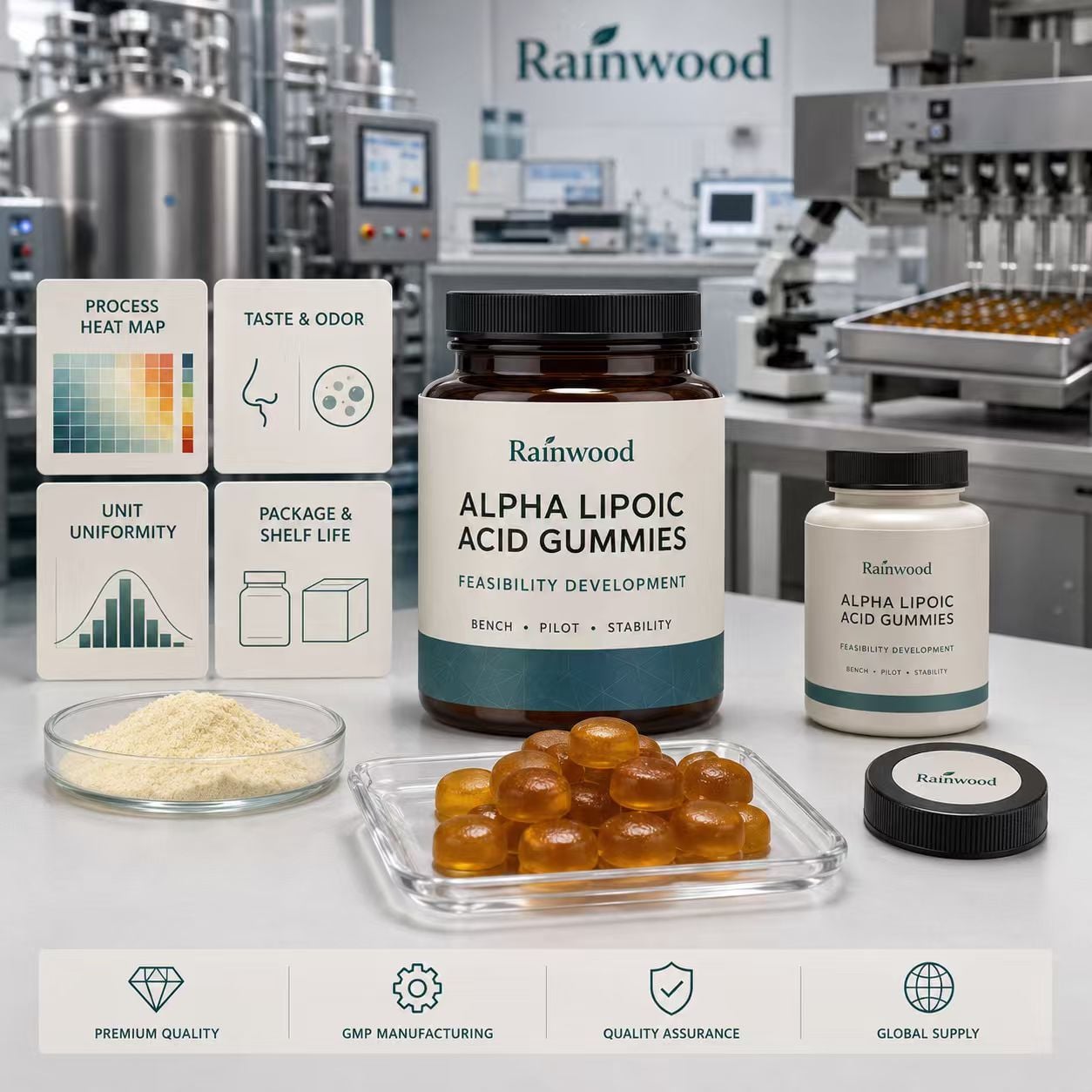
The brief sounds irresistible: put 500 mg of alpha lipoic acid into a great-tasting gummy and turn a technical antioxidant into a consumer-friendly format. Then formulation asks four questions: Is 500 mg the gummy weight or the ALA amount? Which ALA ...
VIEW MORE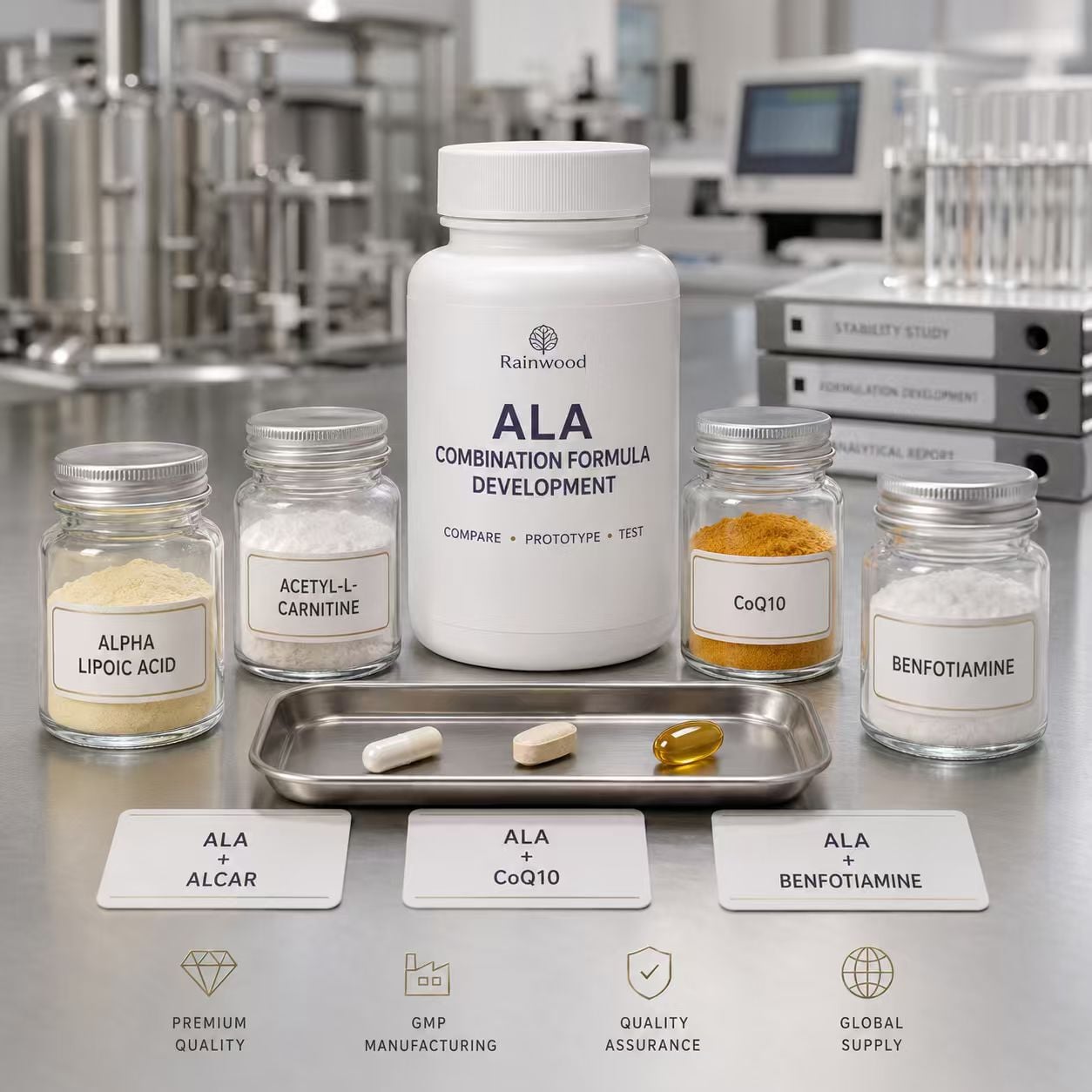
Adding acetyl-L-carnitine, CoQ10, and benfotiamine to alpha lipoic acid creates a longer label in minutes. Creating a formula that fits, tests, remains stable, and supports one clear claim takes much longer. The wrong question is, “Which ingred...
VIEW MORE
The front label shouts “ALA 600 mg.” The Supplement Facts panel defines a two-capsule serving. The factory quote is priced per capsule. The clinical paper used 600 mg per day. Four teams see the same number and calculate four different pr...
VIEW MORE
The supplier COA says 90% chondroitin sulfate. The price is attractive. The powder is pale, the drums are sealed, and the shipment is already moving. Then your customer asks one question: “Which method proves that the 90% result is actually cho...
VIEW MORE
Your supplier offers “marine chondroitin sulfate, USP grade.” The phrase combines two powerful buying signals: a premium source and a recognized standard. It may also combine two requirements that have not been reconciled. The public USP ...
VIEW MORE
The easiest joint formula to design is the one with every fashionable ingredient. The hardest product to sell profitably is often that same formula. Type II collagen, hyaluronic acid, Boswellia, and curcumin can each create a different commercial sto...
VIEW MORE
 EN