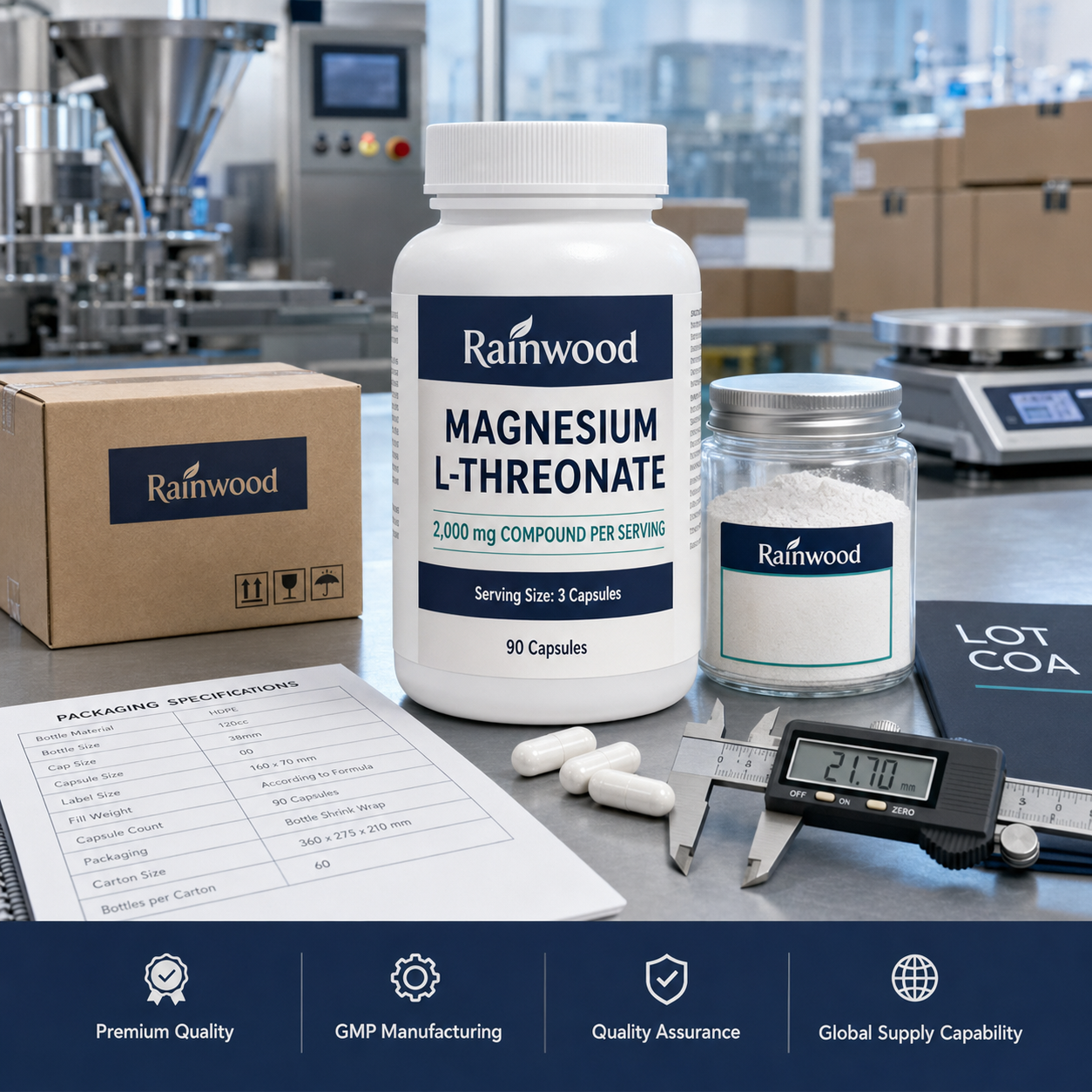
The 2,000 mg number can wreck the margin model Marketplace shoppers often see a large magnesium L-threonate compound number and assume it is elemental magnesium. It is not. Under the EU monohydrate range, 2,000 mg of compound corresponds to about 144...
VIEW MORE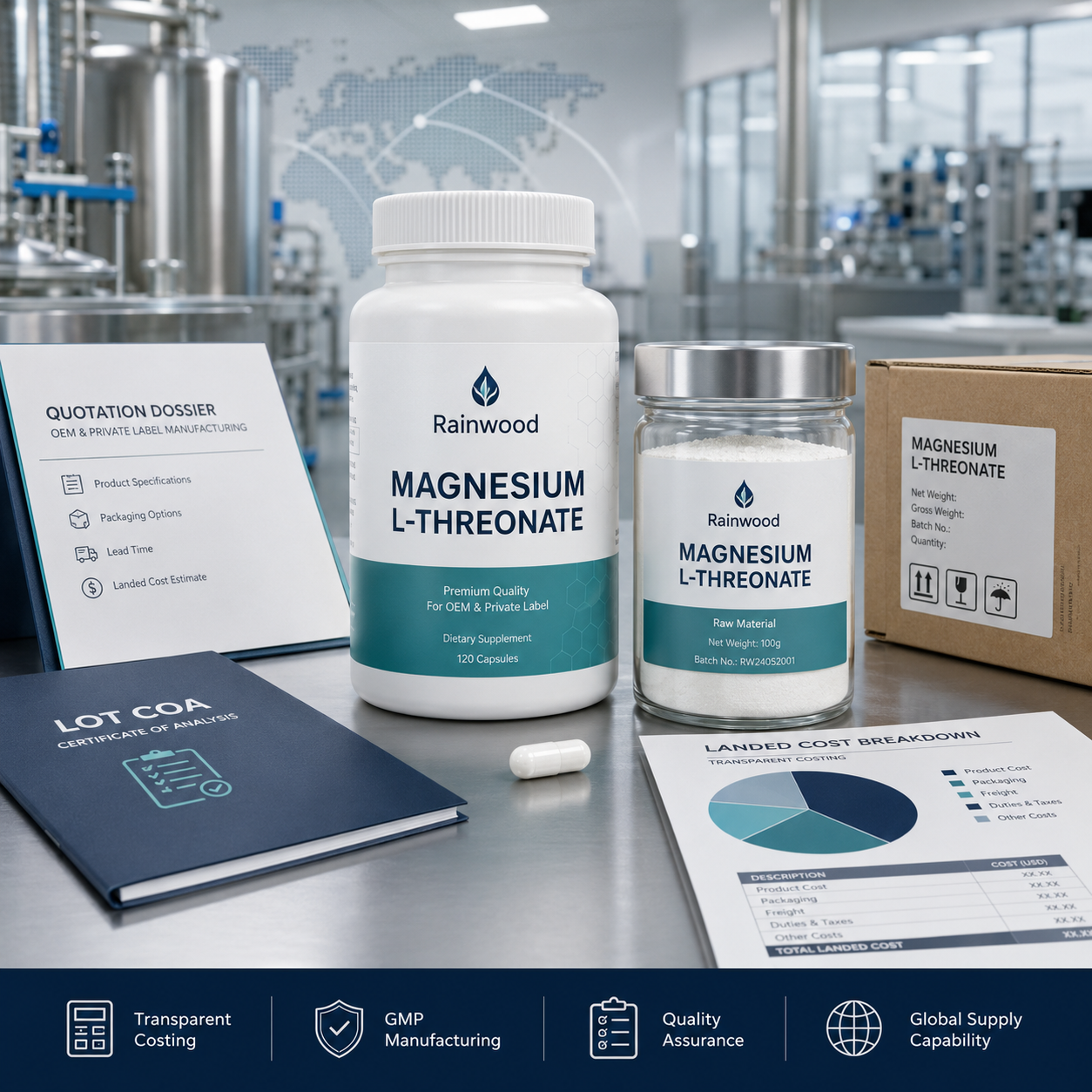
The $12-bottle illusion Two bottles can share the words “magnesium L-threonate” and have radically different economics. One may provide a disclosed 2 g compound serving in three capsules. Another may use a multi-magnesium proprietary blen...
VIEW MORE
The professional-channel dossier has to survive one hard question That question is: “Does the evidence actually apply to this bottle?” A product can copy a studied compound amount yet use a different source, hydration basis, finished form...
VIEW MORE
The uncomfortable possibility: the bulk lot is not the sample Most sample-to-bulk failures are process-control failures, but buyers should also design against substitution. A development sample can be made with a branded or well-documented lot, while...
VIEW MORE
The backup-source paradox A buyer may believe two magnesium L-threonate suppliers create resilience. In reality, the second powder may use a different hydration state, assay basis, manufacturer, trademark status or legal market-access route. It may r...
VIEW MORE
The choice is not simply “factory or trader” A real capsule factory may still buy poorly documented magnesium L-threonate. A knowledgeable distributor may offer better ingredient traceability than a manufacturer that hides its source. The...
VIEW MORE
The comparison most brands get wrong “L-threonate goes to the brain; glycinate is for sleep” is an attractive sales script, not an adequate product comparison. It collapses preclinical mechanisms, ingredient-specific human trials, consume...
VIEW MORE
The low-MOQ trap nobody puts in the quotation A low minimum order can reduce the first invoice while locking a brand into the wrong product architecture. The common trap begins with a large front-panel number such as “2,000 mg.” For the E...
VIEW MORE
Three documents that can look convincing and prove almost nothing The first is a COA recreated on the seller’s own letterhead. It may contain real-looking limits but fail to identify the original ingredient manufacturer or laboratory. The secon...
VIEW MORE
“Sold online already” is not a market-access argument Magnesium L-threonate sits in a regulatory patchwork that exposes retail buyers to copy-and-paste mistakes. In the EU, the monohydrate was authorised as a novel food under define...
VIEW MORE
“Clinically studied” is where the story often becomes larger than the data The human evidence must be read study by study. A 2016 trial involved an older population and a specific magnesium L-threonate formulation; the publication r...
VIEW MORE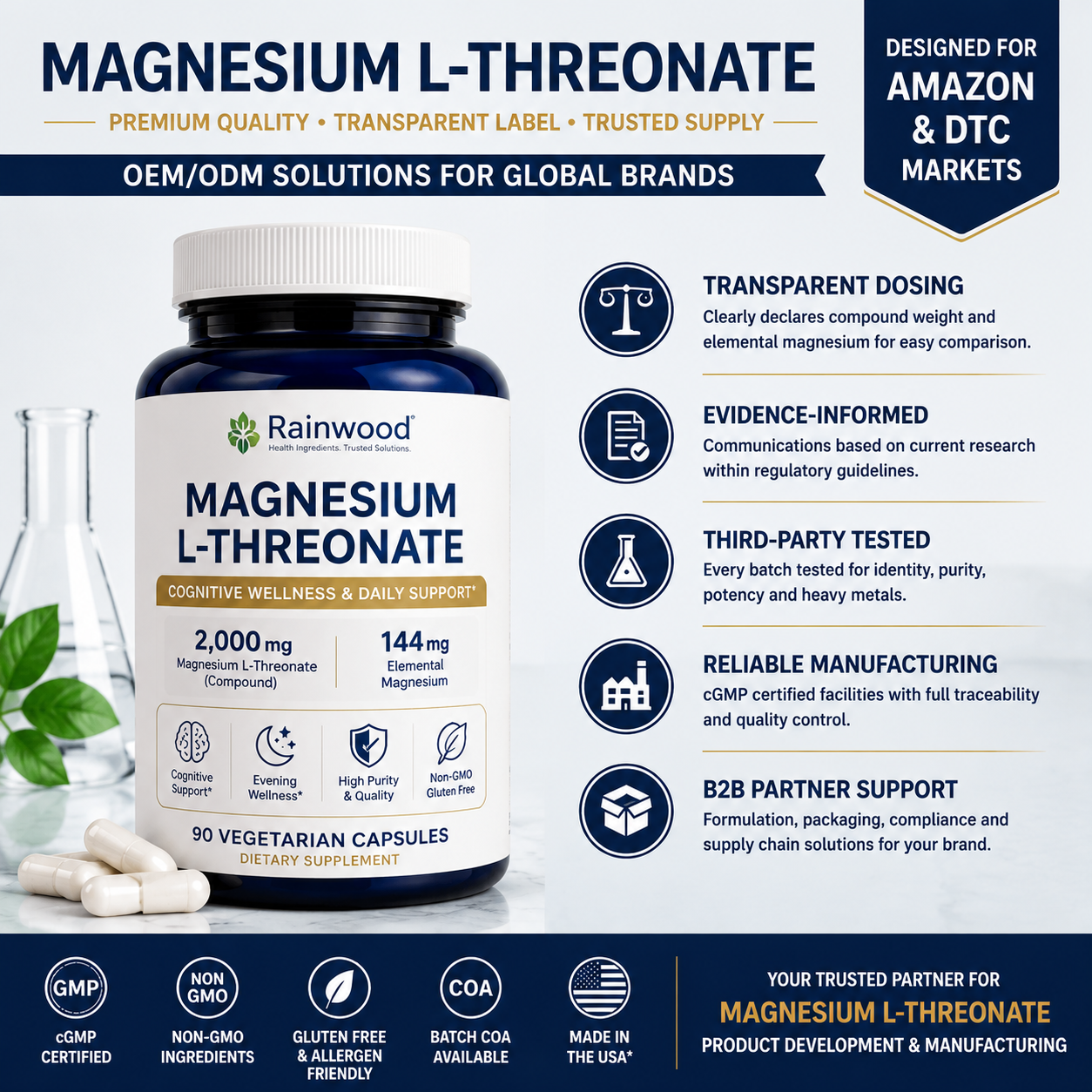
The conversion trick that creates a trust problem later A crowded listing page rewards simple claims and large numbers, so sellers are tempted to place “2,000 mg magnesium” or “maximum strength brain magnesium” above every qua...
VIEW MORE
 EN