 EN

Executive Summary & B2B Formulation Guidance
Calculate nattokinase FU per capsule, serving, bottle, and day while keeping raw potency, overage, and shelf-life claims consistent.
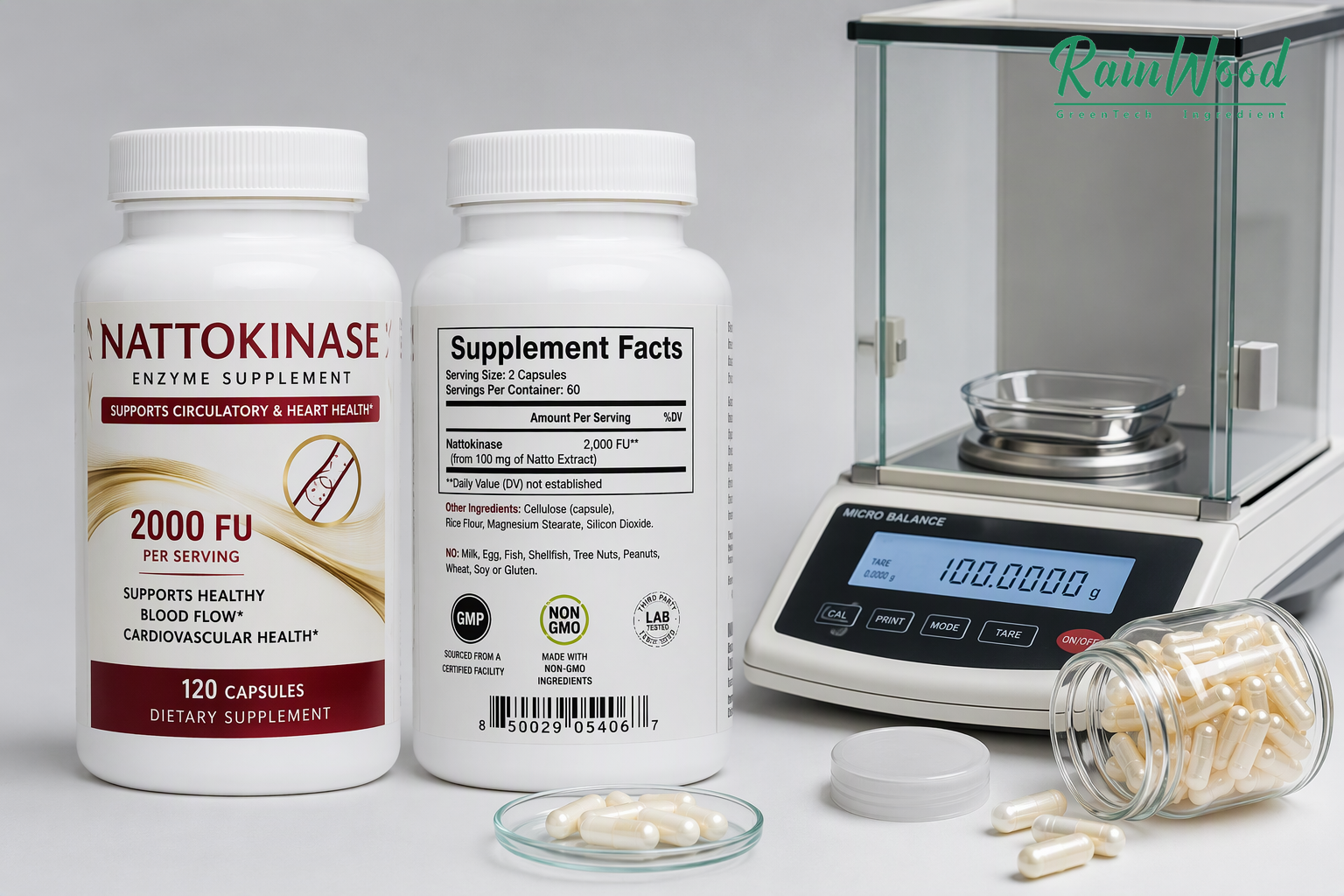
Figure 1: Commercial Finished Nattokinase Supplement Bottles with 2000 FU per Serving Supplement Facts Panel on Analytical Scale
A bottle can say 2,000 FU and still confuse the buyer
The front panel says 2,000 FU. The Supplement Facts panel lists nattokinase powder by milligrams. The suggested use says two capsules daily. A distributor asks whether the bottle provides 2,000 FU per capsule or per day, and the sales team gives two different answers.
This is a label-math problem with a quality consequence. The buyer needs to distinguish activity per gram of raw material, activity per capsule, activity per serving, and activity at release versus at the end of shelf life. The formula must show how the number is calculated and how much material is required.
Start with the declared unit
Write the target in one sentence: for example, “Each capsule provides a minimum of X FU at release” or “Each daily serving provides a minimum of Y FU through the stated shelf life.” Then calculate the amount of powder required using the lot activity in FU/g. If the raw material is 10,000 FU/g, 200 mg theoretically provides 2,000 FU before overage, process loss, or stability decline.
Do not copy a competitor's number without confirming whether its serving is one capsule, two capsules, or a daily dose. The [INTERNAL LINK -> Nattokinase FU Guide] explains why FU and milligrams must remain separate.
Add overage only with a reason
An overage may be used to protect the declared activity through shelf life, but it should be documented and validated. An arbitrary overage can change capsule fill, cost, and customer exposure. The buyer should know whether the activity claim is a release minimum or a shelf-life minimum and which stability data support it.
If the product uses an enteric coating, account for coating weight and process recovery. If a blend uses garlic, bromelain, serrapeptase, or vitamin K2, keep the nattokinase activity calculation separate from the companion ingredients.
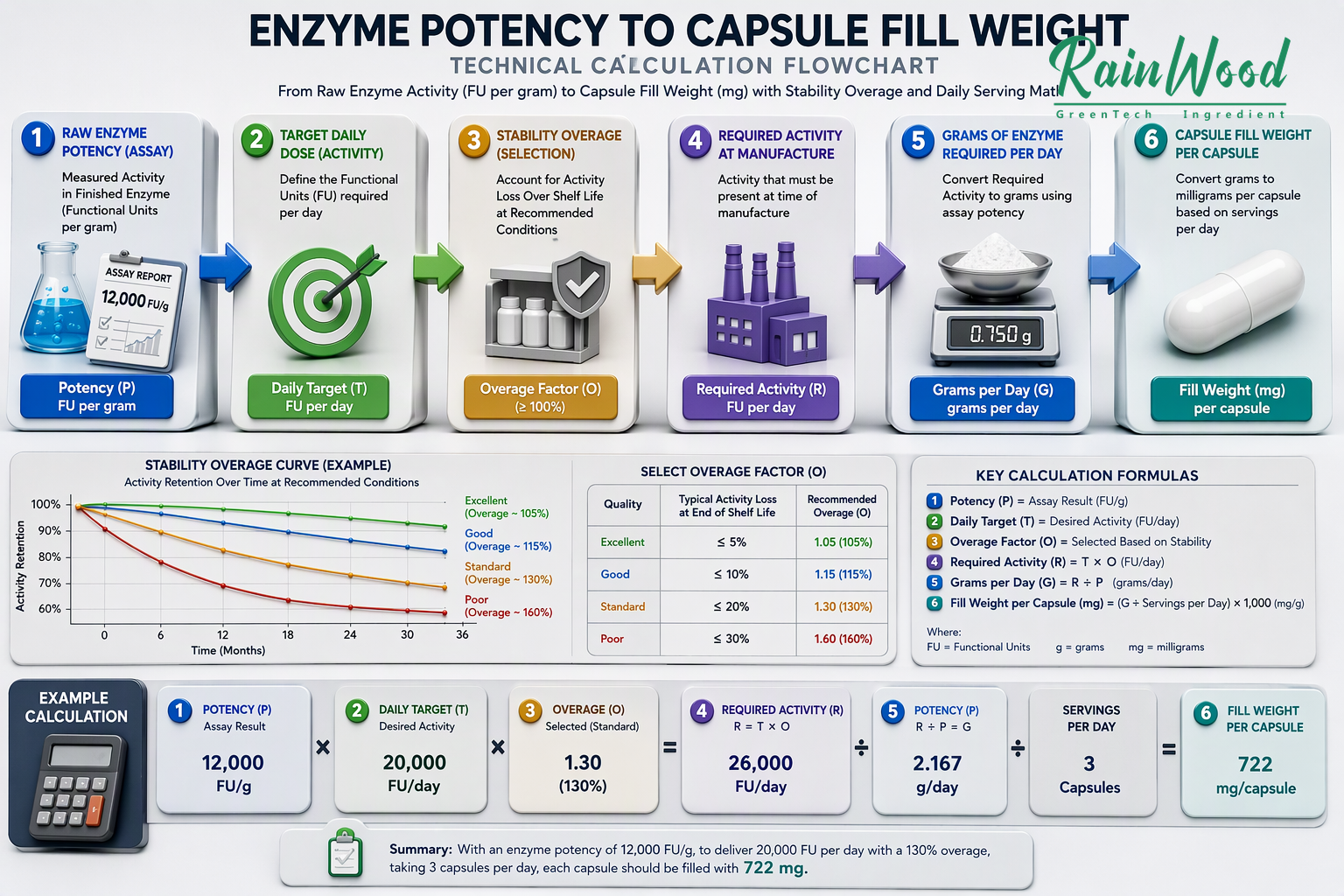
Figure 2: 3D Technical Potency Calculation Flowchart: Raw FU/g Assay Conversion to Capsule Milligram Fill Weight with Overage Curves
The buyer loss from unclear labels
An ambiguous label can create customer complaints and platform questions. It can also cause the brand to under-order raw material or misprice the box. A distributor may compare two products using different serving bases and believe one is stronger when the difference is only presentation.
The formula team may also change capsule count to fit the fill weight without updating the activity claim. That creates a mismatch between the finished product, technical file, and marketing copy. The [INTERNAL LINK -> Nattokinase COA Blog] provides a release-document framework.
Build a dose and cost worksheet
Record raw activity, material grams per capsule, target FU, capsule count per serving, servings per day, capsules per bottle, bottles per month, expected yield, overage, and shelf-life target. Add capsule shell, excipient, package, testing, and freight. Compare cost per released daily serving, not cost per kilogram.
For a powder stick pack, calculate FU per stick, sticks per day, and the activity after storage. For a tablet, include compression and coating recovery. For a softgel, confirm whether the enzyme is compatible with the fill and processing conditions before using a capsule-style number.
How RainwoodBio can support potency-to-format planning
RainwoodBio publishes requirement confirmation, sample development, production control, testing and release, and OEM formats including capsules, powder stick packs, and tablets. Those capabilities can help a brand convert raw activity into a manufacturable label. The exact nattokinase formula still needs product-specific activity, stability, and finished-unit evidence.
Label approval gate
Before artwork approval, confirm:
- FU basis and assay method;
- activity per gram, capsule, serving, and day;
- serving size and daily instructions;
- release versus shelf-life guarantee;
- overage and process-loss calculation;
- finished-product activity test;
- target-market label wording.
Request a [INTERNAL LINK -> Nattokinase Label Math Review] [INTERNAL LINK -> Contact Us Page] with the COA, draft label, serving plan, and package count.
Recheck the math after every activity change
If the supplier changes FU/g, method, source, package, or shelf-life target, rerun the capsule and serving calculation. A small change in raw activity can change fill weight, capsule size, unit count, and monthly cost. Keep the version with the approved COA and artwork so the release team can see which calculation was used.
Show the calculation to procurement, production, quality, and sales. This prevents one team from selling 2,000 FU per capsule while another team has approved 2,000 FU per daily serving. Consistent language is part of product quality.
Put the calculation into change control
The activity worksheet should be linked to the raw-material lot and the finished batch. If the supplier sends a different FU result, the quality team should know whether the formula needs a new input weight or whether the lot is outside the approved range. If the capsule size changes, recalculate material amount, excipient, unit count, package, and daily instructions.
Keep the approved worksheet with the artwork and release record. This prevents a product page from showing one daily activity while the label and manufacturing record use another. It also gives a distributor a clear answer when comparing the product with a competitor.
Show one worked example in the internal file
Assume a raw lot reports 12,000 FU/g and the target is 2,000 FU per capsule. The theoretical input is about 167 mg before overage, processing loss, and any stability adjustment. If the product uses two capsules per serving, the daily activity is 4,000 FU, not 2,000 FU. The exact label depends on the approved serving and target market, but the internal calculation should make the relationship obvious.
Add actual fill-weight data from the pilot. A spreadsheet can show the theory while the production line reveals that the powder bridges or that the capsule cannot hold the planned amount. Record the result with the lot COA and use it when comparing future suppliers.
Control the difference between target and guarantee
The formulation target is the amount the team intends to put into a unit. The release minimum is the lowest result accepted under the agreed method. The label statement is the customer-facing amount, which may be expressed per capsule, serving, or daily use. These values should be connected but should not be treated as interchangeable. A supplier's “typical 2,000 FU” result is not the same as a guaranteed 2,000 FU finished serving.
Write the basis beside every number: as-is or dry basis, raw powder or finished unit, initial release or end of shelf life, and which assay method. When a buyer compares two quotations, this notation often explains why apparently similar numbers produce different costs. It also prevents a change in capsule count from silently changing the daily claim.
Frequently asked questions
Is FU per capsule the same as FU per serving?
Only if one capsule equals one serving. The label must state the relationship clearly.
Does more powder mean more FU?
Only when the powder potency and method are comparable.
Should the label guarantee activity through expiry?
That depends on the evidence and market requirements. The claim should match the stability data.
Can overage solve every stability problem?
No. Package, temperature, moisture, coating, and process controls may be more important.
Conclusion
Nattokinase label math becomes credible when activity, serving, capsule count, raw potency, overage, and shelf life are visible in one controlled calculation. Make the number easy to verify before the label reaches the market.
Disclaimer: This article is for B2B formulation and procurement information. It is not medical advice and does not establish that nattokinase treats, prevents, or cures disease.
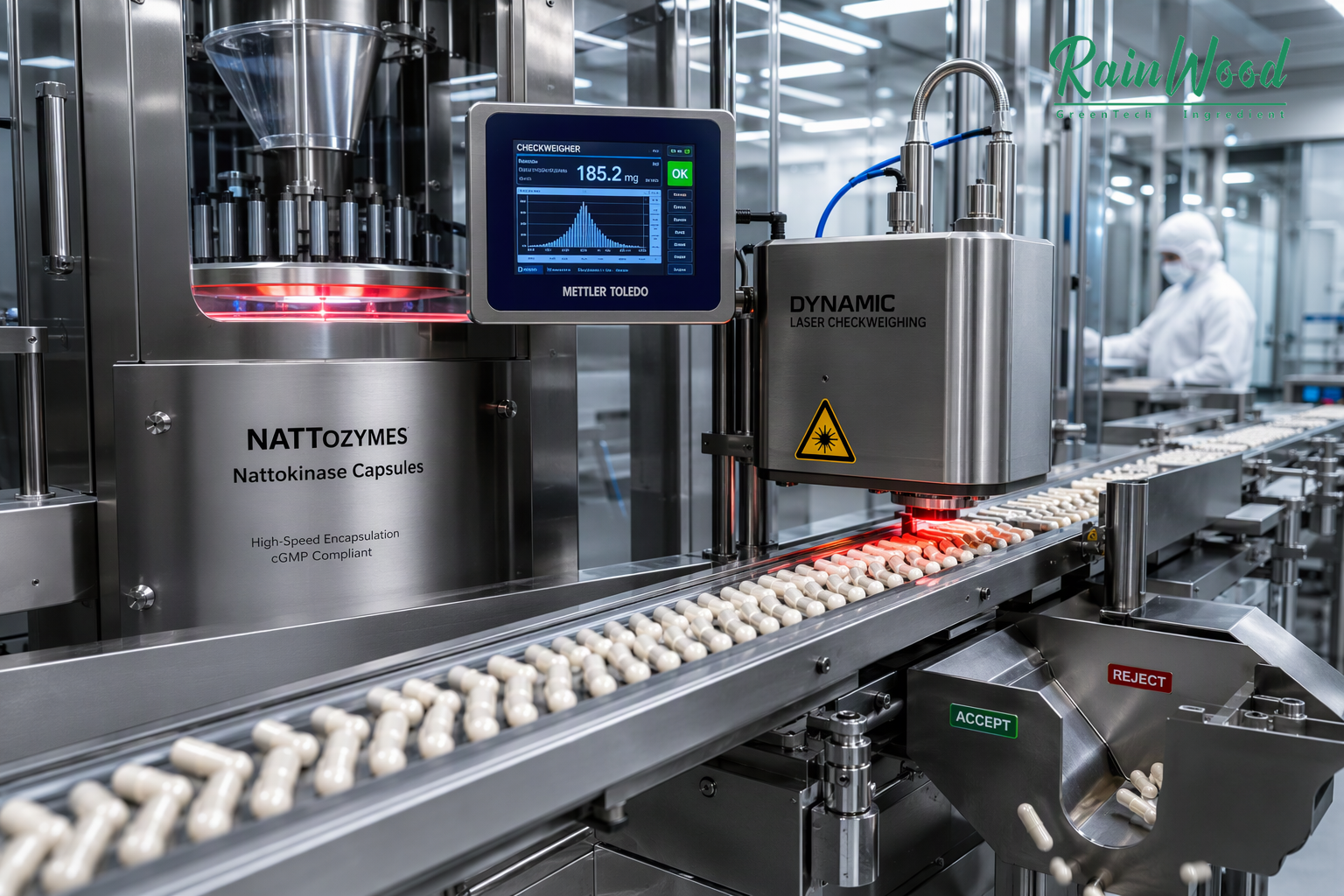
Figure 3: Automated High-Speed Capsule Encapsulation Machine with Dynamic Laser Checkweighing Sensor in cGMP Cleanroom
References
- https://pmc.ncbi.nlm.nih.gov/articles/PMC9312984/
- https://dsld.od.nih.gov/label/82020
- https://www.rainwoodbio.com/oem
Explore RainwoodBio Nattokinase & Cardiovascular OEM Solutions
- Custom Nattokinase Enteric & Delayed-Release Capsules – Gastric-acid protection preserving 2,000~20,000 FU/g enzyme activity for optimal systemic absorption.
- Nattokinase Lipid Softgels & Cardiovascular Blends – Synergistic co-formulations with CoQ10, Phytosterols, Garlic Oil, and Vitamin K2-free options.
- Nattokinase Sachet Stick Packs & Functional Powders – Convenient single-serve sachet stick packs with premium taste masking and high moisture barrier.
- OEM / ODM Contract Manufacturing Services – cGMP certified high-potency blending, blister packaging, and US/EU/Amazon regulatory compliance dossiers.
- Contact RainwoodBio Technical Sales – Request Nattokinase CoA (FU/g assay certificates), stability test protocols, pilot samples, or custom quotation.
Table of Contents
- A bottle can say 2,000 FU and still confuse the buyer
- Start with the declared unit
- Add overage only with a reason
- The buyer loss from unclear labels
- Build a dose and cost worksheet
- How RainwoodBio can support potency-to-format planning
- Label approval gate
- Recheck the math after every activity change
- Put the calculation into change control
- Show one worked example in the internal file
- Control the difference between target and guarantee
- Frequently asked questions
- Conclusion
- References