 EN
Executive Summary & B2B Formulation Guidance
Avoid costly identity mistakes by separating nattokinase enzyme, natto extract, and natto kinase products before you approve a supplier.
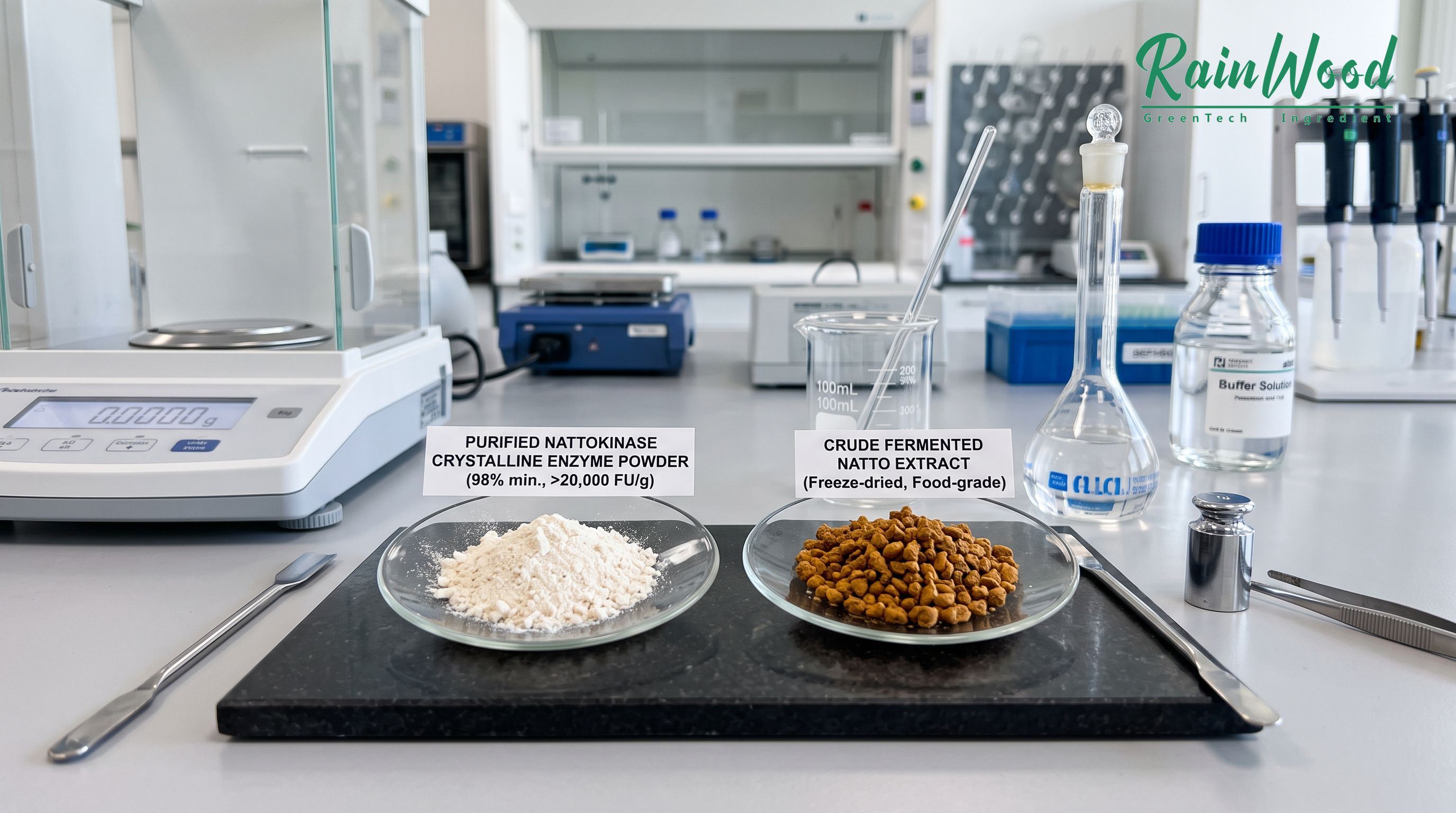
Figure 1: Commercial Comparison of Purified Nattokinase Crystalline Enzyme Powder vs Crude Fermented Natto Extract in Analytical Dishes
The word natto does not define the product
A buyer asks for nattokinase and receives three quotations: purified nattokinase powder, natto extract, and a fermented soybean powder standardized to enzyme activity. All three documents mention natto. They are not automatically equivalent. One may be sold by fibrinolytic units, another by extract weight, and the third by a broad ingredient description with no finished-product activity guarantee.
The first procurement mistake is treating the source story as the product identity. Nattokinase is an enzyme associated with fermentation by *Bacillus subtilis* natto. Natto extract may contain a wider mixture of proteins, peptides, soy components, and other fermentation products. “Natto kinase” may be used as a market synonym, but the buyer still needs the exact specification and activity basis.
Before comparing price or dosage, write the product identity in the purchase order. The [INTERNAL LINK -> Nattokinase Product Page] should describe the same form, activity unit, source, and dosage format as the supplier file.
Why identity changes the formula
Purified enzyme powder is usually evaluated by activity, protein or enzyme identity, moisture, and contaminants. A natto extract may be evaluated by extract ratio, marker compounds, source, and a declared activity. A fermented powder may require additional controls for soy solids, microbial residues, odor, and batch consistency.
Those products also behave differently in capsules, tablets, and powders. An extract can add color, odor, and solids that change fill weight. A purified enzyme may need a carrier or protective package. A brand that copies a 2,000 FU capsule formula into a natto extract powder has not preserved the same product.
Use the [INTERNAL LINK -> Nattokinase FU Guide] to separate activity from material weight before the formula is approved.
The buyer loss from a vague product name
If the delivered material is a broad natto extract instead of the specified enzyme, the brand may be unable to support its label, dosage, or evidence. A finished capsule can contain the expected grams of powder while delivering less enzyme activity than planned. The brand then pays for retesting, rework, relabeling, or replacement inventory.
The loss also appears in customer service. A consumer may expect a consistent enzyme activity but receive a product whose activity changes with extract composition. A retailer may ask why the product page names nattokinase while the COA reports only fermented soybean extract.
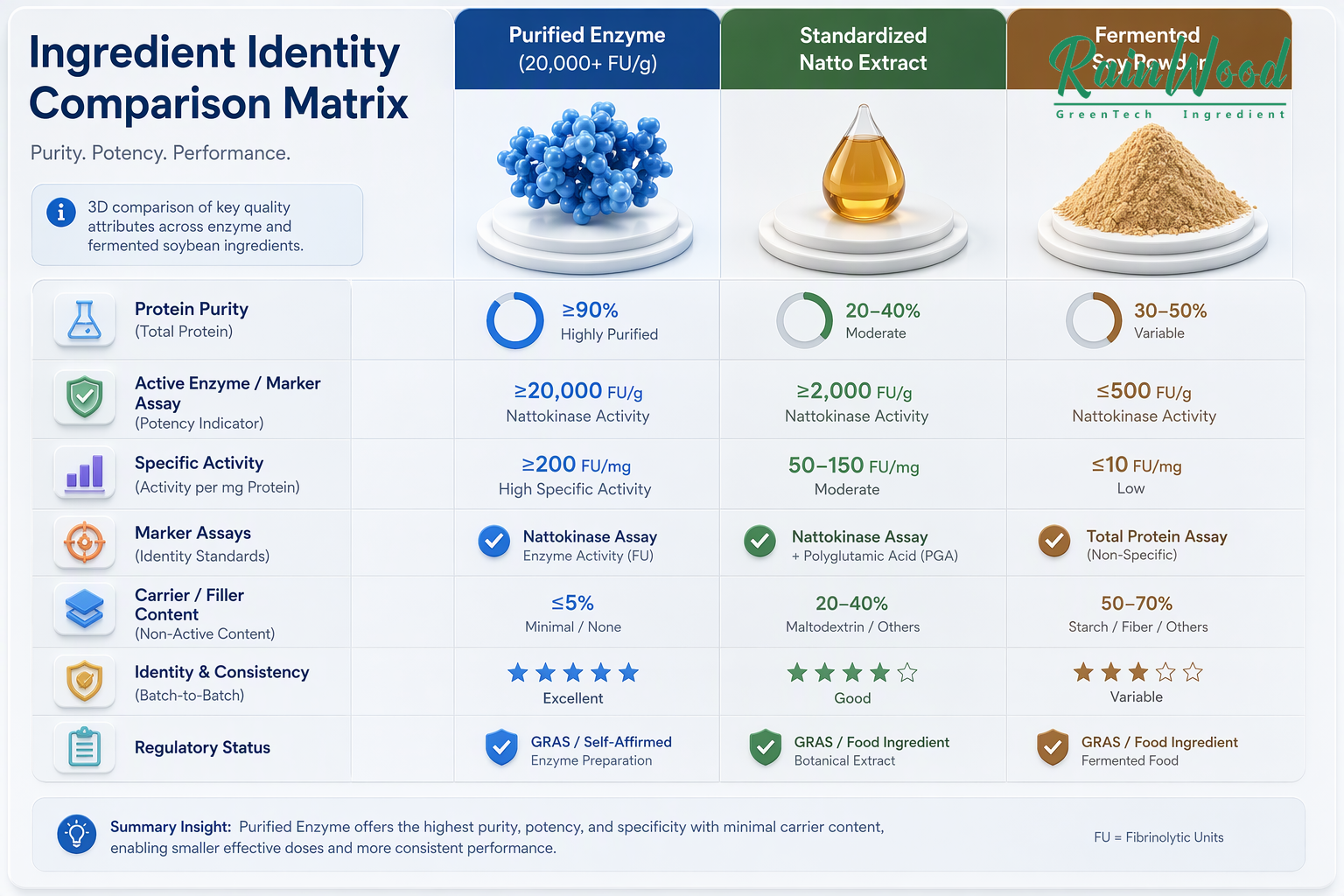
Figure 2: 3D Ingredient Identity Matrix: Purified Enzyme (20,000+ FU/g) vs Standardized Extract vs Fermented Soy Powder Comparison
Write an identity block into the specification
The identity block should state the exact ingredient name, source organism or fermentation description where relevant, whether the material is purified enzyme or extract, activity unit and basis, assay method, protein or identity evidence, soy and allergen status, carrier, moisture, storage, and shelf life.
Ask whether the activity is guaranteed at release, at the end of shelf life, or only a typical value. Ask whether the unit is FU, fibrinolytic units, or another proprietary activity expression. If the supplier uses a branded material, request authorization and the original specification rather than assuming that a market name proves equivalence.
Evidence must follow the exact material
An article about purified nattokinase cannot automatically support a fermented soybean extract. A capsule study cannot automatically support a flavored powder stick pack. A raw-material assay cannot prove that the finished unit maintains the declared activity after storage. The claim chain is study material, commercial ingredient, purchased lot, finished formula, and customer-facing language.
The public NIH Dietary Supplement Label Database shows how a commercial nattokinase label may declare activity in FU and list soy and medication warnings. That is useful market context, not proof that every supplier's product meets the same specification. The [INTERNAL LINK -> Nattokinase Label and Claim Blog] explains how to keep label language connected to the actual evidence.
How RainwoodBio can support identity control
RainwoodBio publishes requirement confirmation, raw-material supplier management, production-process control, testing and release, compliance documentation, and traceability. It also publishes OEM formats including capsules, powders, stick packs, and tablets. These capabilities are relevant when a brand needs the specified nattokinase form to remain consistent from raw material to finished unit. The exact project still needs product-level proof for identity, activity, source, lot, and format.
Identity approval gate
Before approving the supplier, ask:
- Is the material purified nattokinase, natto extract, or fermented powder?
- Which activity unit is guaranteed and on what basis?
- Does the method prove enzyme activity, identity, or both?
- What soy, carrier, moisture, and contaminant information is available?
- Does the finished format use the same activity specification?
Request a [INTERNAL LINK -> Nattokinase Identity and Specification Review] [INTERNAL LINK -> Contact Us Page] and send the quotation, COA, target activity, format, and market.
Make the product name usable by every department
Use the exact material identity on the quote, purchase order, warehouse label, COA, master formula, finished-product release, invoice, website, and customer-service script. Add a short “not interchangeable” note for natto extract, purified enzyme, and fermented powder. This prevents a marketing team from borrowing an activity claim that belongs to another grade.
When the product changes from extract to purified enzyme, reopen formula, package, source, allergen, activity, stability, and claim review. A new material may be better for one format and worse for another. The buyer should approve the change based on the target product, not on a broader ingredient category.
Use a material identity table before approving a quote
Create one row for purified nattokinase, natto extract, fermented natto powder, and any market synonym proposed by a supplier. Record source, physical form, carrier, expected FU basis, identity evidence, soy/allergen status, moisture, odor, contaminant controls, and intended use. If a supplier leaves a row blank, the offer is not yet comparable with a defined enzyme grade.
The same table should travel with the purchase order and finished formula. This prevents a warehouse from receiving “natto extract” while production expects a concentrated enzyme, and it prevents marketing from copying a purified-enzyme activity claim onto a broad fermented powder. A precise identity also makes it easier to investigate a color, odor, or activity difference after arrival.
Frequently asked questions
Is natto extract the same as nattokinase?
No. It may contain nattokinase or activity associated with fermentation, but the composition and specification must be confirmed.
Is natto kinase a different enzyme?
It may be used as a market synonym, but the buyer should request exact identity and activity evidence rather than rely on names.
Can one COA cover both extract and purified enzyme?
Not automatically. The test panel and release limits should match the material being sold.
What is the most important purchase-order line?
The exact material identity, guaranteed activity basis, assay method, lot linkage, and finished-product requirements.
Conclusion
The natto story is only the beginning. Lock whether you are buying purified nattokinase, natto extract, or another fermented material, then connect activity, identity, dosage, and evidence before the quote becomes inventory.
Disclaimer: This article is for B2B procurement and formulation planning. It is not medical advice and does not establish that nattokinase treats, prevents, or cures any disease.

Figure 3: Analytical Chemist Operating HPLC Chromatography and SDS-PAGE Gel Electrophoresis Verifying 27.7 kDa Enzyme Band Identity
References
- https://dsld.od.nih.gov/label/82020
- https://pmc.ncbi.nlm.nih.gov/articles/PMC9312984/
- https://www.rainwoodbio.com/
Explore RainwoodBio Nattokinase & Cardiovascular OEM Solutions
- Custom Nattokinase Enteric & Delayed-Release Capsules – Gastric-acid protection preserving 2,000~20,000 FU/g enzyme activity for optimal systemic absorption.
- Nattokinase Lipid Softgels & Cardiovascular Blends – Synergistic co-formulations with CoQ10, Phytosterols, Garlic Oil, and Vitamin K2-free options.
- Nattokinase Sachet Stick Packs & Functional Powders – Convenient single-serve sachet stick packs with premium taste masking and high moisture barrier.
- OEM / ODM Contract Manufacturing Services – cGMP certified high-potency blending, blister packaging, and US/EU/Amazon regulatory compliance dossiers.
- Contact RainwoodBio Technical Sales – Request Nattokinase CoA (FU/g assay certificates), stability test protocols, pilot samples, or custom quotation.
Table of Contents
- The word natto does not define the product
- Why identity changes the formula
- The buyer loss from a vague product name
- Write an identity block into the specification
- Evidence must follow the exact material
- How RainwoodBio can support identity control
- Identity approval gate
- Make the product name usable by every department
- Use a material identity table before approving a quote
- Frequently asked questions
- Conclusion
- References