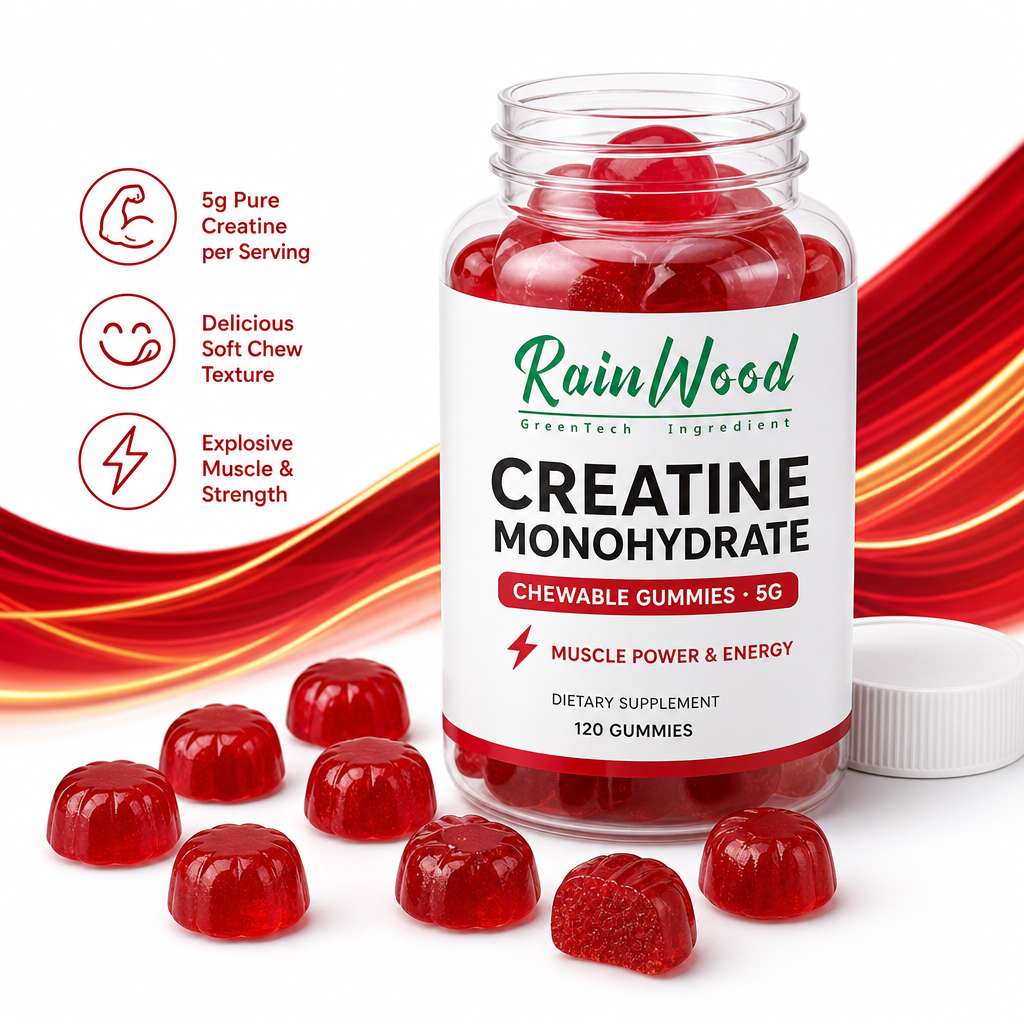
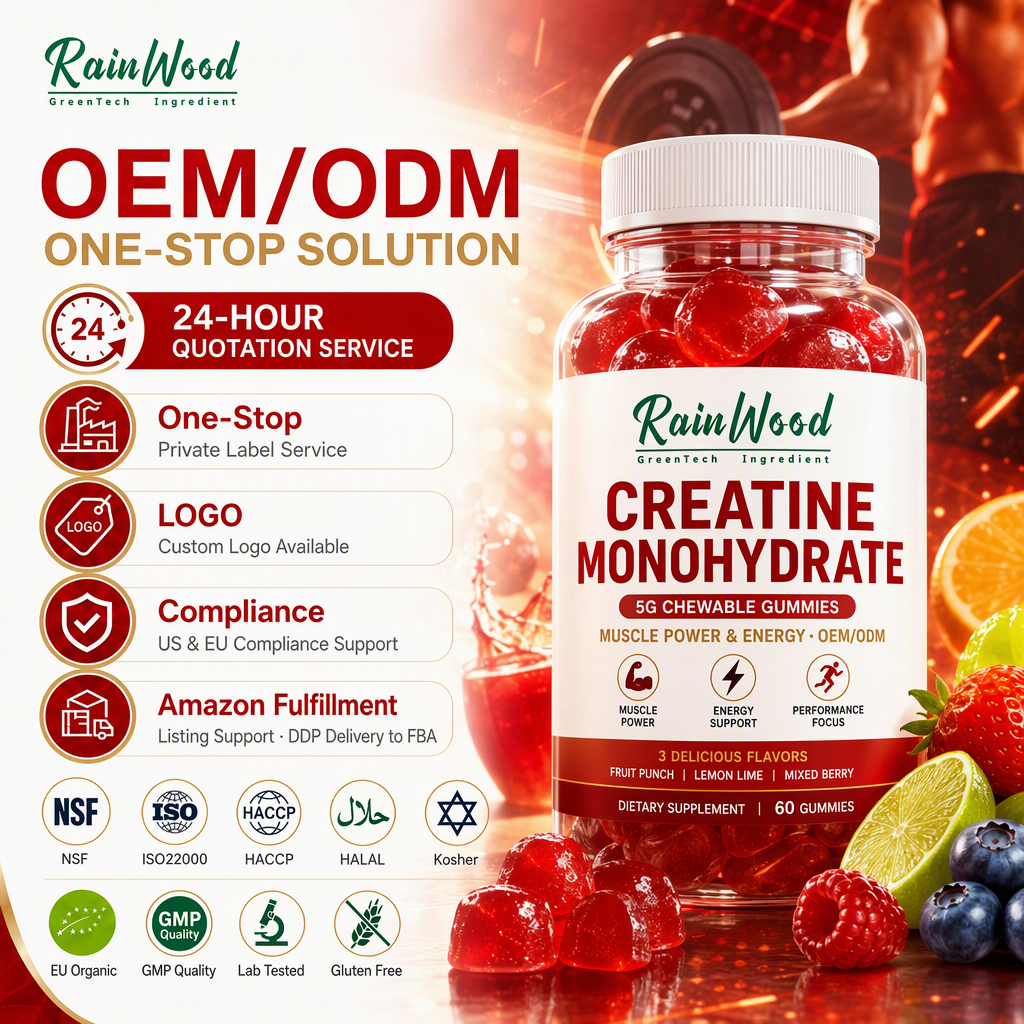
Creatine Gummies are a chewable supplement concept being evaluated for sports nutrition brands, private label supplement businesses, and e-commerce sellers. The proposed product focuses on serving-size clarity, fruit-flavored formulation options, packaging performance, and finished-product quality verification.
| Specification | Details |
|---|---|
| Product Name | Creatine Gummies |
| Product Category | Sports Nutrition Supplements |
| Dosage Form | Chewable Gummies |
| Active Ingredient | Creatine Monohydrate, pending confirmation |
| Target Daily Creatine Intake | 3–5 g as a preliminary development target |
| Creatine Content per Gummy | Pending formulation and testing |
| Serving Size | Pending prototype validation |
| Bottle Count | 60–90 gummies, proposed |
| Flavor Options | Fruit Punch, Lemon Lime, Berry, subject to development |
| Gummy Base | Pectin or gelatin, pending formulation |
| Sweetener System | Pending formulation |
| Packaging | Plastic bottle with optional outer carton |
| Shelf Life | Pending stability study |
| Quality Documentation | COA and finished-product test reports, subject to availability |
| Product Status | Formulation feasibility evaluation |
Creatine gummies offer an alternative to conventional creatine powders and capsules. Their chewable format, portable packaging, and potential flavor customization provide opportunities for sports nutrition brands developing differentiated supplement products.
For brands selling through Amazon and other e-commerce channels, accurate serving information is essential. The creatine content per gummy, number of gummies per serving, and total creatine content per serving should be clearly established before product labeling.
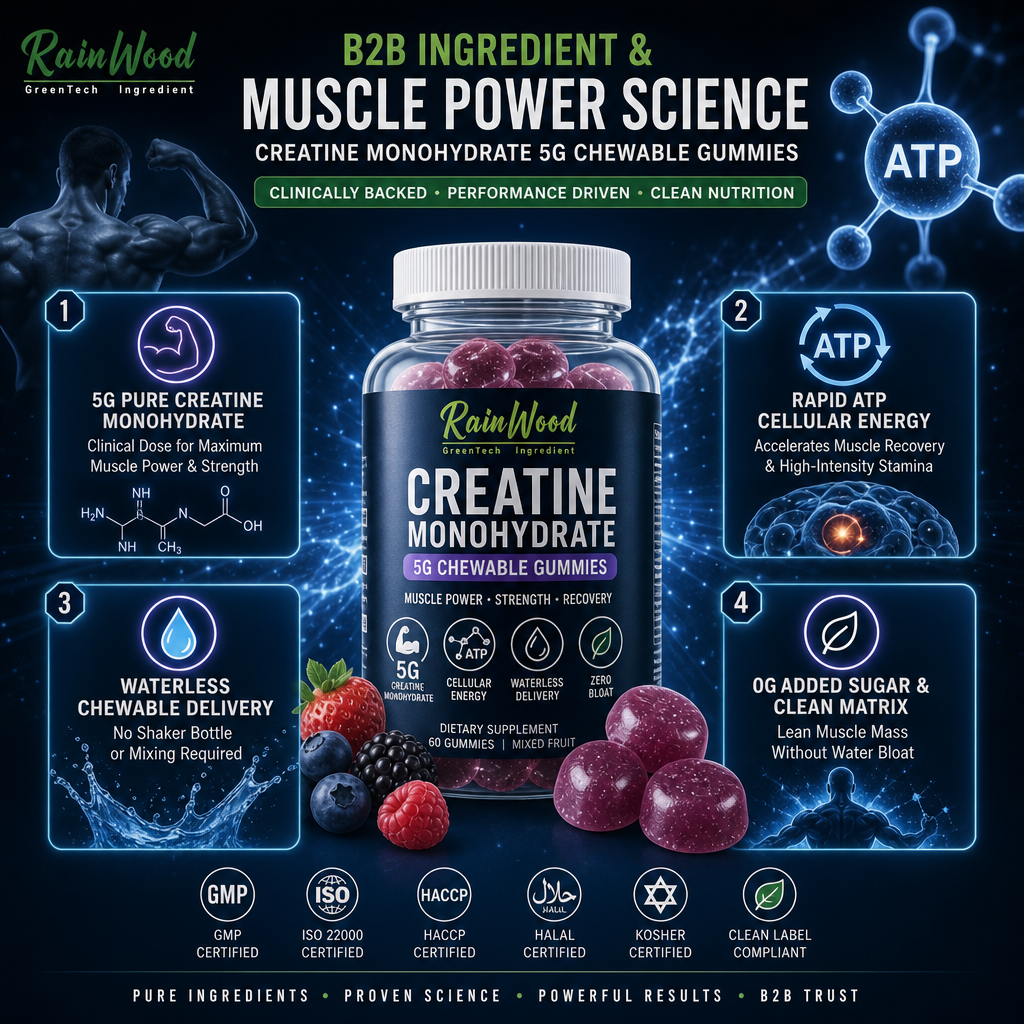
The formulation should balance the target daily creatine intake with gummy size, texture, flavor, and practical daily consumption. The actual amount of creatine per gummy must be confirmed through prototype development and analytical testing.
Fruit Punch, Lemon Lime, and Berry are proposed flavor directions. Final options depend on sensory evaluation, formulation compatibility, and manufacturing feasibility. Low-sugar or sugar-free formulations may be evaluated as separate development projects.
Plastic bottles with optional outer cartons are proposed packaging configurations. Moisture protection, seal integrity, physical stability, and shipping conditions should be evaluated before selecting the final packaging system.
| Quality Parameter | Recommended Evaluation |
|---|---|
| Creatine Content | Verify actual content using a validated analytical method |
| Content Uniformity | Evaluate consistency between gummies and production batches |
| Creatinine | Assess as a relevant degradation indicator where appropriate |
| Microbiological Quality | Establish applicable testing specifications |
| Physical Stability | Monitor texture, stickiness, deformation, and appearance |
| Moisture Control | Evaluate water activity and moisture changes |
| Packaging Performance | Assess seal integrity and moisture barrier performance |
| Shelf-Life Validation | Establish shelf life using stability studies |
| Label Verification | Confirm serving size, ingredient declarations, and nutritional information |
An alternative chewable format for brands expanding their creatine supplement portfolios.
A potential product development option for brands seeking customized flavor, bottle count, and packaging configurations.
A format concept that supports clear serving-size communication, portable packaging, and differentiated product positioning.
Clearly defined creatine content per gummy and per serving helps brands prepare accurate product labels and provide transparent product information.
A gummy format offers an alternative to powders and capsules for consumers who prefer chewable supplements.
Multiple flavor directions can be evaluated to support brand differentiation and target-market preferences.
Finished-product content testing and stability studies help establish appropriate specifications and support consistent product quality.
Packaging and formulation options may be evaluated according to confirmed manufacturing capabilities, order requirements, and project specifications.
Q1. How Much Creatine Does Each Gummy Contain?
The actual creatine content per gummy depends on the final formulation. It should be confirmed through prototype development and analytical testing before the serving size and label declarations are finalized.
Q2. How Many Gummies Are Required per Serving?
The serving size depends on the target daily creatine intake, gummy dimensions, formulation feasibility, and consumer convenience. The final number of gummies per serving should be established through product development.
Q3. How Is Creatine Stability Evaluated in Gummies?
Finished-product stability studies should evaluate creatine retention under defined storage conditions. Relevant factors include formulation pH, moisture, processing conditions, packaging performance, and storage temperature.
Q4. Can Low-Sugar or Sugar-Free Creatine Gummies Be Developed?
Low-sugar or sugar-free formulations may be evaluated as separate development projects. Feasibility depends on the sweetener system, gummy texture, flavor profile, stability, and applicable labeling requirements.
Q5. Can Creatine Gummies Be Customized for Private Label Brands?
Flavor options, bottle count, packaging configurations, and formulation requirements may be evaluated according to the project's needs and confirmed manufacturing capabilities.
Q6. What Quality Documents May Be Available?
Potential documentation includes raw material specifications, batch-specific Certificates of Analysis (COA), finished-product test reports, and stability data, subject to actual availability.
Q7. How Can Brands Confirm the Accuracy of Creatine Label Claims?
Brands should verify the actual creatine content using an appropriate analytical method and ensure that the results support the declared amount per gummy and per serving. Finished-product testing is important for accurate labeling and quality assurance.
 EN