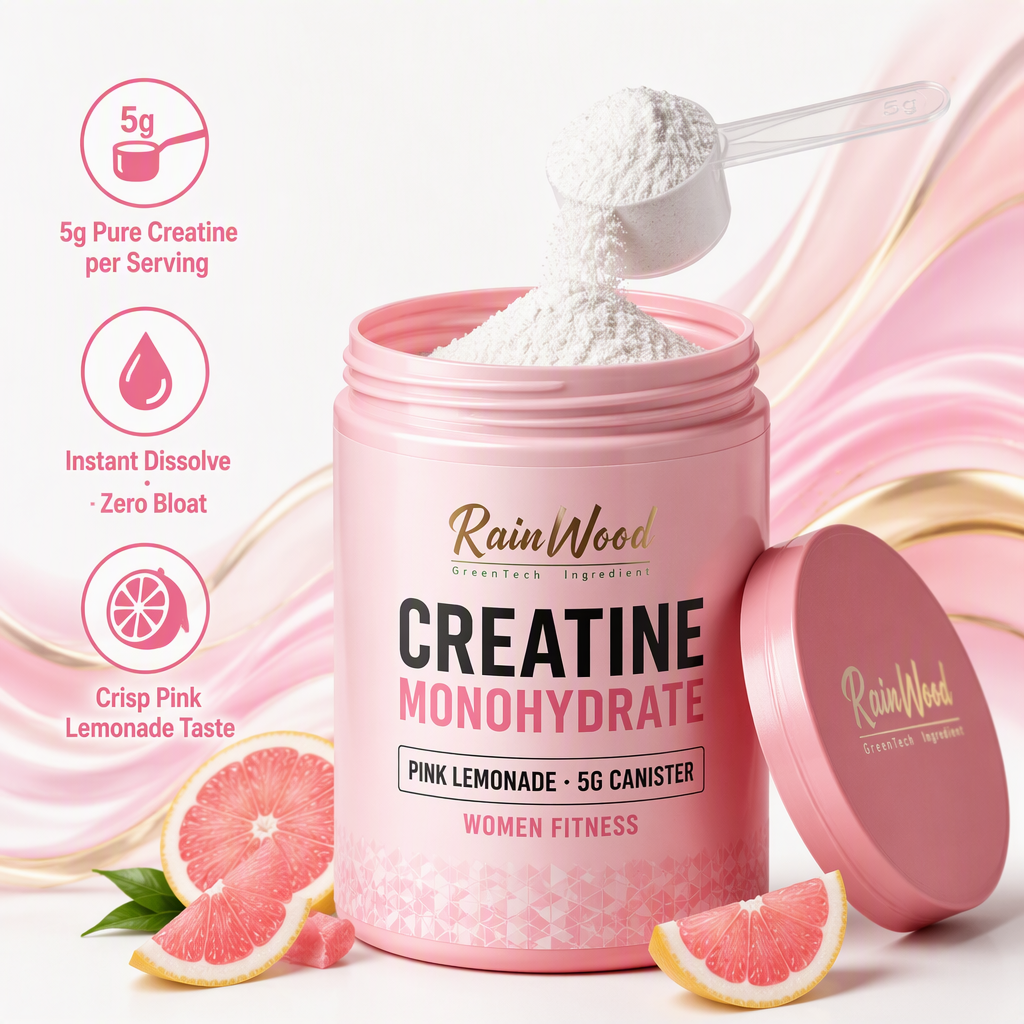
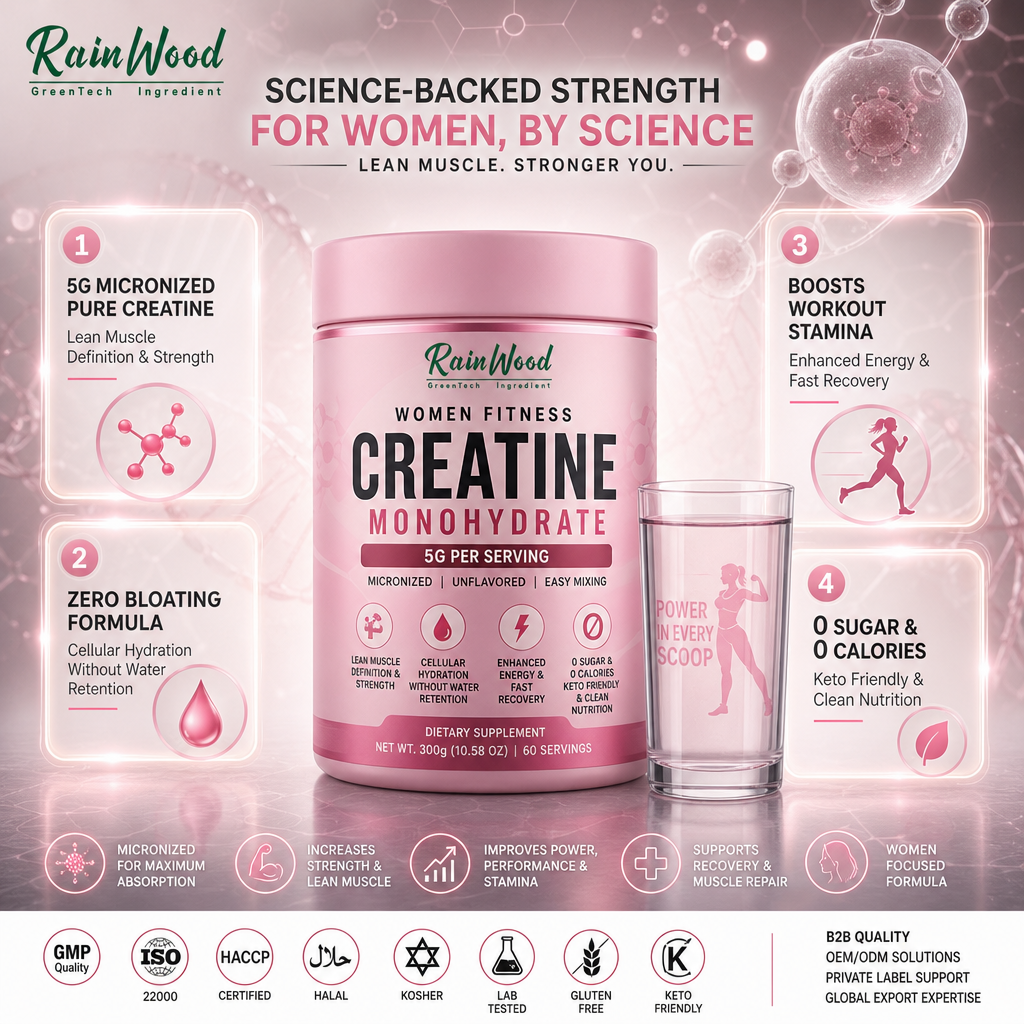
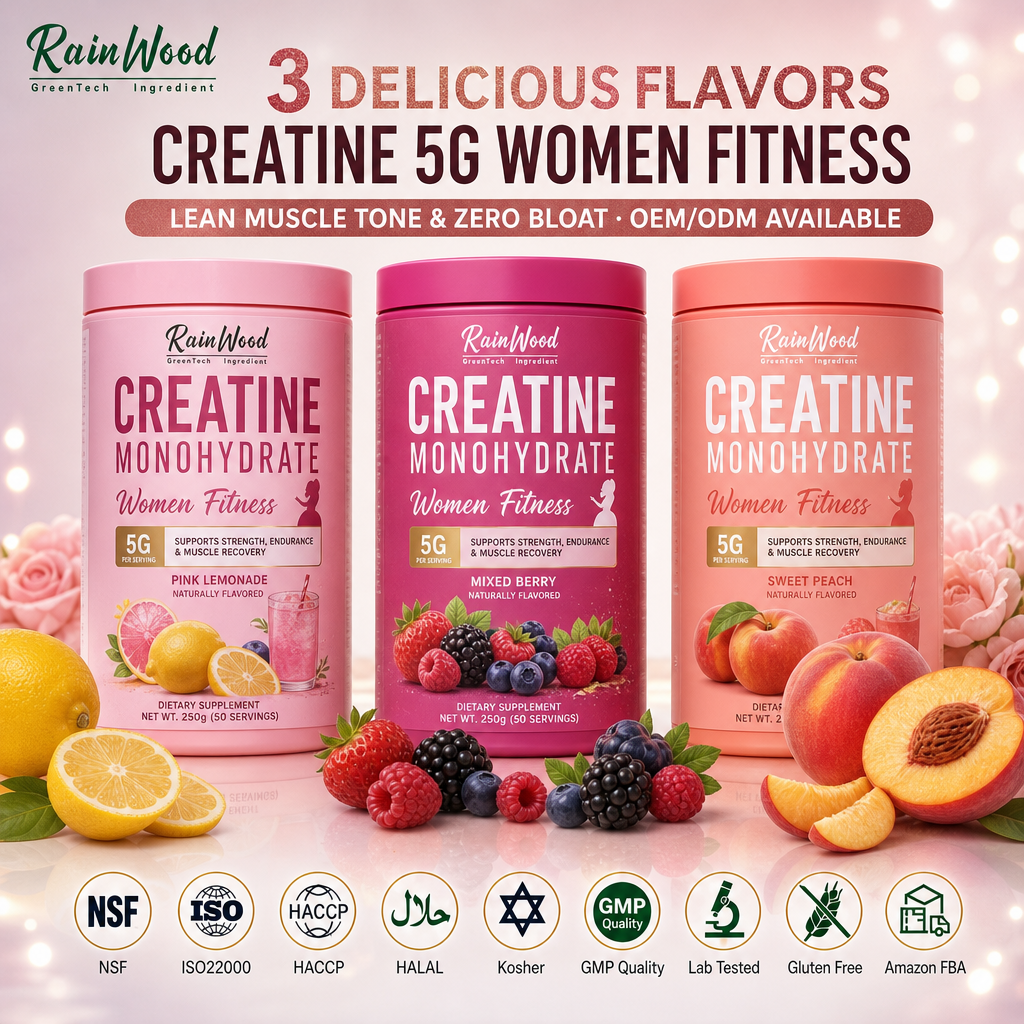
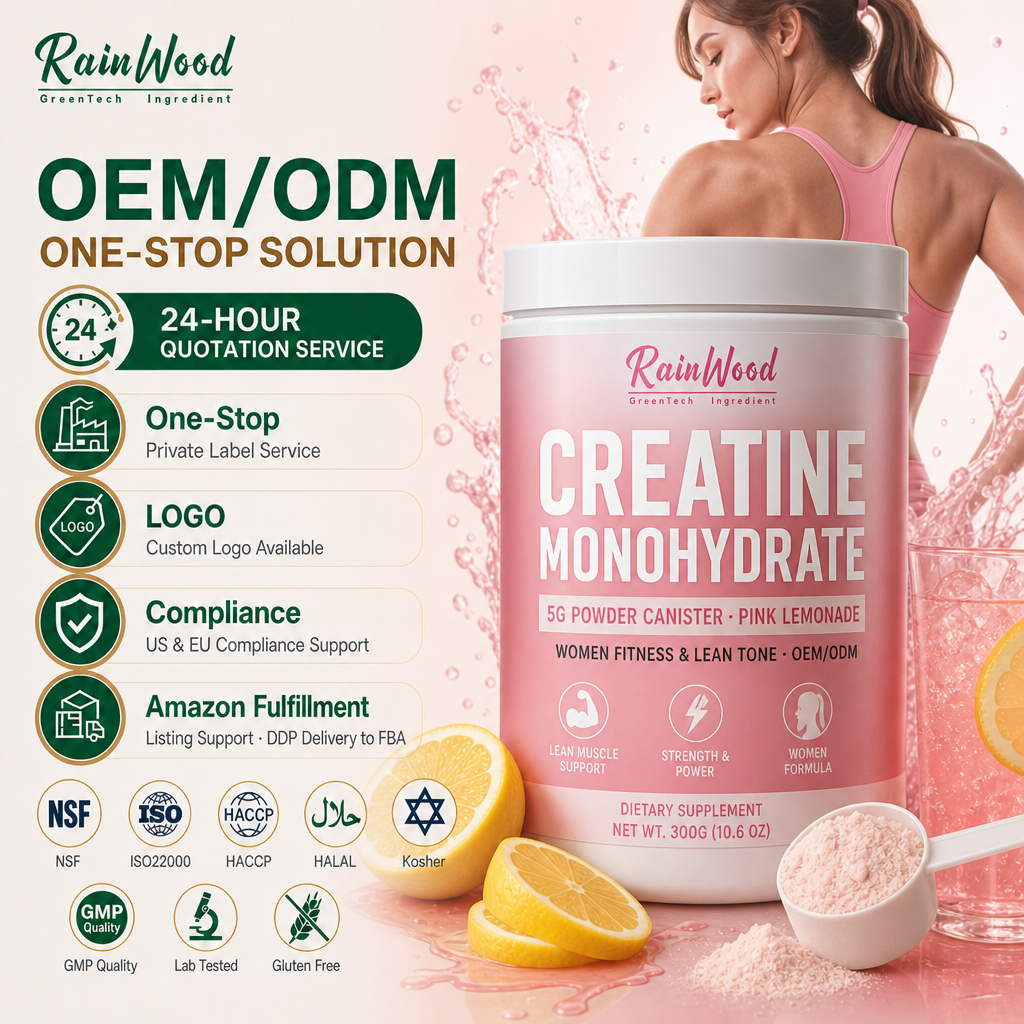
Flavored Creatine Monohydrate Powder is designed for sports nutrition brands seeking a convenient and enjoyable way to incorporate creatine into their product portfolios. Combining creatine monohydrate with a customizable flavor system, this powdered supplement is suitable for developing private label products for e-commerce, fitness, and active lifestyle markets.
With a target of 5 g creatine monohydrate per serving, customizable fruit flavor options, and flexible packaging concepts, this product provides a starting point for brands looking to develop differentiated creatine supplements for their target customers.
| Specification | Description |
|---|---|
| Product Name | Flavored Creatine Monohydrate Powder |
| Main Ingredient | Creatine Monohydrate |
| Target Active Ingredient | 5 g Creatine Monohydrate per Serving |
| Product Form | Flavored Powder |
| Suggested Serving Size | Approximately 6–8 g, subject to final formulation |
| Suggested Flavors | Lemon Lime, Forest Berry, Mango |
| Flavor System | Flavoring agents, acidulants, sweeteners, and optional processing aids, subject to formulation |
| Suggested Packaging | Sealed Supplement Tub with Scoop or Stand-Up Pouch |
| Suggested Net Weight | 360–480 g per Tub for a 60-Serving Concept; 300 g for Approximately 40–50 Servings |
| Target Market | Sports Nutrition Brands, Fitness Supplement Brands, Private Label Buyers, and E-commerce Sellers |
| Customization | Flavor, Sweetness, Serving Size, Net Weight, and Packaging Concepts, Subject to Feasibility |
Creatine monohydrate is a widely researched ingredient in sports nutrition. Flavored creatine powder combines this established ingredient with a fruit-inspired flavor system to create a product concept focused on ingredient specifications and consumer experience.
For brands selling through Amazon and other e-commerce channels, flavor acceptance, serving clarity, product consistency, and packaging convenience are important considerations during product development.
This product concept focuses on a clearly defined creatine serving, flexible flavor development, and packaging options that can be evaluated according to the brand's positioning and target market.
Different consumers have different flavor preferences. A balanced flavor system can help brands develop a distinctive product instead of competing solely on the price of unflavored creatine.
Potential flavor directions include:
Lemon Lime: A refreshing citrus profile with a balanced sweet-and-sour character.
Forest Berry: A mixed-berry profile designed for a familiar fruit-forward taste.
Mango: A tropical fruit profile for brands exploring sweeter, fruit-oriented options.
Sweetness, acidity, flavor intensity, and aftertaste can be evaluated during formulation development. Final flavor availability and performance depend on ingredient selection and sample testing.
The proposed formulation targets 5 g of creatine monohydrate per serving. The total serving weight may be approximately 6–8 g, depending on the flavor system and other formulation ingredients.
The difference between total powder weight and creatine monohydrate content should be clearly reflected in product specifications and labeling.
For example, a 360 g product containing 60 servings would have a total serving weight of 6 g. A target of 5 g creatine monohydrate would leave approximately 1 g per serving for the remaining formulation ingredients. This is a formulation-planning example and must be verified during product development.
Packaging selection influences product presentation, storage, shipping, and the overall customer experience.
Potential options include:
Sealed tubs with measuring scoops.
Stand-up pouches for alternative packaging concepts.
Different net weights and serving counts based on the final formulation.
Brand-specific label layouts and flavor identification.
Packaging materials, moisture protection, closure performance, and scoop accuracy should be evaluated before finalizing a commercial product.
For B2B buyers, ingredient specifications and product documentation are important parts of supplier evaluation.
Before commercial production, buyers should confirm the creatine monohydrate specification, applicable identity and assay testing, finished-product quality requirements, microbiological criteria, and packaging compatibility.
A lot-specific Certificate of Analysis (COA), ingredient documentation, and other technical records should be requested and confirmed according to the actual product and available testing arrangements.
A target of 5 g creatine monohydrate per serving provides a clear starting point for product development. Serving size, total powder weight, and servings per container can be coordinated to support consistent product specifications and transparent labeling.
Lemon lime, forest berry, and mango provide potential starting points for flavor development. Sweetness, acidity, flavor intensity, and aftertaste can be evaluated to help brands select a suitable sensory profile for their target audience.
Flavor acceptance, powder texture, dispersion, and ease of preparation can affect how consumers experience a powdered supplement. These attributes should be assessed through sample testing and, where appropriate, structured sensory evaluation.
Tub and pouch formats offer different options for product presentation and packaging development. Final packaging selection can take into account serving count, moisture protection, shipping requirements, and the brand's visual identity.
For brands planning to enter or expand within the sports nutrition category, a well-defined product brief can help align ingredient specifications, flavor targets, packaging, and labeling requirements before commercial production.
Any private label, OEM, formulation, or packaging services should be confirmed according to the supplier's actual capabilities and project requirements.
| Application | Product Concept | Key Development Considerations |
|---|---|---|
| Sports Nutrition Supplements | Flavored Creatine Monohydrate Powder | Creatine Content, Flavor Acceptance, and Serving Clarity |
| Amazon Private Label Products | Branded Creatine Powder in Tubs | Packaging, Label Accuracy, Differentiation, and Customer Experience |
| Fitness Supplement Portfolios | Fruit-Flavored Creatine Product Lines | Flavor Variety, Sweetness Balance, and Consistent Specifications |
| E-commerce Supplement Brands | Multiple Net Weight and Serving-Count Options | Product Positioning, Packaging Dimensions, and Shipping Suitability |
The proposed product concept targets 5 g of creatine monohydrate per serving. The final amount should be confirmed through the approved formulation and product specifications.
Serving weight refers to the total weight of the powder consumed in one serving. Creatine content refers specifically to the amount of creatine monohydrate in that serving. A flavored product may also contain flavoring agents, sweeteners, acidulants, and other formulation ingredients.
Lemon lime, forest berry, and mango are proposed starting points. Additional flavors may be evaluated according to the target market, formulation feasibility, and sensory test results.
Sweetness, acidity, and flavor intensity can be considered during formulation development. Final adjustments depend on the selected flavor system, ingredient compatibility, and sample evaluation.
Complete dissolution should not be assumed without testing. Creatine monohydrate may remain partially suspended under some mixing conditions. Dispersion and sedimentation should be evaluated using the intended serving size, water volume, temperature, and mixing method.
The proposed concepts include sealed tubs with measuring scoops and stand-up pouches. Actual availability, packaging materials, minimum order quantities, and customization options should be confirmed before ordering.
Buyers should confirm the creatine monohydrate specification, amount per serving, total serving weight, flavor system, ingredient list, quality testing, packaging format, net weight, serving count, shelf-life data, and applicable market labeling requirements.
The product concept is intended for evaluation by private label and e-commerce brands. OEM services, custom formulation, packaging customization, minimum order quantities, and production timelines must be confirmed with the supplier.
Depending on the product and applicable requirements, buyers may request a product specification, lot-specific COA, ingredient documentation, relevant laboratory testing, and supporting quality records. Availability and testing scope should be confirmed for the actual product.
Serving count is calculated by dividing the total net weight by the final serving weight. For example, 360 g at 6 g per serving provides 60 servings. The final label should match the approved formula and actual net quantity.

 EN