 EN

Executive Summary & B2B Formulation Guidance
Choose the right CoQ10 format by dose, solubility, stability, cost, and channel. Avoid approving a package that cannot protect the finished product.
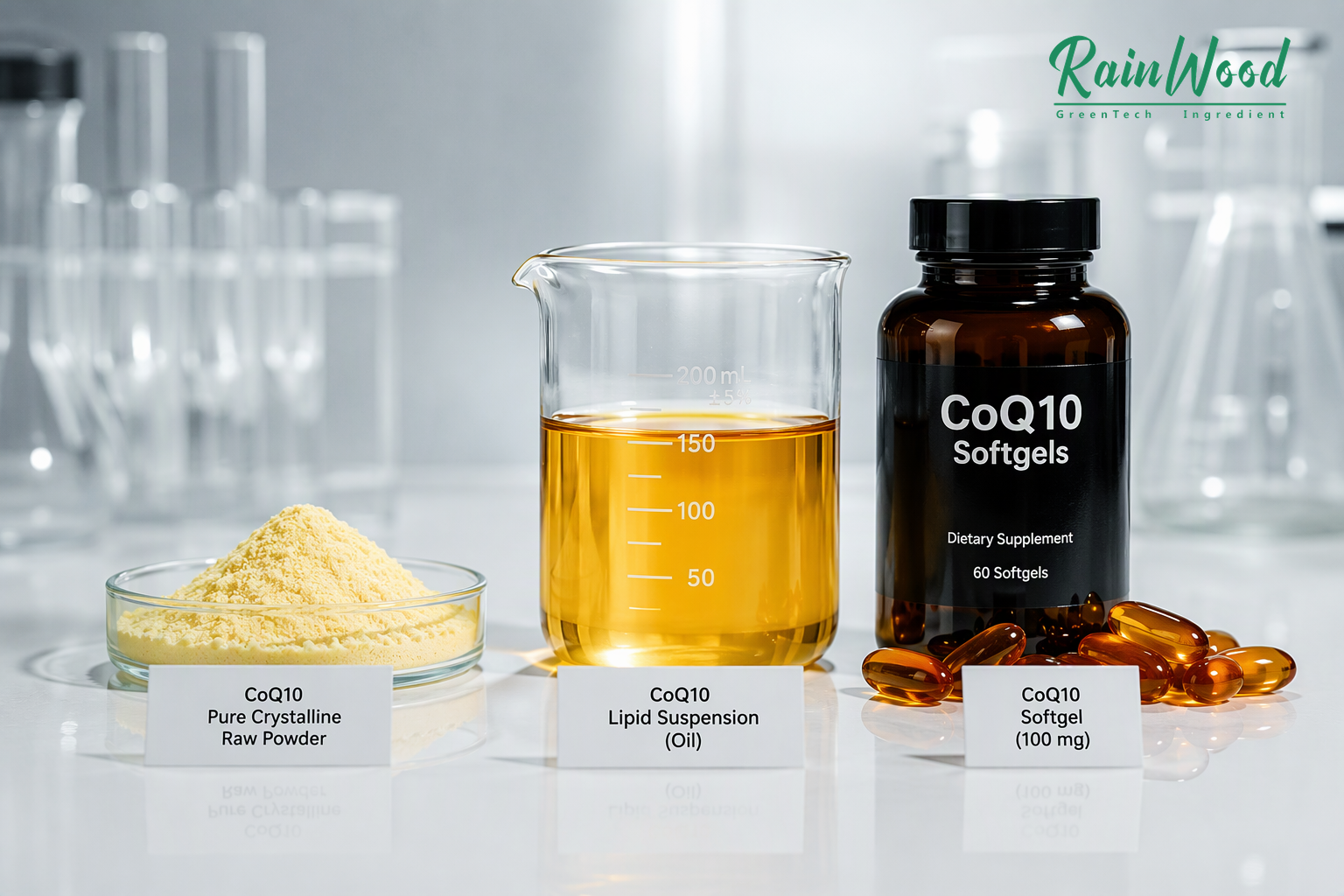
Figure 1: Analytical Comparison of CoQ10 Physical Formats: Pure Crystalline Raw Powder, Lipid Oil Suspension, and Amber Softgels
The cheapest CoQ10 raw material is not automatically the cheapest product to sell. A powder-filled hard capsule may look simple until the fill weight, flow, and absorption story become difficult. An oil softgel may look premium until oxidation, shell compatibility, and shipping heat become the problem. A powder sachet may offer convenience while creating dispersion and moisture questions. The format must solve a buyer problem without creating a larger quality problem.
Format is part of the product specification
CoQ10 is lipophilic and poorly soluble in water. That fact affects how a powder, oil suspension, softgel, tablet, or dispersible system behaves in production and use. The same active amount can have very different processing requirements depending on the carrier and package.
Start with the channel: Amazon bottle, practitioner softgel, travel sachet, tablet line, gummy concept, or bulk ingredient. Then define dose, daily count, sensory expectation, shelf life, shipping route, and target margin. Use the [INTERNAL LINK -> CoQ10 Ingredient Identity Review] before choosing a format so the form and carrier are not left ambiguous.
Powder-filled hard capsules: simple appearance, real process risks
Hard capsules can protect taste and reduce the need for a liquid fill, but crystalline CoQ10 powder may have poor flow or high bulk density. A high dose may require a large capsule or multiple units. The powder can segregate from carriers, bridge in the hopper, or show fill-weight variation. The finished unit still needs content uniformity and stability evidence.
Ask for particle size, bulk density, flow, moisture, and compatibility with the intended excipients. Run a pilot with the commercial material rather than a substitute powder. Test beginning, middle, and end of the filling run. The [INTERNAL LINK -> CoQ10 Capsule Capacity and Dose Math Blog] explains why a quoted active dose must be checked against real capacity.
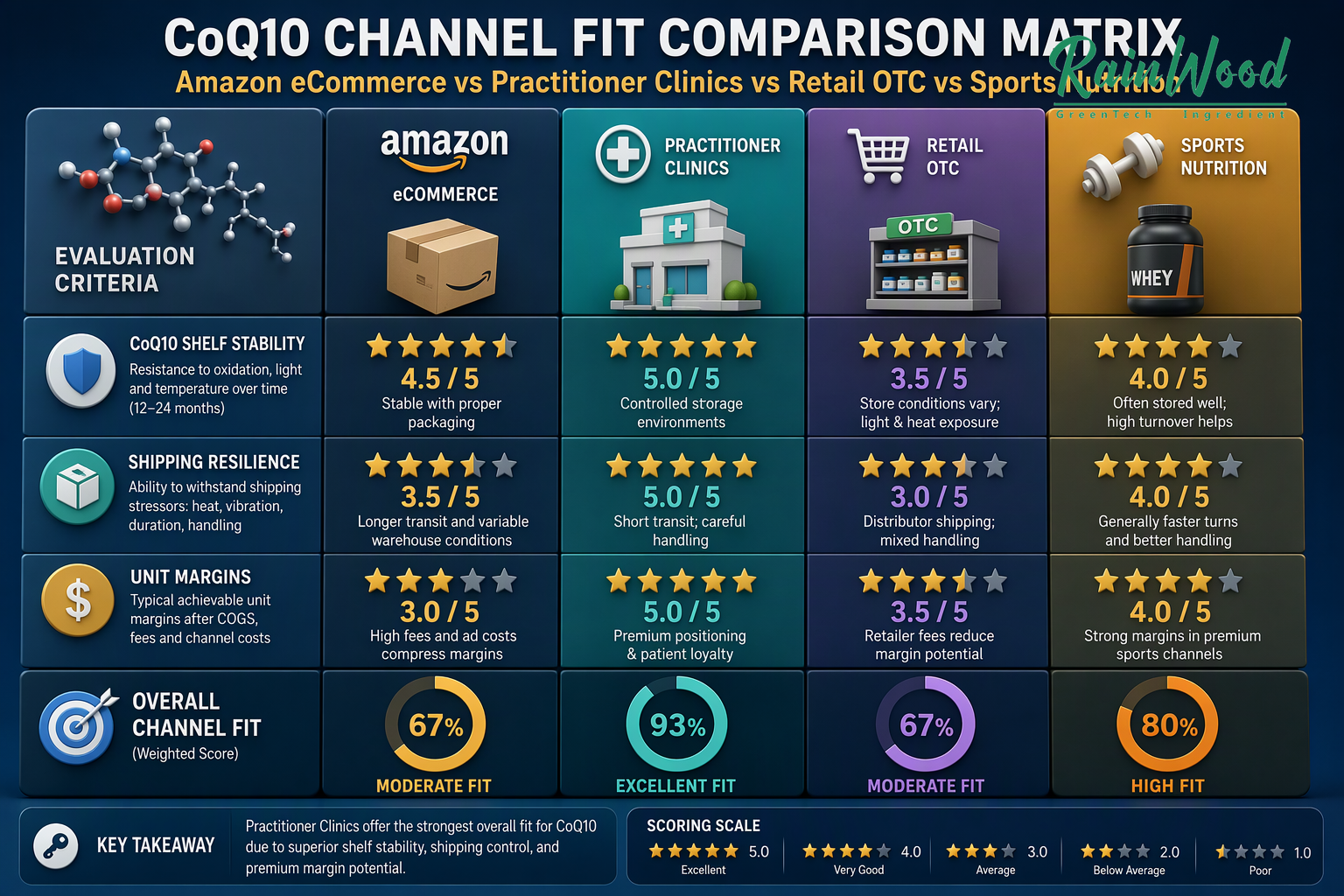
Figure 2: 3D Channel-Fit Evaluation Matrix: Amazon eCommerce vs Practitioner Clinic vs Retail OTC vs Sports Nutrition
Oil softgels: a strong format with a strong control burden
Oil-based softgels can dissolve or disperse CoQ10 in a lipid carrier and are common in the market. The carrier oil, antioxidant system, fill viscosity, shell, seam, and package all matter. A softgel that passes visual inspection can still show leakage, settling, oxidation, or content variation if the fill is not uniform.
Ask what the oil contributes to the label and whether the carrier is compatible with the target market. Review peroxide or oxidation controls where applicable, shell compatibility, fill weight, seam integrity, and accelerated stability. Do not use a human bioavailability study of one proprietary softgel as proof for a different oil, dose, or finished product.
Powder sachets and dispersible products need a real use test
A sachet can make a daily dose convenient, but “mixes in water” is not a complete specification. Measure wetting, dispersion time, sediment, taste, color, and dose recovery after mixing. A product that floats, clumps, or leaves an oily film may create returns even if the raw assay is correct.
Define film barrier, seal strength, moisture limit, storage, and shipping conditions. If the powder is a premix, confirm the active amount per sachet and the uniformity across the run. The [INTERNAL LINK -> CoQ10 Water-Dispersible Formulation Blog] should be connected to the exact carrier and process, not used as a generic absorption promise.
Compare format economics by released serving
Build a scorecard with active amount per unit, units per serving, raw-material input, process yield, package cost, testing, stability, shipping weight, MOQ, lead time, and expected complaint type. Add the customer's daily effort: swallow, count, mix, refrigerate, or carry. A format with a higher unit cost may produce a better margin if it reduces returns and creates a clearer usage routine.
Normalize the comparison to released CoQ10 per daily serving. Include overage and rejected units. If a softgel requires an oil fill and a higher minimum order, the cash risk may exceed the apparent raw-material savings of a powder capsule. The buyer should see the full commercial consequence before artwork.
How RainwoodBio can support a format comparison
RainwoodBio publishes OEM options for hard capsules, softgels, tablets, and powder sachets, along with requirement confirmation, production control, testing and release, packaging, logistics, and traceability. For a CoQ10 project, the relevant capability is the ability to compare the active form and dose against the proposed format before the formula is locked.
Ask for a format feasibility review using the target dose, CoQ10 form, package, market, quantity, and timeline. Review the [INTERNAL LINK -> RainwoodBio OEM Format Options] and [INTERNAL LINK -> RainwoodBio Quality and Release Process].
Format decision gate
Before selecting a format, confirm:
- active form and target amount per serving;
- powder flow or oil-fill behavior;
- unit capacity and number of units per day;
- taste, odor, color, dispersion, or swallowability;
- oxygen and moisture protection;
- package, seal, and shipping exposure;
- finished-product assay and uniformity plan;
- stability evidence in the intended market package;
- MOQ, lead time, and landed cost.
Send RainwoodBio your formula brief, raw-material COA, target market, package idea, quantity, and customer channel for a [INTERNAL LINK -> CoQ10 Format Feasibility Review]. The useful answer is a format choice with documented trade-offs, not a generic list of available dosage forms.
Approve the format with a first-article report
The first-article report should state the commercial CoQ10 lot, form, carrier, equipment, package, active target, fill or unit weight, processing recovery, finished assay, and observed defects. Add a short customer-use test for taste, swallowing, mixing, or portability where relevant. This report converts a format conversation into evidence that procurement and marketing can both use.
If the first article fails, decide whether to change the material, carrier, dose, equipment, package, or customer promise. Do not release a weaker product simply because artwork or a launch date is fixed. A documented pilot is often less expensive than a return campaign or a forced relabeling after launch.
Send the raw COA, target format, dose, package, market, quantity, and pilot concern for a [INTERNAL LINK -> CoQ10 Format Contact Us Page] review. Include the target retail price and daily serving so the recommendation is tested against actual margin.
Frequently asked questions
Is a softgel always more effective than a hard capsule?
No. Formulation, carrier, dose, test design, and the exact finished product determine performance; the shell alone is not proof.
Can the same CoQ10 powder be used in capsules and sachets?
Not automatically. Flow, dispersion, dose uniformity, moisture, flavor, and package requirements may differ.
Is a higher-cost format always more premium?
No. Premium positioning should be supported by a clear customer benefit and evidence that the selected format delivers it consistently.
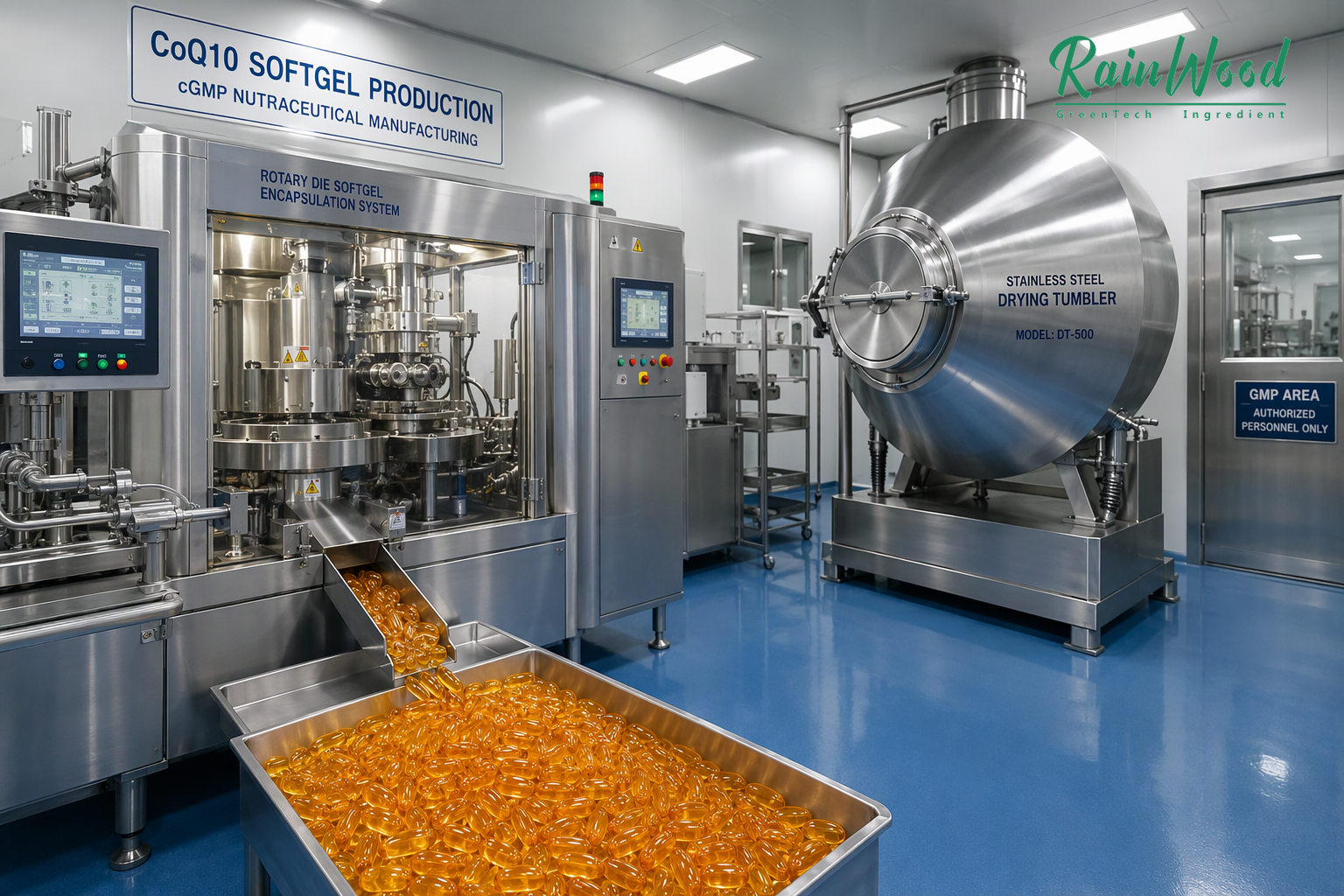
Figure 3: Industrial Rotary Die Softgel Encapsulation and Drying Tumbler Line Operating in cGMP Manufacturing Cleanroom
References
- Bioavailability of CoQ10 Supplements Depends on Carrier Lipids and Solubilization: https://pubmed.ncbi.nlm.nih.gov/30153575/
- Comparative Bioavailability of Different CoQ10 Formulations: https://pmc.ncbi.nlm.nih.gov/articles/PMC7146408/
- Physicochemical Characterization of Water-Soluble CoQ10 Formulations: https://www.sciencedirect.com/science/article/pii/S0378517308005231
- RainwoodBio OEM service: https://www.rainwoodbio.com/oem
*This article is for B2B procurement and educational purposes. Product identity, formulation, safety, labeling, and regulatory requirements must be confirmed for the exact ingredient, finished format, and destination market.*
Explore RainwoodBio CoQ10 & Custom Formulation Capabilities
- Custom CoQ10 Hard Capsules & High-Potency Blends – Precision cGMP encapsulation for CoQ10 with PQQ, L-Carnitine, and Vitamin E co-factors.
- High-Absorption CoQ10 Softgels & Lipid Suspensions – MCT/Olive oil carrier systems with natural tocopherol stabilization.
- Water-Soluble CoQ10 Micro-Encapsulated Powders & Stick Packs – Enhanced bioavailability single-serve sachets and beverage-grade premixes.
- OEM / ODM Contract Manufacturing Services – End-to-end formulation development, pilot batch scaling, and US/EU regulatory compliance dossiers.
- Contact RainwoodBio Technical Sales – Request CoA, HPLC analytical protocols, pilot stability samples, or commercial quotation.
Table of Contents
- Format is part of the product specification
- Powder-filled hard capsules: simple appearance, real process risks
- Oil softgels: a strong format with a strong control burden
- Powder sachets and dispersible products need a real use test
- Compare format economics by released serving
- How RainwoodBio can support a format comparison
- Format decision gate
- Approve the format with a first-article report
- Frequently asked questions
- References