 EN
Executive Summary & B2B Formulation Guidance
Two CoQ10 HPLC results may not be comparable. Check standards, redox separation, sample preparation, and reporting basis before approving a lot.
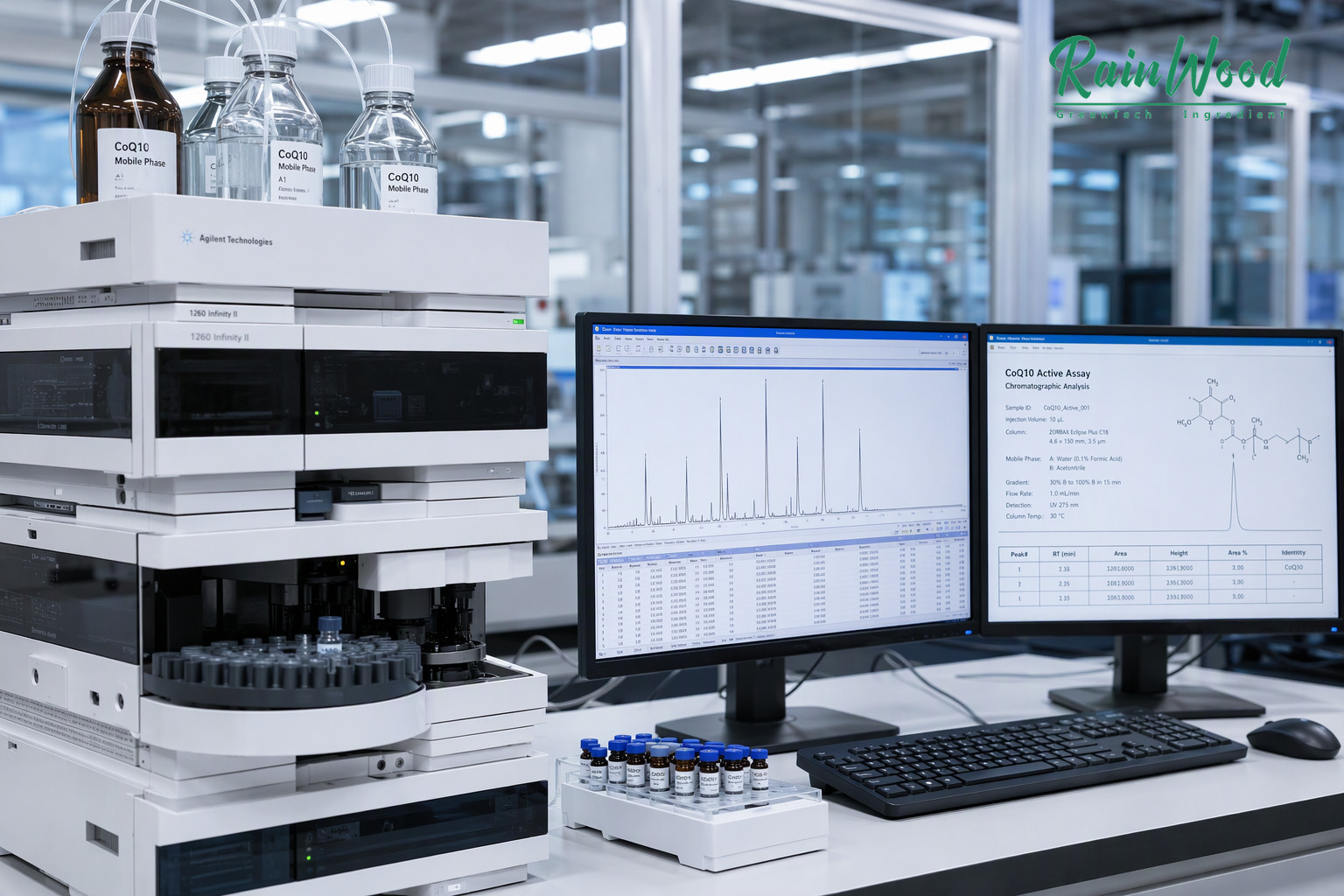
Figure 1: Modern Analytical HPLC Chromatography Instrumentation for CoQ10 Active Assay and Peak Purity Analysis
Supplier A reports CoQ10 at 99.2%. Supplier B reports 98.7%. The numbers look close enough to compare, but the methods may be answering different questions. One may report total CoQ10 after conversion; another may separate ubiquinone and ubiquinol; a third may use a different sample preparation or standard. Without method alignment, a price comparison based on the number is a guess.
HPLC is a technique, not a universal specification
High-performance liquid chromatography can be a powerful tool for CoQ10 content and form analysis, but “HPLC tested” is not a complete method. The buyer needs the column, mobile phase, detector, reference standard, sample preparation, run time, system suitability, calculation, and reporting basis. If a result is used for release, the method must be fit for the exact material and matrix.
The [INTERNAL LINK -> CoQ10 COA Gap Review] should start by copying the method fields from each supplier. If the fields do not align, classify the numbers as not directly comparable until a method bridge is completed.
Redox separation changes the question
Ubiquinone and ubiquinol are interconvertible forms. Some methods distinguish them; some report total CoQ10; some may convert one form before measurement. A high total result does not prove that a product sold as ubiquinol still contains the required reduced form. A form-specific claim requires form-specific evidence.
Ask whether the method measures the declared form, the sum of both forms, or a calculated result. Ask how oxidation or reduction is controlled during sample preparation. If a sample can change before injection, the laboratory may report a result that reflects handling rather than the original product.
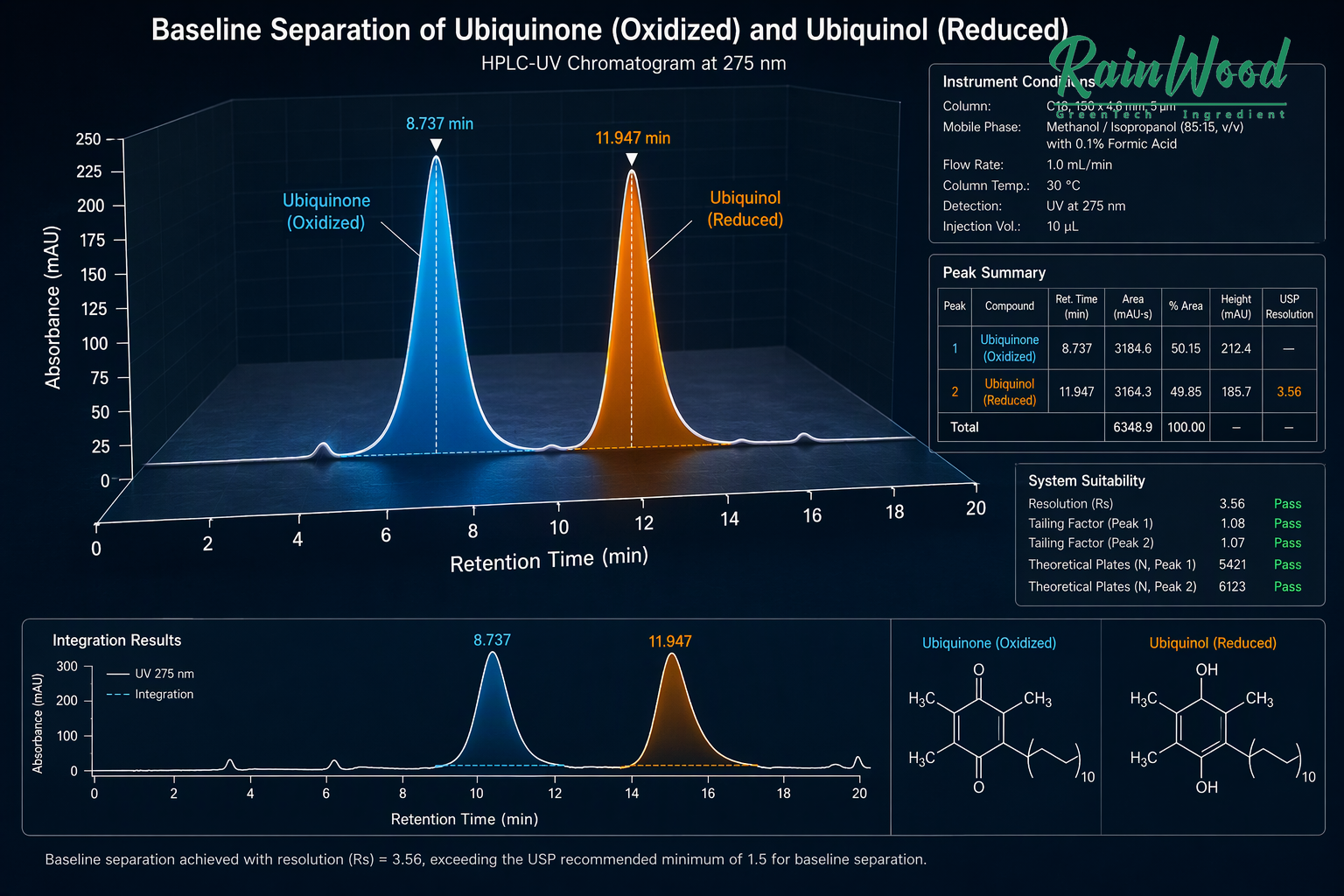
Figure 2: 3D Chromatogram Visualization: Baseline Separation of Ubiquinone (Oxidized) and Ubiquinol (Reduced) Peaks
Standard and basis can change the reported percentage
Results may be reported on an as-is basis, dry basis, or corrected for purity of the reference standard. Moisture, carrier, and dilution can change the calculation. A powder premix and a pure crystalline powder cannot be compared with the same denominator unless the active basis is clear.
Record the sample mass, dilution, standard purity, response factor, and calculation. If the supplier reports “99%” without explaining whether it is active content or assay purity, request clarification before using the result in label math. The [INTERNAL LINK -> CoQ10 Label Math and Dose Calculator] should reference the same basis as the release COA.
Method suitability depends on the finished matrix
A raw powder dissolved in a laboratory solvent is not the same as CoQ10 in oil, a softgel fill, a compressed tablet, a gummy, or a sachet blend. Excipients can affect extraction, recovery, filtration, and peak response. A raw-material method may need adaptation or validation for the finished product.
Ask the laboratory whether the method was used for the exact matrix and whether recovery, precision, specificity, linearity, and stability were evaluated. Do not assume that an instrument name proves that the finished product can be released with the same method.
Method bridges prevent false supplier disputes
When two laboratories report different results, first compare sample identity, storage, sampling, method, standard, and calculation. A difference does not automatically prove fraud or a bad lot. It may show that the methods are not measuring the same property. A retained sample tested by both methods can help determine whether the results are systematically different.
Define acceptance rules before testing. Decide which method controls the purchase order, when an independent confirmation is required, how a retest is handled, and who pays for it. Keep the method version with the specification. A supplier change from one internal method to another should trigger change control.
A practical method-comparison table
For each supplier, record:
- analyte: ubiquinone, ubiquinol, or total CoQ10;
- sample matrix and preparation;
- reference standard and purity correction;
- chromatographic separation and detector;
- calibration and calculation basis;
- recovery, precision, and system suitability;
- reporting units and minimum specification;
- laboratory identity and method version;
- finished-product applicability.
This table is more useful than collecting several COAs with the same company logo. It tells procurement whether a high number is comparable and tells quality which document should control release.
How RainwoodBio can support method alignment
RainwoodBio publishes testing and release, requirement confirmation, documentation, and traceability within its project workflow. For CoQ10, the buyer should request a method-alignment package that connects the raw-material method to the finished format and target market. The exact method, laboratory, and batch evidence still need to be confirmed for the project.
RainwoodBio lists hard capsules, softgels, tablets, and powder sachets. The same CoQ10 method may not answer the same question in each matrix, so use the [INTERNAL LINK -> CoQ10 OEM Format Comparison] and [INTERNAL LINK -> RainwoodBio Quality and Release Process] when defining the release plan.
Approval gate before comparing prices
Do not compare supplier prices by HPLC number until you know that the numbers share the same analyte, basis, method suitability, and lot status. If they do not, compare the cost of the missing evidence as part of the landed product cost. The cheaper quote may require a new method, retest, or finished-product study that the higher quote already includes.
Send two COAs, both method descriptions, the target specification, format, market, and label claim for a [INTERNAL LINK -> CoQ10 HPLC Method Bridge Review]. The requested output is a comparability decision, not a declaration that one laboratory is wrong.
Put method ownership into the quality agreement
The quality agreement should name the controlling method, laboratory, standard, reporting basis, retest procedure, and change-notification requirement. If a supplier changes the column, detector, sample preparation, or calculation, the buyer should receive notice before the new result becomes a release number. This prevents a method change from appearing as a mysterious shift in supplier performance.
For a finished product, identify who owns method suitability and who keeps the raw chromatograms or supporting records. A product page does not need every laboratory detail, but the quality file should be able to explain how the declared number was generated. Clear ownership reduces disputes and shortens the investigation when two COAs disagree.
Send two COAs, method descriptions, the target specification, format, market, and current quotation for a [INTERNAL LINK -> CoQ10 HPLC Contact Us Page] method-bridge review.
Frequently asked questions
Does the same HPLC result mean the same product?
No. The analyte, method, standard, basis, and matrix must be comparable.
Can HPLC prove CoQ10 identity by itself?
It can support identity and content when the method is suitably specific, but the full evidence package and reference standard still matter.
Should finished softgels be tested by the raw-powder method?
Only when the method is shown to be suitable for the finished matrix or a qualified adaptation is used.
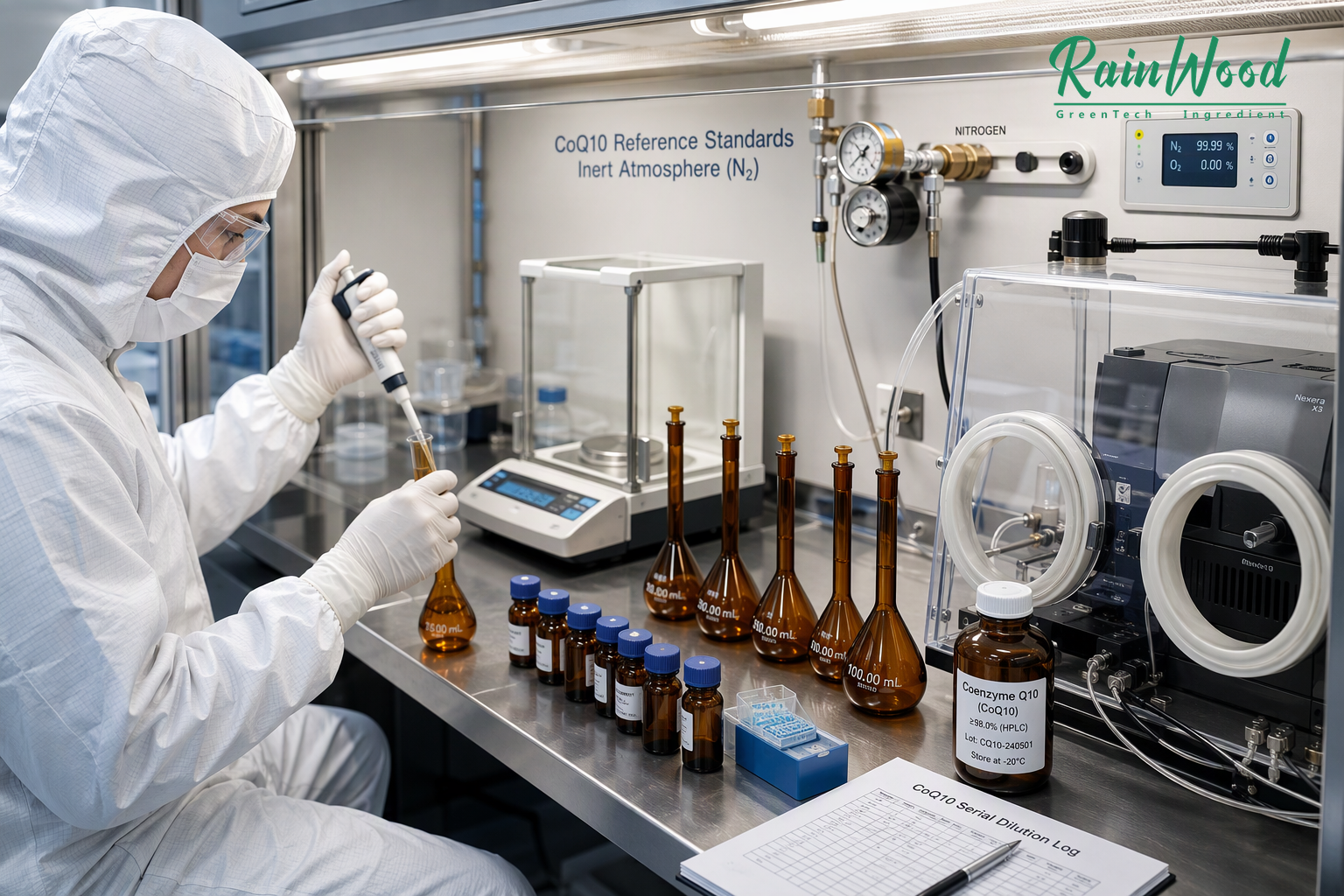
Figure 3: Senior Analytical Chemist Preparing CoQ10 Reference Standard Solutions in Amber Volumetric Flasks Under Inert Atmosphere
References
- Stability of Reduced and Oxidized CoQ10 in Finished Products: https://pubmed.ncbi.nlm.nih.gov/33673604/
- Quality Control Assessment of Commercial CoQ10 Supplements: https://pmc.ncbi.nlm.nih.gov/articles/PMC2170950/
- Comparative Bioavailability of CoQ10 Formulations: https://pubmed.ncbi.nlm.nih.gov/30153575/
- RainwoodBio homepage: https://www.rainwoodbio.com/
*This article is for B2B procurement and educational purposes. Analytical, identity, safety, labeling, and regulatory requirements must be confirmed for the exact ingredient, matrix, finished product, and destination market.*
Explore RainwoodBio CoQ10 & Custom Formulation Capabilities
- Custom CoQ10 Hard Capsules & High-Potency Blends – Precision cGMP encapsulation for CoQ10 with PQQ, L-Carnitine, and Vitamin E co-factors.
- High-Absorption CoQ10 Softgels & Lipid Suspensions – MCT/Olive oil carrier systems with natural tocopherol stabilization.
- Water-Soluble CoQ10 Micro-Encapsulated Powders & Stick Packs – Enhanced bioavailability single-serve sachets and beverage-grade premixes.
- OEM / ODM Contract Manufacturing Services – End-to-end formulation development, pilot batch scaling, and US/EU regulatory compliance dossiers.
- Contact RainwoodBio Technical Sales – Request CoA, HPLC analytical protocols, pilot stability samples, or commercial quotation.
Table of Contents
- HPLC is a technique, not a universal specification
- Redox separation changes the question
- Standard and basis can change the reported percentage
- Method suitability depends on the finished matrix
- Method bridges prevent false supplier disputes
- A practical method-comparison table
- How RainwoodBio can support method alignment
- Approval gate before comparing prices
- Put method ownership into the quality agreement
- Frequently asked questions
- References