 EN

Executive Summary & B2B Formulation Guidance
Manage nattokinase color, odor, soy-source, allergen, package, and customer complaint risks with a practical release plan.
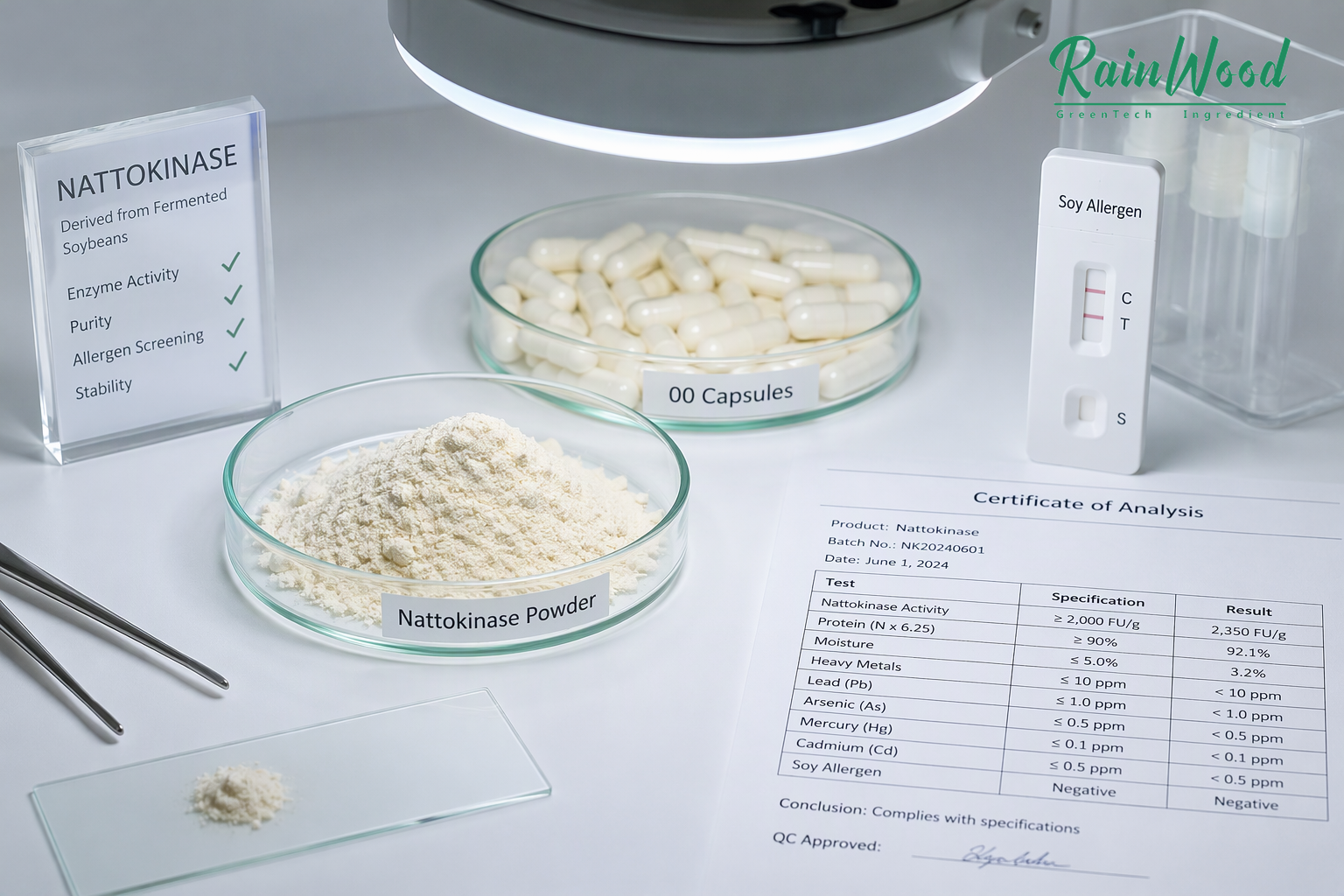
Figure 1: Analytical Sensory Testing Laboratory Setup with Nattokinase Powder, Enteric Capsules, and Soy Allergen Test Strips
A strange odor is not automatically a failed lot
A customer opens a nattokinase bottle and notices a fermented or sulfur-like odor. Another customer reports a darker powder or capsule. The brand immediately suspects degradation, while the supplier says natto-derived material naturally smells different. Both reactions can be incomplete.
Appearance and odor are useful signals, not complete identity or activity tests. The buyer needs a reference sample, package history, source information, and a method to determine whether the observation reflects normal variation, moisture, contamination, packaging interaction, or real activity loss.
Why odor and color can change
Natto-derived materials may carry fermentation-related odor or color. A purified enzyme may be lighter or less odorous than a broader extract. Carriers, excipients, capsules, flavor, and package liners can also influence sensory perception. Moisture and heat can change powder texture and odor concentration without creating an obvious external package defect.
The supplier should define an approved appearance and odor reference. Compare fresh and retained samples under consistent conditions. Do not compare a newly opened sachet with a bottle stored for months in a humid room.
Soy and allergen information matters
Nattokinase is commonly associated with fermented soybean sources. The buyer should ask about soy presence, residual components, allergen controls, shared equipment, cleaning, and target-market label requirements. Purification does not automatically answer every allergen question.
The public NIH label database shows that a commercial nattokinase label may identify soy and include a soy-allergy warning. That is an example of market practice, not a universal template. The [INTERNAL LINK -> Nattokinase Source Traceability Blog] explains how to connect source language to documentation.
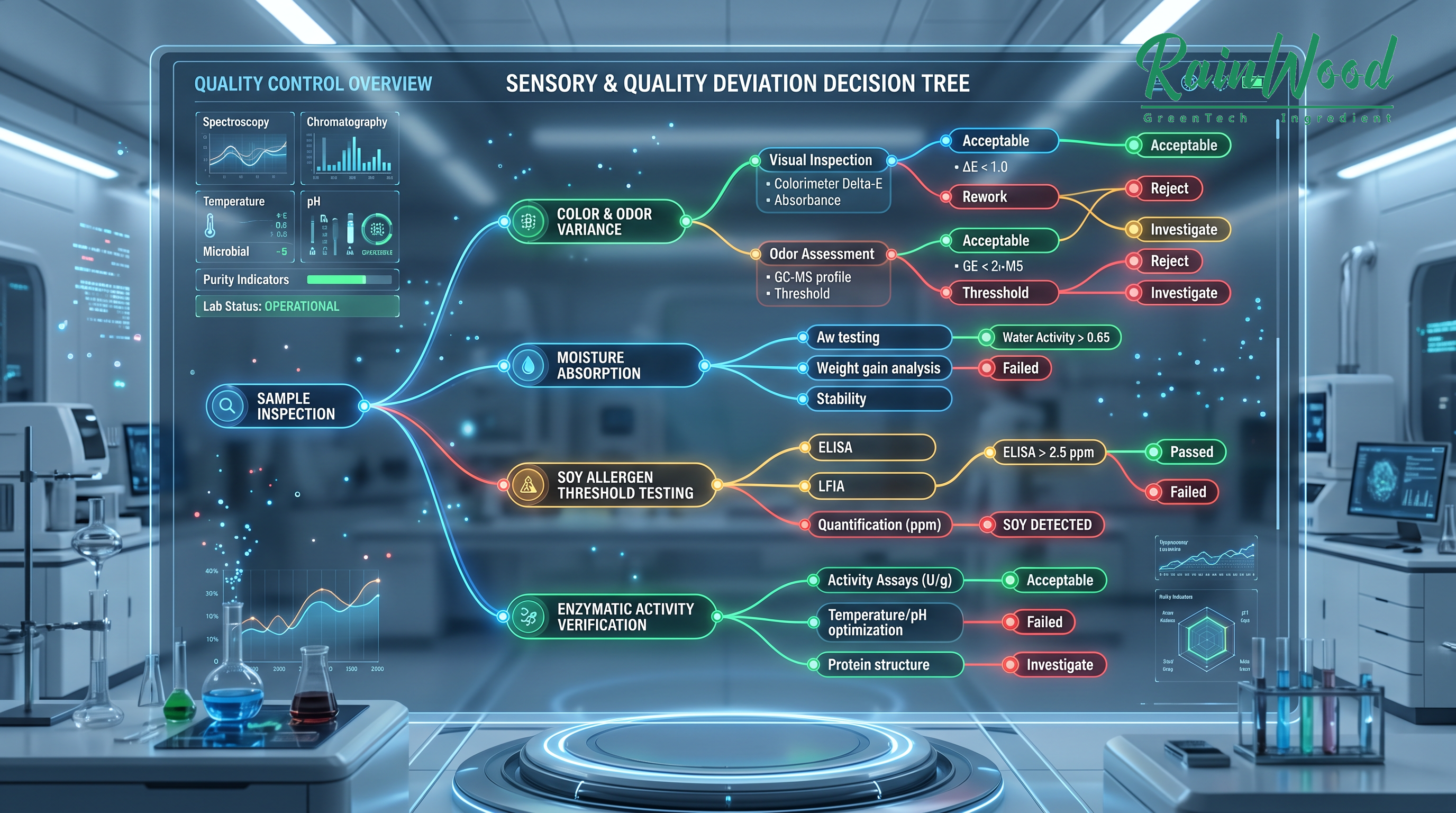
Figure 2: 3D Quality Deviation Decision Tree Diagram: Sensory Variance vs Moisture vs Allergen Threshold vs FU Retention
The buyer loss from sensory complaints
An unexplained odor can create returns, poor reviews, and retailer concern. Automatic rejection can create unnecessary replacement cost if the product is within specification. Automatic release can create a larger problem if the change signals moisture, contamination, or activity loss.
The brand also needs a complaint response. Retained samples, lot records, package information, and activity tests can distinguish a normal source characteristic from a real quality deviation.
Build a sensory and release procedure
Define reference color, odor, texture, capsule appearance, package condition, and sampling location. Photograph samples, but do not use photos as a substitute for testing. Record storage, transport, opening, and customer-use conditions.
When a sensory change appears, check package integrity, moisture, activity, identity, microbiology where relevant, and related contaminants. If the product is flavored or blended, test the finished matrix separately. The [INTERNAL LINK -> Nattokinase Stability Blog] provides a broader investigation sequence.
How RainwoodBio can support complaint traceability
RainwoodBio publishes raw-material management, testing and release, packaging, warehousing, logistics, compliance documentation, and traceability. These capabilities are relevant when a brand needs to investigate a nattokinase odor or color complaint. Product-specific retained samples, lot records, and test results still need confirmation.
Complaint approval gate
Ask:
- Is the observation within the approved reference range?
- Is the package intact and stored correctly?
- Does activity remain within the agreed limit?
- Is the source or carrier different from the approved sample?
- Are soy and allergen statements accurate?
- What evidence supports release or rejection?
Request a [INTERNAL LINK -> Nattokinase Sensory and Complaint Review] [INTERNAL LINK -> Contact Us Page] with photos, lot number, COA, package, storage history, and customer description.
Use complaint trends to improve the specification
Track odor, color, caking, leakage, activity, soy questions, and package damage by lot and channel. A single complaint may be normal variation; a trend can reveal a source, package, or storage problem. Share the trend with the supplier during review instead of treating every complaint as a separate event.
If the product has a natto-derived odor, explain the approved sensory range to distributors and customer service. This reduces unnecessary rejection while preserving a clear escalation path for a new or unusually strong odor. Sensory education should never replace activity and identity testing.
Create a reference sample library
Keep approved samples for raw enzyme, blend, filled capsule or sachet, and finished package. Label each with lot, date, storage, and test status. When a complaint arrives, compare the customer sample with the closest reference and test the attributes that can explain the change. This is faster and more defensible than arguing from a photograph.
Ask the supplier to preserve a retained sample for the same lot. A buyer and supplier can then compare activity, moisture, odor, color, and package condition using the same material. The result can guide release, replacement, or a package improvement.
Use a complaint investigation form
Record customer description, lot, package, storage, opened date, number of affected units, photos, odor or color description, and whether the product was mixed or consumed. Request the customer sample when appropriate and compare it with a retained unit. Then test package integrity, moisture, activity, identity, and relevant microbiological or contaminant attributes.
Classify the outcome as normal sensory variation, storage-related change, package failure, source change, activity deviation, or unresolved. Each category should have a different response. A brand that records this information can improve the specification and supplier process instead of repeating the same argument for every complaint.
Turn sensory expectations into a documented specification
Define an approved range for color, odor, powder flow, capsule appearance, and package condition using retained reference samples. The range should describe what is acceptable, what requires investigation, and what is a release failure. A natural fermented odor may be acceptable for one natto-derived ingredient and unacceptable for a deodorized capsule, so the specification must match the actual product and customer promise.
Pair every sensory rule with an objective check where possible. Moisture and activity can help investigate clumping; package seal and micro results can help investigate an unusual odor; identity and source records can help investigate a color shift. This prevents customer service from making a medical or purity conclusion from appearance alone. It also gives the brand a repeatable response when multiple lots are sold through different channels.
Keep complaint evidence connected to the lot
When a complaint is confirmed, link the investigation to the supplier lot, finished batch, package configuration, and shipment route. This allows the brand to distinguish one damaged delivery from a broader specification issue and gives the supplier a fact pattern it can investigate.
Frequently asked questions
Does strong odor prove bad nattokinase?
No. Source, extract composition, package, and storage can affect odor. Investigation is required.
Does a white powder prove purity?
No. Appearance does not replace identity, activity, or contaminant testing.
Should every nattokinase product carry a soy warning?
The answer depends on source, process, market, and label requirements. Request documentation and qualified review.
Can a photo settle a complaint?
Photos support the investigation but do not prove activity, identity, or safety.
Conclusion
Treat odor, color, soy, and customer complaints as evidence signals. Compare against a controlled reference, inspect the package, test activity and identity, and document the release decision.
Disclaimer: This article is for B2B quality and complaint planning. It is not medical advice and does not establish that nattokinase treats, prevents, or cures disease.
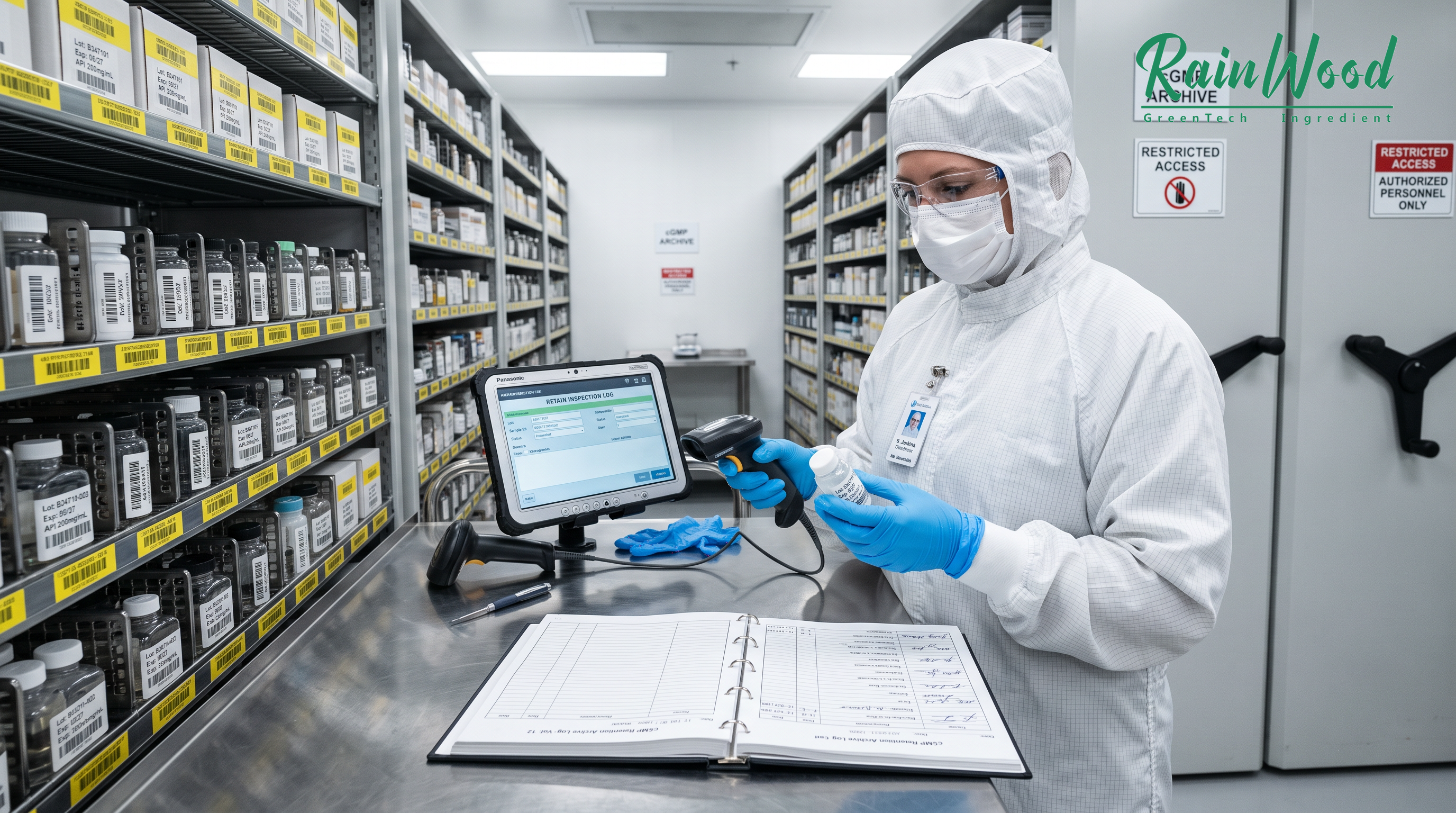
Figure 3: Quality Assurance Specialist in Cleanroom Inspecting Lot Sample Retention Archive and Barcode Serialization Logs
References
- https://dsld.od.nih.gov/label/82020
- https://pmc.ncbi.nlm.nih.gov/articles/PMC9312984/
- https://www.rainwoodbio.com/
Explore RainwoodBio Nattokinase & Cardiovascular OEM Solutions
- Custom Nattokinase Enteric & Delayed-Release Capsules – Gastric-acid protection preserving 2,000~20,000 FU/g enzyme activity for optimal systemic absorption.
- Nattokinase Lipid Softgels & Cardiovascular Blends – Synergistic co-formulations with CoQ10, Phytosterols, Garlic Oil, and Vitamin K2-free options.
- Nattokinase Sachet Stick Packs & Functional Powders – Convenient single-serve sachet stick packs with premium taste masking and high moisture barrier.
- OEM / ODM Contract Manufacturing Services – cGMP certified high-potency blending, blister packaging, and US/EU/Amazon regulatory compliance dossiers.
- Contact RainwoodBio Technical Sales – Request Nattokinase CoA (FU/g assay certificates), stability test protocols, pilot samples, or custom quotation.
Table of Contents
- A strange odor is not automatically a failed lot
- Why odor and color can change
- Soy and allergen information matters
- The buyer loss from sensory complaints
- Build a sensory and release procedure
- How RainwoodBio can support complaint traceability
- Complaint approval gate
- Use complaint trends to improve the specification
- Create a reference sample library
- Use a complaint investigation form
- Turn sensory expectations into a documented specification
- Keep complaint evidence connected to the lot
- Frequently asked questions
- Conclusion
- References