 EN
Executive Summary & B2B Formulation Guidance
Qualify a nattokinase supplier with checks for identity, FU activity, assay method, stability, warnings, format, and traceability.
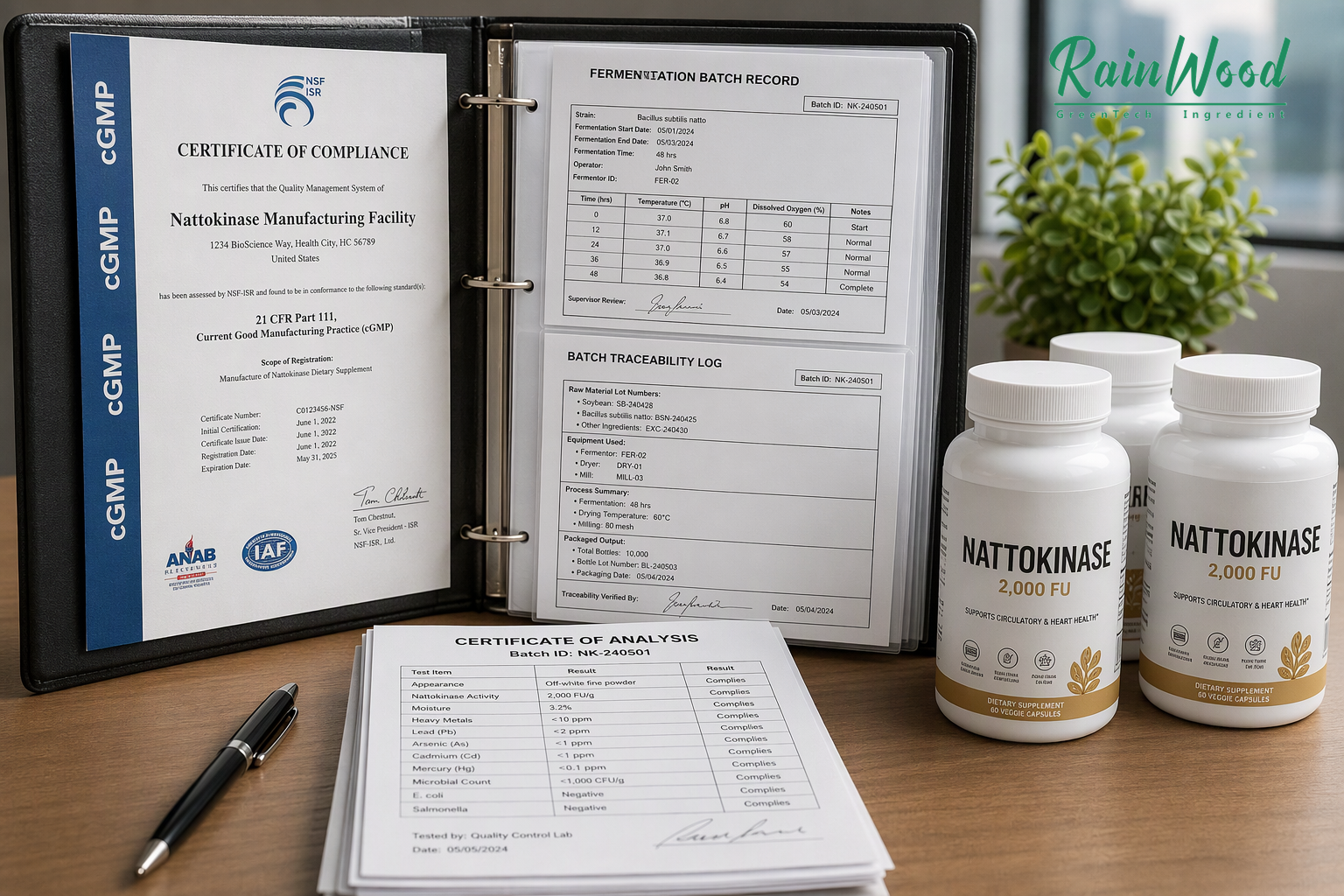
Figure 1: Supplier Quality Audit Dossier Binder with cGMP Certificates, Fermentation Batch Traceability, and Nattokinase Samples
A supplier is not qualified because the COA has a large number
A high FU result and a polished presentation are useful first steps. They do not prove that the supplier can reproduce the activity, protect it through shelf life, support the finished format, or provide a defensible warning and claim file. Private-label brands need a qualification process that connects raw enzyme, lot, capsule, package, and market.
1. Lock exact product identity
Confirm purified nattokinase, natto extract, or another defined grade. Record source, activity unit, assay basis, soy status, carrier, storage, and shelf life. The name on the quotation, COA, formula, artwork, and finished release must match.
2. Review activity and method
Ask what one FU means, which substrate and conditions are used, whether the result is per gram or serving, and whether the method is comparable to the buyer's laboratory. Request a lot-linked report, reference information, and acceptance limit. The [INTERNAL LINK -> Nattokinase Assay Method Blog] provides a method-review framework.
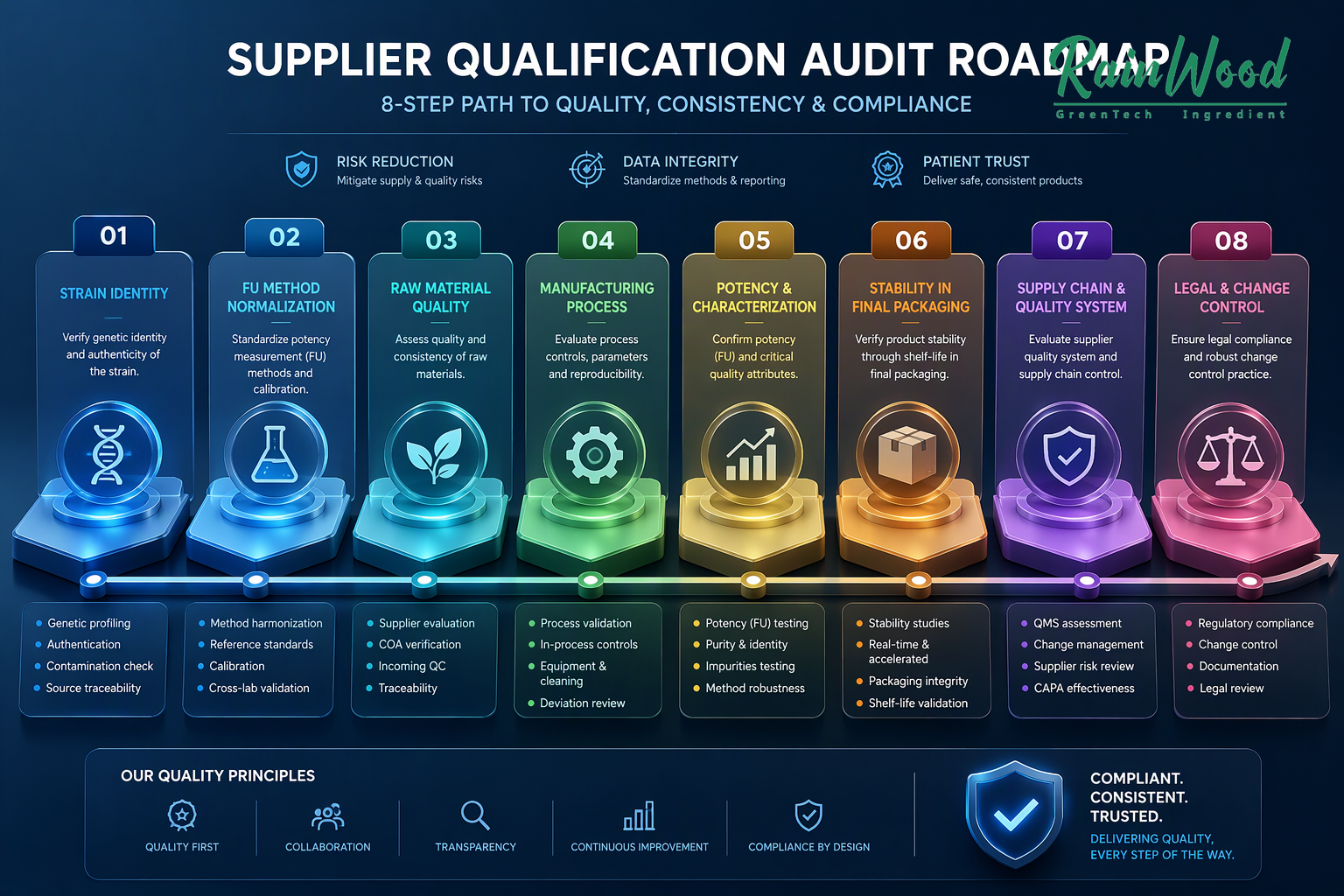
Figure 2: 3D 8-Step Supplier Qualification Audit Roadmap: From Strain Verification and FU Normalization to Packaging Stability
3. Check identity separately from activity
Ask how the supplier confirms nattokinase identity and controls other proteases, extract components, process residues, and contaminants. A passing activity result is not a complete identity file. Request source and manufacturing documentation appropriate to the target market.
4. Qualify the sample-to-bulk bridge
Request enough sample for activity confirmation, pilot filling, stability, and retention. Before shipment, request a commercial-lot sample. At receipt, inspect packages and sample across containers. Compare activity, moisture, appearance, odor, and flow against the approved sample.
5. Match the supplier to the format
For capsules, review fill weight, activity per unit, shell, package, and daily capsule count. For tablets, review compression, coating, dissolution, and activity recovery. For stick packs, review flow, film, seal, moisture barrier, flavor, and single-dose activity. The [INTERNAL LINK -> Nattokinase Format Blog] explains why raw-material capability does not equal finished-product capability.
6. Test stability in the actual package
Ask for raw and finished-product stability, activity at release and expiry, storage, transport, opening, and in-use conditions. A small sealed sample does not represent a bulk drum or a bottle opened daily. Retain commercial units and define complaint investigation pulls.
7. Review warnings and claims
Confirm soy and allergen statements, medication questions, surgery, pregnancy and nursing language, target-market warnings, and approved claims. Ask who reviews the product page, testimonials, and influencer copy. Use the [INTERNAL LINK -> Nattokinase Safety Warning Blog] for the warning-file questions.
8. Put change control and accountability in writing
The purchase order should state identity, activity, method, package, shelf life, release documents, sample approval, change notification, lead time, nonconformance response, and replacement terms. Ask who pays for confirmatory testing when the lot fails.
RainwoodBio publishes requirement confirmation, raw-material supplier management, production control, testing and release, documentation, OEM formats, and traceability. These published capabilities are relevant context. The buyer should still verify exact nattokinase evidence, certificate scope, product method, and batch records.
Supplier approval gate
Approve only when the supplier can demonstrate:
- exact identity and source;
- comparable FU method and lot activity;
- sample-to-bulk controls;
- finished-format stability;
- warning and claim documentation;
- traceability and failure response.
Request a [INTERNAL LINK -> Nattokinase Supplier Qualification Review] [INTERNAL LINK -> Contact Us Page] with the formula, COA, target FU, market, format, quantity, and current supplier problem.
Requalify after a meaningful change
Reopen the supplier review when the source organism, fermentation site, purification step, FU method, package, capsule shell, coating, flavor, or target market changes. Compare new material with the approved sample and decide whether a method bridge, pilot, stability pull, or claim review is needed.
Keep a scorecard for lot acceptance, COA completeness, response time, delivery, complaints, and change notification. A supplier with a good first sample but poor communication should not receive the same approval status as one with stable, transparent performance.
Qualify the supplier for the actual use case
Do not treat a supplier's capsule success as proof that it can make a stable enteric tablet or powder stick pack. Define the form, target FU, market, package, and warnings beside the supplier approval. A company can be approved for raw-material supply and remain conditional for finished OEM production until the pilot and stability evidence are complete.
Ask who owns the release decision, who handles a failed activity result, and how quickly a change notice is issued. Include these answers in the quality agreement. The most useful supplier is not the one with the longest capability list; it is the one that can show evidence for the product you will actually sell.
Use staged approval for a new supplier
Classify the supplier as exploratory, conditional, or approved. Exploratory means the supplier can provide a sample and basic documents. Conditional means identity and activity are promising but first-lot, method, or stability evidence is outstanding. Approved means the exact form, format, market file, and response terms meet the agreed requirements.
Review the scope beside the supplier name. A company may be approved for raw powder and conditional for enteric tablets, or approved for one FU method and conditional for a new method. This prevents a successful small project from being treated as automatic proof for every future nattokinase SKU.
Turn qualification into an approval record
The final approval should identify the exact supplier entity, site, material grade, FU method, finished format, package, market, and permitted claims. Attach the signed specification, sample COA, method description, allergen statement, stability plan, change-notification terms, and pilot result. Mark open items as conditional rather than allowing a sales presentation to imply full approval.
For private-label work, add the brand's responsibilities: artwork review, warning review, storage instructions, complaint handling, and finished-product release. Add the supplier's responsibilities: lot traceability, replacement or investigation, sample retention, change notification, and document updates. This division makes the qualification useful after the first order, when the real test is whether a later lot can be released without a new argument.
Review performance after the first commercial lot
At the first-lot review, compare promised activity, actual release results, delivery condition, document timing, and response to questions. Use the findings to change the supplier status or the next purchase-order controls rather than treating qualification as a one-time form.
Frequently asked questions
Is a factory audit enough?
No. Product identity, activity, method, finished format, stability, warnings, and lot evidence are also required.
Should every lot be independently tested?
Testing frequency should reflect risk, history, market, and contract terms. New suppliers or unexplained variation justify stronger confirmation.
What is the most overlooked item?
Method comparability and change control are often overlooked. A new assay or source can invalidate the original activity number.
Can a supplier provide a ready-made dossier?
Ask for the exact product and market scope. A general capability page is not a product-specific dossier.
Conclusion
The right nattokinase supplier connects identity, FU activity, method, stability, format, warnings, documentation, and accountability. Qualify the finished product before the first commercial order, not after the first complaint.
Disclaimer: This checklist is for B2B procurement and quality planning. It is not medical, legal, or regulatory advice and does not establish that nattokinase treats, prevents, or cures disease.

Figure 3: cGMP Facility Audit Team Inspecting Fermentation Bioreactors, Sterile Air Filtration, and Downstream Ultrafiltration Units
References
- https://pmc.ncbi.nlm.nih.gov/articles/PMC9312984/
- https://dsld.od.nih.gov/label/82020
- https://www.rainwoodbio.com/oem
- https://www.rainwoodbio.com/
Explore RainwoodBio Nattokinase & Cardiovascular OEM Solutions
- Custom Nattokinase Enteric & Delayed-Release Capsules – Gastric-acid protection preserving 2,000~20,000 FU/g enzyme activity for optimal systemic absorption.
- Nattokinase Lipid Softgels & Cardiovascular Blends – Synergistic co-formulations with CoQ10, Phytosterols, Garlic Oil, and Vitamin K2-free options.
- Nattokinase Sachet Stick Packs & Functional Powders – Convenient single-serve sachet stick packs with premium taste masking and high moisture barrier.
- OEM / ODM Contract Manufacturing Services – cGMP certified high-potency blending, blister packaging, and US/EU/Amazon regulatory compliance dossiers.
- Contact RainwoodBio Technical Sales – Request Nattokinase CoA (FU/g assay certificates), stability test protocols, pilot samples, or custom quotation.
Table of Contents
- A supplier is not qualified because the COA has a large number
- 1. Lock exact product identity
- 2. Review activity and method
- 3. Check identity separately from activity
- 4. Qualify the sample-to-bulk bridge
- 5. Match the supplier to the format
- 6. Test stability in the actual package
- 7. Review warnings and claims
- 8. Put change control and accountability in writing
- Supplier approval gate
- Requalify after a meaningful change
- Qualify the supplier for the actual use case
- Use staged approval for a new supplier
- Turn qualification into an approval record
- Review performance after the first commercial lot
- Frequently asked questions
- Conclusion
- References