 EN
EN
Meta title: 30 mg Zinc Glycinate vs 30 mg Elemental Zinc
Meta description: Confusing compound weight with elemental zinc can create an underdosed formula or excessive intake. Learn the label math every supplement brand must verify.
“30 mg zinc glycinate” sounds simple.
It can describe two radically different products.
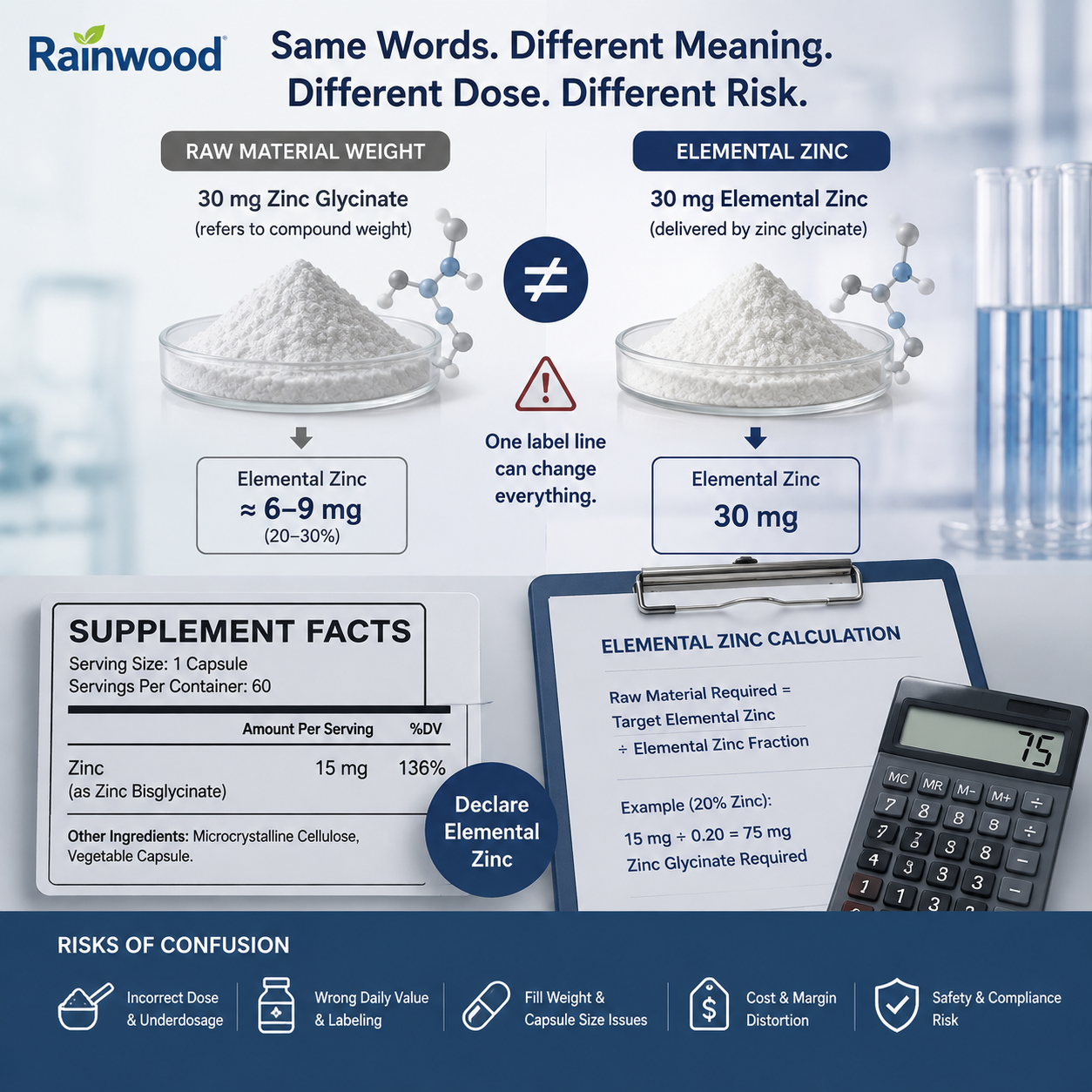
One supplier may mean 30 mg of the complete zinc-glycine compound, which provides only a fraction of that weight as elemental zinc. Another may mean enough zinc glycinate raw material to deliver 30 mg of elemental zinc.
The same-looking sentence can therefore change raw-material input, label Daily Value, capsule fill, cost, safety assessment and customer expectations.
This is not a minor wording problem. It is formula control.
The label must declare elemental zinc
In a U.S. Supplement Facts panel, the declared quantity for zinc is the amount of zinc—not the gross weight of its source compound. The source can then appear in parentheses, such as “Zinc (as zinc bisglycinate).”
If a commercial formula sheet says only “zinc glycinate 30 mg,” stop and ask:
- Is 30 mg the raw-material weight?
- Is it elemental zinc delivered by the raw material?
- What is the assayed elemental percentage?
- Is the calculation based on a minimum, typical or exact value?
- Has any carrier or moisture been included?
Use our elemental-zinc label calculator before requesting a quotation.
The calculation suppliers expect buyers to skip
The basic calculation is:
Raw material required = target elemental zinc ÷ elemental zinc fraction
If the approved ingredient contains 20% elemental zinc, delivering 15 mg requires 75 mg of raw material.
If it contains 30% elemental zinc, the same target requires 50 mg.
Those grades cannot be substituted one for one. A silent change affects fill weight and cost even if the front label still says 15 mg zinc.
Calculate using the approved specification and appropriate formulation target. Then confirm the finished product through a justified test plan.
Trap 1: the sales quotation uses compound milligrams
A quotation may advertise “50 mg zinc glycinate capsules” because 50 sounds stronger than 10. But if that statement refers to raw-material weight, the customer may receive far less elemental zinc than expected.
The opposite trap is also possible: a brand asks for 30 mg of zinc glycinate powder, while the factory interprets it as 30 mg elemental zinc and uses much more material. The resulting label, Daily Value and risk assessment can become wrong.
Every quotation should display both:
- target elemental zinc per serving; and
- required raw-material input based on the approved grade.
Anything less invites a dispute after packaging is printed.
Trap 2: a theoretical percentage replaces the supplier’s assay range
Theoretical chemistry is useful, but commercial ingredients may contain water, carriers or standardized concentrations. Formulating from an ideal molecular percentage while purchasing a 20% standardized grade creates a predictable shortage.
The purchase specification should state:
- minimum and maximum elemental zinc;
- test basis, such as as-is or dry basis;
- moisture range;
- carrier content;
- assay method; and
- overage policy where applicable.
Do not use the supplier’s “typical” result as though every batch will equal it.
Trap 3: the Daily Value is calculated from the wrong number
The U.S. Daily Value for zinc is 11 mg for adults and children age four and older under current labeling rules. A product declaring 15 mg elemental zinc therefore presents a very different percentage Daily Value from one containing 15 mg of a 20% zinc glycinate powder.
Using compound weight in the Daily Value calculation can misbrand the product and exaggerate its nutritional contribution.
Have regulatory review the final Supplement Facts, ingredient list, serving size and directions as one connected system. A correct number in the wrong location is still a label problem.
Trap 4: the Amazon title contradicts the bottle
Marketplace teams often optimize titles and images separately from regulatory review. The bottle may correctly declare 15 mg zinc, while the listing says “75 mg high-potency zinc.” That 75 mg could be the raw-material input.
Customers do not know which number represents the active mineral. Competitors may report the listing. Customer service may provide inconsistent explanations.
Create one approved claim sheet covering:
- label;
- product title;
- image callouts;
- comparison charts;
- FAQ;
- advertising;
- influencer scripts; and
- wholesale catalogues.
Trap 5: the serving size changes but the headline does not
A factory may need two capsules to deliver the target formula. If the brand later changes to one capsule for convenience, the zinc amount may be reduced while old images keep the stronger number.
Version-control the formula, serving size, label and digital assets. The customer should never have to calculate whether “per capsule,” “per serving” and “per day” mean the same thing.
Build a five-line formula control sheet
For each zinc SKU, show:
1. elemental zinc target per unit;
2. units per serving and servings per day;
3. elemental zinc target per day;
4. raw-material grade and percentage; and
5. raw-material input per batch and per unit.
Add theoretical yield, allowed overage and finished-product acceptance criteria. This small table prevents departments from translating the same formula differently.
Explore our custom capsule and tablet options.
Do not let “high potency” become a safety shortcut
NIH’s Office of Dietary Supplements lists the adult tolerable upper intake level at 40 mg zinc per day from food and supplements for healthy people. It also notes that 50 mg or more taken for weeks can interfere with copper absorption and cause other adverse effects.
That does not mean every product near a threshold is automatically inappropriate; market, population and professional-use context matter. It does mean the formulation team must assess total daily intake and avoid using compound-versus-elemental confusion to create an accidentally excessive product.
How RainwoodBio can prevent the number from changing departments
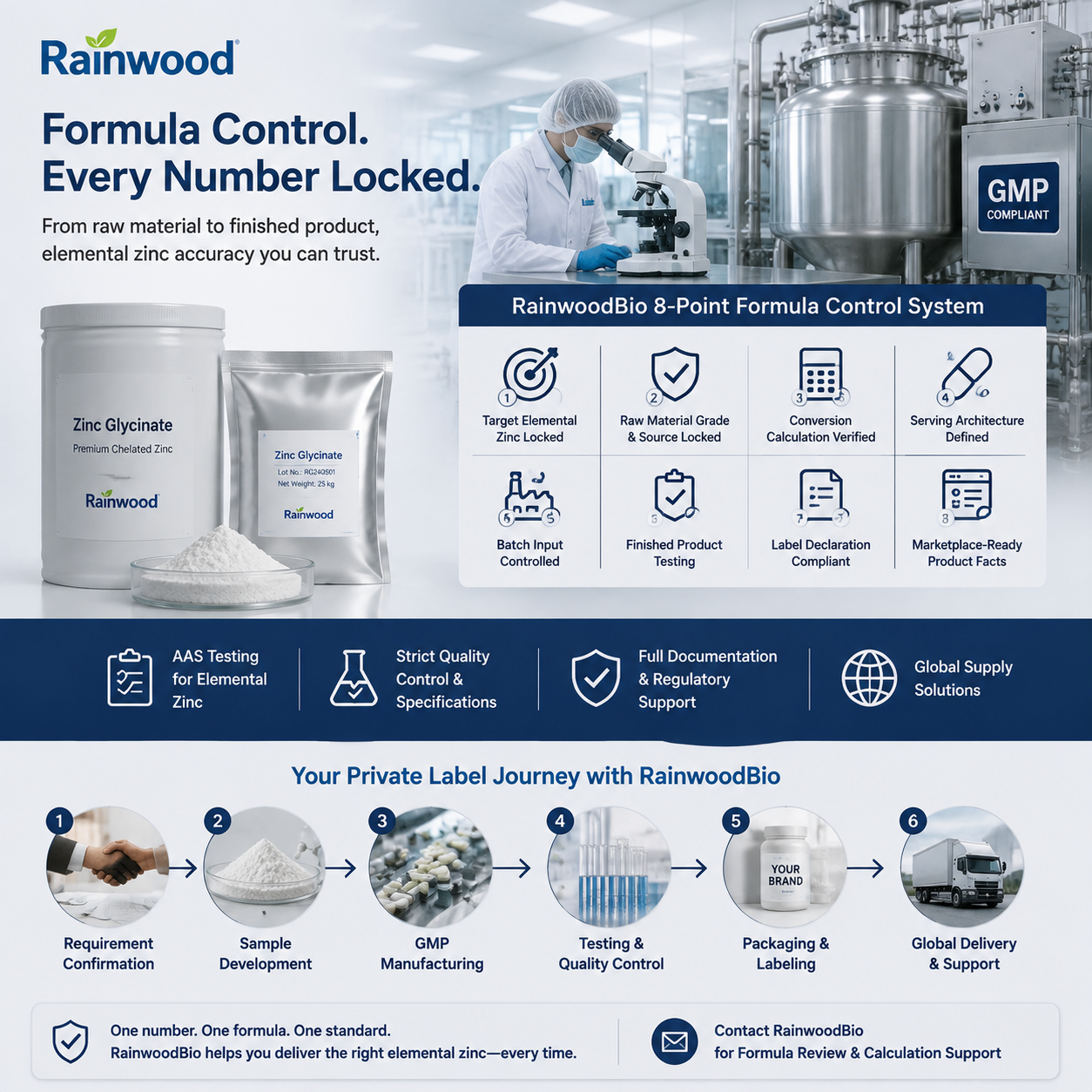
RainwoodBio’s published private-label workflow covers requirement confirmation, sample development, production, testing and packaging across capsules, tablets, gummies and powder formats.
For a zinc glycinate project, RainwoodBio can lock:
- target elemental zinc;
- raw-material grade and source;
- conversion calculation;
- serving architecture;
- batch input;
- finished-product testing;
- label declaration; and
- marketplace-ready product facts.
RainwoodBio’s published laboratory list includes AAS, which can support elemental-mineral testing when a suitable method and matrix preparation are used. The exact release specification should be agreed before production.
The pre-print challenge
Ask your team to answer one sentence without hesitation:
“Each daily serving contains ___ mg of elemental zinc, supplied by ___ mg of approved zinc glycinate raw material with an elemental specification of ___%.”
If purchasing, formulation, quality and marketing fill the blanks differently, do not print the label.
Send RainwoodBio your formula for a free elemental-zinc calculation and label feasibility review. The output should tell you the required raw-material input, serving reality and questions that must be resolved before quotation.
Frequently asked questions
1.Does “zinc 15 mg as zinc bisglycinate” mean 15 mg of the whole compound?
On a U.S. Supplement Facts panel, it normally declares 15 mg of elemental zinc, with zinc bisglycinate identified as the source.
2.Can I use the theoretical zinc percentage?
Use it for a reasonableness check. Commercial formulation should use the approved grade’s specification, account for moisture or carriers and follow an agreed overage and release policy.
3.Why do two suppliers require different input weights?
Their products may have different elemental specifications, hydration, carriers or composition. Confirm identity and grade before comparing price per kilogram.
4.Should the front label show the compound weight?
That depends on market rules and presentation, but it must not confuse the customer or contradict the required nutrition declaration.
References
- FDA, Dietary Supplement Labeling Guide: https://www.fda.gov/food/dietary-supplements-guidance-documents-regulatory-information/dietary-supplement-labeling-guide
- NIH ODS, Zinc Fact Sheet for Health Professionals: https://ods.od.nih.gov/factsheets/Zinc-HealthProfessional/
- FDA Warning Letter to Sun Ten Laboratories, including zinc finished-product and master-record issues: https://www.fda.gov/inspections-compliance-enforcement-and-criminal-investigations/warning-letters/stpca-inc-dba-sun-ten-laboratories-645336-04072023
- RainwoodBio Private Label Supplements: https://www.rainwoodbio.com/private-label-supplements
*This article is educational and does not replace market-specific regulatory, safety or labeling review.*