 EN
Executive Summary & B2B Formulation Guidance
CoQ10 blends with PQQ, L-carnitine, or vitamin E add formulation and claim risk. Build the dose, stability, testing, and evidence file first.
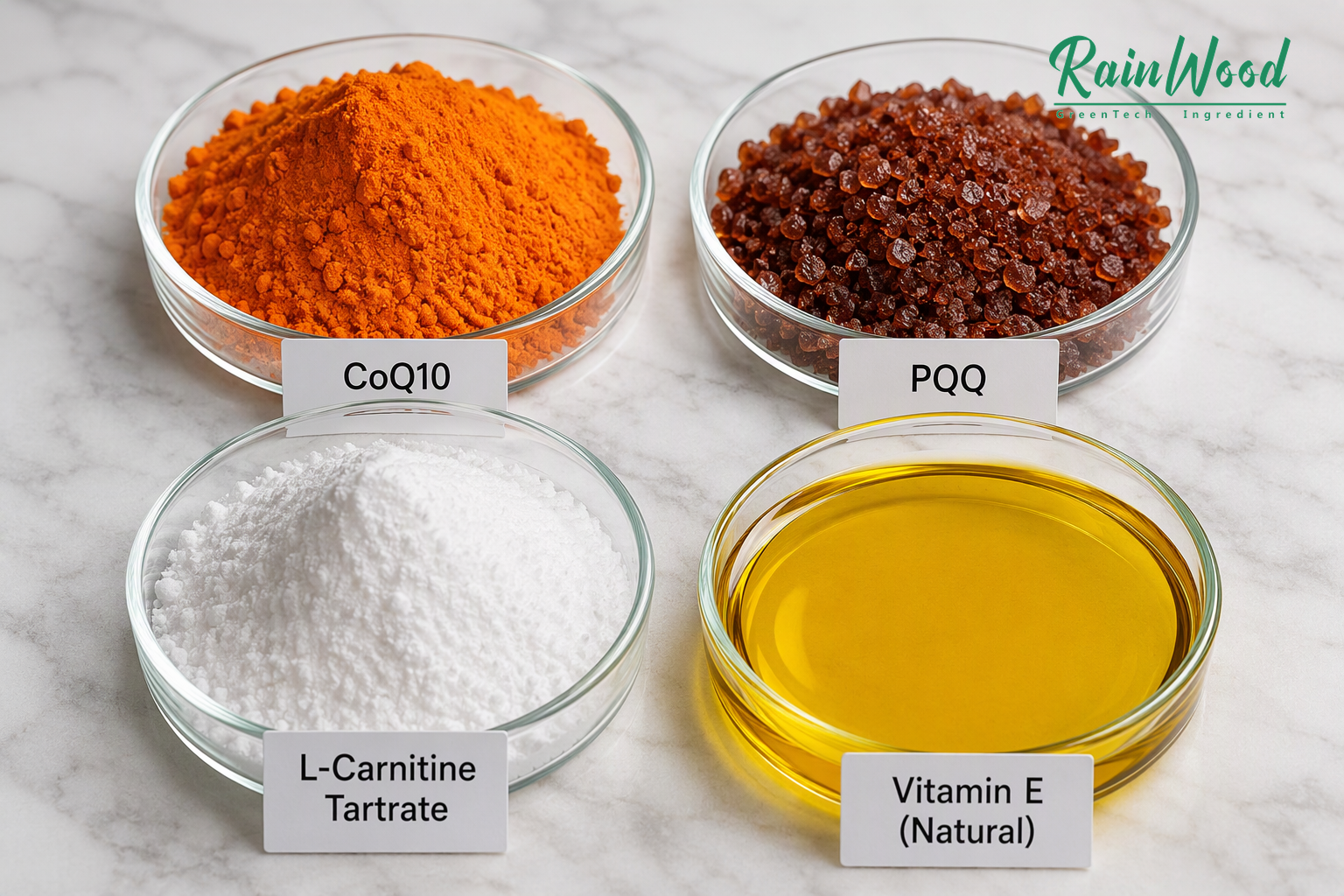
Figure 1: Synergistic Multi-Active Formulation: CoQ10 Active, PQQ Crystals, L-Carnitine Tartrate, and Natural Tocopherols
Adding PQQ, L-carnitine, or vitamin E can make a CoQ10 formula look more complete. It can also make the product harder to test, explain, price, and defend. Each ingredient adds its own identity, dose, source, stability, warning, and claim requirements. A crowded label is not automatically a stronger product.
Start with the job each ingredient must do
Write one sentence for each active: why is it in the formula, for which buyer, at what amount, and with what evidence? If the answer is “because competitors use it,” the formula needs a better commercial reason. The [INTERNAL LINK -> CoQ10 Ingredient Identity Review] can separate the core active from companion ingredients and carriers.
The buyer loss is often hidden until launch. A blend may require a larger capsule, a more expensive softgel, a stronger package, additional testing, and more complex customer service. It may also create a combined claim that no single study supports.
PQQ creates a separate identity and dossier question
PQQ may be supplied as a specific salt or branded ingredient with its own specifications and authorization requirements. Do not treat the name “PQQ” as enough information. Confirm exact form, assay, source, carrier, label amount, and any trademark authorization.
Keep the CoQ10 assay separate from PQQ assay. The raw-material studies for one ingredient do not prove the finished combination. Extend the method review to matrix interference, extraction, and finished-product recovery.
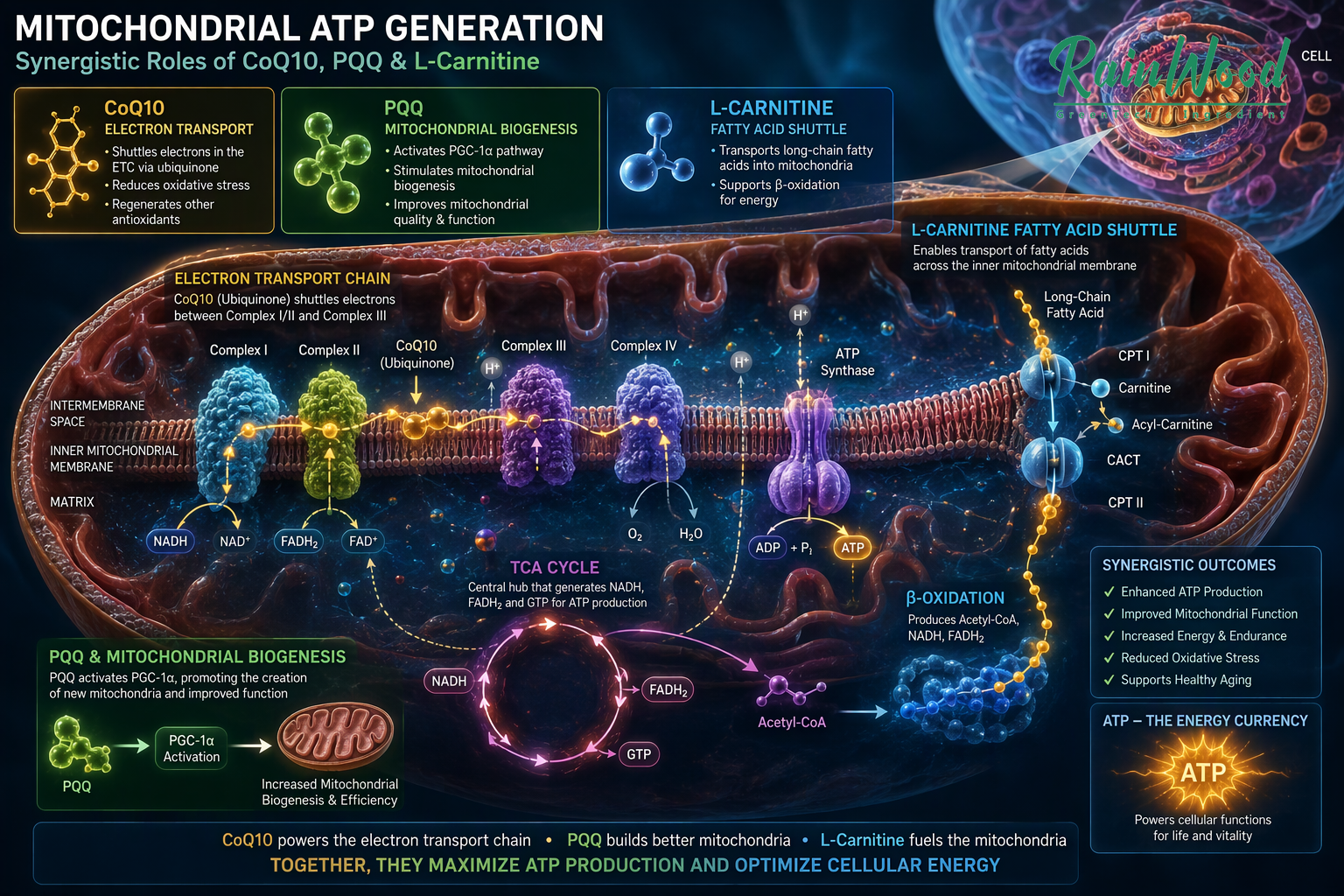
Figure 2: 3D Cellular Bioenergetics Model: Mitochondrial ATP Synthesis Co-Factor Synergies for CoQ10, PQQ, and L-Carnitine
L-carnitine changes dose and formulation economics
L-carnitine is commonly used at a larger mass than CoQ10 in some formulations. The form—such as a salt or ester—changes the declared active basis, taste, hygroscopicity, and capsule capacity. A formula that looks compact with CoQ10 alone may require multiple capsules when L-carnitine is added.
Calculate each active separately and then calculate the total blend weight. Review flow, moisture, odor, and uniformity. If the customer wants a “mitochondrial” formula, keep that positioning distinct from a disease or guaranteed energy claim. Use the [INTERNAL LINK -> CoQ10 Capsule Capacity and Dose Math Blog] before selecting the format.
Vitamin E can support a formula but cannot replace stability evidence
Vitamin E may be included as a nutrient or as part of an antioxidant strategy. The form and amount must be declared accurately. Its presence does not prove that CoQ10 will remain stable, nor does it establish a synergistic clinical outcome.
Run the complete blend in the intended carrier, shell, and package. Test CoQ10 content, companion-ingredient potency, redox form where relevant, oxidation indicators, appearance, and uniformity. The [INTERNAL LINK -> CoQ10 Stability and Packaging Blog] should explain what the finished formula can actually prove.
Combination claims need a map
Build a claim matrix with columns for statement, ingredient, amount, evidence type, population, format, market, and reviewer. “Supports cellular energy” may need a different review from “helps manage cholesterol” or “protects the heart.” Keep the wording aligned with the evidence for the exact product.
Do not combine mechanistic words into a stronger medical sentence. A study on CoQ10 alone does not automatically support CoQ10 plus PQQ. A study on a branded PQQ material does not automatically support another source. Trace the evidence chain from study to finished formula.
Blending creates uniformity and stability risks
Different powders can vary in density, flow, moisture, particle size, and electrostatic behavior. A low-dose ingredient may segregate from a high-dose carrier. A hygroscopic ingredient may change the moisture exposure of CoQ10. The finished blend can pass a raw-material COA while failing content uniformity.
Sample beginning, middle, and end of the blend and filling run. Use a method suitable for each active in the actual matrix. If the formulation uses separate premixes, document the order of addition, mixing time, hold time, and package.
How RainwoodBio can support a multi-active formula
RainwoodBio publishes requirement confirmation, supplier management, production control, testing and release, compliance documentation, packaging, and traceability. For a CoQ10 blend, the buyer should ask for a formula feasibility assessment that separates each active's identity, dose, assay, storage, and claim boundary.
RainwoodBio lists hard capsules, softgels, tablets, gummies, and powder sachets. Review the [INTERNAL LINK -> RainwoodBio OEM Format Options] and [INTERNAL LINK -> RainwoodBio Quality and Release Process] with the formula and target market.
Combination approval gate
Before approving the blend, confirm:
- exact form and active basis for every ingredient;
- dose per capsule, serving, and day;
- assay and finished-product method for each active;
- blend uniformity and matrix-interference plan;
- compatibility, moisture, light, and oxygen controls;
- package, shelf life, and in-use exposure;
- evidence and permitted wording for each claim;
- sourcing, trademark, allergen, and regulatory documents;
- total landed cost and unit count.
Send RainwoodBio the formula, COAs, target claims, format, package, market, quantity, and existing quotation for a [INTERNAL LINK -> CoQ10 Combination Formula Review]. The deliverable should show whether each ingredient earns its place in the finished product.
Use a removal test before adding another active
Create a version of the formula without each companion ingredient and compare active dose, unit count, taste, stability, testing burden, cost, and claim clarity. If removing an ingredient changes nothing important for the target buyer, it may be adding complexity without value. If it solves a real formulation or positioning need, document that reason and the evidence supporting it.
Run the comparison with the intended package and customer instructions. A blend that looks attractive on paper may create moisture, segregation, odor, or medication questions in practice. The removal test gives procurement and marketing a defensible answer when a retailer asks why every ingredient is present.
Send the complete formula, simplified alternatives, COAs, target claims, format, market, and quotation for a [INTERNAL LINK -> CoQ10 Blend Contact Us Page] assessment. Include the target retail price and daily unit count so the added ingredient is judged against its technical burden. Add the intended customer segment and the one problem the formula is expected to solve; otherwise the blend can become a collection of unrelated trend ingredients. Record that decision in the formula brief and repeat the review after any formula change. Keep the rationale with the approved artwork and change-control record for future commercial audits.
Frequently asked questions
Does adding PQQ make CoQ10 more effective?
No automatic conclusion can be made. The exact combination, doses, formulation, and evidence must be reviewed.
Can one COA cover a multi-active blend?
No. Raw-material COAs do not replace finished-product testing for the combined matrix.
Is vitamin E necessary in every CoQ10 formula?
No. It should have a defined formulation or nutritional purpose and be supported by the product specification.
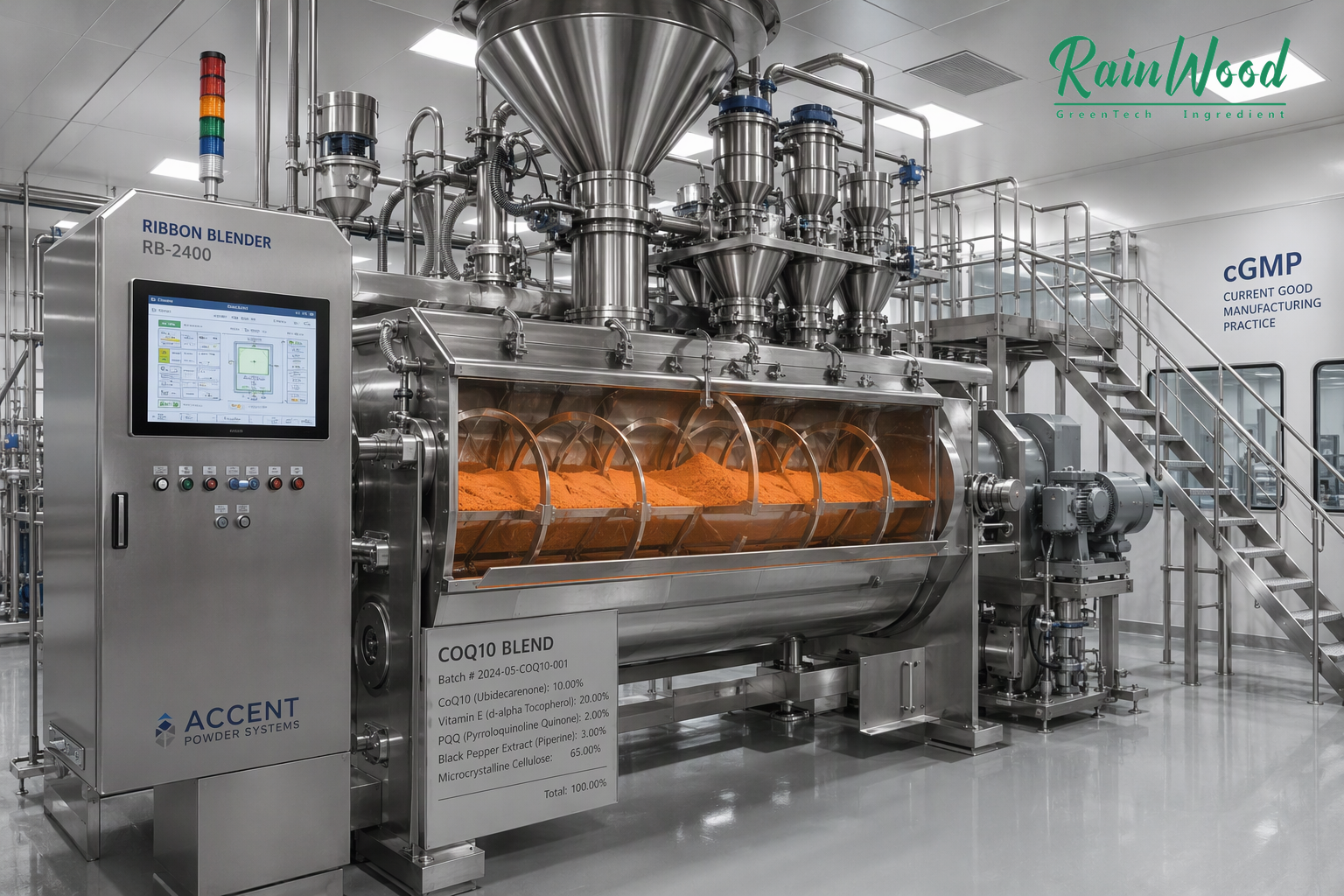
Figure 3: Automated Sanitary Multi-Component Ribbon Powder Blending Equipment in cGMP Manufacturing Suite
References
- CoQ10 Bioavailability and Carrier Lipids: https://pubmed.ncbi.nlm.nih.gov/30153575/
- Stability of Reduced and Oxidized CoQ10: https://pubmed.ncbi.nlm.nih.gov/33673604/
- NCBI LiverTox CoQ10 Overview: https://www.ncbi.nlm.nih.gov/books/NBK603562/
- RainwoodBio OEM service: https://www.rainwoodbio.com/oem
*This article is for B2B procurement and educational purposes. Product identity, formulation, analytical, safety, labeling, and regulatory requirements must be confirmed for the exact blend, finished format, and destination market.*
Explore RainwoodBio CoQ10 & Custom Formulation Capabilities
- Custom CoQ10 Hard Capsules & High-Potency Blends – Precision cGMP encapsulation for CoQ10 with PQQ, L-Carnitine, and Vitamin E co-factors.
- High-Absorption CoQ10 Softgels & Lipid Suspensions – MCT/Olive oil carrier systems with natural tocopherol stabilization.
- Water-Soluble CoQ10 Micro-Encapsulated Powders & Stick Packs – Enhanced bioavailability single-serve sachets and beverage-grade premixes.
- OEM / ODM Contract Manufacturing Services – End-to-end formulation development, pilot batch scaling, and US/EU regulatory compliance dossiers.
- Contact RainwoodBio Technical Sales – Request CoA, HPLC analytical protocols, pilot stability samples, or commercial quotation.
Table of Contents
- Start with the job each ingredient must do
- PQQ creates a separate identity and dossier question
- L-carnitine changes dose and formulation economics
- Vitamin E can support a formula but cannot replace stability evidence
- Combination claims need a map
- Blending creates uniformity and stability risks
- How RainwoodBio can support a multi-active formula
- Combination approval gate
- Use a removal test before adding another active
- Frequently asked questions
- References