 EN

Executive Summary & B2B Formulation Guidance
A CoQ10 sample can pass while commercial bulk behaves differently. Control particle size, density, flow, assay, package, and first-article release.
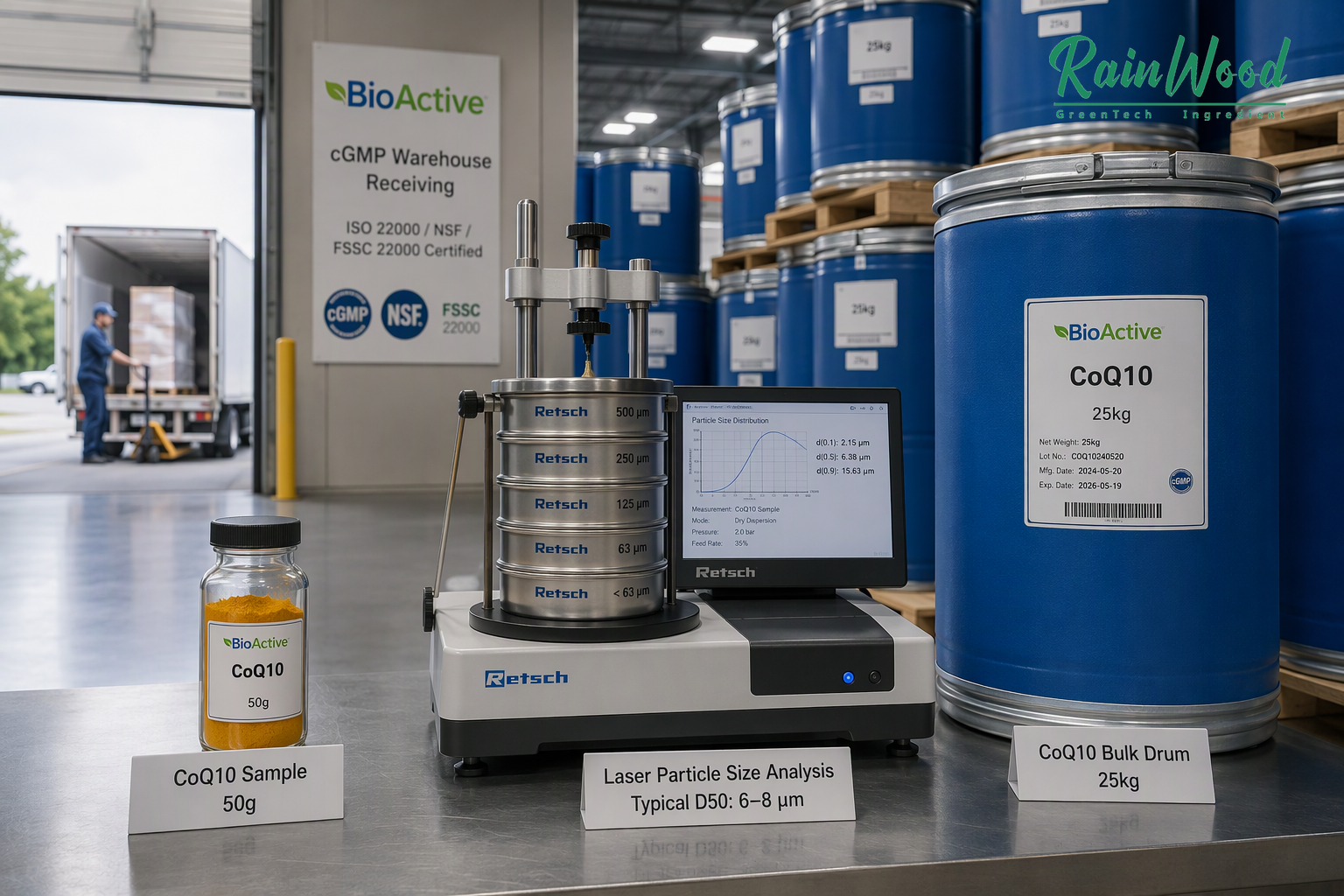
Figure 1: Comparing Small Scale 50g Laboratory Sample vs 25kg Commercial Fiber Drum Bulk Lot at Receiving Dock
The sample fills perfectly in a small laboratory capsule. The commercial bulk bridges in the hopper, separates from the carrier, and produces a different unit weight. The supplier may not have sent a bad sample; the buyer may have approved a sample without defining the attributes that must remain equivalent. CoQ10 projects need a sample-to-bulk gate before the deposit becomes inventory.
A sample is a reference, not a promise of sameness
The approved sample should be linked to a lot number, source, manufacturer, form, assay method, package, and storage condition. If the supplier sends a development sample from a different process or site, classify it as a development sample. Do not let a sales sample silently become the commercial specification.
Use the [INTERNAL LINK -> CoQ10 Ingredient Identity Review] to record critical attributes: redox form, active content, carrier, particle size, bulk density, moisture, flow, color, and package. Define which attributes must match and which may vary within a justified range.
Particle size can change production without changing the name
CoQ10 is commonly supplied as a crystalline powder or as a carrier-based formulation. Particle size and crystal properties can affect flow, packing, segregation, extraction, dissolution, and sensory appearance. A different milling or drying step can create a powder that meets the same chemical assay but behaves differently on the filling line.
Request particle-size distribution, bulk density, tap density, moisture, and flow information where those attributes affect the format. Compare sample and bulk using the same test conditions. If the product is a softgel, particle size may affect suspension stability; if it is a hard capsule, it may affect fill uniformity.
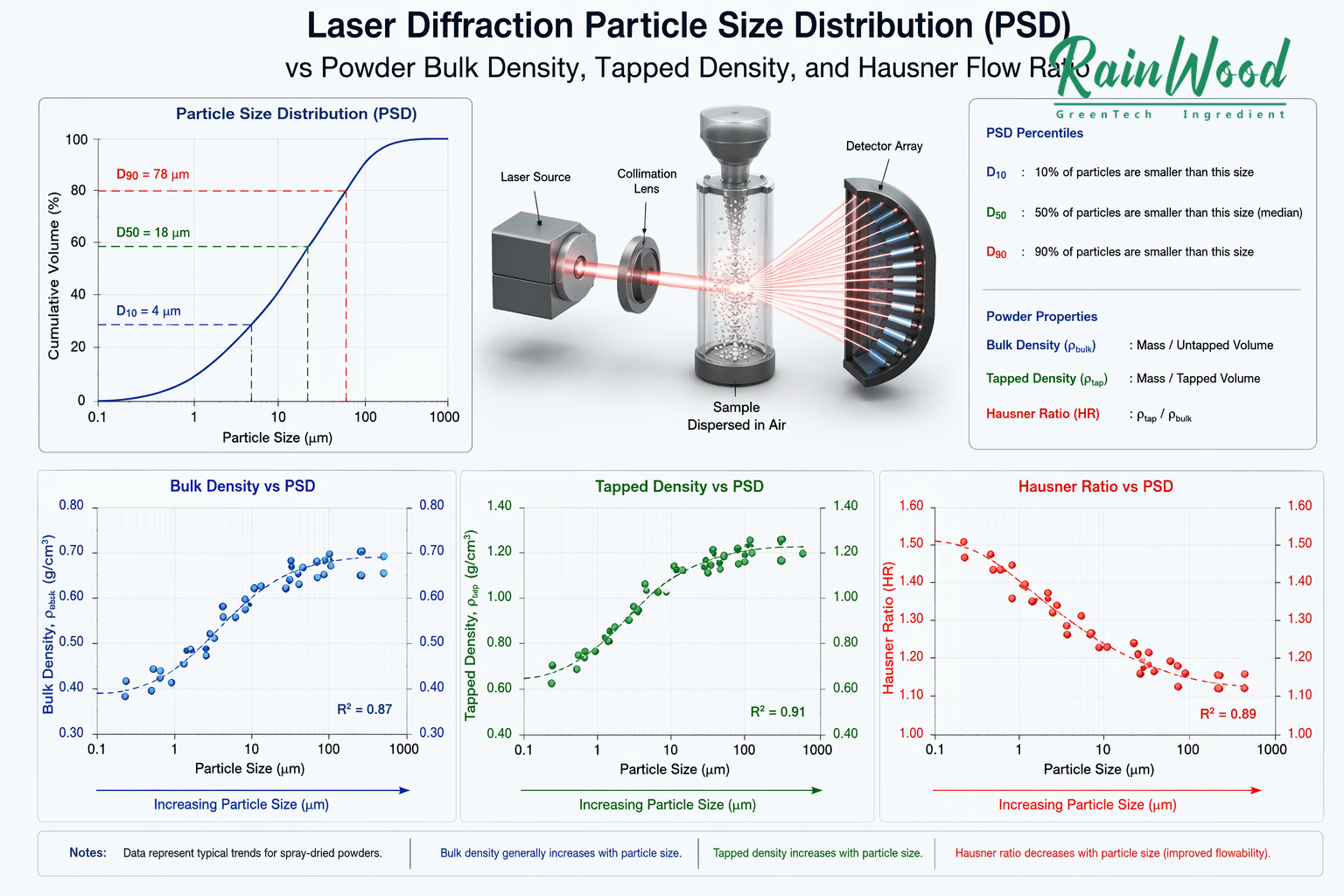
Figure 2: 3D Particle Engineering Analysis: Laser Diffraction PSD Curves (D10, D50, D90) vs Bulk Density and Flowability
Bulk density changes the dose calculation
Two powders can deliver the same 100 mg of active while occupying different volumes. A low-density premix may require a larger capsule. A high-density powder may settle or compact during transport. The practical fill weight can change even when the label amount does not.
Run a first-article pilot with the commercial lot and intended equipment. Record theoretical input, actual fill, variation, rejected units, flow interruptions, and finished-product assay. The [INTERNAL LINK -> CoQ10 Capsule Capacity and Dose Math Blog] should use pilot data rather than a sample photograph.
Sampling location matters
One scoop from the top of a drum may not represent the container or lot. Oil-adsorbed particles, fine powder, and carrier can segregate during transport and handling. Sampling should be risk-based and representative of the lot and container locations.
Ask how the supplier samples, how many increments are combined, and how the retained sample is stored. For high-value or new-supplier material, consider buyer confirmation using a retained sample. A disagreement should trigger a method and sampling review before it becomes an accusation.
Package can create a bulk difference
A sample in a sealed vial may arrive dry and free-flowing while bulk bags experience heat, pressure, moisture ingress, or long storage. Ubiquinol may also change redox form during exposure. Request the package specification, seal, desiccant or barrier approach, storage, and maximum hold time.
Compare appearance, moisture, active content, redox form where relevant, flow, and package condition on arrival. If a lot is repacked before production, document the transfer and recheck the attributes that can change.
Set a commercial equivalence range
Define critical, operational, and descriptive attributes. Critical attributes may include identity, redox form, minimum active content, carrier, allergen status, and package. Operational attributes may include bulk density, flow, particle size, and moisture when they affect production. Descriptive attributes may include color or odor when they are not linked to a label claim.
The quality agreement should state what happens when an attribute is outside the range: hold, retest, pilot, conditional release, replacement, or rejection. Include pre-shipment sample timing and buyer review rights. This is stronger than arguing about whether the material “looks the same.”
How RainwoodBio can support sample-to-bulk control
RainwoodBio publishes requirement confirmation, raw-material supplier management, production and process control, testing and release, packaging, logistics, and traceability. For CoQ10, ask for a controlled sample-to-bulk plan that links the reference sample, commercial lot, pilot, package, and release record.
RainwoodBio lists multiple OEM formats. Use the [INTERNAL LINK -> RainwoodBio OEM Format Options] and [INTERNAL LINK -> RainwoodBio Quality and Release Process] to decide which bulk attributes matter for the selected product.
Sample approval checklist
Before approving bulk, confirm:
- sample and bulk manufacturer, site, source, and form;
- lot numbers and retention conditions;
- active assay and method comparability;
- particle size, density, moisture, and flow;
- carrier, redox form, and allergen status;
- package, storage, and transport exposure;
- pilot fill or blend performance;
- finished-product assay and uniformity;
- pre-shipment sample and failed-lot terms.
Send the approved sample details, bulk COA, target format, package, quantity, market, and quotation for a [INTERNAL LINK -> CoQ10 Sample-to-Bulk Qualification Review]. The goal is to create a pass/fail gate before the commercial lot enters your finished-product inventory.
Put a pre-shipment decision into the purchase order
Define when the supplier sends a sample from the actual commercial lot, how the sample is sealed, what documents accompany it, and how long the buyer has to review. The sample should use the same method and basis as the release COA. If it is outside the approved range, the order should be held before production rather than debated after finished goods are printed.
When the sample and bulk differ, compare method, sampling, moisture, storage, source, and processing history in that order. Document the result as accept, retest, conditional release, or reject. This gives the buyer a repeatable path that protects the launch without making unsupported accusations.
Send the reference sample record, commercial COA, format, package, quantity, market, and difference report for a [INTERNAL LINK -> CoQ10 Sample Contact Us Page] review. Include the intended filling equipment and production date because the same powder may perform differently on pilot and commercial lines. Add the time between receipt and production so moisture, temperature, and package exposure can be included in the comparison. Record the storage location during that period.
Frequently asked questions
Is a different color proof that the bulk is wrong?
No. It is a signal for investigation. Compare source, method, moisture, particle properties, redox form, and package before deciding.
Should every drum be tested separately?
Sampling should represent the lot and risk. New suppliers, high-value lots, or unexplained variation justify stronger confirmation.
Can a supplier change the mill or drying step without notice?
Only through agreed change control because the change may affect flow, dose, stability, and finished-product performance.
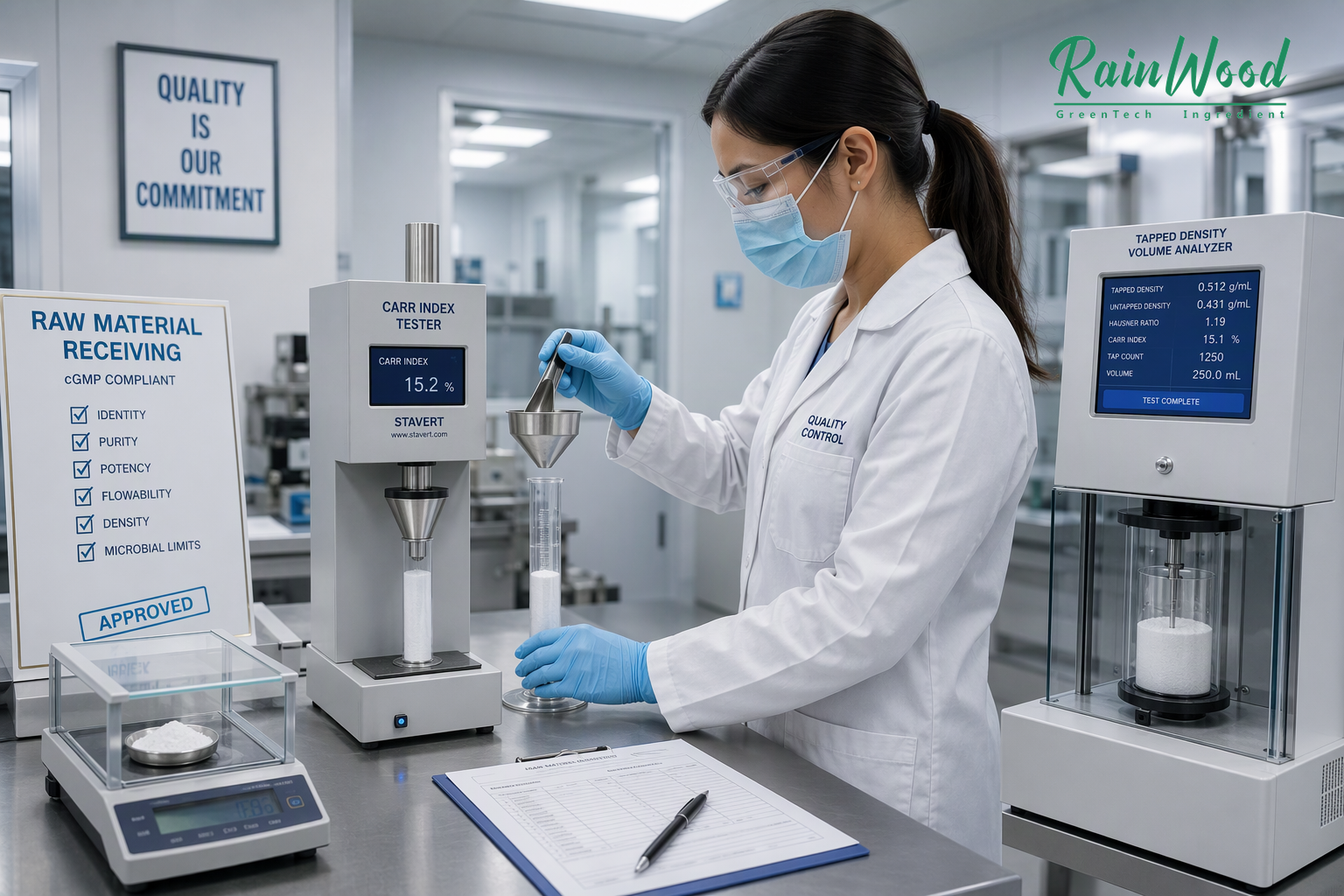
Figure 3: Quality Control Specialist Performing Powder Carr's Index Flowability and Tapped Density Analysis
References
- Quality Control Assessment of Commercial CoQ10 Supplements: https://pmc.ncbi.nlm.nih.gov/articles/PMC2170950/
- Stability of Reduced and Oxidized CoQ10 in Finished Products: https://pubmed.ncbi.nlm.nih.gov/33673604/
- Comparative Bioavailability of CoQ10 Formulations: https://pubmed.ncbi.nlm.nih.gov/30153575/
- RainwoodBio OEM service: https://www.rainwoodbio.com/oem
*This article is for B2B procurement and educational purposes. Product identity, sampling, analytical, stability, safety, labeling, and regulatory requirements must be confirmed for the exact ingredient, finished format, and destination market.*
Explore RainwoodBio CoQ10 & Custom Formulation Capabilities
- Custom CoQ10 Hard Capsules & High-Potency Blends – Precision cGMP encapsulation for CoQ10 with PQQ, L-Carnitine, and Vitamin E co-factors.
- High-Absorption CoQ10 Softgels & Lipid Suspensions – MCT/Olive oil carrier systems with natural tocopherol stabilization.
- Water-Soluble CoQ10 Micro-Encapsulated Powders & Stick Packs – Enhanced bioavailability single-serve sachets and beverage-grade premixes.
- OEM / ODM Contract Manufacturing Services – End-to-end formulation development, pilot batch scaling, and US/EU regulatory compliance dossiers.
- Contact RainwoodBio Technical Sales – Request CoA, HPLC analytical protocols, pilot stability samples, or commercial quotation.
Table of Contents
- A sample is a reference, not a promise of sameness
- Particle size can change production without changing the name
- Bulk density changes the dose calculation
- Sampling location matters
- Package can create a bulk difference
- Set a commercial equivalence range
- How RainwoodBio can support sample-to-bulk control
- Sample approval checklist
- Put a pre-shipment decision into the purchase order
- Frequently asked questions
- References