 EN
Executive Summary & B2B Formulation Guidance
How to evaluate nattokinase blends with serrapeptase, bromelain, garlic, or botanicals by dose, compatibility, evidence, and risk.
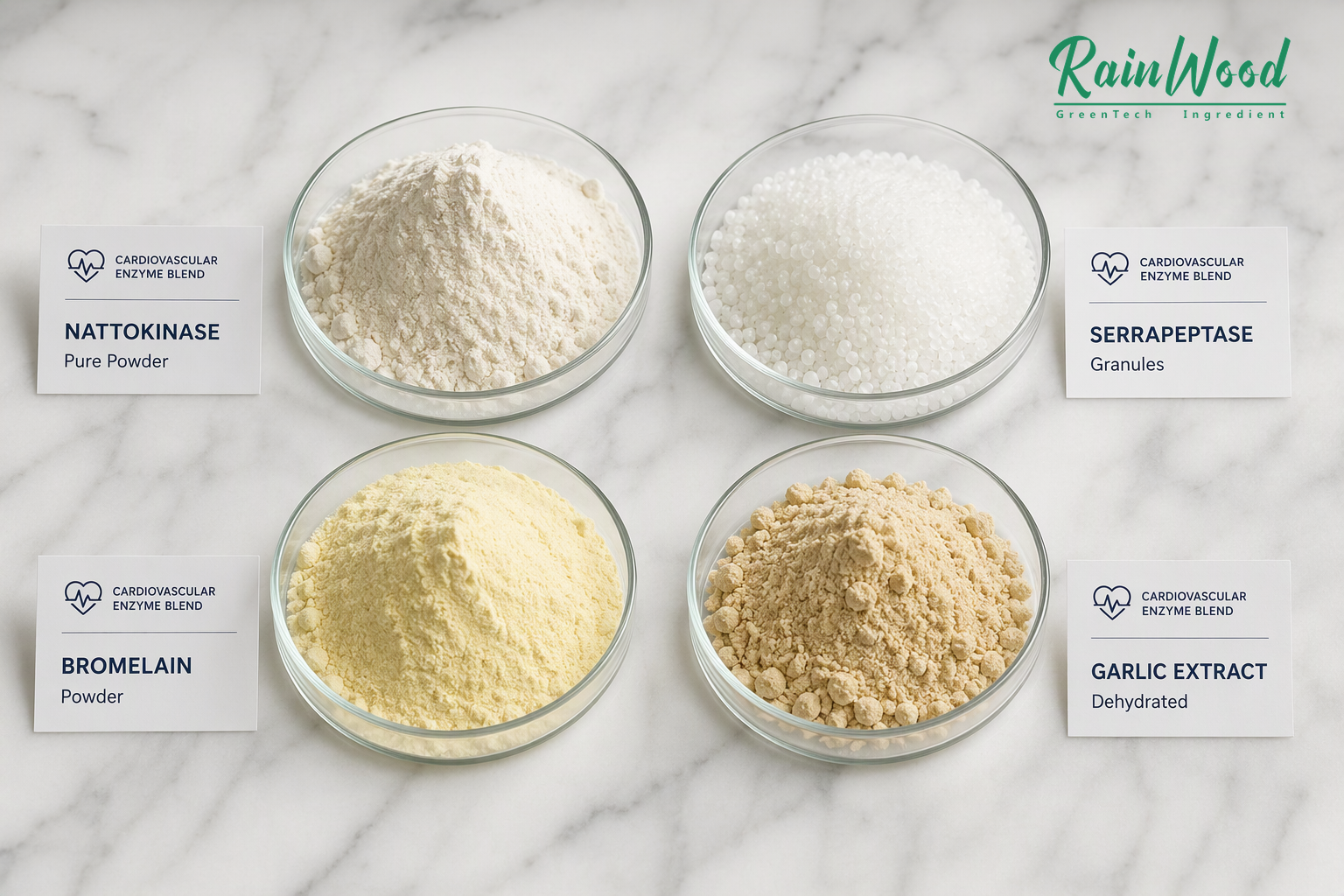
Figure 1: Commercial Laboratory Presentation of Multi-Enzyme Cardiovascular Blend: Nattokinase, Serrapeptase, Bromelain, and Garlic Extract
A longer ingredient list creates a longer proof list
Nattokinase formulas are often combined with serrapeptase, bromelain, garlic, grape seed, CoQ10, or other cardiovascular ingredients. The product can look more complete and command a higher price. It also becomes harder to define the active dose, assay every component, protect enzyme activity, control taste and odor, and review medication warnings.
More ingredients are not automatically more premium. Each ingredient should solve a defined buyer problem and fit the target format, evidence, and market.
Different enzymes need different activity units
Nattokinase may be declared in FU. Serrapeptase and bromelain use other activity conventions. A formula cannot add the numbers together or compare them as if they were the same unit. The master formula should show each enzyme's identity, assay, active amount, and method separately.
Garlic and botanicals may be standardized to a marker or extract ratio rather than enzyme activity. CoQ10 may be supplied with a carrier. The [INTERNAL LINK -> Nattokinase Dose Calculation Blog] helps keep active amount and carrier weight visible.
Physical compatibility can fail before the label does
Enzymes and botanical powders can differ in particle size, density, moisture, color, odor, and stability. A low-dose enzyme can segregate from a larger carrier or botanical fraction. A garlic ingredient can affect odor and customer acceptance. A moisture-sensitive enzyme can lose activity while the other ingredients remain within specification.
Use a premix strategy where necessary and test the final matrix. A raw nattokinase COA cannot prove activity after blending with acidic, hygroscopic, or volatile ingredients. The [INTERNAL LINK -> Nattokinase Stability Blog] explains why package and formula need one stability plan.
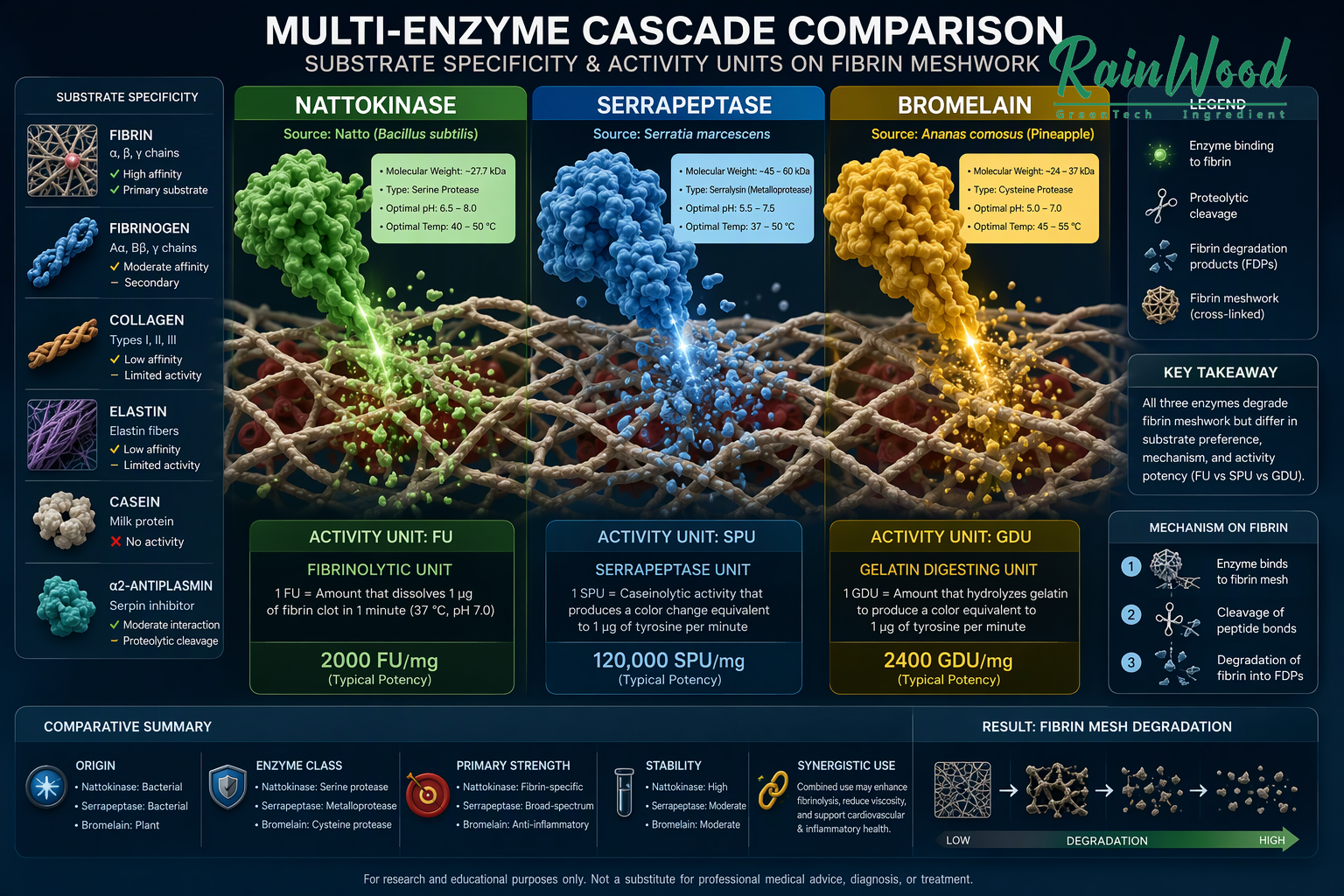
Figure 2: 3D Multi-Enzyme Cascade Diagram: Comparing Substrate Specificities and Activity Units (FU vs SPU vs GDU) on Fibrin Meshwork
The buyer loss from a crowded formula
An overloaded capsule can require multiple units. A powder can taste poor or clump. A supplier may provide several raw COAs but no finished-product evidence. The brand then pays for reformulation, new artwork, extra testing, and delayed fulfillment.
The claim risk is also larger. A blend page may imply that every ingredient supports clot prevention, arterial cleaning, or blood thinning. A customer taking medication may interpret the language as a treatment promise. Marketing intensity cannot replace a claim-to-evidence matrix.
Build a blend specification
List exact forms, active amounts, activity units, standardization, carriers, assay methods, water, contaminants, microbiology where relevant, package, storage, and shelf life. Add a finished-product method for each critical active. Define the sample plan for low-dose components and the response when one ingredient fails.
Review the target market and customer. A practitioner product may need a technical dossier. An Amazon product may need clearer warnings and a restrained claim set. A distributor may need allergen and traceability documents. Use [INTERNAL LINK -> Nattokinase Safety Warning Blog] before approving the marketing brief.
How RainwoodBio can support multi-ingredient OEM
RainwoodBio publishes requirement confirmation, supplier management, process control, quality testing and release, compliance documentation, and OEM formats including capsules, tablets, powders, and stick packs. These capabilities can support a complex enzyme formula. The exact blend still needs product-specific compatibility, activity, stability, and claim evidence.
Blend approval gate
Before approving, ask:
- What exact activity unit applies to each enzyme?
- Which ingredients require premixing or protection?
- Can the selected format hold the full dose?
- How will the final matrix be tested?
- Which claims are supported by direct evidence?
- What medication or allergen warnings are needed?
Request a [INTERNAL LINK -> Nattokinase Blend Feasibility Review] [INTERNAL LINK -> Contact Us Page] with the formula, target dose, market, and package.
Use a blend decision matrix
For each added ingredient, write its intended buyer benefit, active amount, assay, evidence, compatibility risk, warning, and cost. Remove an ingredient when the team cannot state why it belongs in the formula. This prevents a blend from becoming a collection of popular names with no release logic.
The matrix should also show which ingredient drives the package and shelf life. If nattokinase needs low moisture but a botanical attracts water, the package and formula may need redesign. If a garlic ingredient creates a strong odor, the customer experience and complaint plan should be updated before production.
Define the release plan before adding another enzyme
For every enzyme, record the activity unit and method. Do not report “total enzyme activity” unless the calculation has a meaningful, approved definition. For every botanical, record extract ratio or marker, source, carrier, and contaminant controls. Then set a finished-product sampling plan that can detect low-dose components and matrix interference.
Run compatibility checks under real package and storage conditions. A blend can pass a fresh release assay and lose activity later because one component changes moisture or pH. A strong odor can also create returns even when every active passes. The formula should be judged by released product performance, not the number of ingredients in the marketing headline.
Give the sales team a simple comparison sheet
List each active, its exact form, activity or standardization unit, amount per serving, method, evidence, and warning. Explain which studies apply to which ingredient and which claims are not approved. This prevents a sales representative from combining “fibrinolytic,” “blood thinning,” and “anti-inflammatory” into one unsupported product promise.
The sheet should also show the package and daily unit count. A blend that needs four capsules may not fit the channel's price or customer routine. A powder may require a flavor and moisture-control plan. The commercial decision should be visible before the brand prints a premium formula story.
Prevent the blend from creating a claim problem
Make a claim map before adding any companion ingredient. For each statement, identify the ingredient, exact amount, evidence type, target market, and reviewer. Keep nattokinase activity claims separate from serrapeptase or bromelain activity and from botanical standardization. If the page combines several mechanisms into “supports circulation and inflammation,” the buyer may struggle to identify which evidence supports the sentence.
The formula also needs a customer-use map. A multi-ingredient capsule may increase odor, capsule count, allergen questions, and medication concerns. A powder blend may need flavor masking and moisture control. Test the actual blend in its final package, then give sales a one-page explanation of what is included, what is measured, and what is not claimed. This is stronger than adding another popular ingredient to a crowded label.
Frequently asked questions
Can all enzyme activities be added together?
No. Each activity unit is method-specific and should remain separate.
Is a multi-enzyme blend automatically stronger?
No. It may be more difficult to formulate, test, explain, and position.
Can raw COAs prove the blend?
No. Finished-product testing is needed for the matrix and declared amounts.
Should garlic be added to every nattokinase formula?
No. It should have a defined reason and pass compatibility, safety, and claim review.
Conclusion
Build a nattokinase blend around measurable actives and a defined buyer problem. A longer ingredient list only creates value when the supplier can prove the finished formula, not merely list more raw materials.
Disclaimer: This article is for B2B formulation and procurement planning. It is not medical advice and does not establish that any blend treats, prevents, or cures disease.
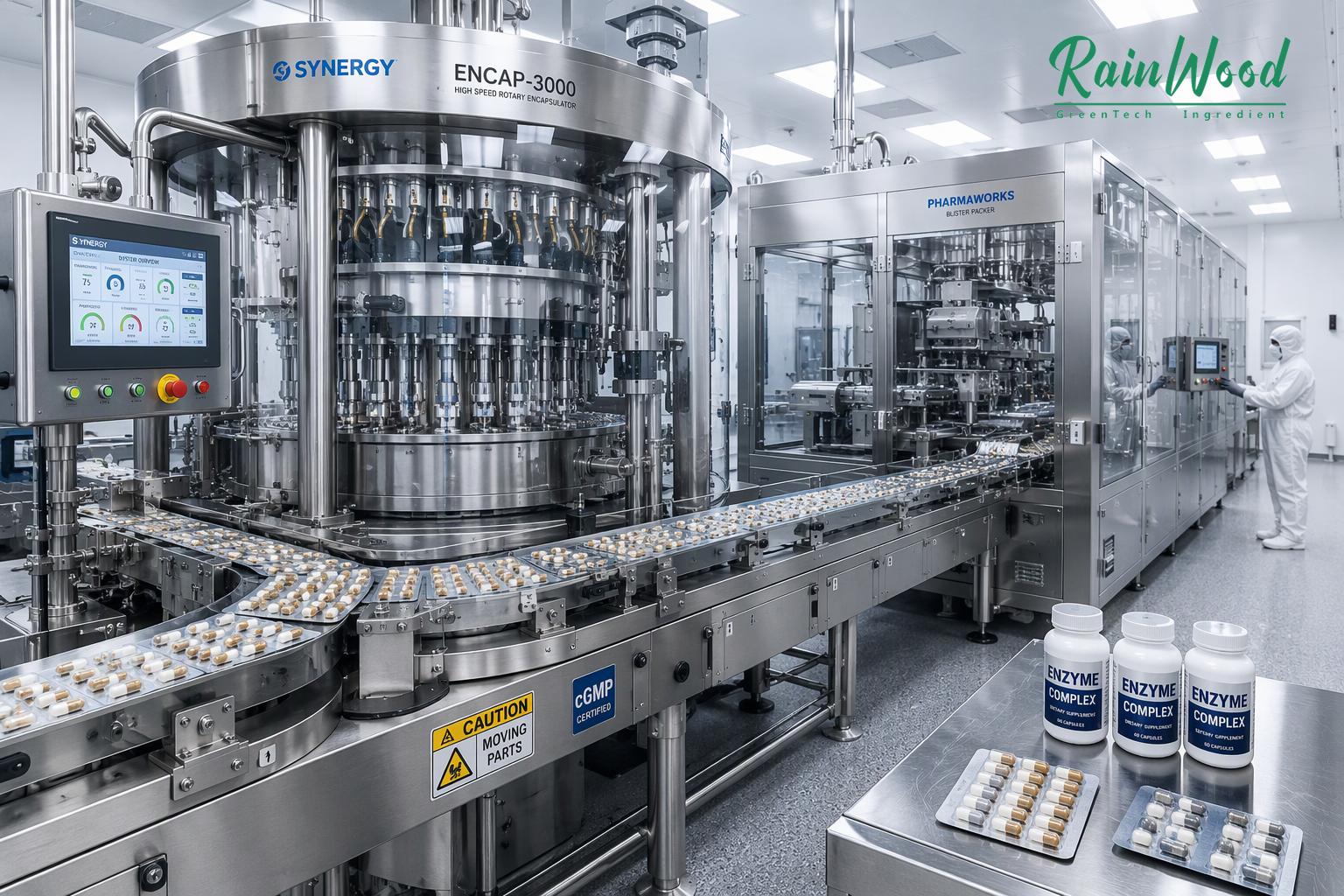
Figure 3: Automated High-Speed Rotary Multi-Component Encapsulation and Blister Packaging Line in cGMP Cleanroom
References
- https://pmc.ncbi.nlm.nih.gov/articles/PMC9312984/
- https://www.fda.gov/food/dietary-supplements-guidance-documents-regulatory-information/dietary-supplement-labeling-guide
- https://www.rainwoodbio.com/oem
Explore RainwoodBio Nattokinase & Cardiovascular OEM Solutions
- Custom Nattokinase Enteric & Delayed-Release Capsules – Gastric-acid protection preserving 2,000~20,000 FU/g enzyme activity for optimal systemic absorption.
- Nattokinase Lipid Softgels & Cardiovascular Blends – Synergistic co-formulations with CoQ10, Phytosterols, Garlic Oil, and Vitamin K2-free options.
- Nattokinase Sachet Stick Packs & Functional Powders – Convenient single-serve sachet stick packs with premium taste masking and high moisture barrier.
- OEM / ODM Contract Manufacturing Services – cGMP certified high-potency blending, blister packaging, and US/EU/Amazon regulatory compliance dossiers.
- Contact RainwoodBio Technical Sales – Request Nattokinase CoA (FU/g assay certificates), stability test protocols, pilot samples, or custom quotation.
Table of Contents
- A longer ingredient list creates a longer proof list
- Different enzymes need different activity units
- Physical compatibility can fail before the label does
- The buyer loss from a crowded formula
- Build a blend specification
- How RainwoodBio can support multi-ingredient OEM
- Blend approval gate
- Use a blend decision matrix
- Define the release plan before adding another enzyme
- Give the sales team a simple comparison sheet
- Prevent the blend from creating a claim problem
- Frequently asked questions
- Conclusion
- References