 EN

Executive Summary & B2B Formulation Guidance
Why a strong nattokinase sample may not predict commercial bulk and how to control FU activity, packaging, storage, and release.
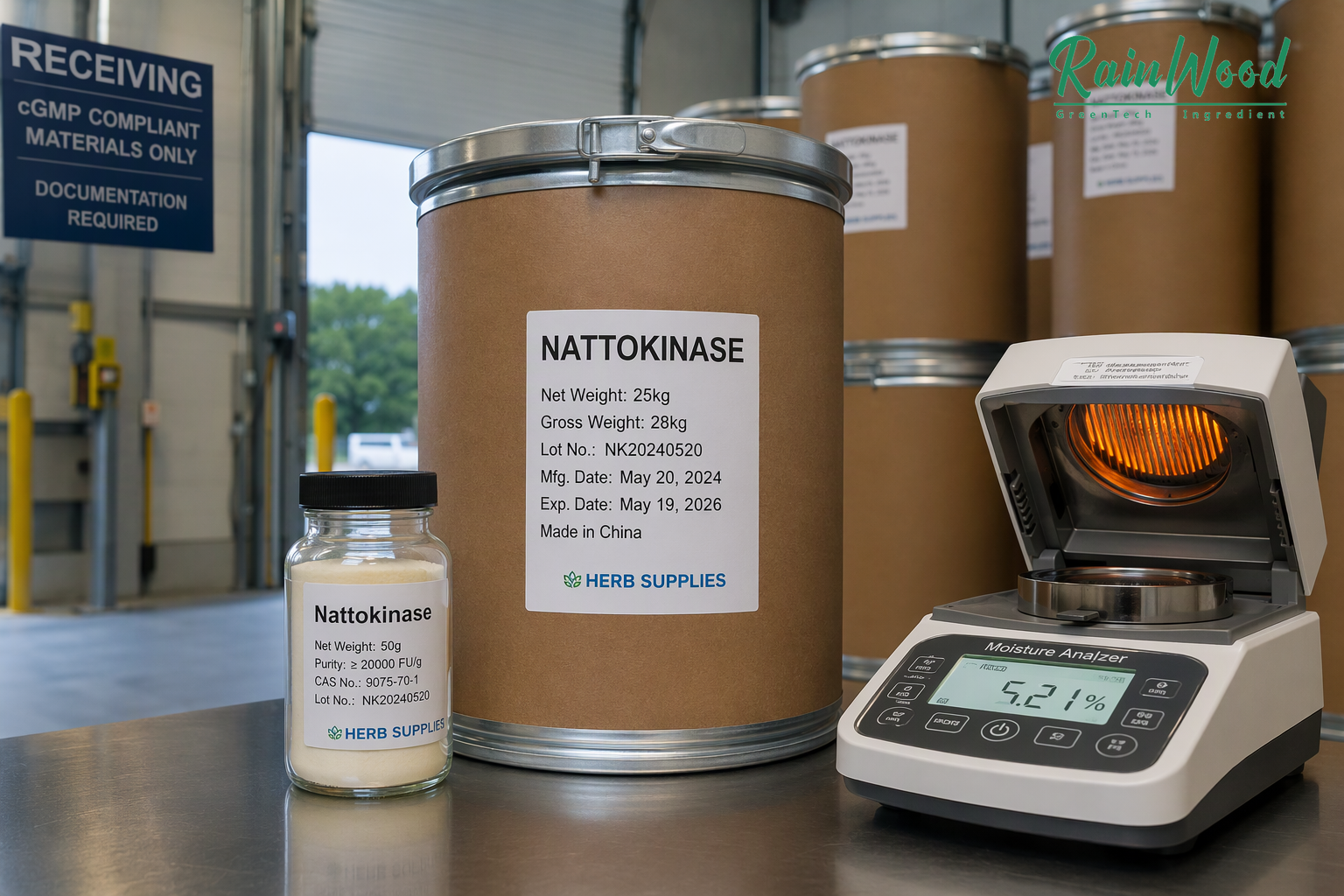
Figure 1: Laboratory Comparison: 50g Glass Pilot Sample Jar Beside 25kg Sealed Commercial Bulk Fiber Drums in Receiving Warehouse
The sample can be real and the commercial lot can still disappoint
A nattokinase sample shows a strong FU result and flows cleanly into capsules. The brand approves it. Months later, the commercial lot has lower activity, more odor, and a different powder texture. The supplier says the sample and bulk are the same grade. The buyer has a launch delay and no clear answer.
This does not automatically prove the sample was misleading. Scale changes fermentation, purification, drying, milling, packaging, sampling, and storage. A sample may be taken soon after production and packed in a small high-barrier pouch. Bulk may travel farther, remain open longer, or come from a different point in a broader batch.
Why enzyme activity can drift at scale
Enzymes are sensitive to conditions that may not change a basic visual inspection. Heat exposure during drying or transport, water pickup, oxygen, pH environment, and repeated opening can reduce activity. A larger batch can also have activity variation that a small sample does not represent.
The test method can create a second difference. The sample may be tested by the supplier method while the bulk is tested by a buyer laboratory using another substrate or basis. The numbers then look inconsistent even when the material has not changed. Use the [INTERNAL LINK -> Nattokinase Assay Method Blog] to define method comparability.
The buyer loss from sample-to-bulk drift
If the bulk fails after packaging materials are printed, the brand may pay for retesting, replacement, rework, expedited freight, and a delayed launch. If the activity is lower but still above a generic minimum, the brand may have to decide whether the label can remain unchanged. That decision is expensive when the supplier's specification did not define the activity basis.
The trust loss is larger when the product is sold as a high-FU premium enzyme. A distributor may ask whether the activity is guaranteed at release or through expiry. A vague answer makes future purchase planning difficult.
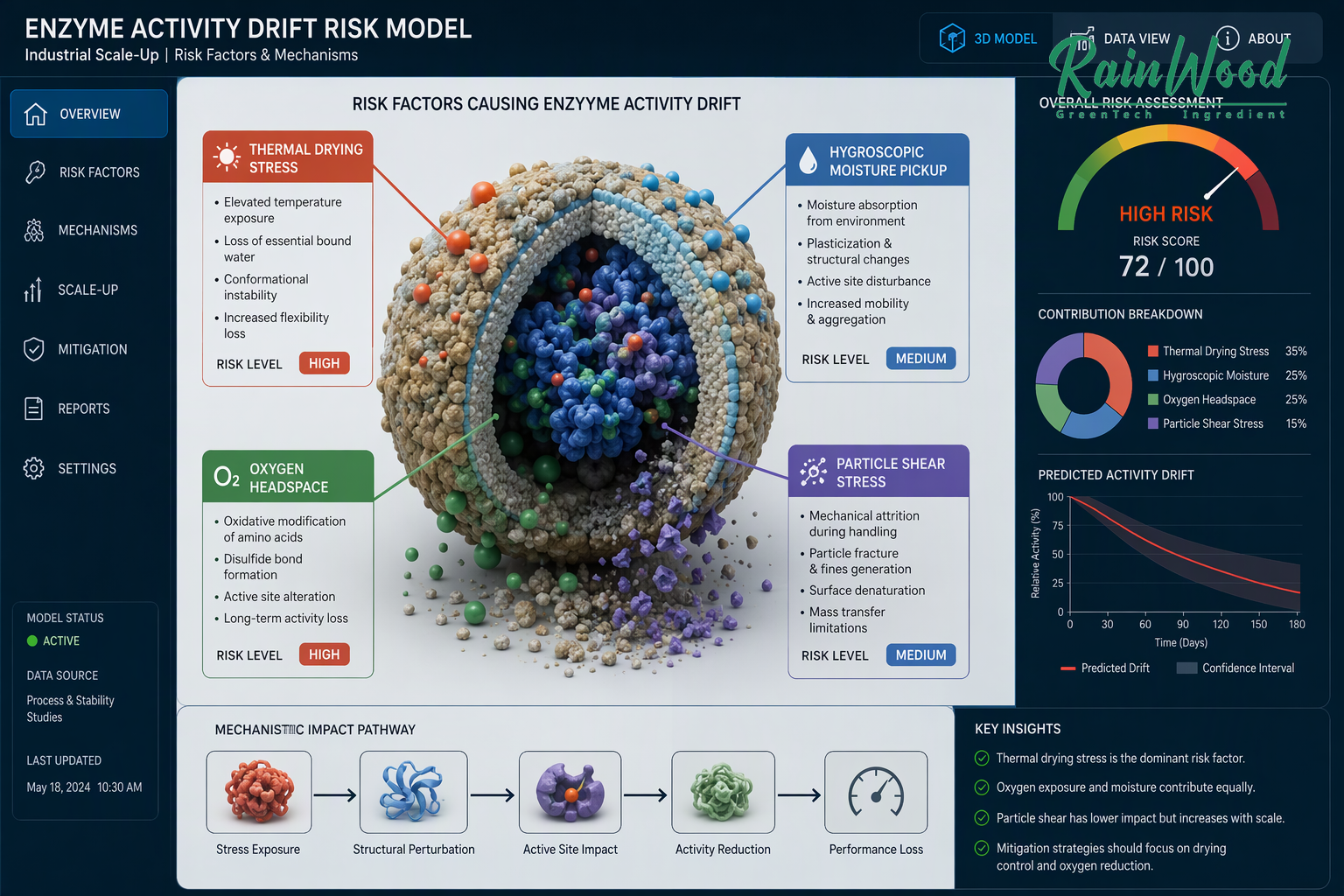
Figure 2: 3D Industrial Scale-Up Risk Model: Thermal Exposure, Moisture Absorption, Headspace Oxygen, and Particle Shear Factors
Build a sample approval record
Record product name, source, lot, activity, assay method, package, manufacturing date, storage, and sample amount. Keep enough sample for identity, activity confirmation, pilot production, stability, and retained comparison. Photograph the powder and package under consistent conditions, but treat images as supporting evidence rather than a release test.
Define must-match attributes: enzyme identity, activity basis, activity range, source, soy status, and critical safety limits. Define range attributes: color, odor, flow, density, and particle size where they do not affect the label but affect production. Agree on what happens when a commercial lot falls outside the range.
Use a first-commercial-lot gate
Request a pre-shipment sample from the actual lot. Compare activity by the agreed method, inspect package integrity, and test moisture and relevant impurities. At receipt, sample across containers and locations. For finished capsules, test activity per unit after filling. For enteric-coated tablets, test activity after coating and storage. The [INTERNAL LINK -> Nattokinase Stability Blog] covers the package-to-activity connection.
How RainwoodBio can support sample-to-bulk control
RainwoodBio publishes requirement confirmation, raw-material supplier management, process control, testing and release, and traceability through warehousing and logistics. These capabilities can support a documented transition from approved sample to commercial nattokinase product. Product-specific sample-to-bulk evidence still needs to be requested for the exact lot and format.
Sample approval gate
Before full production, require:
- approved sample and retained reference;
- comparable activity method and basis;
- pre-shipment commercial-lot sample;
- moisture, package, and storage review;
- first-article finished-product testing;
- replacement and nonconformance terms.
Request a [INTERNAL LINK -> Nattokinase Sample to Bulk Review] [INTERNAL LINK -> Contact Us Page] and send the sample COA, commercial COA, target FU, package, and launch schedule.
Define the first-article release record
The first commercial lot should be held while the buyer reviews the commercial sample, COA, package, and finished-product results. Record raw activity, activity after processing, unit weight, package condition, moisture, appearance, and storage. If the commercial lot differs from the approved sample, open a deviation before the material reaches normal inventory.
Ask the supplier to explain whether the approved sample was made from the same source, site, process, and package as the bulk. If not, classify the sample as a development sample rather than a commercial reference. This distinction helps the buyer set realistic expectations and prevents a sales sample from becoming an unmeasurable promise.
Treat the sample as a controlled reference
Store the approved sample in a sealed package with lot, date, and conditions recorded. Do not open it repeatedly for sales photography or small tests and then use it as the long-term commercial reference. If a second sample is needed, identify it as a new reference and explain why.
Use a first-article or pilot release before a full production order. The pilot should use commercial raw-material lots, the intended filling equipment, the planned package, and the approved activity method. Compare raw activity, activity after processing, capsule or stick weight, moisture, appearance, odor, and package integrity. If the pilot fails, solve the cause while the purchase order and artwork can still be changed.
The quality agreement should define whether the supplier must replace a lot that falls outside the approved sample range. It should also define whether the buyer can test a retained sample, request a method bridge, or accept a conditional release. Written terms reduce conflict when the sample and bulk are both technically plausible but commercially different.
Set a commercial equivalence range
Define which attributes must match the approved sample and which can vary within a documented range. Critical attributes may include identity, activity basis, minimum FU, moisture, source, allergen status, and package. Operational attributes may include color, odor, density, and flow when they affect filling but not the label.
Require a pre-shipment sample from the actual commercial lot. If it is outside the range, hold the order while the supplier explains the cause. This gives the buyer a decision point before the material is mixed, filled, or shipped to a retailer.
Make pre-shipment sampling part of the purchase order
The buyer should define when a commercial-lot sample is collected, how it is sealed, which container locations it represents, and how long the buyer has to review it. The sample should carry the actual lot number and use the same activity method and basis as the release COA. If the pre-shipment result differs from the approved reference, hold the order before filling rather than negotiating after finished goods are printed.
When a difference appears, compare method, sampling, moisture, storage, source, and processing history in that order. A new FU number may be real, but it may also reflect a different extraction or reporting basis. Document the decision as accept, reject, retest, or conditional release. This creates a repeatable supplier conversation and protects the brand from making a promise based on an unrepresentative sample.
Frequently asked questions
Is a lower bulk FU result proof of supplier failure?
It may reflect method, sampling, storage, or real activity drift. Investigate the cause before deciding.
Should every drum be tested?
Sampling should be risk-based but must represent the lot and the container locations.
Can the supplier change packaging after sample approval?
Only through change control because package exposure can affect enzyme activity.
Does one good commercial lot prove repeatability?
It is an important gate, but trend data across lots provide stronger evidence.
Conclusion
An approved nattokinase sample is a reference, not a guarantee. Lock the method, activity basis, package, storage, and first-lot release plan before you let a strong sample become a weak commercial launch.
Disclaimer: This article is for B2B procurement and quality planning. It is not medical advice and does not establish that nattokinase treats, prevents, or cures disease.
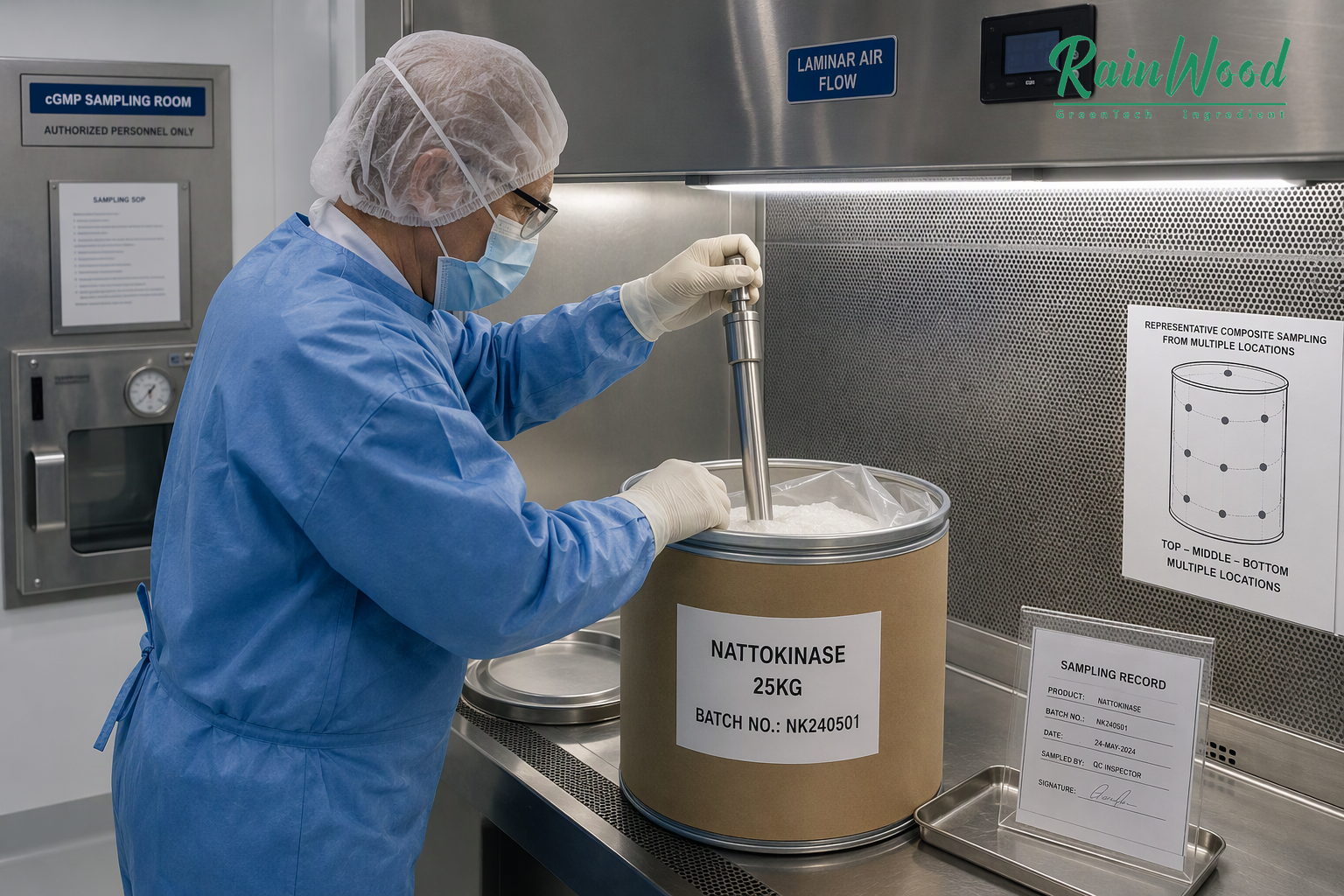
Figure 3: Senior QC Inspector Taking Representative Composite Core Samples from Bulk Nattokinase Drums under Laminar Flow Booth
References
- https://pmc.ncbi.nlm.nih.gov/articles/PMC9312984/
- https://pubmed.ncbi.nlm.nih.gov/17520440/
- https://www.rainwoodbio.com/oem
Explore RainwoodBio Nattokinase & Cardiovascular OEM Solutions
- Custom Nattokinase Enteric & Delayed-Release Capsules – Gastric-acid protection preserving 2,000~20,000 FU/g enzyme activity for optimal systemic absorption.
- Nattokinase Lipid Softgels & Cardiovascular Blends – Synergistic co-formulations with CoQ10, Phytosterols, Garlic Oil, and Vitamin K2-free options.
- Nattokinase Sachet Stick Packs & Functional Powders – Convenient single-serve sachet stick packs with premium taste masking and high moisture barrier.
- OEM / ODM Contract Manufacturing Services – cGMP certified high-potency blending, blister packaging, and US/EU/Amazon regulatory compliance dossiers.
- Contact RainwoodBio Technical Sales – Request Nattokinase CoA (FU/g assay certificates), stability test protocols, pilot samples, or custom quotation.
Table of Contents
- The sample can be real and the commercial lot can still disappoint
- Why enzyme activity can drift at scale
- The buyer loss from sample-to-bulk drift
- Build a sample approval record
- Use a first-commercial-lot gate
- How RainwoodBio can support sample-to-bulk control
- Sample approval gate
- Define the first-article release record
- Treat the sample as a controlled reference
- Set a commercial equivalence range
- Make pre-shipment sampling part of the purchase order
- Frequently asked questions
- Conclusion
- References