 EN
EN

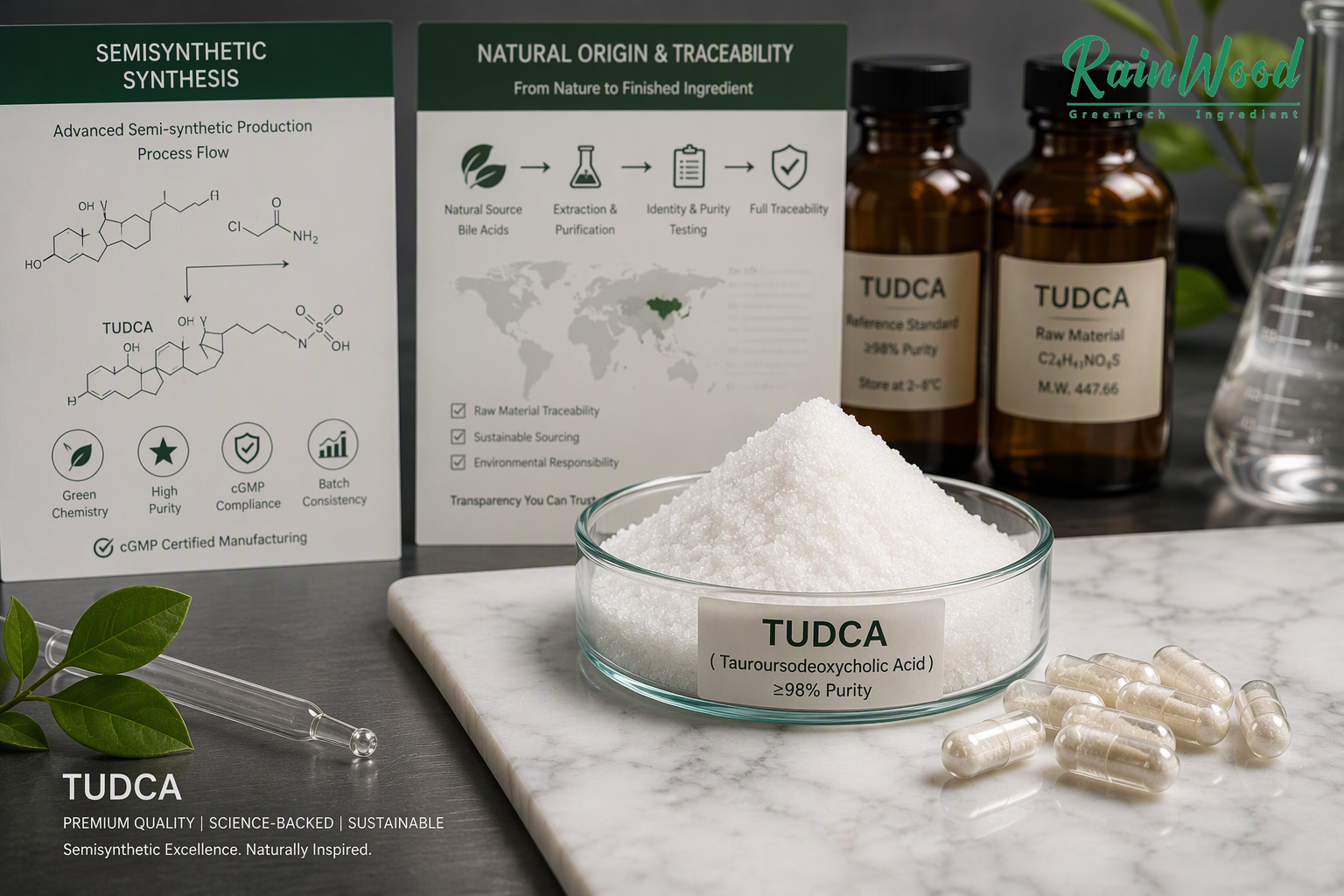
Executive Summary: The origin of raw TUDCA—whether produced via controlled chemical semisynthesis from Ursodeoxycholic Acid (UDCA) or direct crude animal bile extraction—fundamentally dictates upstream traceability, related substance impurity profiles, and dietary certification integrity (Vegan, Halal, Kosher, Non-GMO). Establishing verifiable origin documentation protects brands against labeling fraud, ethical consumer backlash, and regulatory non-compliance.
In global dietary ingredient sourcing, sales collateral often presents starkly contrasting narratives: Supplier A markets "100% natural TUDCA extracted from animal bile," while Supplier B offers "cGMP high-purity TUDCA produced via controlled semisynthetic coupling." A third trader provides no origin declaration at all. While the quoted spot prices per kilogram may appear similar, the underlying regulatory dossiers and consumer acceptance profiles are vastly different.
For Tauroursodeoxycholic Acid (TUDCA), sourcing origin is not merely a decorative marketing story. It directly impacts chromatographic impurity fingerprints, TSE/BSE animal-origin declarations, religious dietary certifications, heavy metal risk profiles, and ethical brand equity. For private-label brands procuring bulk TUDCA powder for commercial TUDCA capsule manufacturing, locking the verifiable chemical route before printing consumer packaging is an essential risk control.
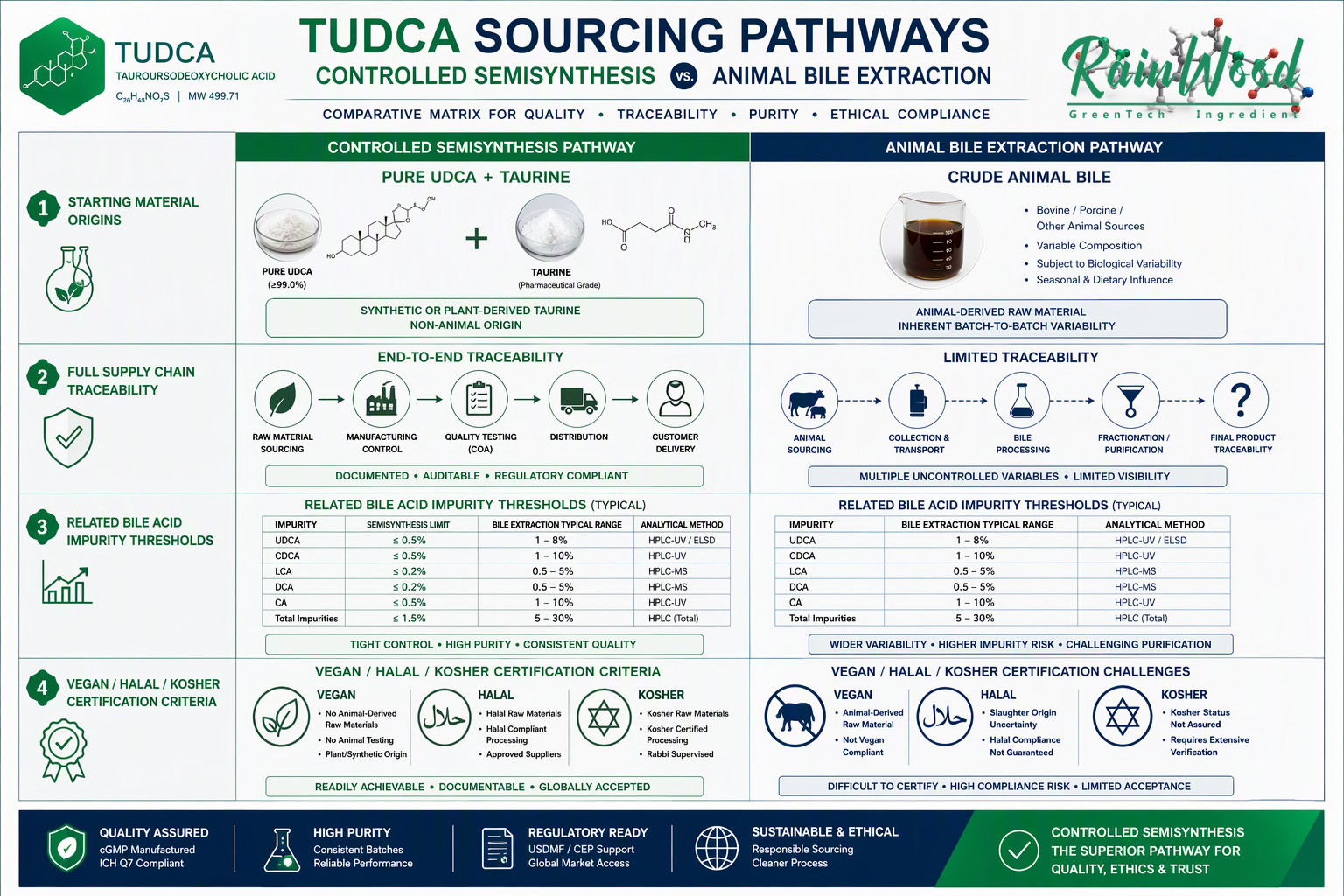
1. Deconstruct the Two Primary Sourcing Routes
Utilize our TUDCA source and traceability checklist to audit the chemical and operational differences between manufacturing pathways:
2. Upstream Traceability in Semisynthetic Manufacturing
Even for semisynthetic TUDCA, regulatory bodies (including the US FDA under 21 CFR Part 111 and EU authorities) mandate unbroken chain-of-custody documentation. A chemical manufacturer cannot claim an "animal-free" or "synthetic" product if the precursor UDCA was derived from uncertified animal bile without documented purification steps.
To substantiate consumer marketing claims, request an auditable Certificate of Origin and Synthesis Route Flowsheet detailing starting material specifications, coupling reagents (such as EEDQ or chloroformates), recrystallization solvents, and residual organic solvent profiles adhering to ICH Q3C standards.
3. The Sourcing Approval Gate for Brand Owners
Before approving TUDCA raw materials or printing label artworks, verify the following core compliance milestones:
- Verified Synthetic Flowchart: Complete reaction stoichiometry and starting material origin documentation on manufacturer letterhead.
- TSE/BSE & Non-Animal Origin Declarations: Formal certificates signed by quality assurance leadership confirming raw material compliance.
- Dietary Certification Audits: Third-party Halal and Kosher facility certificates explicitly naming Tauroursodeoxycholic Acid within the certified product annex.
Secure Fully Traceable, cGMP Semisynthetic TUDCA Raw Materials
Shaanxi Rainwood Biotech supplies cGMP-certified bulk semisynthetic TUDCA powder (≥98% dry basis) and turnkey OEM/ODM capsule formulations with complete TSE/BSE-free, Non-GMO, and ISO 17025 traceability dossiers.
Frequently Asked Questions (FAQ)
Q1: Is modern commercial TUDCA primarily synthetic or extracted from animal bile?
Over 95% of global commercial dietary supplement TUDCA is produced via controlled chemical semisynthesis (conjugating purified Ursodeoxycholic Acid with Taurine) due to higher purity, ethical consumer alignment, and absence of biological zoonotic risks.
Q2: Can TUDCA supplements be certified as Vegan or Vegetarian?
Yes, provided the TUDCA is produced via a fully synthetic or non-animal semisynthetic route, filled into vegetarian HPMC capsule shells, and manufactured on dedicated non-animal production lines with verified TSE/BSE-free documentation.
Q3: What analytical tests verify that TUDCA is free from animal biological contaminants?
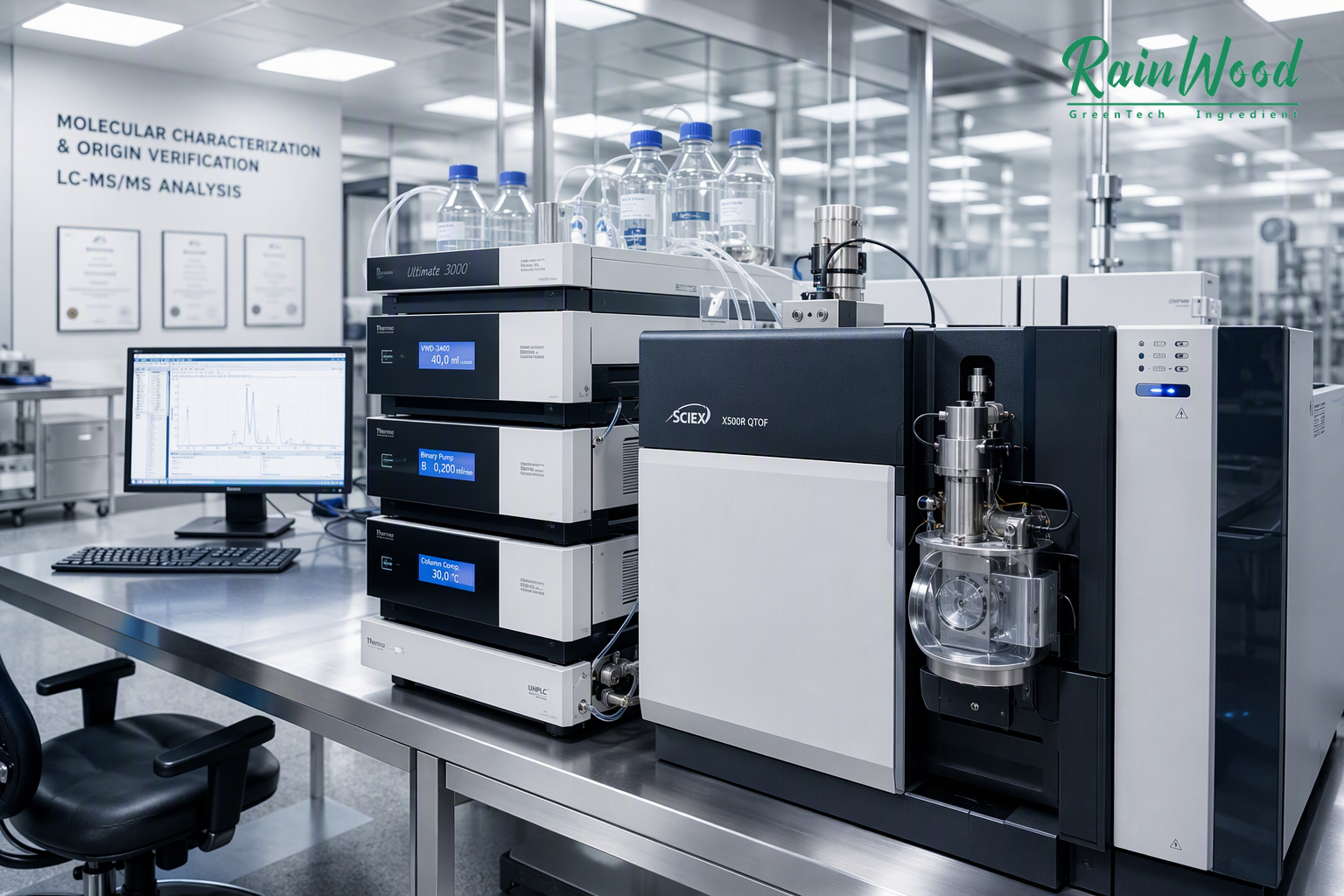
High-resolution LC-MS/MS peptide mapping, absence of foreign bile conjugates (such as Cholic Acid or Deoxycholic Acid derivatives), and rigorous microbiological testing confirm synthetic purity and absence of crude animal bile residues.
References & Standards
- PubMed Central (PMC): Bile Acids Chemistry and Semisynthetic Conjugation Pathways (PMC6952947)
- European Pharmacopoeia (Ph. Eur.): Monograph on Ursodeoxycholic Acid and Related Bile Salts.
- Shaanxi Rainwood Biotech: TUDCA Synthesis & Traceability Standards and Quality Infrastructure.