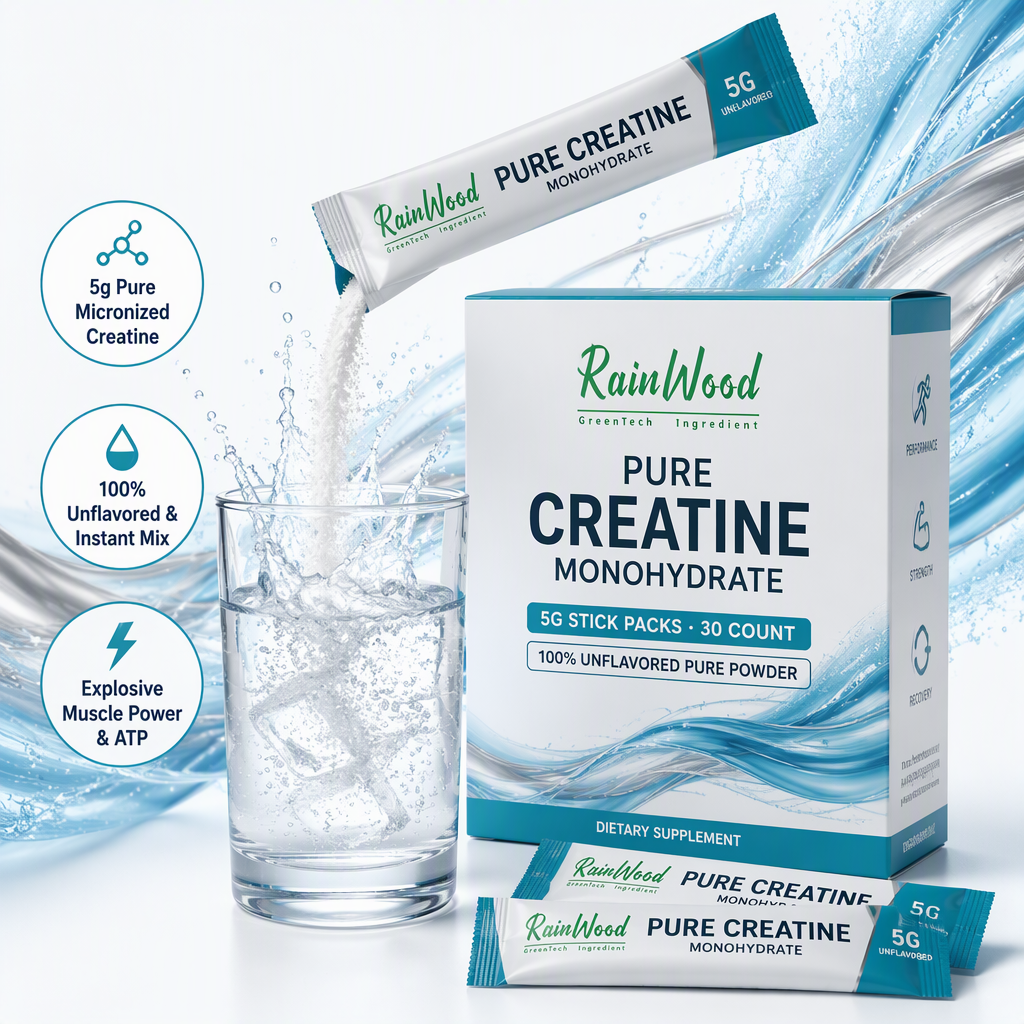
Creatine Monohydrate and Electrolyte Powder Stick Packs are designed for sports nutrition brands seeking a convenient, single-serve format that combines creatine with essential electrolytes. The proposed formulation features 5 g of creatine monohydrate per stick, alongside customizable elemental sodium, potassium, and magnesium levels.
With flexible flavor development and private-label packaging options, this product concept provides a starting point for brands developing creatine-based drink mixes for active lifestyles. Rainwood supports formula customization and stick-pack packaging development, subject to project requirements and manufacturing feasibility.
| Parameter | Proposed Specification |
|---|---|
| Product Name | Creatine Monohydrate and Electrolyte Powder Stick Packs |
| Product Category | Sports Nutrition Supplements |
| Active Ingredient | Creatine Monohydrate |
| Dosage Form | Powder Stick Packs |
| Proposed Creatine Monohydrate | 5 g per stick |
| Proposed Elemental Sodium | 300–500 mg per stick |
| Proposed Elemental Potassium | 150–300 mg per stick |
| Proposed Elemental Magnesium | 40–80 mg per stick |
| Proposed Net Fill Weight | 8–10 g per stick |
| Flavor Development Options | Lemon-Lime, Apple, Orange, and Mineral-Salt Profiles |
| Packaging Concept | Individual High-Barrier Sachets |
| Proposed Retail Configuration | 30 Stick Packs per Box |
| Customization | Formula Customization and Private-Label Packaging |
Creatine monohydrate is one of the most extensively studied forms of creatine used in sports nutrition. Combining it with sodium, potassium, and magnesium offers brands an opportunity to develop a multi-ingredient powder drink mix in a convenient single-serve format.
The proposed formula uses 5 g of creatine monohydrate per stick as its starting point. Electrolyte levels can be evaluated according to the intended product positioning, serving size, flavor profile, and target-market requirements.
For supplement brands and product developers, successful formulation involves more than selecting ingredient quantities. Mineral salt selection, elemental mineral delivery, taste balance, powder flow, dispersibility, moisture protection, and finished-product consistency should all be considered before commercial production.
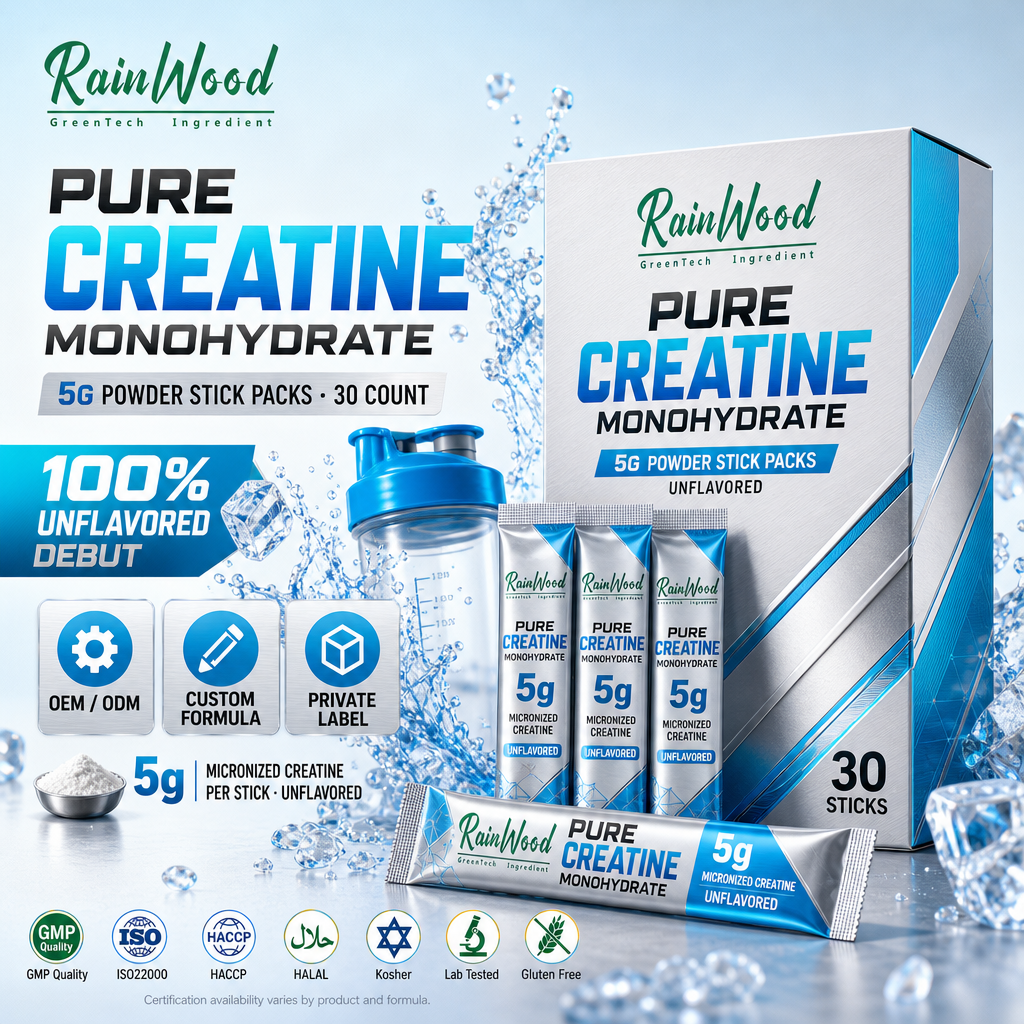
Creatine and Electrolyte Combination
Combines creatine monohydrate with a proposed sodium, potassium, and magnesium profile in one powder formulation.
Defined Serving-Size Development
A proposed 5 g creatine monohydrate input per stick provides a clear starting point for serving-size calculations and product development.
Customizable Mineral Profile
Elemental sodium, potassium, and magnesium targets can be adjusted during formulation development, subject to ingredient compatibility, sensory performance, and applicable requirements.
Flexible Flavor Development
Lemon-lime, apple, orange, and mineral-salt profiles are potential development directions. Final flavors should be selected following sensory evaluation.
Single-Serve Packaging Concept
Individual stick packs offer convenient portioning and portable packaging for sports nutrition product lines.
B2B Customization Support
Rainwood can support formula customization and private-label packaging development according to project specifications and confirmed manufacturing capabilities.
The following parameters should be defined before the product specification is finalized:
Creatine monohydrate identity, assay, and declared amount per serving
Exact sodium, potassium, and magnesium salt forms
Verified elemental mineral content per serving
Finished-product net weight and serving-size calculations
Sweetener selection, total sugars, and added sugars where applicable
Flavor profile, taste balance, and mixing instructions
Powder flow, blend uniformity, and dispersibility
Moisture content, packaging barrier performance, and shelf-life validation
Applicable heavy-metal, microbiological, and other quality limits
Batch-specific Certificate of Analysis and appropriate analytical methods
Raw-material calculations should be reconciled with the finished formula and verified before label artwork is approved.
Potential applications include:
Creatine monohydrate drink mixes
Creatine and electrolyte combination powders
Flavored sports nutrition stick packs
Portable single-serve powder supplements
Final product positioning and labeling should reflect the actual composition, substantiated evidence, and requirements of the intended market.
Q1. What form of creatine is used in this product concept?
Creatine monohydrate is the confirmed development direction. The proposed target is 5 g of creatine monohydrate per stick, subject to final formula and finished-product verification.
Q2. How are the electrolyte amounts calculated?
The proposed sodium, potassium, and magnesium amounts refer to elemental mineral content, not the total weight of the corresponding mineral salts. Calculations must use the exact ingredient specifications and appropriate conversion factors.
Q3. Can the electrolyte ratios be customized?
The preliminary formulation provides target ranges for elemental sodium, potassium, and magnesium. Final levels can be evaluated during formula customization, taking account of serving weight, taste, ingredient compatibility, and target-market requirements.
Q4. Is the product sugar-free?
The sweetener system and sugar content have not yet been finalized. Sugar-free, zero-sugar, and related claims should not be made until the final formula and applicable labeling requirements have been verified.
Q5. Which flavors can be developed?
Lemon-lime, apple, orange, and mineral-salt profiles are proposed for evaluation. Final availability depends on formulation trials and sensory approval.
Q6. Is private-label packaging available?
Private-label packaging development is within the intended service scope. Final packaging configurations and project feasibility must be confirmed before an order is placed.
Q7. What documentation should buyers request?
Buyers should request the applicable raw-material specifications, ingredient COAs, finished-product testing plan, elemental mineral calculations, and supporting quality documentation. Available documents depend on the finalized formula and production arrangements.

 EN
EN