 EN

Executive Summary & B2B Formulation Guidance
Evaluate nattokinase and vitamin K2 formulas by dose, audience, medication warnings, evidence, label language, and supplier controls.
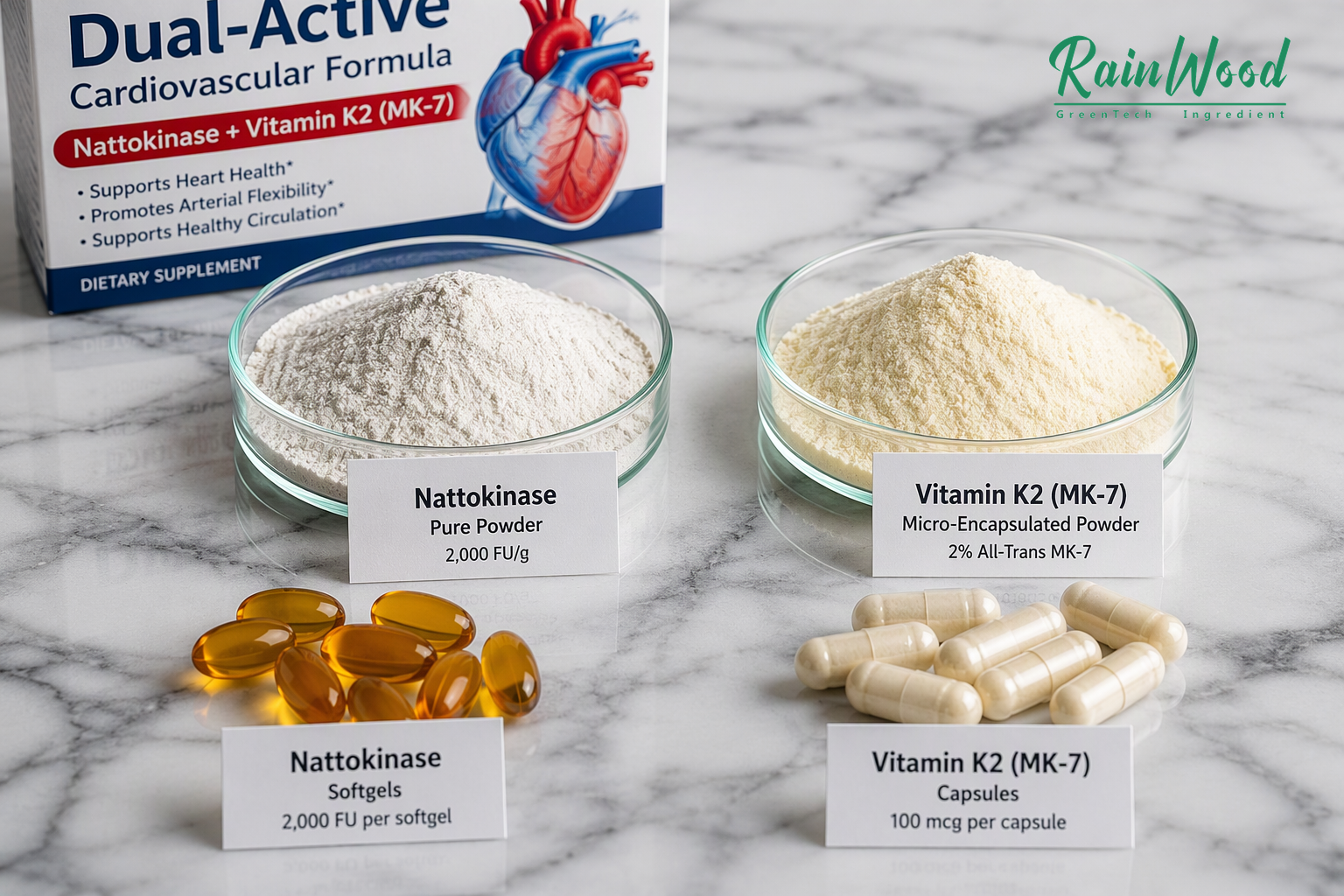
Figure 1: Dual-Active Cardiovascular Formulation: Nattokinase Powder Alongside Micro-Encapsulated Vitamin K2 (MK-7) in Glassware
Adding K2 changes the product conversation
Nattokinase is often marketed around circulation, while vitamin K2 is marketed around bone and vascular health. Combining them can create an attractive formula story. It can also create a more complicated label, evidence file, interaction review, and customer-service burden. The formula should be built around a defined buyer, not a desire to add every popular cardiovascular ingredient.
Keep activity and vitamin amounts separate
Nattokinase should be specified by FU activity and method. Vitamin K2 should be specified by chemical form, amount, potency, and stability. A blend name cannot replace the individual active amounts. If the product contains MK-7 or another K2 form, the buyer should confirm identity and assay separately.
The [INTERNAL LINK -> Nattokinase FU Guide] explains why enzyme activity and mass are different. The [INTERNAL LINK -> Nattokinase COA Blog] explains why one COA line cannot prove both ingredients.
Compatibility is more than a label question
A powder blend can create segregation if the two components differ in particle size, density, or amount. Vitamin K2 may be provided in a carrier or premix. The carrier weight changes the capsule or sachet calculation. The formula needs a defined mixing order, sampling plan, and finished-unit assay.
Stability may also differ. Enzyme activity can be sensitive to moisture and heat, while vitamin K2 may require protection from light and oxidation depending on its form. The package must protect both actives without creating a false assumption that one stability study covers the entire product.
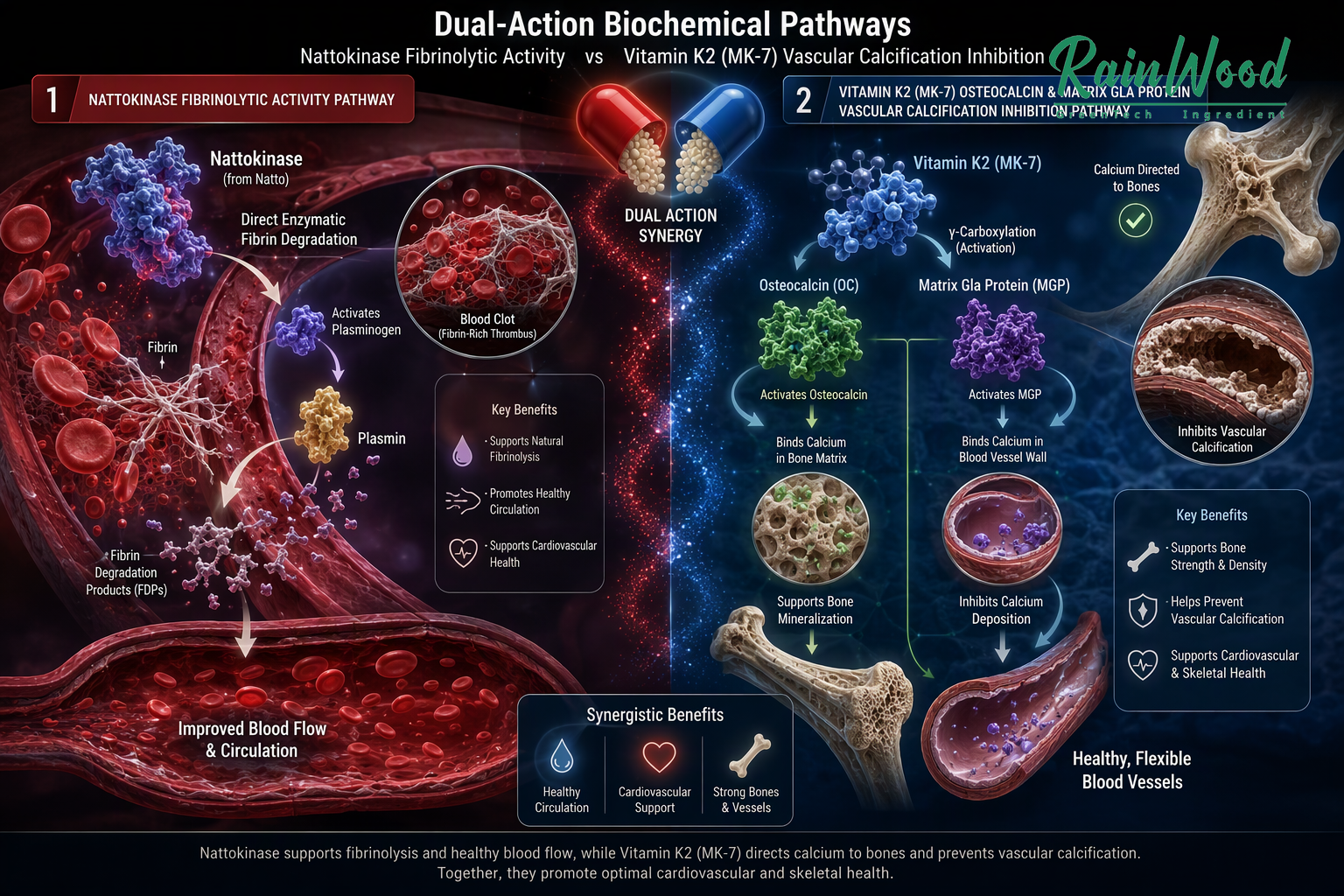
Figure 2: 3D Dual-Mechanism Model: Nattokinase Fibrinolytic Pathway vs Vitamin K2 (MK-7) Matrix Gla Protein Vascular Protection
The buyer loss from a fashionable blend
The product can become difficult to explain. Customers may ask whether K2 changes the nattokinase safety profile or whether the formula is intended for people taking medication. A marketplace or retailer may request separate evidence for each claim. If the blend is not uniform, the brand pays for rework or customer-service handling.
The biggest risk is overclaiming. “Blood thinner,” “clears arteries,” and “prevents clots” can create a drug-like impression. K2-related language can also create medication questions. A disclaimer does not remove the need for a careful review.
Build a two-active evidence file
List identity, amount, assay, source, storage, and stability for nattokinase and K2 separately. Add compatibility, premix, package, finished-unit, and claim evidence. Record the intended audience and warnings. The [INTERNAL LINK -> Nattokinase Safety Warning Blog] covers the warning file.
Use the target market to determine label and claim review. A general wellness product, a practitioner formula, and a product marketed to people taking anticoagulants require different communication discipline.
How RainwoodBio can support blend development
RainwoodBio publishes requirement confirmation, raw-material supplier management, process control, testing and release, compliance documentation, and OEM formats including capsules, tablets, and powders. These capabilities can support a two-active formula. Product-specific evidence for enzyme activity, K2 form, stability, uniformity, and warnings still needs to be confirmed.
Formula approval gate
Ask:
- What exact K2 form and dose are used?
- What FU target applies to nattokinase?
- Are both actives measured in the finished unit?
- Do carriers change the ratio or fill weight?
- Which medication and audience warnings are needed?
- Are the claims reviewed for the target market?
Request a [INTERNAL LINK -> Nattokinase and K2 Formula Review] [INTERNAL LINK -> Contact Us Page] with the draft formula, COAs, target audience, market, and format.
Review the combined formula with a customer-service script
The support team should know the exact nattokinase FU, K2 form and amount, soy status, storage, and when to refer medication questions to a healthcare professional. Do not allow staff to improvise that the combination is “safer,” “stronger,” or appropriate for someone taking medication. The script should repeat the approved label boundary.
For procurement, retain separate raw-material COAs and a finished-product result for both actives. If one active changes source or potency, reopen the formula calculation and label review. A combined capsule is a new product, not the sum of two approved powders.
Separate formula rationale from medical positioning
The reason to add vitamin K2 should be written as a formulation and buyer decision, not as a promise that the combination prevents a cardiovascular event. Define the K2 form, amount, stability, and intended customer. Then review whether the product page creates a combined blood, bone, or vascular claim that is stronger than either ingredient's evidence.
Use a blend matrix to track activity and assay for nattokinase, potency and form for K2, carrier weight, package, and finished-unit results. If the formula uses two premixes, confirm that the combined powder remains uniform. If one active is light-sensitive and the other is moisture-sensitive, package selection should protect both.
The brand should also decide whether a single capsule or two products better serve the buyer. A shorter formula can be easier to explain, test, and qualify.
Decide whether one formula or two products is clearer
If the brand cannot explain why K2 belongs beside nattokinase, consider two focused products rather than one crowded capsule. A single-ingredient product may be easier to qualify by FU and easier for customer service to explain. A combined product may be attractive when the buyer wants a specific formulation concept, but it must carry the additional dose, stability, and warning work.
Run a pilot with both actives and test finished-unit activity and K2 potency. Review package light and moisture protection, especially when one active is more sensitive than the other. Keep the formula rationale in the technical file so future marketing does not turn it into a disease or medication claim.
Control the two-active blend as one finished product
Set a minimum and maximum for each active, then test the blend for uniformity across beginning, middle, and end samples. Record whether the declared nattokinase activity is measured in the combined blend or after a separation step, and record the K2 form and potency method separately. A finished capsule can pass one assay and fail another if the matrix or extraction procedure is not defined.
Review the customer-facing name before artwork. A product called “nattokinase plus K2” may be interpreted as a medical combination, while a formulation description can remain more precise. Check daily unit count, storage, light protection, allergen language, and medication questions together. If the blend cannot be explained in one accurate paragraph, a single-ingredient product may be easier to qualify and sell.
Frequently asked questions
Does adding K2 make nattokinase safer?
No automatic conclusion can be made. The combination requires its own formula, safety, and claim review.
Can a nattokinase study support a nattokinase plus K2 blend?
Not automatically. The finished formula and evidence must be distinguished.
Should K2 be included in every nattokinase product?
No. It should solve a defined formulation or positioning need and fit the target customer.
Does a combined capsule need separate warnings?
The label and warnings should be reviewed for every ingredient and target market.
Conclusion
Nattokinase plus K2 can be a credible formula only when both actives remain measurable, stable, and honestly positioned. Build the evidence file before adding the second active to the front panel.
Disclaimer: This article is for B2B formulation and procurement planning. It is not medical advice and does not establish that nattokinase or vitamin K2 treats, prevents, or cures disease.
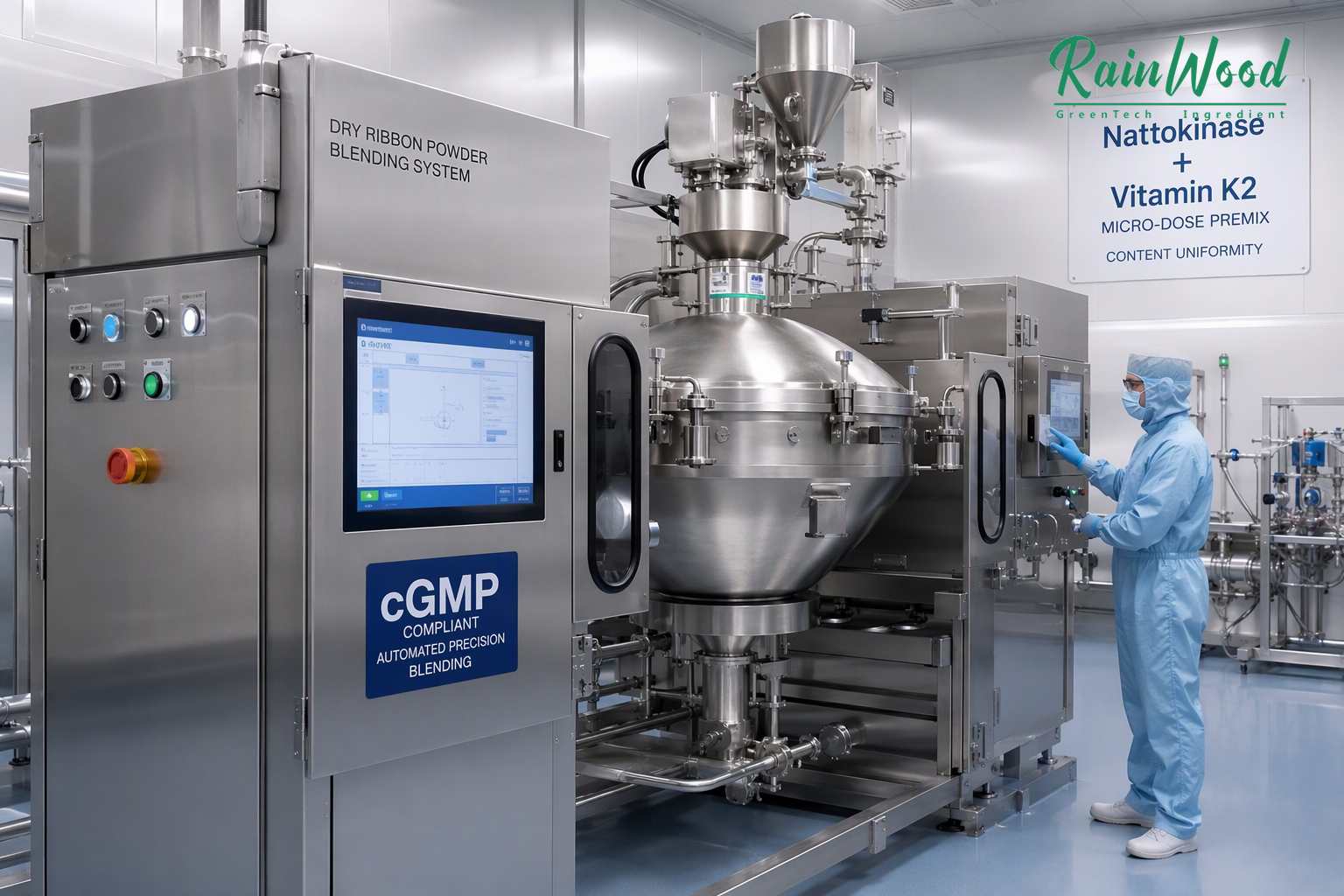
Figure 3: cGMP Automated Ribbon Powder Blending Machinery Blending Nattokinase with Micro-Dose Vitamin K2 Premix for Uniformity
References
- https://dsld.od.nih.gov/label/82020
- https://pubmed.ncbi.nlm.nih.gov/33843667/
- https://www.fda.gov/food/dietary-supplements-guidance-documents-regulatory-information/dietary-supplement-labeling-guide
- https://www.rainwoodbio.com/oem
Explore RainwoodBio Nattokinase & Cardiovascular OEM Solutions
- Custom Nattokinase Enteric & Delayed-Release Capsules – Gastric-acid protection preserving 2,000~20,000 FU/g enzyme activity for optimal systemic absorption.
- Nattokinase Lipid Softgels & Cardiovascular Blends – Synergistic co-formulations with CoQ10, Phytosterols, Garlic Oil, and Vitamin K2-free options.
- Nattokinase Sachet Stick Packs & Functional Powders – Convenient single-serve sachet stick packs with premium taste masking and high moisture barrier.
- OEM / ODM Contract Manufacturing Services – cGMP certified high-potency blending, blister packaging, and US/EU/Amazon regulatory compliance dossiers.
- Contact RainwoodBio Technical Sales – Request Nattokinase CoA (FU/g assay certificates), stability test protocols, pilot samples, or custom quotation.
Table of Contents
- Adding K2 changes the product conversation
- Keep activity and vitamin amounts separate
- Compatibility is more than a label question
- The buyer loss from a fashionable blend
- Build a two-active evidence file
- How RainwoodBio can support blend development
- Formula approval gate
- Review the combined formula with a customer-service script
- Separate formula rationale from medical positioning
- Decide whether one formula or two products is clearer
- Control the two-active blend as one finished product
- Frequently asked questions
- Conclusion
- References