Brand: Rainwood Biotech | Product ref: 5148
Pomegranate peel extract powder from Punica granatum L. peel for ingredient sourcing and formulation. Rainwood’s catalog lists ellagic acid 40%, 90% and 98% options, plus punicalagin 30% and 40% options. These are different marker families; select the target assay and validate the offered grade against a current specification, lot COA and formulation sample.
Peel botanical sourceTwo marker familiesLot documents on requestFormulation sample review
| Product | Pomegranate Peel Extract Powder |
| Botanical source | Punica granatum L.; peel/rind |
| Catalog grades | Ellagic acid 40/90/98%; punicalagin 30/40% |
| Assay | Method, basis and result to confirm per lot |
| Extraction | Solvent and carrier to confirm per grade |
| Appearance | Confirm color and odor with sample |
| Physical data | Particle size, moisture, density on specification |
| Safety panel | Agree limits for microbes, metals, pesticides and solvents |
| Pack options | Catalog: 1 kg bag / 25 kg drum; confirm quote |
| Buyer documents | Current TDS, lot COA, sample and market files on request |
Ellagic acid and punicalagin require different purchasing specifications. Use the Description tab for the full buyer dossier, then request the current grade specification, lot COA and a matched sample for your formulation trial.
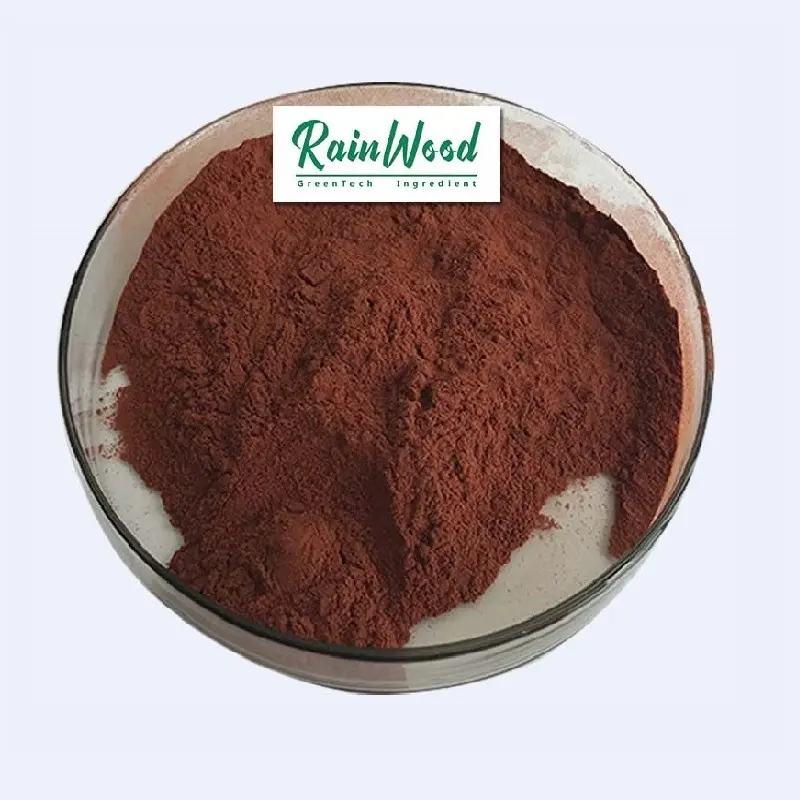
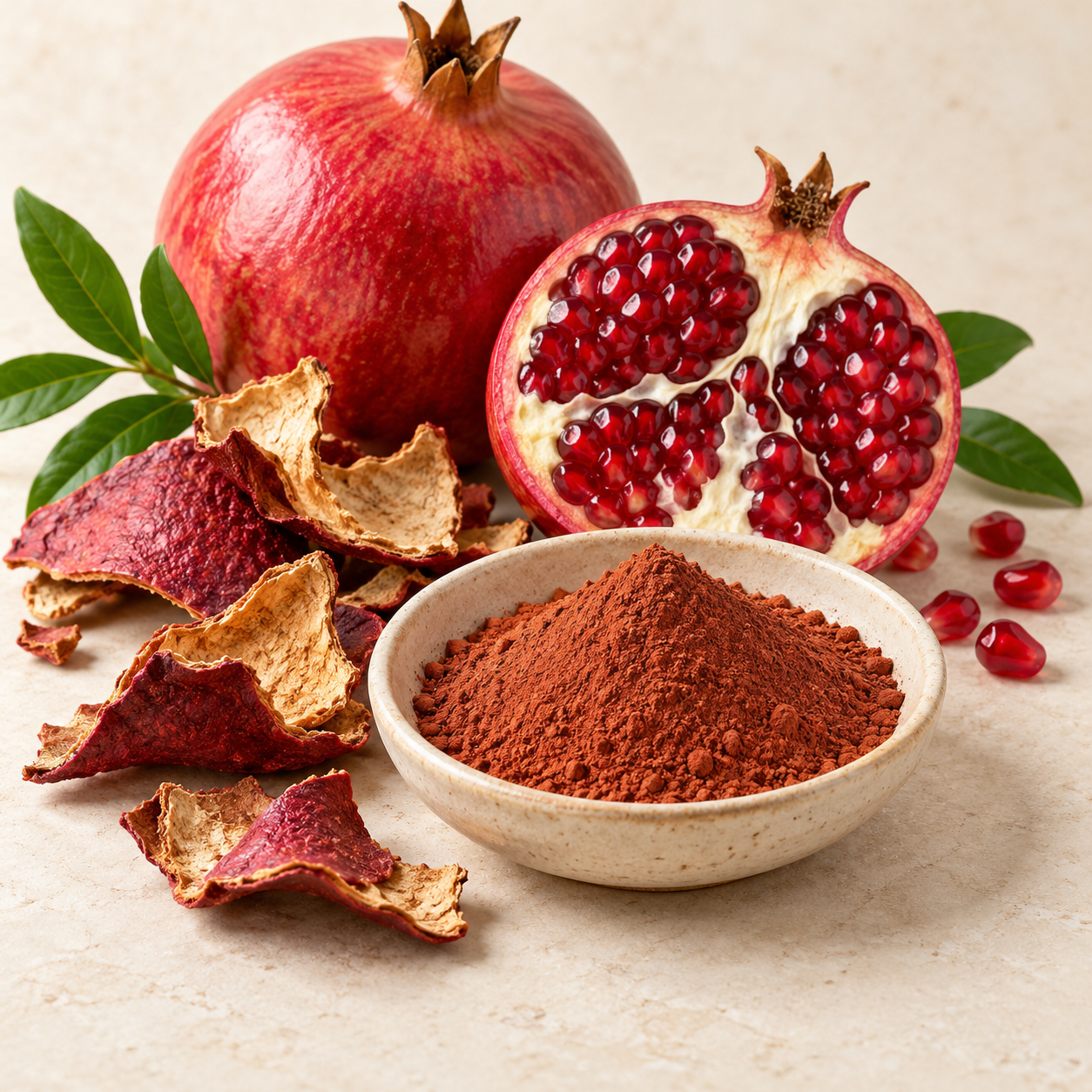
Gallery images illustrate the ingredient. Confirm the offered lot's appearance using a current sample.
Specify the marker. Verify the lot. Build the right formula. This page expands the Rainwood catalog into a practical qualification route for procurement, QA and product-development teams.
Punica granatum L. peel is the botanical source. Rainwood’s catalog lists ellagic acid 40%, 90% and 98%, and punicalagin 30% and 40% as reference options. Ellagic acid and punicalagin are different compounds and must not be compared as one specification. The exact offered grade, assay method, actual lot result, solvent system, pack and lead time require current supplier documents.
Ask for a coherent set of records for the same offered grade and lot. A marketing page, sample label and COA should name the same plant part and marker.
This is a procurement checklist, not a certificate of analysis. No batch COA was supplied for this page. Do not treat these fields as passed tests, fixed limits or actual results. Set acceptance criteria with Rainwood and review the current lot documents before purchase.
| Group | Parameter | Evidence to request or agree |
|---|---|---|
| Identity | Botanical name | Confirm Punica granatum L. in the offered specification. |
| Identity | Plant part | Confirm peel/rind and source declaration. |
| Source | Origin | Request origin and lot traceability records. |
| Profile | Extraction ratio | State only if it is defined for this grade; do not infer from assay %. |
| Profile | Target marker | Identify ellagic acid or punicalagin and the exact analyte. |
| Profile | Assay method | Request the current method, such as an agreed HPLC method. |
| Profile | Reporting basis | Clarify dry basis/as-is, calibration standard and any sum of isomers. |
| Profile | Actual lot assay | Match the lot result to the purchase specification. |
| Physical | Appearance | Record the offered lot color and visual description. |
| Physical | Odor and taste | Compare a retained sample with the agreed standard. |
| Physical | Particle size | Confirm sieve or distribution needed for the dosage form. |
| Physical | Moisture / loss on drying | Agree limit and method for the selected grade. |
| Physical | Ash | Request if part of your acceptance criteria. |
| Physical | Bulk density | Measure for filling and packing feasibility if relevant. |
| Physical | Tapped density | Request when flow and capsule fill are critical. |
| Process | Extraction solvent | Request grade-specific solvent declaration. |
| Process | Carrier / excipients | Disclose any added carriers or flow aids. |
| Safety | Residual solvents | Agree analytes, limits, method and lot results. |
| Safety | Pesticide residues | Select a panel for source and destination market. |
| Safety | Lead (Pb) | Agree a market-appropriate limit and lot result. |
| Safety | Arsenic (As) | Agree a market-appropriate limit and lot result. |
| Safety | Cadmium (Cd) | Agree a market-appropriate limit and lot result. |
| Safety | Mercury (Hg) | Agree a market-appropriate limit and lot result. |
| Microbiology | Total plate count | Agree limit, method and lot result. |
| Microbiology | Yeast and mold | Agree limit, method and lot result. |
| Microbiology | E. coli / Salmonella | Agree organism-specific methods and acceptance. |
| Commercial | Packaging / shelf life | Confirm inner liner, pack size, storage and expiry/retest basis. |
For a COA, check the product name, lot number, issue date, specification limit, actual result and method. A method name alone does not establish that the offered lot meets your target.
Ask Rainwood for its grade-specific extraction and manufacturing flow when process validation is required. The sequence above describes the buyer approval workflow, not an unverified claim about a particular factory line.
| Format | Development checks |
|---|---|
| Capsules or tablets | Marker delivery, blend uniformity, flow, fill weight and stability. |
| Powder sachets | Taste, color, particle size, mixing and moisture protection. |
| Beverages and shots | Dispersion, sediment, pH, processing stability and sensory profile. |
| Cosmetic systems | Compatibility, color shift, odor and stability in the target base. |
Set use level with a qualified formulator and the destination-market rules. A 98% ellagic acid assay is not a water-solubility claim; test the offered sample in your own liquid system.
| Buyer question | Standardized extract | Crude peel powder |
|---|---|---|
| Marker target | Defined only when stated in an agreed grade specification. | Marker level varies unless separately measured. |
| Formula space | Can be assessed against target marker per serving. | May need more material for the same marker target; calculate from actual assay. |
| Identity | Require source and method evidence. | Require source and method evidence. |
| Safety release | Lot testing and market limits still required. | Lot testing and market limits still required. |
1. Is ellagic acid the same as punicalagin?
No. Name the marker, assay method and reporting basis in your RFQ.
2. Which catalog grade should I request?
Share the formula, target marker and serving size. The listed grade percentages are options; confirm current availability and lot assay.
3. Does a 98% grade dissolve in water?
Purity does not prove solubility. Test dispersion, sediment and pH stability with the offered sample.
4. Which COA fields matter most?
Lot identity, marker, actual assay result, method, physical limits and relevant contaminant results.
5. Can you provide allergen or market declarations?
Request the current grade-specific declarations and review their scope; do not assume universal compliance.
6. What sample and packaging can I request?
The catalog references 1 kg foil bags and 25 kg drums. State sample quantity and confirm pack, availability and cost in the quote.
7. How do I confirm lead time and shelf life?
Use the written quotation and the selected lot’s storage and expiry/retest records.
8. Can Rainwood support third-party testing or OEM?
Specify the test panel and laboratory requirement, or send a finished-product brief. Scope, cost and feasibility are confirmed for the project.
Technical background: review of pomegranate peel constituents and review of ellagic acid properties. These publications do not verify any Rainwood lot.
These are practical buying advantages of a clearly specified pomegranate peel ingredient, subject to confirmation for the offered grade and lot.
Ellagic acid and punicalagin are distinct targets. Rainwood’s catalog lists options for both, allowing a buyer to start the RFQ with the intended marker rather than a generic “pomegranate extract” label.
Ask for analyte definition, assay basis and method before comparing percentages or quotations. This reduces the risk of approving a substitute grade that cannot meet the finished product’s label plan.
Use a current lot COA, matching specification and sample for QA release. Agree the contaminant panel with your destination market and product category.
Evaluate flow, color and taste in dry formats, or dispersion and sediment in liquids. A high marker assay is not proof of water solubility or finished-product stability.
Rainwood’s site describes both botanical ingredients and OEM/ODM supplement work. Send an ingredient target or finished-product brief so grade, format, documents and commercial terms can be scoped together.
For an actionable quote: include target marker, assay, format, market, sample quantity, forecast volume and required tests. Send your brief →
Shaanxi Rainwood Biotech Co., Ltd. presents itself as a Xi’an-based botanical ingredient and supplement business. Its company profile states that it was established in 2006 and describes an approximately 10,000 m² factory area on a 19-acre site. These are company-published background facts, not evidence of this pomegranate extract lot’s specification.
|
2006 Year stated on company profile |
Xi’an, China Company location |
Ingredient + OEM Published service areas |
The company profile lists quality systems and certifications including HACCP, ISO 22000, HALAL and ISO 9001. For procurement approval, request current certificate copies and verify the legal entity, site, activity scope, validity period and relevance to the offered grade. Also request the lot’s actual test results; a site-level certificate does not replace a product COA.
One brief, one useful response: send the target marker and assay, application, destination market, annual volume, required documents and expected purchase timeline. Contact Rainwood →
If the brief is still open, compare adjacent botanical ingredient categories by marker, form and documentation. Each link leads to an existing Rainwood product page; ask for the current grade specification before treating any catalog value as an order specification.
| Ingredient | Why a buyer may compare it |
|---|---|
| Grape Seed Extract Powder → | Another polyphenol-rich botanical for a different source and marker brief. |
| Resveratrol Powder → | A separate named polyphenol ingredient for portfolio review. |
| Rhodiola Rosea Extract Powder → | A botanical extract with its own identity and assay requirements. |
| Ginseng Powder → | Another botanical option when evaluating finished-product concepts. |
These materials are not substitutes for pomegranate peel extract. Formulation suitability and any permitted claims require product-specific review.

 EN
EN