 EN
EN

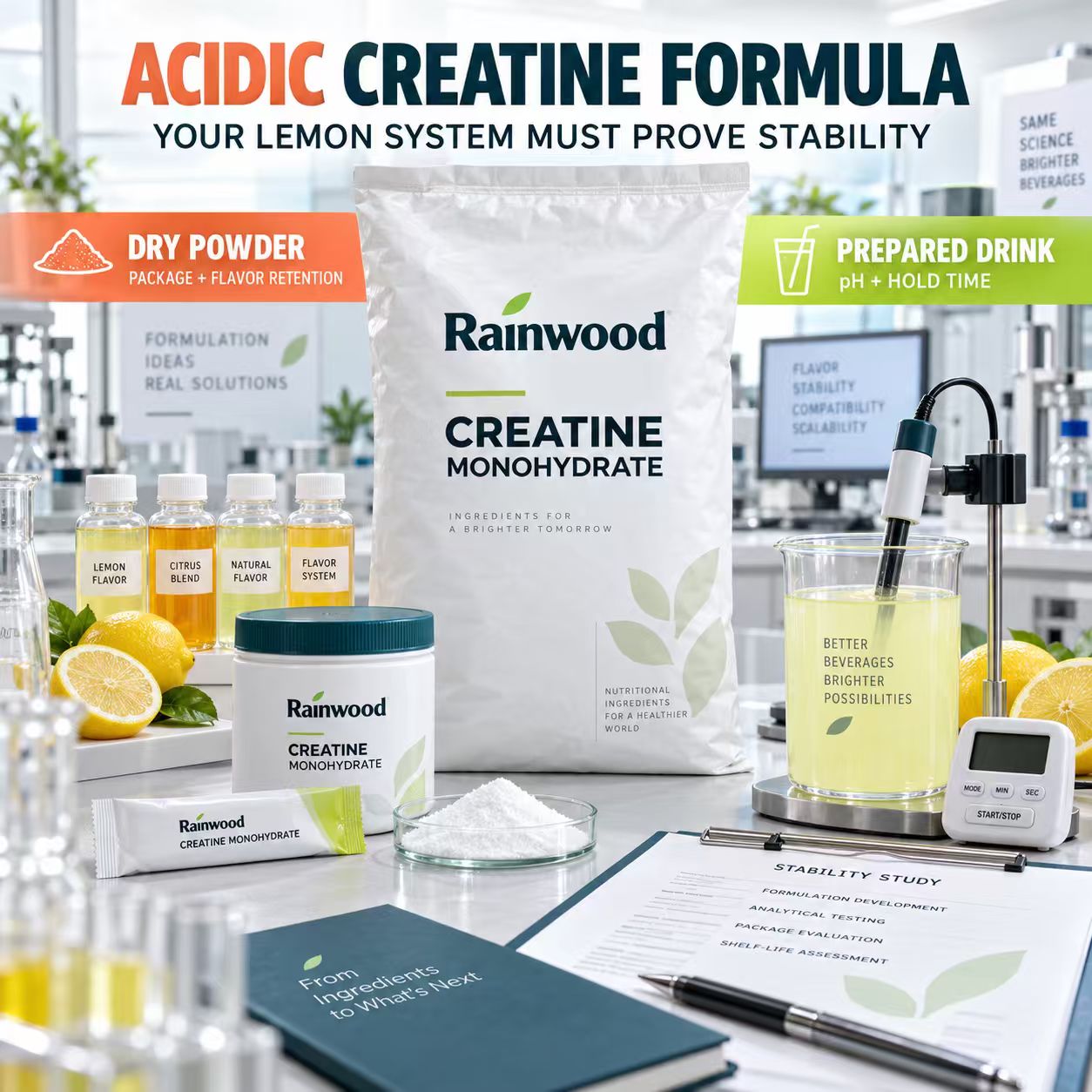
Meta title: Acidic Creatine Electrolyte Flavor Stability Guide
Meta description: Lemon and citrus flavors can improve a creatine electrolyte drink but change pH, taste, sediment, and stability. Test the finished formula before launch.
The lemon concept wins the tasting panel. The formula is acidic, bright, and easy to drink. Three months later, the product has a different aftertaste, more sediment, and a label team asking whether the prepared drink still contains the intended creatine amount.
Acidic flavors are not automatically a problem. They are a formulation decision that changes pH, sensory balance, solubility, and the time the powder or prepared drink spends in contact with water. In a creatine electrolyte powder, the acid system also interacts with sodium, potassium, magnesium, sweeteners, and flavor oils. A successful first sip is not stability evidence.
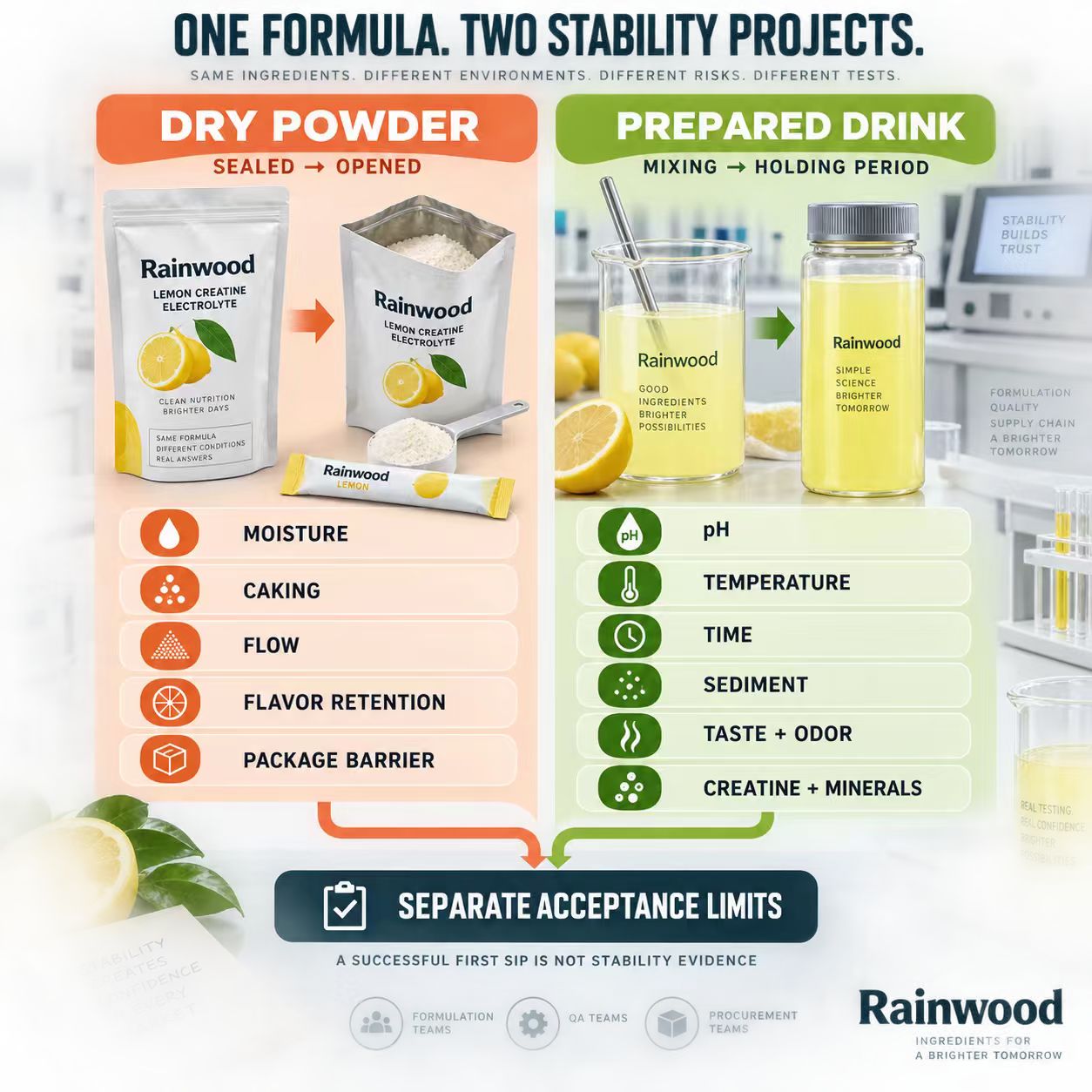
Dry stability and liquid stability are different projects
A sealed powder can be stable in a moisture-barrier package while the prepared drink changes after mixing. Creatine monohydrate solubility is temperature-dependent, and the chemical environment of an acidic drink is not the same as a dry blend. The time between mixing and consumption should be part of the product brief.
Use our acidic creatine electrolyte stability specification to separate dry-powder shelf life from prepared-drink holding time.
The intended use may be “mix and drink immediately,” but customers do not always follow that instruction. Some prepare a bottle before leaving for the gym, sip it over a long session, or leave it in a warm car. Test realistic behavior instead of relying on a perfect laboratory window.
Acid changes more than the pH number
Citric acid, malic acid, tartaric acid, and blended acid systems create different sourness, buffering, mineral interactions, and aftertaste. Sodium citrate or other buffers may soften the acid but add sodium or citrate to the elemental calculation. Magnesium and potassium forms can become more noticeable as acidity rises.
The buyer loss is a formula that needs more sweetener, flavor, or carrier than planned. The serving weight grows, the powder no longer fits the intended stick pack, and the product claims “low sugar” or “clean label” become harder to maintain.
Read the solubility and osmolality guide for creatine plus electrolytes before adjusting acid or water volume to solve a sediment problem.
The test plan for a lemon or citrus pilot
Record:
- pH of the dry-formula preparation at the labeled water volume;
- creatine and mineral content after mixing;
- sediment and crystal formation over time;
- flavor and odor immediately, after fifteen minutes, and after the intended use period;
- temperature exposure from cold to warm conditions;
- color and clarity where relevant;
- package moisture and caking before preparation;
- effect of the acid system on finished-product stability.
Use the commercial or representative formula, not a simplified test solution. If a flavor supplier provides a premix, include its carriers and acids in the calculation.
The claim problem with “fast” or “instant” drinks
An acidic powder may disperse quickly, but fast dispersion is not the same as faster hydration or better performance. Keep the product page precise. Describe the preparation behavior you measured and avoid converting a sensory result into a physiological promise.
If the product is marketed around a “fresh lemon hydration” experience, confirm that the taste remains acceptable after the full serving is consumed. A sample that tastes good at five seconds may become overly sour or salty after fifteen minutes.
Packaging and flavor are linked
Acids and hygroscopic sweeteners can increase moisture sensitivity. Flavor oils may require carriers or emulsifiers that change powder flow. A package that works for a neutral creatine powder may not protect a citrus formula from caking or aroma loss.
Test the final blend in the final package. For tubs, simulate repeated opening. For stick packs, inspect seal contamination and barrier performance. Record whether the flavor intensity and powder flow change during storage.
How RainwoodBio can validate the finished acid system
RainwoodBio publishes powder and sachet formats, sample development, formula requirements, testing and release documentation, packaging, and traceability. For an acidic creatine electrolyte powder, the relevant capability is evaluating pH, taste, stability, package, and prepared-drink behavior together.
Request a lemon or citrus creatine electrolyte pilot review with your acid system, target pH, water volume, flavor, creatine form, mineral panel, and package.
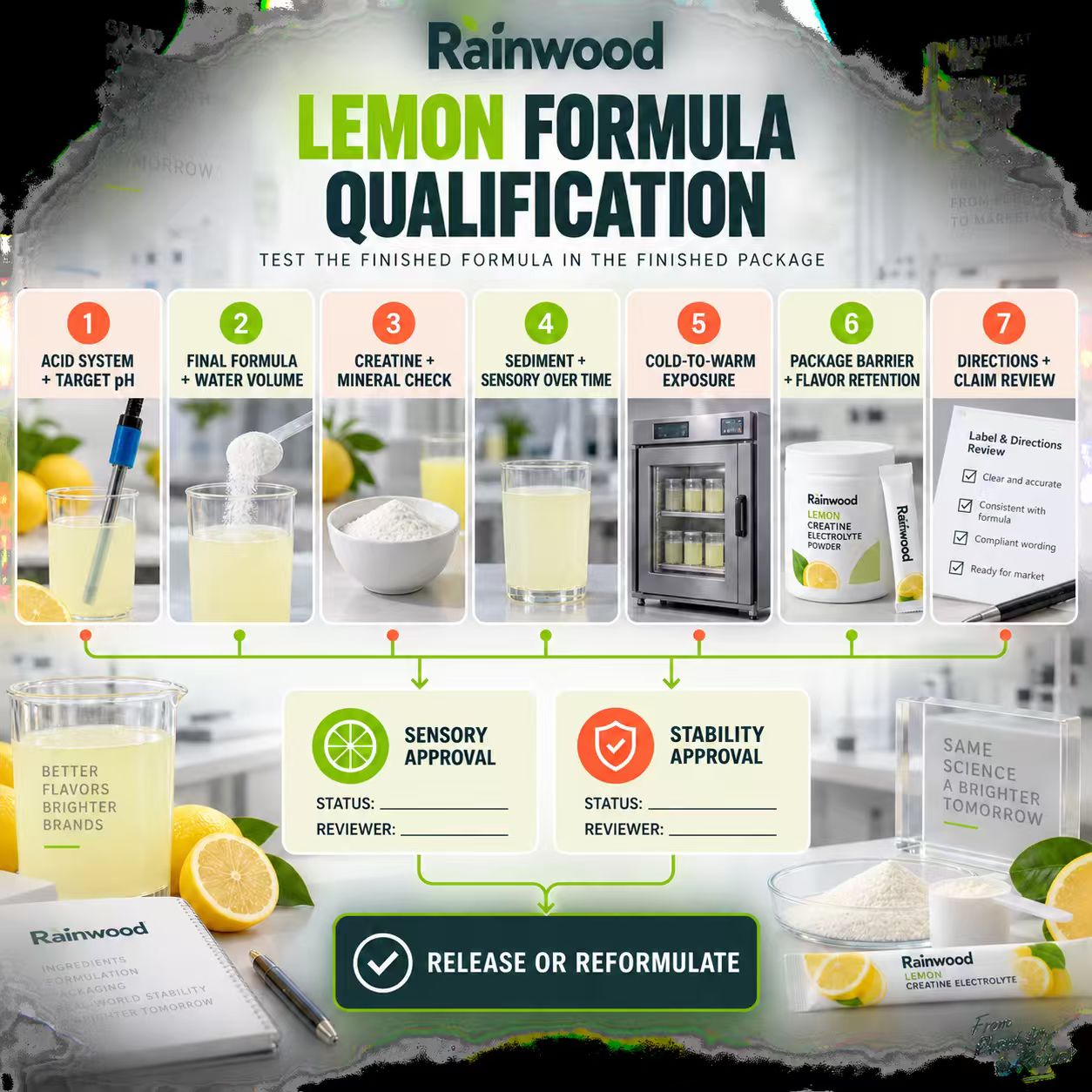
Acidic-formula approval gate
Before launch, confirm:
- the target pH and acid system are documented;
- dry and liquid stability are assessed separately;
- creatine and mineral content are checked in the prepared drink where relevant;
- sediment, taste, and holding time have defined limits;
- package barrier and flavor retention are tested;
- the label directions state the intended water volume and consumption window;
- claims describe measured product behavior rather than unsupported outcomes.
Send your formula, pH data, pilot samples, stability plan, draft label, and target market for a citrus creatine electrolyte stability review. RainwoodBio can help identify whether the acid system improves the product or creates a delayed release problem.
Separate flavor approval from stability approval
A flavor house may approve a citrus system because the aroma is attractive at the start of a tasting. That approval does not cover the creatine, minerals, package, or prepared-drink hold time. Keep two signatures in the development record: one for sensory acceptance and one for chemical and physical stability. If the formula is filled into a tub, include an opened-package check; if it is filled into sachets, include seal and moisture-barrier checks. This prevents the team from treating a successful flavor trial as permission to print a long shelf life or a broad “instant hydration” claim.
Use a retained sample from the final blend for every later comparison. A new flavor lot can change acid load or carrier content even when the flavor name stays the same.
Include the intended mixing water in the stability record. Different water hardness, temperature, and mineral background can change clarity and taste, especially in a formula that already carries sodium, potassium, and magnesium.
Frequently asked questions
1.Does acidic flavor destroy creatine immediately?
Do not make a universal conclusion. Stability depends on pH, temperature, concentration, time, and the complete formula. Test the actual product and intended holding period.
2.Can sodium citrate solve a sour drink?
It may buffer acidity, but it adds sodium and citrate and can change taste, osmolality, and label calculations. Validate the complete system.
3.Should the label say drink immediately after mixing?
If the stability and sensory data support that direction, it may be appropriate. The wording should match the actual product use and target-market review.
References
- Solution thermodynamics of creatine monohydrate: https://www.sciencedirect.com/science/article/pii/S002196141500333X
- FDA, Label Claims for Food and Dietary Supplements: https://www.fda.gov/food/nutrition-food-labeling-and-critical-foods/label-claims-food-dietary-supplements
- ISSN position stand on energy drinks and electrolytes: https://pmc.ncbi.nlm.nih.gov/articles/PMC9987737/
- RainwoodBio OEM information: https://www.rainwoodbio.com/oem
This article is for B2B procurement and educational purposes. Stability, safety, dose, labeling, analytical, packaging, and regulatory requirements must be confirmed for the exact formula, preparation time, package, and destination market.