 EN
EN

Meta title: Creatine Electrolyte Gummies or Capsules Guide
Meta description: Creatine and electrolyte doses can make gummies or capsules impractical. Compare dose, taste, unit count, stability, and packaging before choosing a format.
The brand wants a convenient gummy. The buyer wants two capsules per day. The formula contains a gram-level creatine target plus sodium, potassium, and magnesium. The concept looks attractive until the team calculates how much powder must fit into each unit and how the minerals will taste.
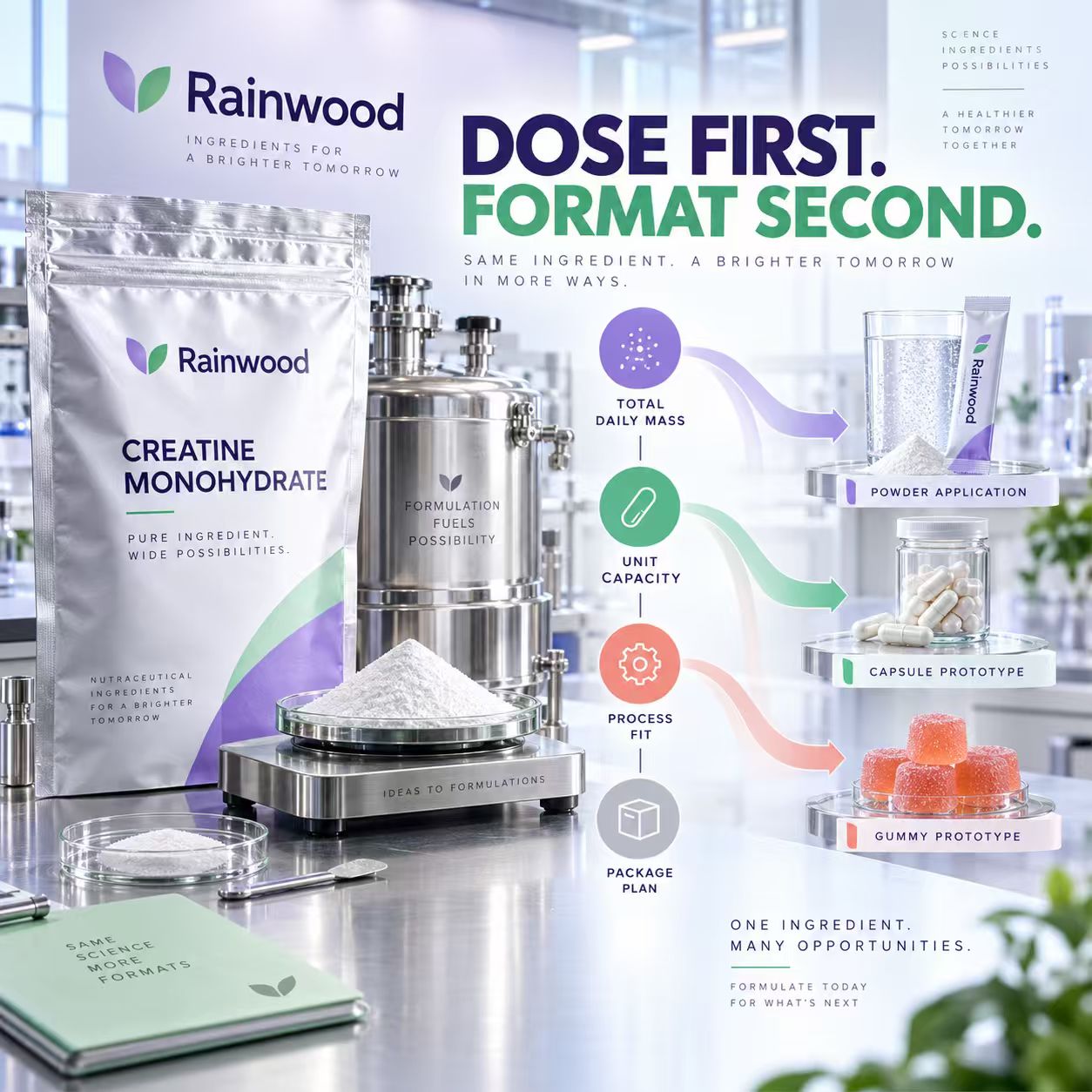
Format is not a cosmetic choice for a creatine electrolyte product. The dose can determine whether the formula belongs in a powder, stick pack, gummy, tablet, or capsule. A product designed around a high creatine serving and meaningful electrolyte amounts may become too large, too salty, too sticky, or too expensive when compressed into a small unit.
Start with the total daily mass
Add every active and necessary excipient:
- creatine form and daily amount;
- elemental sodium, potassium, and magnesium contributions;
- sweeteners, acids, flavors, binders, lubricants, or gelling agents;
- overage, coating, and process loss;
- unit count and serving frequency.
Use our creatine electrolyte format-dose comparison before choosing the delivery form from a mood board.
If the daily mass is several grams, a powder or stick pack may offer a simpler customer routine. If the daily amount is deliberately low, a capsule or gummy may be feasible, but the product must still pass dose and uniformity checks.
Gummies: consumer appeal with dose and taste limits
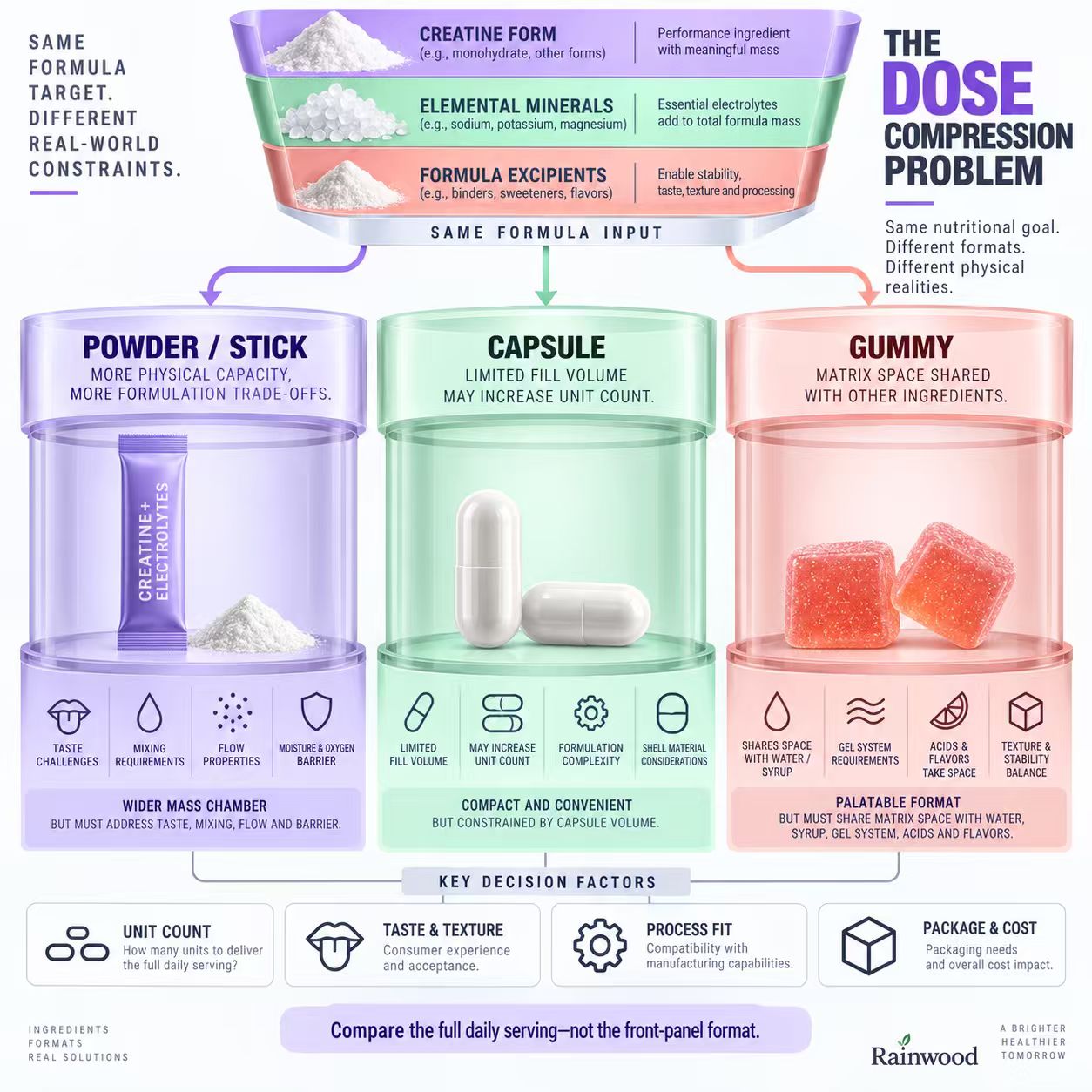
Gummies must carry active ingredients inside a mass that also contains water or syrup solids, gelling agents, sweeteners, acids, flavors, and processing aids. Creatine and mineral salts can create saltiness, bitterness, chalkiness, moisture migration, and texture changes. The formula may need several gummies per serving, which changes calories, package count, and customer compliance.
Heat exposure during cooking or holding can also affect the active system. Test the actual addition point and process temperature. A powder that is stable in a dry sachet is not automatically stable in a hot gummy mass.
Capsules: compact appearance, difficult dose math
Capsules avoid gummy texture but have limited fill volume. A low-density blend may require several large capsules. Mineral salts and creatine can differ in density and flow, creating content-uniformity and fill-weight problems. If a flavor or excipient system is needed, the number of capsules increases.
Read the 5 g creatine scoop and serving math guide because the same dose reality decides whether a capsule promise is credible.
Powder and stick pack: more practical mass, more powder engineering
Powders can accommodate gram-level doses and allow a larger water volume to manage taste and osmolality. Stick packs add portion control and portability. The trade-off is moisture barrier, flow, filling, seal, and blend-uniformity control.
If the customer expects a clear drink, the powder must be tested for sediment and preparation time. If the product is positioned as a travel hydration serving, the package should protect the blend and communicate the correct water volume.
Compare formats using the finished customer routine
| Format | Main advantage | Main risk |
|---|---|---|
| Powder tub | Flexible serving and efficient bulk pack | Scoop variation and repeated moisture exposure |
| Stick pack | Portion control and portability | Filling, seal, and segregation risk |
| Capsule | No taste during use | High unit count and fill limitation |
| Gummy | Strong consumer appeal | Mass, taste, heat, and moisture constraints |
| Tablet | Compact unit and branding | Compression, dose, and disintegration |
The correct format is the one that delivers the intended dose, taste, stability, and customer routine at a defendable cost.
The formulation trade-off buyers often underestimate
Reducing creatine to fit a gummy or capsule can make the product easier to manufacture but change the evidence and product promise. Increasing the number of units can preserve the dose but reduce compliance. Adding more flavor or sweetener can hide mineral taste but increase calories or serving mass. Switching mineral salts can improve taste but change elemental delivery.
Document the trade-off and decide which variable is non-negotiable. Do not let package design quietly determine the active dose.
How RainwoodBio can compare formats before committing to tooling
RainwoodBio publishes hard capsules, gummies, powders, stick packs, tablets, formula development, testing and release documentation, packaging, and traceability. For a creatine electrolyte blend, the relevant capability is a side-by-side format feasibility study using the same active targets and market requirements.
Request a creatine electrolyte gummy, capsule, and powder comparison with target dose, unit count, flavor, package, price, and annual volume.
The format approval gate
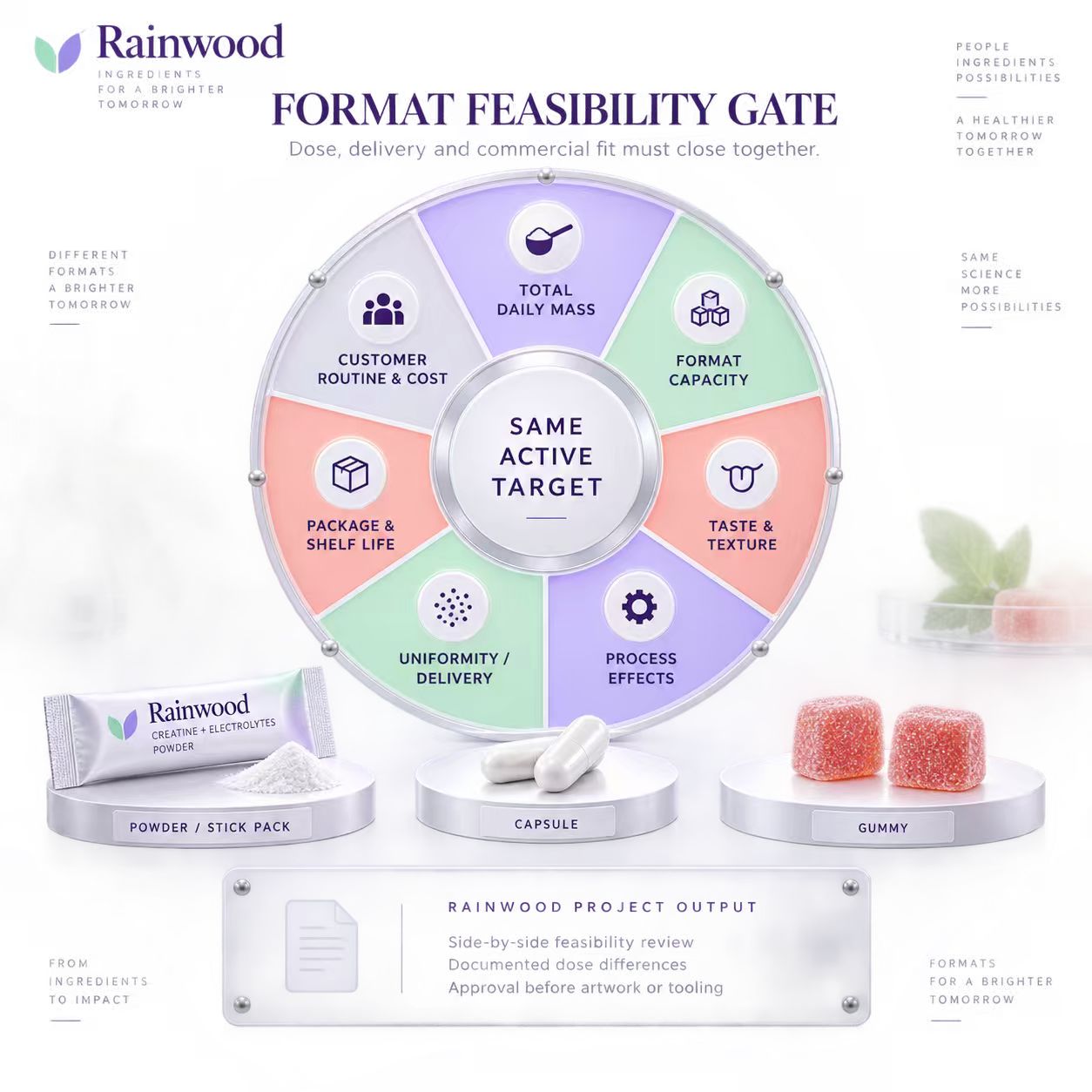
Before artwork or tooling, confirm:
- total daily active mass is calculated;
- each format delivers the same intended dose or clearly states a different one;
- taste and texture are acceptable at the real serving;
- heat, moisture, compression, or filling effects are tested;
- content uniformity, disintegration, or finished-drink behavior passes;
- package and shelf-life requirements are appropriate;
- the customer routine and cost per serving are realistic.
Send your candidate formulas, dose target, draft packaging, supplier COAs, and target market for a creatine electrolyte format feasibility review. RainwoodBio can help show which format protects the product promise instead of merely looking attractive in a mockup.
Do not hide a dose compromise in the serving directions
If the gummy or capsule format cannot carry the preferred amount, make the trade-off visible in the product brief. A lower dose may be acceptable for a clearly defined concept, but the label, evidence, and product-page wording must change with it. Increasing the number of units may preserve the dose but affect swallowing, calories, package size, and customer compliance. A powder may look less premium but deliver the intended amount with a simpler preparation instruction. Ask the same buyer to compare the complete monthly routine for each format. The best choice is often the one that makes the dose easiest to understand and repeat.
Frequently asked questions
1.Can a gummy deliver a full creatine serving?
It may be possible, but the number of gummies, taste, texture, calories, heat process, and cost must be validated. Do not assume a capsule or powder dose transfers directly.
2.Are capsules better for avoiding mineral taste?
They may avoid direct taste, but they create fill-volume, flow, unit-count, and uniformity constraints. Compare the complete routine.
3.Should every format use the same electrolyte dose?
Not automatically. The target dose must fit the intended use, evidence, market, and format. If it changes, update the label and product positioning.
References
- NIH Office of Dietary Supplements, Exercise and Athletic Performance: https://ods.od.nih.gov/factsheets/ExerciseAndAthleticPerformance-HealthProfessional/
- ISSN position stand on energy drinks and electrolytes: https://pmc.ncbi.nlm.nih.gov/articles/PMC9987737/
- FDA, Dietary Supplement Labeling Guide: https://www.fda.gov/food/dietary-supplements-guidance-documents-regulatory-information/dietary-supplement-labeling-guide
- RainwoodBio OEM information: https://www.rainwoodbio.com/oem
This article is for B2B procurement and educational purposes. Dose, format capacity, taste, stability, safety, analytical, labeling, and regulatory requirements must be confirmed for the exact formula and destination market.