 EN
EN

Meta title: Creatine Electrolyte Powder Claim Review Guide
Meta description: Hydration, energy, and performance claims require different evidence. Build a defensible creatine electrolyte claim file by market and dose.
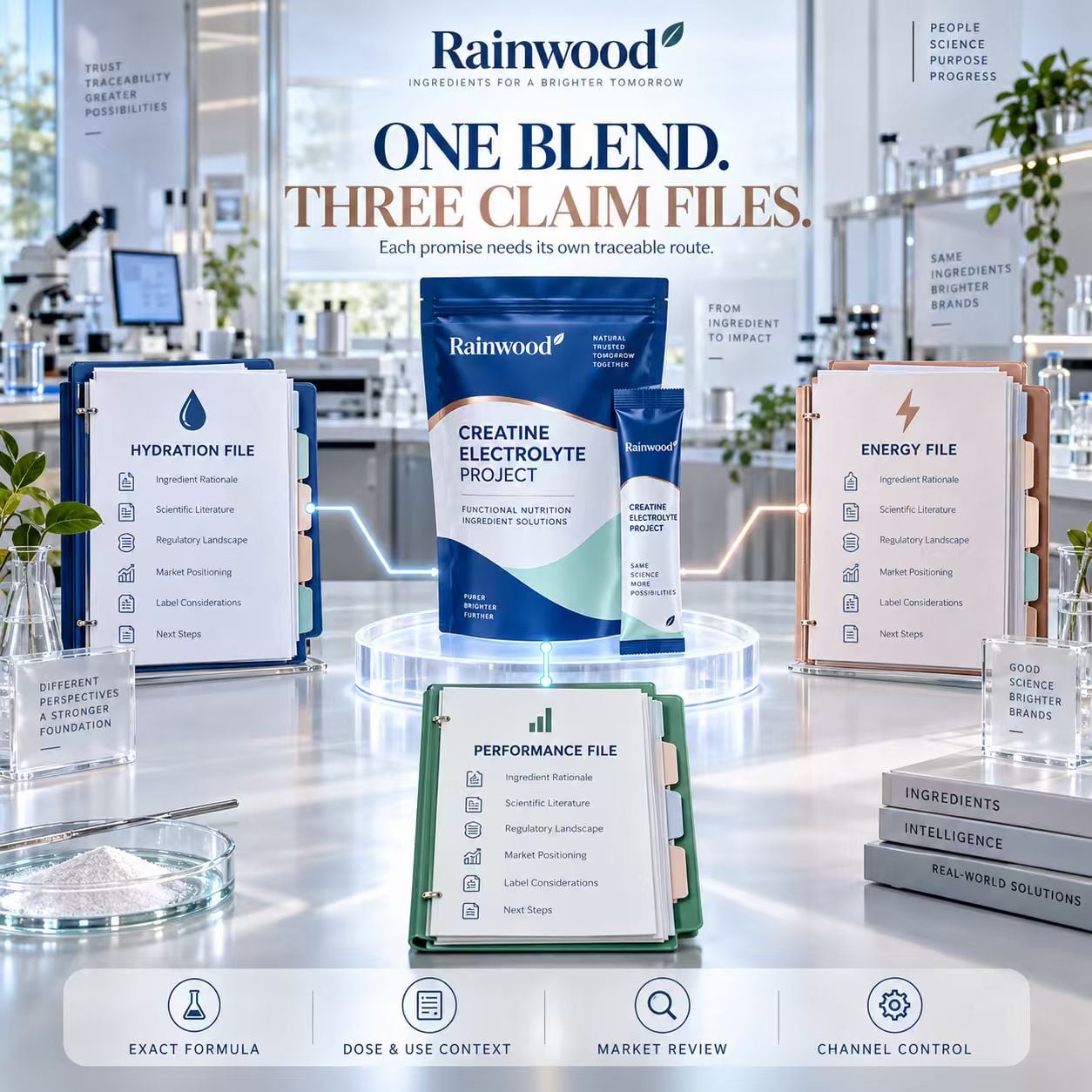
The product page wants three bold promises: hydration, energy, and performance. The formula contains creatine, sodium, potassium, magnesium, a sweetener, and perhaps caffeine. The copywriter sees one powerful blend. A qualified reviewer sees several separate claim questions.
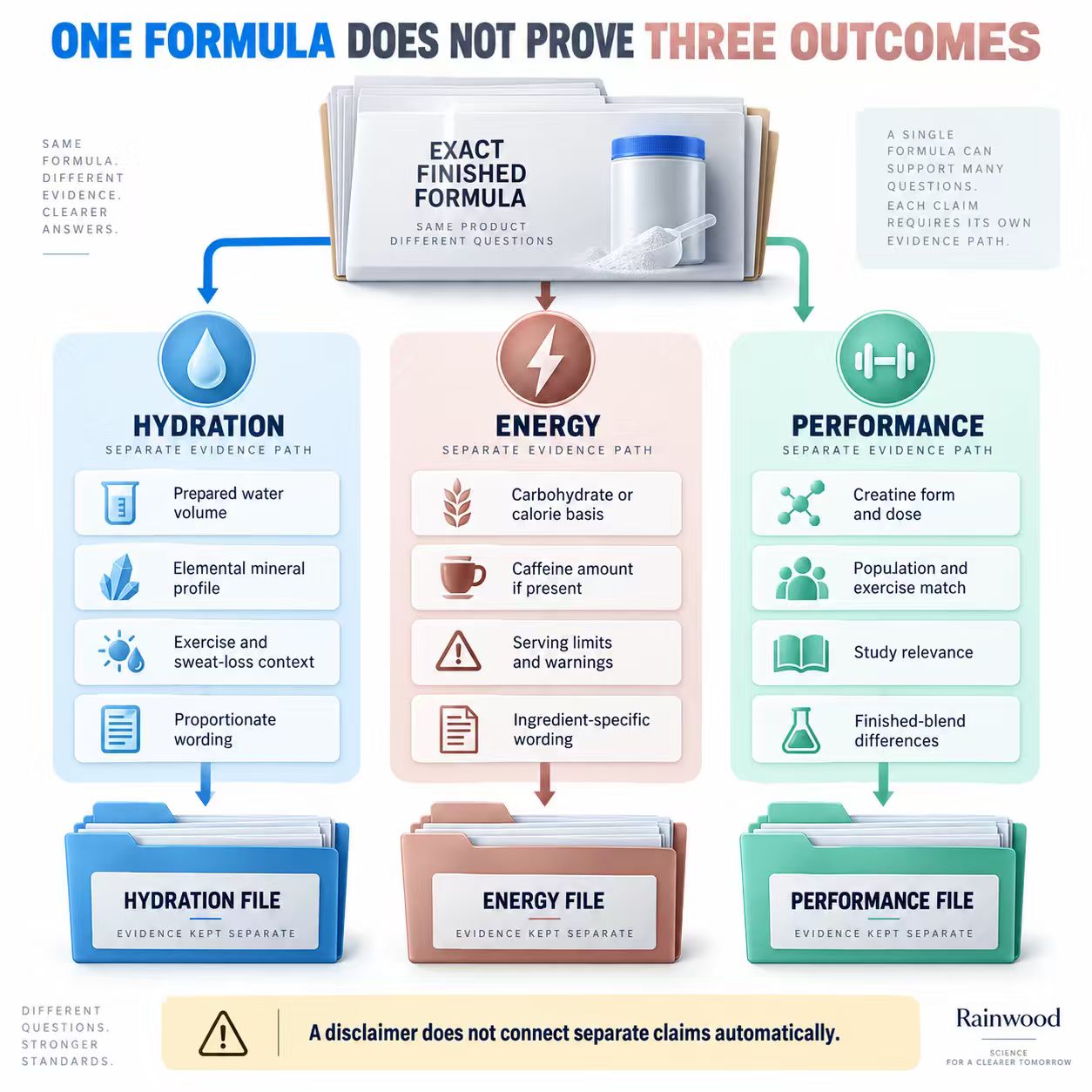
Creatine electrolyte powder can be a strong commercial concept, but the claim file must follow the actual formula. “Hydration” may refer to a prepared beverage and a specific electrolyte context. “Energy” may refer to calories or caffeine. “Performance” may depend on creatine dose, population, exercise type, and evidence. These words are not interchangeable, and a disclaimer at the bottom of the page does not connect them automatically.
Begin with the exact finished product
Freeze:
- creatine form and amount per serving;
- sodium, potassium, and magnesium elemental amounts;
- carbohydrate, sweetener, and caffeine content;
- water volume and preparation direction;
- serving frequency and use occasion;
- target market and sales channel.
Use our creatine electrolyte claim-and-evidence checklist before selecting the headline claim.
The product form matters. A study of creatine monohydrate at a particular daily amount does not automatically prove a smaller or different form. A hydration statement for a drink at one sodium concentration does not prove the same statement at another dilution. Every claim needs a traceable route to the formula.
Hydration is a formulation and context claim
Electrolytes can be part of a hydration product, but the effect depends on fluid volume, sodium, exercise duration, sweat loss, carbohydrate, and individual use. The ISSN position stand discusses sports drinks in the context of fluid and electrolyte losses; it does not make every multi-mineral powder a universal hydration solution.
Avoid “hydrates faster than water,” “prevents dehydration,” or “replaces all lost electrolytes” unless a qualified market review confirms the evidence and wording. Instead, define the preparation and intended use and keep the statement proportionate to what the formula and evidence show.
Read the sodium-led use-case formulation guide before writing a hydration headline.
Energy can mean three different things
Calorie or carbohydrate energy
If the formula contains sugar or another carbohydrate, calculate calories and nutrient claims from the finished panel. Do not imply that any sweetener provides meaningful exercise fuel.
Caffeine stimulation
If caffeine is present, state the amount, serving limit, and market-specific warnings where required. “Energy” should not hide a stimulant dose.
Perceived vitality
Words such as “alert,” “focused,” or “energized” may imply a physiological effect that needs its own review. Keep the claim tied to the ingredient, amount, and evidence.
Performance claims need a material and dose match
NIH resources describe creatine research in relation to strength, power, and high-intensity effort, while noting that results vary and typical use patterns matter. That background does not prove that every creatine electrolyte formula improves performance in every user.
Match the evidence by form, dose, population, exercise type, duration, and finished formula. If your product includes caffeine, amino acids, or carbohydrates, disclose that the finished blend differs from a creatine-only study. Do not use “clinically proven” as a shortcut for a product that was never tested in its final form.
Claims can change across markets and channels
FDA guidance distinguishes health, nutrient-content, and structure/function claims. Other markets use different definitions, notification systems, and expectations. A product page, marketplace bullet, influencer script, and distributor catalog are all part of the practical claim environment.
Create a claim matrix:
| Proposed claim | Formula evidence | Market review | Channel status |
|---|---|---|---|
| Contains creatine | Identity and amount | Panel rules | Usually factual, still review |
| Electrolyte support | Mineral amounts and use context | Market-specific | Conditional |
| Energy | Carbohydrate or caffeine basis | Market-specific | Conditional |
| Performance | Matched creatine evidence | Qualified review | High scrutiny |
| Prevents dehydration | Disease or outcome implication | Do not assume | High risk |
Use the matrix to narrow language before translation and artwork.
The claim file should include limits
Keep study summaries, product specifications, COAs, dose calculations, target-market notes, approved copy, prohibited copy, and version history. Record what the evidence does not prove. A reviewer should be able to see whether a statement describes an ingredient fact, a structure/function role, a hydration context, or a performance outcome.
Do not delete unfavorable or inconclusive evidence. Balanced files are more credible during retailer, distributor, and marketplace review.
How RainwoodBio can connect formula development with claim review
RainwoodBio publishes requirement confirmation, formula development, testing and release documentation, packaging, traceability, and multiple powder and sachet formats. For a claim-heavy creatine electrolyte product, the relevant capability is keeping the draft label, formula, COAs, prepared-drink data, and target markets in one controlled project file.
Request a creatine electrolyte claim-to-formula review with your complete ingredient list, target dose, studies, draft copy, and market list.

The claim approval gate
Before publishing, confirm:
- every claim names or implies the correct ingredient and dose;
- creatine evidence matches the exact form and serving;
- hydration wording matches the mineral profile and use case;
- energy wording distinguishes calories from caffeine;
- no disease, prevention, cure, or guarantee language appears;
- translations and distributor copy follow the same boundary;
- source or formula changes trigger claim re-review.
Send your draft label, product page, formula, COAs, study file, and target market for a creatine electrolyte claim-file review. RainwoodBio can help identify which statement is supported, conditional, or too strong for the current evidence.
Keep the evidence file usable for sales teams
A regulatory memo alone will not stop claim drift. Create a one-page sales version that lists the approved product form, serving amount, intended use, allowed phrases, prohibited phrases, and the source behind each approved statement. Train distributors to ask for the target market before translating the copy. When a buyer requests a stronger claim, route the request back to the evidence owner rather than letting a salesperson improvise. This simple handoff makes the brand look more professional and protects the formula from being described as a medical solution or a guaranteed performance product.
Frequently asked questions
1.Can I say “supports hydration” on every electrolyte powder?
No. The wording depends on the mineral profile, preparation, use context, market, and surrounding claims. Obtain a qualified review.
2.Does a creatine study prove a creatine electrolyte blend?
Not automatically. Confirm form, dose, formula, population, endpoint, and market language.
3.Does a disclaimer make a performance claim safe?
No. A disclaimer does not replace evidence or remove an implied disease or guaranteed-outcome claim.
References
- NIH Office of Dietary Supplements, Exercise and Athletic Performance: https://ods.od.nih.gov/factsheets/ExerciseAndAthleticPerformance-HealthProfessional/
- FDA, Label Claims for Food and Dietary Supplements: https://www.fda.gov/food/nutrition-food-labeling-and-critical-foods/label-claims-food-dietary-supplements
- FDA, Dietary Supplement Labeling Guide: https://www.fda.gov/food/dietary-supplements-guidance-documents-regulatory-information/dietary-supplement-labeling-guide
- RainwoodBio Contact Us: https://www.rainwoodbio.com/contact-us
This article is for B2B procurement and educational purposes. Claims, evidence, safety, analytical, labeling, and regulatory requirements must be confirmed for the exact formula, channel, and destination market.