 EN
EN

Meta title: Magnesium Form in Creatine Electrolyte Powders
Meta description: Magnesium citrate, glycinate, and oxide differ in elemental dose, taste, bulk, solubility, and cost. Choose the form for the finished formula.
The buyer asks for “magnesium in the electrolyte blend.” The supplier offers citrate, glycinate, or oxide and says they all provide the same mineral. The number on the quotation looks simple until the formulator checks elemental percentage, taste, moisture, solubility, capsule or scoop space, and the claim the brand wants to make.
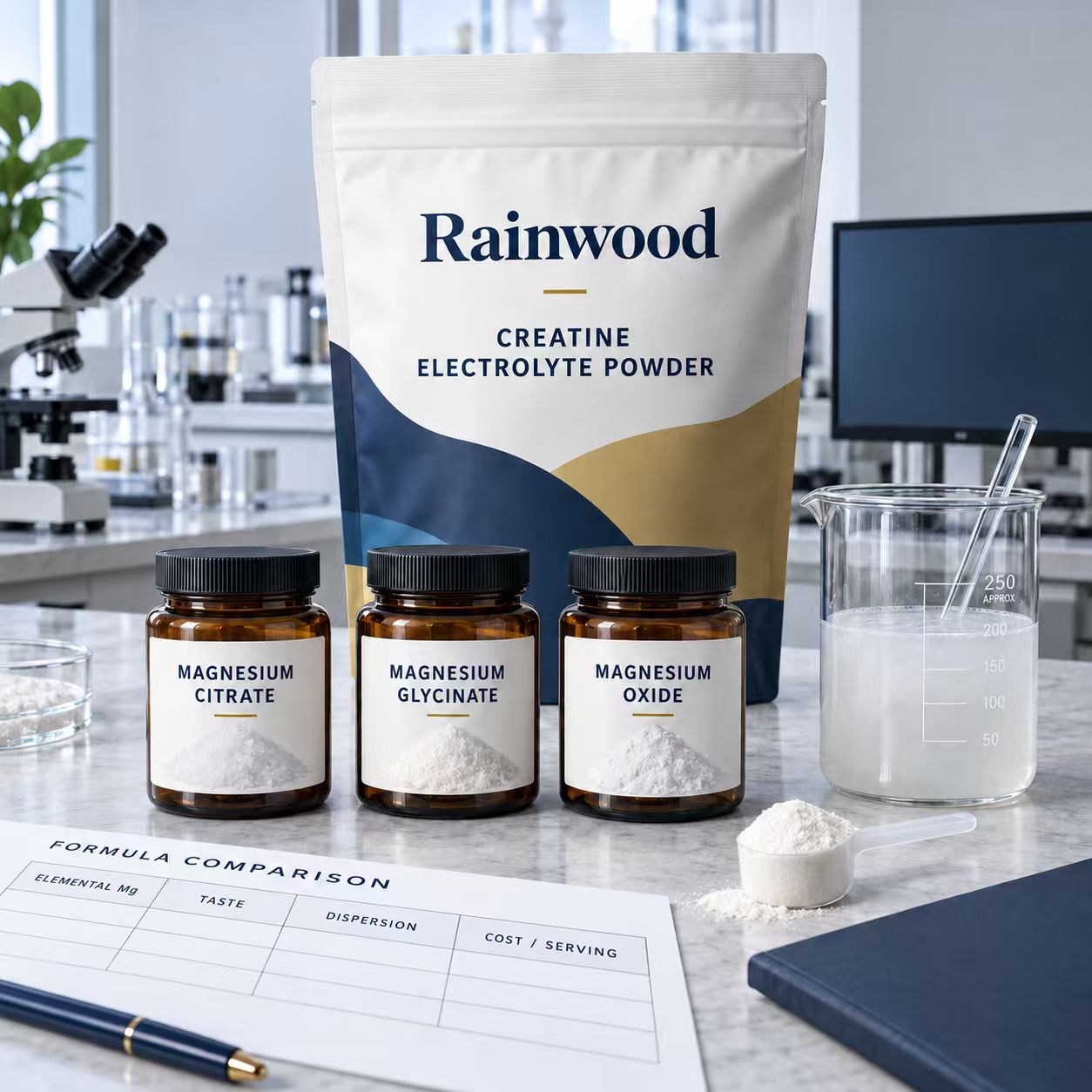
In a creatine electrolyte powder, magnesium is not a decorative third mineral. Its salt form can change the amount of powder required, bitterness, mouthfeel, sediment, hygroscopicity, and cost. It can also alter the amount of citrate, amino acid, or oxide delivered alongside the magnesium. Choose the form based on the complete product, not a generic “magnesium” line.
Name the magnesium form before you compare price
Write the exact material: magnesium citrate, magnesium glycinate, magnesium oxide, magnesium malate, or another defined salt or chelate. Ask whether it is anhydrous or hydrated, what percentage is elemental magnesium, and whether the supplier reports the assay on an as-is or dry basis.
Use our magnesium-form and elemental-dose specification before the supplier converts every option into one unhelpful mineral number.
The raw material may also contribute citrate or an amino acid that affects taste, pH, osmolality, or the label. If a buffered creatine system or sodium citrate is already in the formula, count the overlapping ions.
Citrate: familiar acid profile, meaningful sensory effects
Magnesium citrate can fit a tart beverage concept, but it may add acidity, bitterness, or a mineral finish depending on the grade and dose. The amount required to deliver a target elemental magnesium may occupy more or less space than another form. Test the complete blend rather than assuming the flavor system will cover it.
The buyer loss is a drink that becomes harsh when the customer uses the labeled water volume. The brand may then add more sweetener or flavor, increasing powder mass and changing the carbohydrate or calorie claim.
Glycinate: different composition and education burden
Magnesium glycinate contributes an amino-acid component and may be positioned differently from citrate or oxide. The product team must decide how to declare the ingredient, how to calculate elemental magnesium, and whether the formula’s total amino-acid content matters to the target market.
Do not let a “gentle” or “premium” descriptor substitute for a defined specification and product-specific evidence. The exact grade, elemental amount, taste, stability, and market wording still require review.
Oxide: high elemental percentage does not solve every formula problem
Magnesium oxide can offer a high elemental proportion, but its dispersibility and mouthfeel may be challenging in a flavored drink. The powder may settle or create a chalky sensation. If the product is designed as a clear or rapidly mixed hydration beverage, the form must be tested under those conditions.
Read the solubility, sediment, and osmolality guide before choosing a form from elemental percentage alone.
Compare forms with the same delivered magnesium target
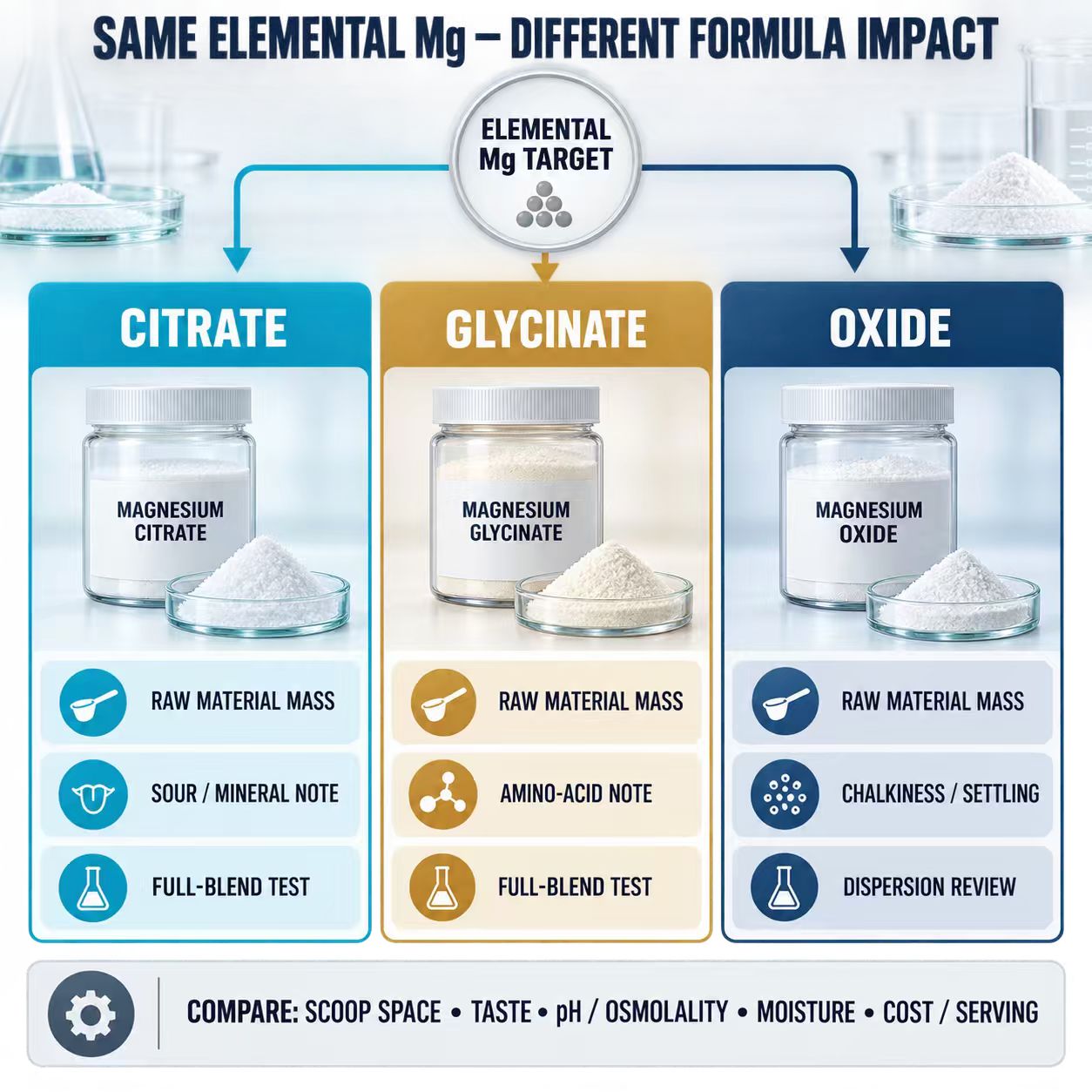
Do not compare 100 mg of citrate with 100 mg of oxide as if they were equivalent. Normalize each candidate to the same elemental magnesium per serving and then compare:
- raw-material weight;
- powder volume and scoop impact;
- taste and aftertaste;
- solubility or dispersion;
- pH and osmolality;
- moisture and caking;
- safety and market label requirements;
- cost per finished serving.
Use a pilot blend with the same creatine, sodium, potassium, sweetener, acid, and flavor. Record whether the magnesium form changes the result after the drink sits for fifteen to thirty minutes.
The hidden interaction with sodium and potassium
A mineral blend can become too salty, bitter, or acidic when each ingredient is optimized alone. Sodium citrate may be used for buffering, potassium salts can contribute bitterness, and magnesium salts can add a powdery finish. A flavor designed for creatine alone may fail once the full electrolyte system is present.
Create a sensory hierarchy: first define the maximum acceptable saltiness, bitterness, sourness, and chalkiness, then decide how much magnesium the product can carry. If the target magnesium cannot fit the drink without excessive masking, change the form, serving volume, or product format rather than hiding the problem.
A magnesium-form comparison table
| Question | Citrate | Glycinate | Oxide |
|---|---|---|---|
| Elemental dose | Verify by grade | Verify by grade | Often higher, still verify |
| Taste risk | Sour or mineral | Variable, amino-acid note possible | Chalky or settling risk |
| Drink behavior | Needs full-formula test | Needs full-formula test | Strong dispersion review |
| Powder bulk | Depends on grade | Depends on grade | Often compact, not always easy to disperse |
| Claim basis | Elemental magnesium | Elemental magnesium | Elemental magnesium |
The table is a decision aid, not a universal ranking. The finished formula and target market decide the winner.
How RainwoodBio can compare magnesium forms inside the full blend
RainwoodBio publishes formula development, powders, sachets, testing and release documentation, packaging, and traceability. For a creatine electrolyte powder, the relevant capability is a side-by-side mineral-form trial with elemental-dose reconciliation and sensory checks.
Request a magnesium-form and creatine electrolyte pilot review with your target elemental magnesium, water volume, flavor, creatine dose, and package.
The mineral-form approval gate
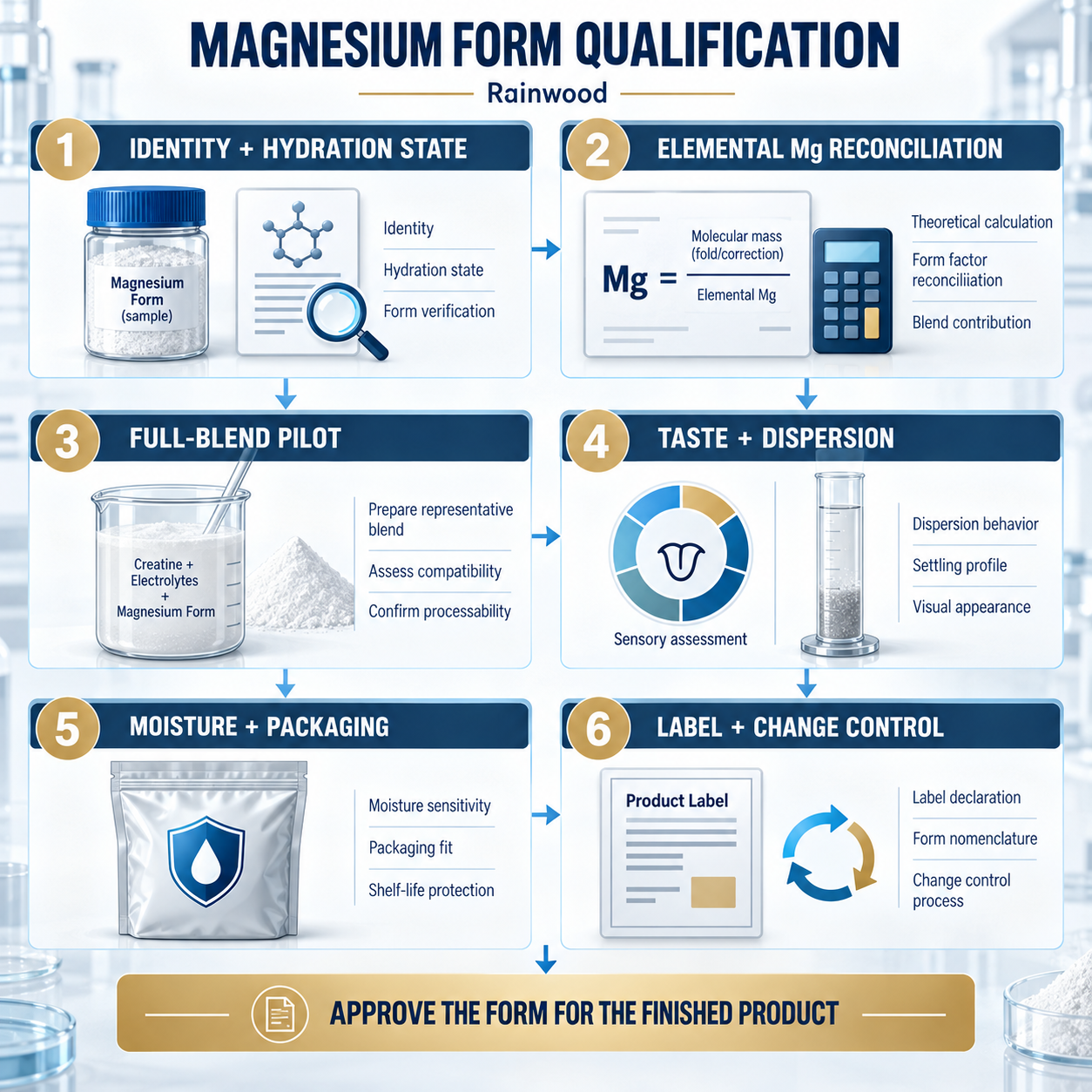
Before launch, confirm:
- the magnesium salt and hydration state are named;
- elemental magnesium calculation is documented;
- overlapping citrate or amino-acid contributions are counted;
- taste, dispersion, sediment, pH, and osmolality pass in the finished drink;
- moisture and packaging are suitable for the selected powder;
- label and nutrient claims use the correct market basis;
- a supplier or salt-form change triggers requalification.
Send the candidate magnesium COAs, target mineral panel, creatine formula, water volume, sensory brief, and draft label for a magnesium-form selection review. RainwoodBio can help identify whether the selected salt supports the product or creates avoidable cost and taste problems.
Frequently asked questions
1.Is magnesium glycinate always the best form for a sports powder?
No. It may fit some products, but the choice depends on elemental dose, taste, stability, cost, and target-market requirements.
2.Does a higher elemental percentage mean less taste risk?
No. It may reduce raw-material mass, but the salt’s solubility and sensory character can still create problems.
3.Can magnesium oxide be used in a clear drink?
It may be possible in a suitable system, but dispersion and sediment must be validated. Do not assume high elemental content guarantees a clear beverage.
References
- FDA, Dietary Supplement Labeling Guide: https://www.fda.gov/food/dietary-supplements-guidance-documents-regulatory-information/dietary-supplement-labeling-guide
- ISSN position stand on energy drinks and electrolytes: https://pmc.ncbi.nlm.nih.gov/articles/PMC9987737/
- Compositional aspects of hydration beverages: https://pmc.ncbi.nlm.nih.gov/articles/PMC10781183/
- RainwoodBio OEM information: https://www.rainwoodbio.com/oem
This article is for B2B procurement and educational purposes. Mineral form, elemental dose, safety, stability, labeling, analytical, and regulatory requirements must be confirmed for the exact formula and destination market.