 EN
EN

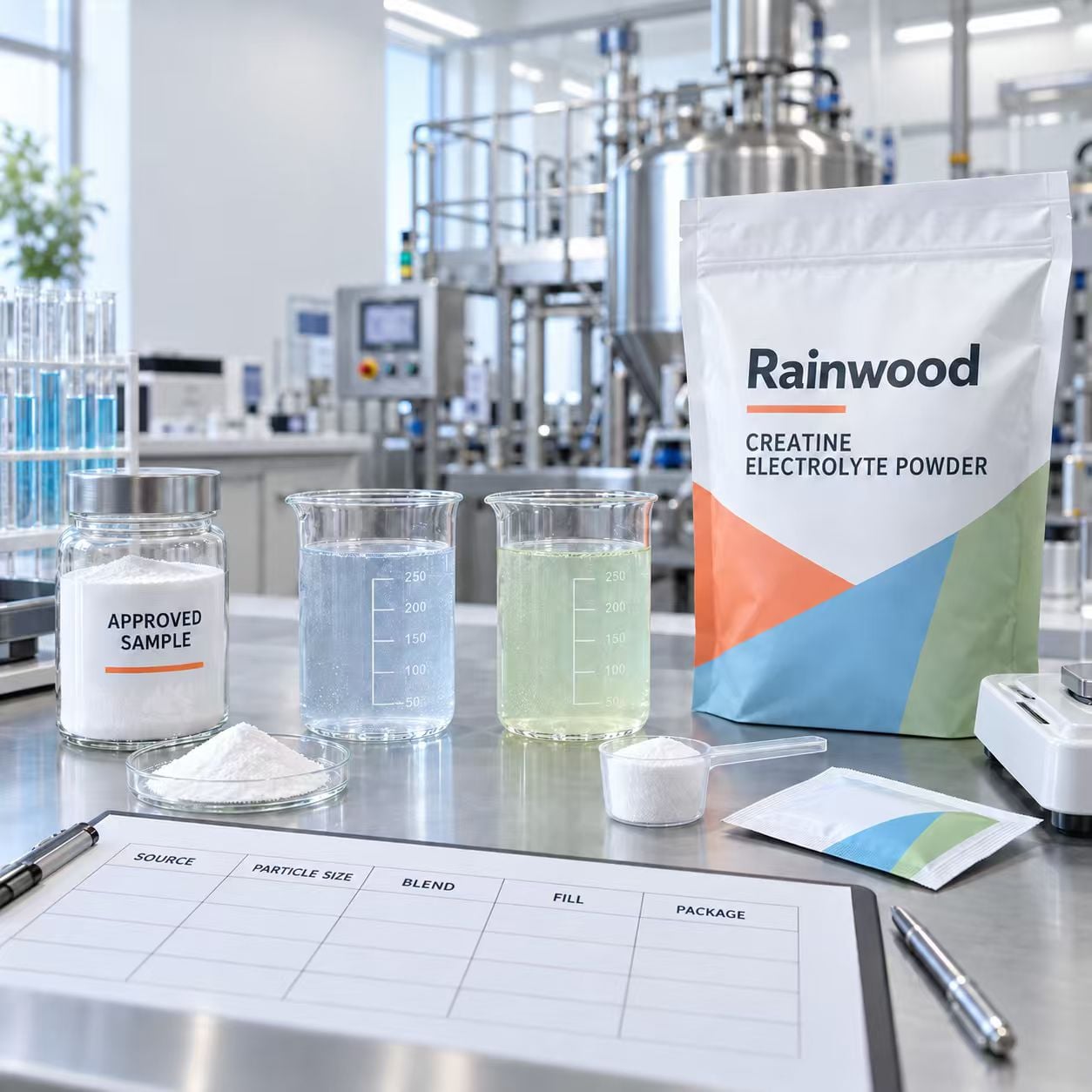
Meta title: Creatine Electrolyte Sample to Bulk Control Guide
Meta description: A perfect creatine electrolyte sample does not guarantee matching bulk. Control source, particle size, mixing, filling, moisture, and package drift.
The sample dissolves, tastes clean, and fills the target sachet. You approve the supplier. The first commercial batch arrives with more sediment, a different salt note, and uneven scoop weights. The COA still says the creatine passed.
This is the sample-to-bulk problem in a multi-ingredient powder. Creatine particles, mineral salts, acids, sweeteners, flavors, and carriers can differ in density, size, moisture, and flow. A small laboratory sample can be carefully blended. A commercial batch must survive larger equipment, transfer, vibration, filling, packaging, and transport.
The correct response is not to accuse the supplier automatically. It is to define what the approved sample represents, what the commercial lot must match, and which tests can detect drift before the powder becomes finished inventory.
A sample is one lot under one set of conditions
Record the sample lot, production date, source, package, storage history, quantity, and test conditions. Ask whether it came from a commercial lot, a laboratory batch, or a selected blend. If the supplier cannot link the sample to a manufacturing record, treat it as a development sample rather than a commercial reference.
Use our creatine electrolyte sample-to-bulk qualification checklist before granting final approval.
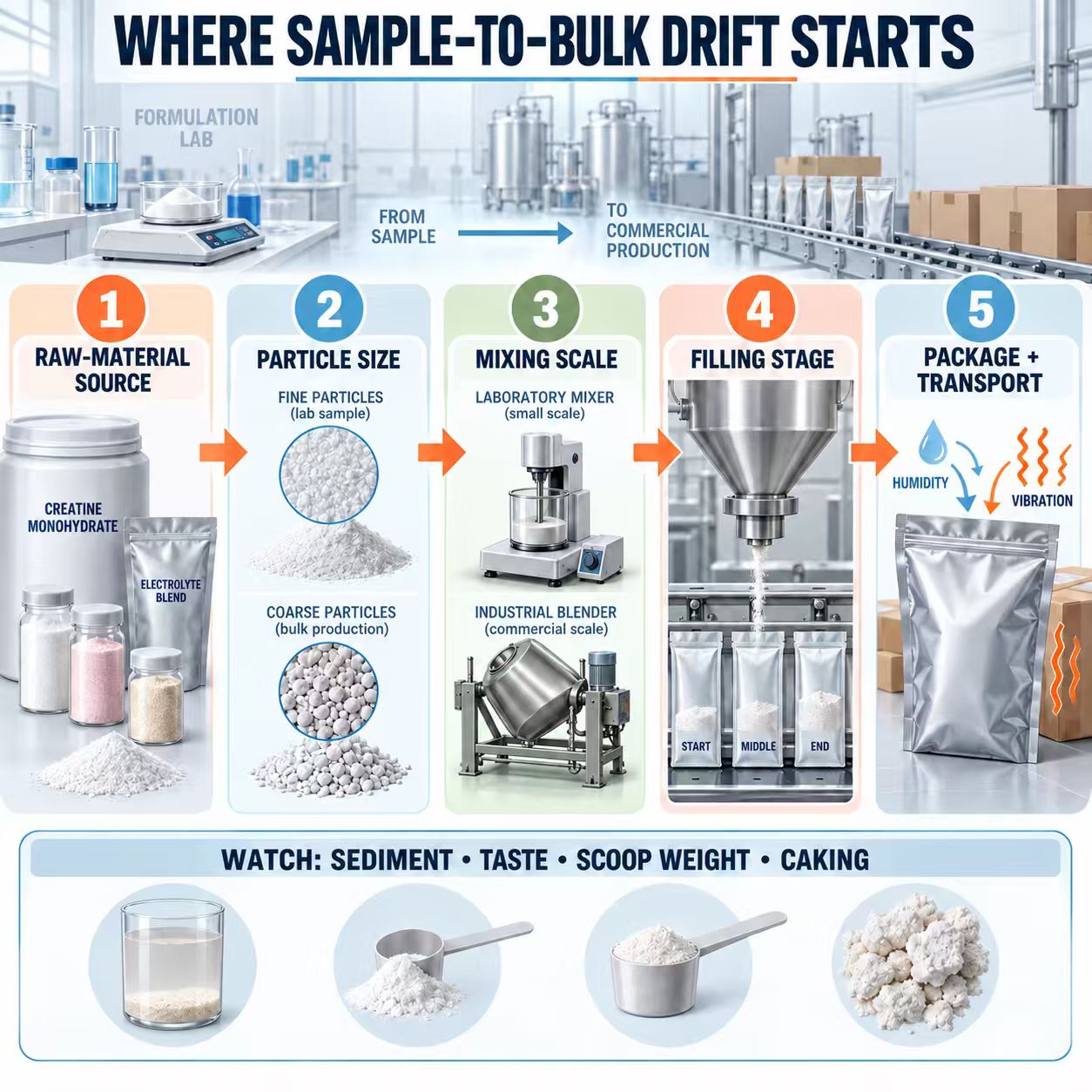
Five drift points to investigate
Raw-material source drift
The creatine form, mineral salt, flavor, sweetener, or carrier changes. The formula name remains the same, but assay, taste, density, or moisture behavior moves.
Particle-size drift
The commercial supplier uses a different milling or agglomeration condition. Fine particles may create dust, while larger crystals settle or fill differently.
Mixing-scale drift
A laboratory mixer can distribute ingredients more evenly than a production blender. Scale, fill level, mixing order, and transfer steps matter.
Filling drift
Vibration and hopper movement can segregate the blend. The first and last packs may not have the same composition.
Packaging and transport drift
Moisture uptake, seal problems, or vibration can create caking, density change, and flavor loss after release.
Read the mixing-order and uniformity guide when the bulk lot passes the average assay but fails the customer experience.
Compare the sample and bulk with a matched panel
At minimum, compare:
- creatine identity and assay;
- elemental sodium, potassium, and magnesium;
- moisture and water activity where relevant;
- bulk density, particle size, and flow;
- color, odor, flavor, and sediment;
- pH and prepared-drink behavior;
- blend uniformity across sampling locations;
- package integrity and storage conditions.
Use the same method, water volume, temperature, mixing time, and observation window. A different test condition can make a real drift look like a laboratory disagreement.
The sample-to-bulk decision gate
Use three gates:
1. Document gate: lot, formula version, source, process, package, and COA are complete.
2. Analytical gate: agreed identity, assay, mineral, moisture, microbiology, and contaminant limits pass.
3. Application gate: the lot behaves in a representative drink, sachet, tub, or production trial.
If the application gate fails, do not accept a generic “normal variation” explanation without a root-cause assessment. Ask whether a source, salt, flavor, mixing, drying, or package condition changed.
Contract controls that reduce reorder risk
Add the following to the supply agreement:
- retain the approved sample and define its storage;
- identify the commercial lot and sampling method;
- state acceptable ranges for chemical and physical properties;
- require advance notice for source, formula, process, site, or package changes;
- define requalification, rejection, replacement, and credit terms;
- keep records for deviations and corrective actions.
These controls recognize that powders have some natural variation while protecting the buyer from material changes that affect the finished product.
How RainwoodBio can create a sample-to-bulk handoff
RainwoodBio publishes sample development, supplier management, testing and release documentation, packaging, logistics, and traceability. For a creatine electrolyte blend, the relevant capability is connecting the approved formula sample with the commercial batch, finished format, and release decision.
Request a creatine electrolyte sample-to-bulk control plan with your batch size, sampling points, package, use case, and timeline.
Bulk release checklist
Before accepting the first commercial lot, confirm:
- every raw-material lot is linked to the blend record;
- no unapproved source or process change occurred;
- chemical and elemental amounts meet the agreed basis;
- samples from different filling stages are comparable;
- the powder performs in the intended water volume;
- package seals and moisture barriers remain intact;
- deviations have a documented disposition.
Send the approved sample report, bulk COA, batch record, specification, and pilot results for a creatine electrolyte sample-to-bulk review. RainwoodBio can help turn a one-time sample approval into a repeatable reorder gate.
What to do when the bulk lot is borderline
Put the lot on hold instead of blending it into finished production to protect the schedule. Preserve a representative sample and repeat the comparison under the same method and water volume. If the difference is sensory, run a controlled application trial; if it is analytical, check the sample chain, method, and lot records before accepting a supplier explanation. The disposition should state whether the lot is accepted, reworked, downgraded to another use, replaced, or rejected. This record is valuable at the next reorder because it shows which trend the supplier must prevent, rather than leaving the incident as an informal email.
Trend moisture, density, odor, and sediment over several lots. A gradual movement can warn you before a dramatic failure reaches the customer.
Also compare the package headspace and fill-weight distribution. A supplier may deliver the same formula in a different bag or with a different fill setting, allowing more air and humidity into the product. That change can be invisible in a raw-material assay but visible in caking and scoop behavior.
Keep photographs, sensory notes, and the final disposition with the lot record so the next purchase team can see the actual history.
That record also supports faster supplier discussions when the next deviation appears.
Frequently asked questions
1.Is a different taste proof that the bulk is wrong?
It is a signal to investigate, not proof of misconduct. Compare source, process, assay, moisture, flavor, package, and sensory conditions using the same method.
2.Should I test every ingredient again in the finished blend?
The panel should be risk-based, but finished-product checks are important where segregation, low-dose actives, or label claims are involved.
3.Can the supplier replace a failed lot without a new sample?
That depends on the agreement. Require replacement terms and requalification conditions before the first purchase.
References
- NIH Office of Dietary Supplements, Exercise and Athletic Performance: https://ods.od.nih.gov/factsheets/ExerciseAndAthleticPerformance-HealthProfessional/
- ISSN position stand on energy drinks and electrolytes: https://pmc.ncbi.nlm.nih.gov/articles/PMC9987737/
- FDA, Dietary Supplement Labeling Guide: https://www.fda.gov/food/dietary-supplements-guidance-documents-regulatory-information/dietary-supplement-labeling-guide
- RainwoodBio About Us: https://www.rainwoodbio.com/about-us
This article is for B2B procurement and educational purposes. Lot consistency, dose, stability, safety, labeling, analytical, and regulatory requirements must be confirmed for the exact blend, batch, package, and destination market.