 EN
EN

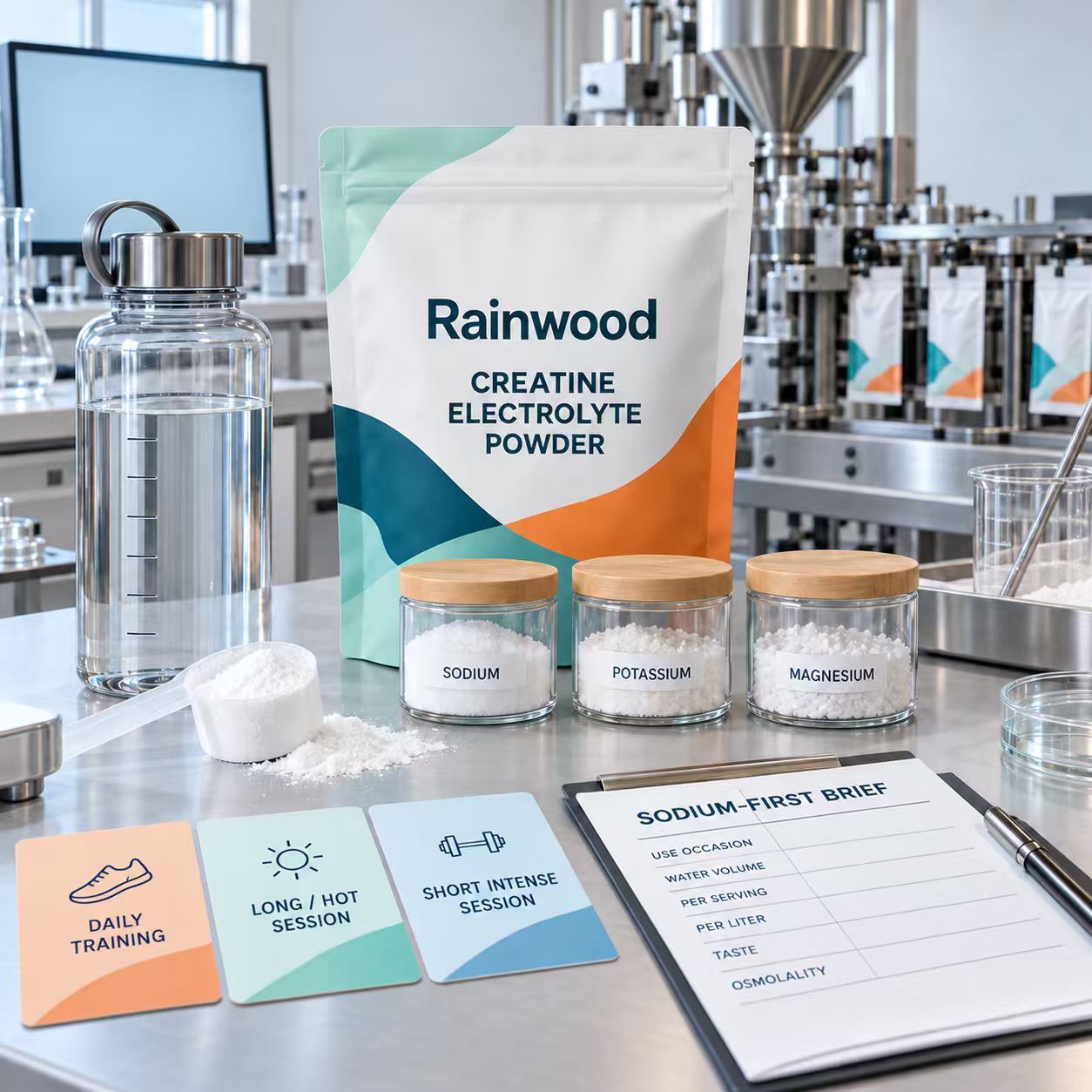
Meta title: Sodium Strategy for Creatine Electrolyte Powders
Meta description: Build a creatine electrolyte powder around exercise duration, sweat loss, fluid volume, and target users instead of copying a mineral ratio.
The formula meeting starts with a fashionable ratio: sodium, potassium, magnesium, and calcium in equal-looking numbers. The endurance customer asks a different question: how much sodium is in the bottle, how much water will I drink, and is the formula designed for my sweat situation?
An electrolyte powder is not automatically a hydration solution because it contains four minerals. Sodium, fluid volume, exercise duration, climate, carbohydrate content, and individual sweat loss all shape the use case. Creatine adds another layer: the product may be used daily for training support, while the electrolyte profile may be most relevant during longer or hotter sessions.
The commercial risk is a formula that looks complete but does not serve a clear moment. It may taste too salty for daily use and too weak in sodium for heavy sweating. A strong product brief starts with the user scenario, then sets the mineral profile.
Sodium has a different role from the other minerals
Sodium is often central to sweat-replacement formulations because it is lost in sweat and influences fluid retention and palatability. The ISSN discussion of energy drinks notes that sports drinks often contain sodium in a range related to fluid and electrolyte losses, while potassium and magnesium play different and more context-dependent roles.
That does not mean “more sodium is always better.” The appropriate amount depends on serving volume, exercise duration, sweat rate, climate, diet, target market, and whether the powder is used during training or simply consumed at home.
Use our sodium-led creatine electrolyte formulation guide to define the occasion before choosing the ratio.
The first segmentation question: when is the product used?
Daily training support
The customer may mix the powder once per day, perhaps before or after training. Taste, convenience, creatine dose, and manageable sodium become important. A very salty profile can reduce repeat use.
Long-duration or hot-weather exercise
Fluid volume, sweat loss, and sodium replacement become more important. The product may need clearer use instructions and a serving concentration that works in a larger bottle.
Short, high-intensity sessions
The user may value creatine and flavor more than a heavy electrolyte load. Do not copy an endurance formula into a short-session product simply because the word “hydration” is popular.
Read the pre-workout, during-training, and daily-use comparison before writing a universal direction such as “drink all day.”
The hidden mistake: using equal mineral numbers
Equal milligrams do not mean equal physiological role, and equal salt weights do not mean equal elemental amounts. A formula can display 200 mg of sodium, 200 mg of potassium, and 200 mg of magnesium while delivering a very different practical profile after salt conversion. Magnesium may contribute little to hydration relative to sodium but can add taste or gastrointestinal burden at higher amounts.
Create a target table with:
- sodium per serving and per liter of prepared drink;
- potassium and magnesium per serving;
- water volume and mixing directions;
- creatine amount and form;
- carbohydrate or sweetener contribution;
- expected use duration and climate;
- acceptable taste and osmolality range.
The formula should be judged against that use case, not against a competitor’s colorful label.
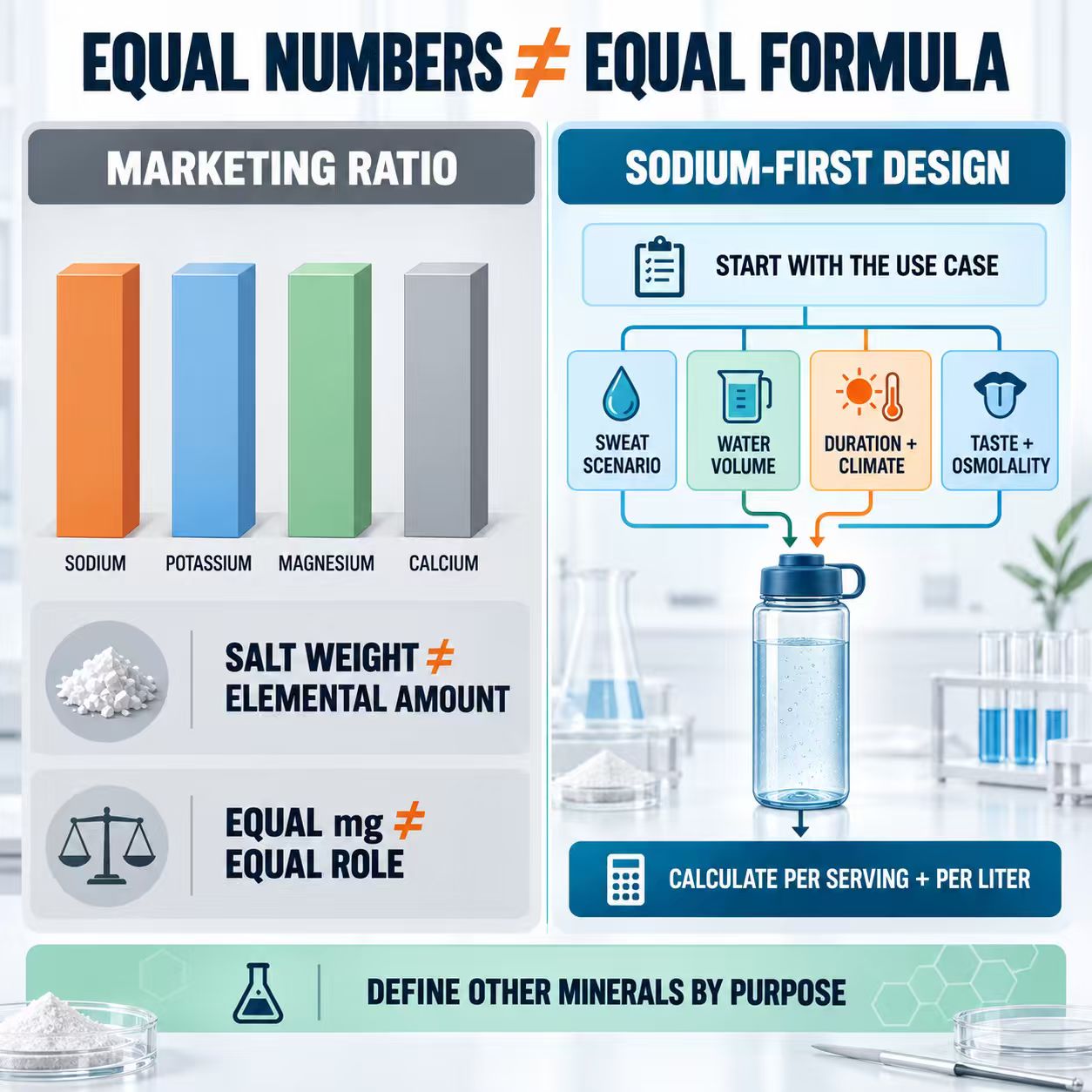
Water volume changes the mineral experience
The same sachet tastes and behaves differently in 250 ml, 500 ml, and 750 ml of water. Sodium concentration, sweetness, acidity, creatine suspension, and osmolality all change. A product that tastes balanced in a shaker bottle can become too salty in a small glass.
Put the water volume on the front-facing directions if the formula depends on it. Test the minimum and maximum recommended volume, including cold water and the mixing method a consumer is likely to use. Do not leave the preparation ratio to a vague “mix with water” instruction.
Sweat-loss positioning requires careful language
You can explain that the formula is designed for a certain exercise scenario without claiming that every consumer will have the same electrolyte needs. Avoid suggesting that the product prevents a medical condition or guarantees performance. A qualified review should confirm the wording for each market.
The product page should also tell users that normal diet, total fluid intake, duration, and individual sweat patterns matter. That information makes the brand look more professional and reduces the temptation to promise universal “rapid hydration.”
A sodium-first formula design worksheet
| Design input | Example decision question |
|---|---|
| Primary occasion | Daily, during training, or hot-weather endurance? |
| Water volume | 300 ml, 500 ml, 750 ml, or another amount? |
| Sodium target | What delivered amount fits the scenario and taste? |
| Other minerals | What is their purpose and elemental dose? |
| Creatine | Which form and daily amount are supported? |
| Carbohydrate | Is energy part of the product promise? |
| Sensory limit | How salty, acidic, or sweet can the drink be? |
| Label market | Which claims and nutrient thresholds apply? |
Use the worksheet with the formulator and the commercial team. A product with one clear occasion is easier to sell and easier to validate.
How RainwoodBio can turn the scenario into a production brief
RainwoodBio publishes requirement confirmation, supplier management, formula development, testing and release documentation, multiple powder and sachet formats, packaging, and traceability. For a sodium-led creatine electrolyte product, the useful capability is translating the training scene into serving, flavor, package, and release criteria.
Request a sweat-scenario and creatine electrolyte formula review with target users, exercise duration, water volume, climate, creatine dose, and price target.
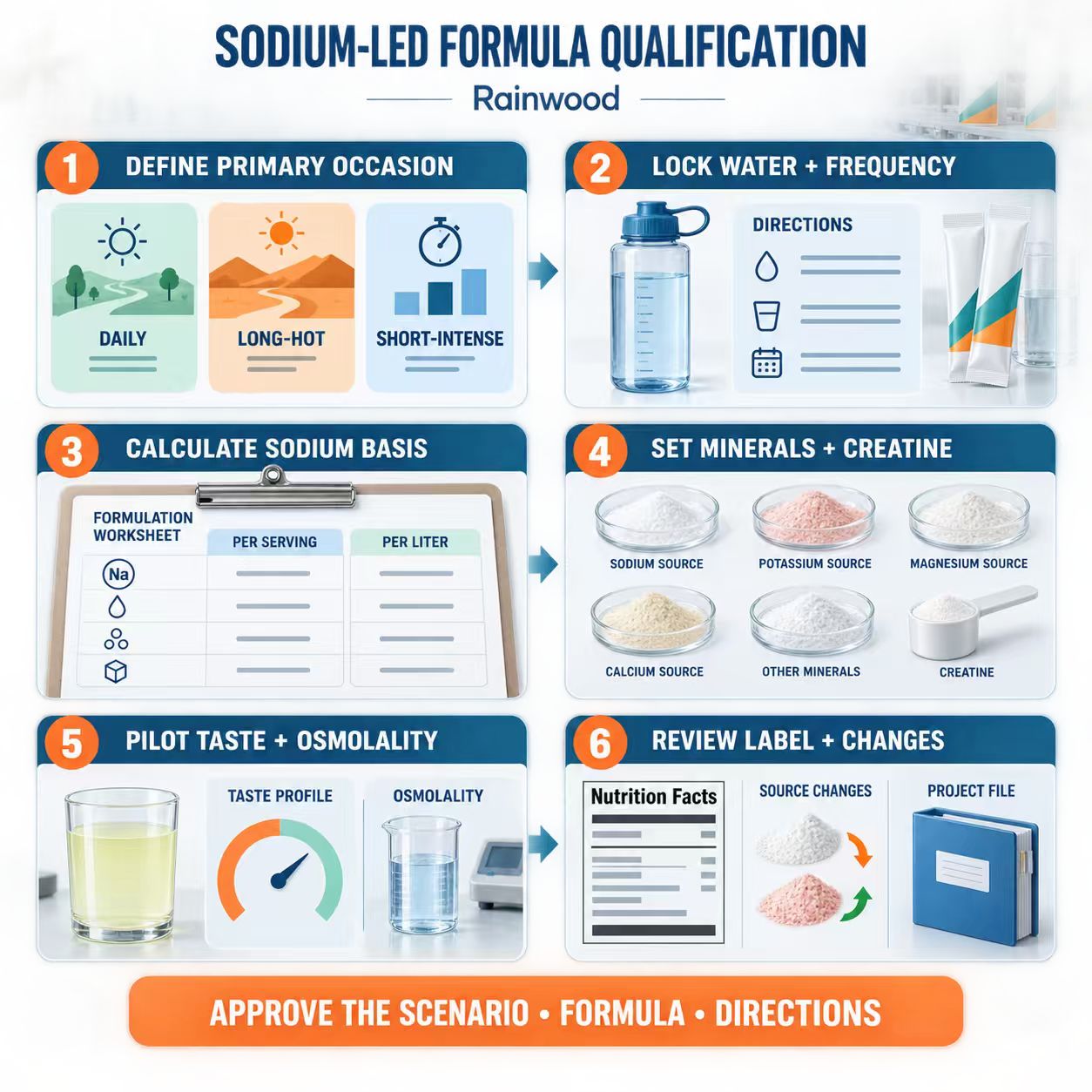
The approval gate
Before production, confirm:
- the product has one primary use occasion;
- sodium is calculated per serving and per prepared volume;
- other minerals have a defined rationale and elemental amount;
- directions state the water volume and serving frequency;
- taste and osmolality have been tested in the intended preparation;
- the claim language is bounded by evidence and target market;
- source and formula changes trigger a new use-case review.
Send your target user profile, mineral proposal, creatine specification, water volume, draft label, and market list for a sodium-led electrolyte formula assessment. RainwoodBio can help identify whether the ratio serves a real training need or only looks impressive on the panel.
Frequently asked questions
1.Should every creatine electrolyte powder be high in sodium?
No. The right amount depends on the use occasion, serving volume, duration, climate, taste, and target user. Define the scenario first.
2.Is magnesium essential for a hydration claim?
Not automatically. It may support a broader mineral profile, but its role, form, dose, and market language should be reviewed separately from sodium.
3.Can I use the same mineral ratio for all markets?
The ratio may be technically similar, but labeling, nutrient claims, directions, and target-user expectations can differ. Review each market.
References
- ISSN position stand on energy drinks and electrolytes: https://pmc.ncbi.nlm.nih.gov/articles/PMC9987737/
- Compositional aspects of hydration beverages: https://pmc.ncbi.nlm.nih.gov/articles/PMC10781183/
- American College of Sports Medicine fluid replacement position stand: https://pubmed.ncbi.nlm.nih.gov/9303999/
- RainwoodBio OEM information: https://www.rainwoodbio.com/oem
This article is for B2B procurement and educational purposes. Hydration, dose, safety, labeling, analytical, and regulatory requirements must be confirmed for the exact formula, use scenario, and destination market.