 EN
EN

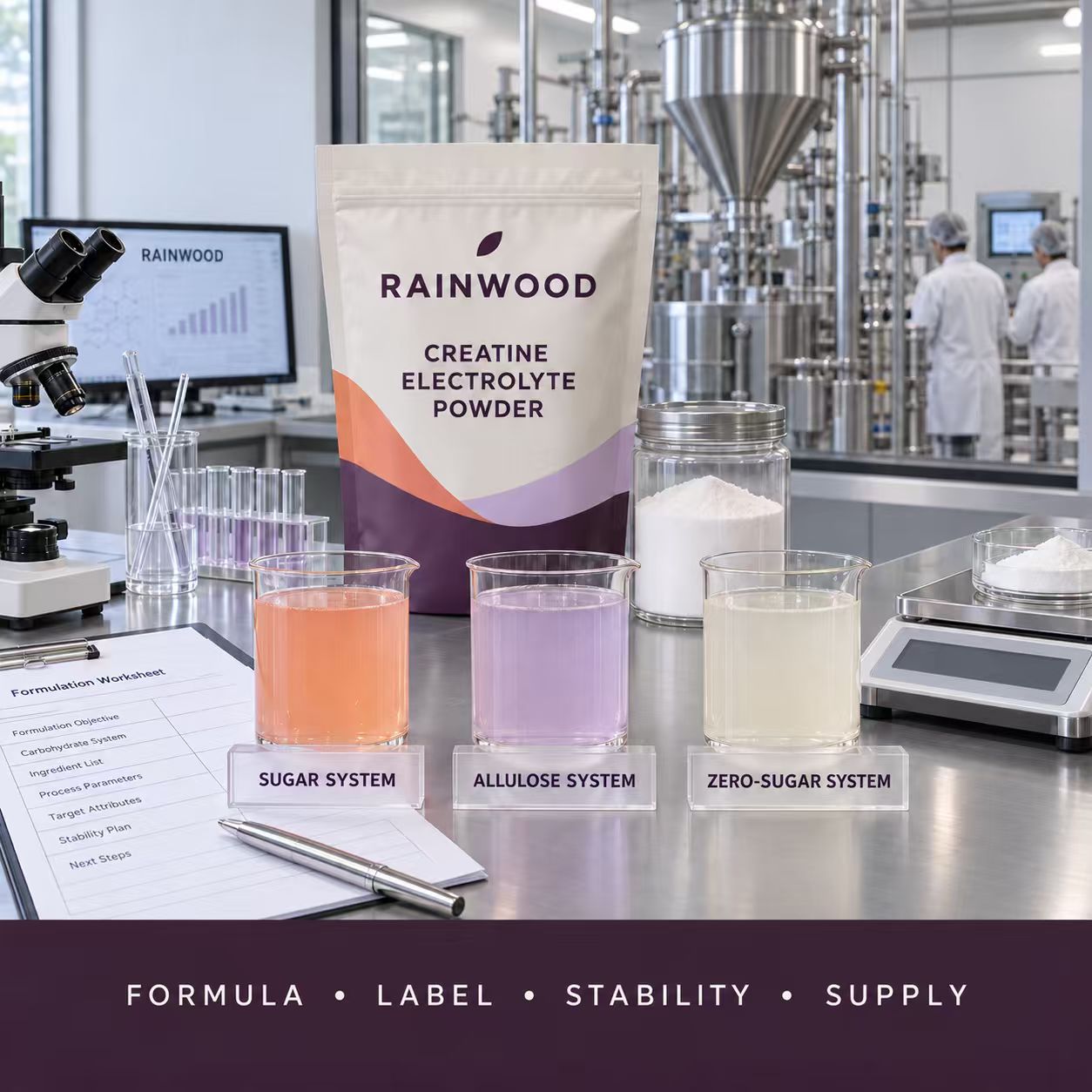
Meta title: Sugar or Zero Sugar Creatine Electrolyte Powder Guide
Meta description: Sugar, allulose, and zero-sugar systems change osmolality, taste, texture, cost, and claims in creatine electrolyte powders.
The product brief says “zero sugar,” while the formulation team wants a carbohydrate system to improve taste and drinking behavior. Another buyer wants a low-calorie endurance powder. A third wants a premium allulose blend. These are not interchangeable requests with different sweeteners. They are different beverage systems.
In a creatine electrolyte powder, sugar, allulose, polyols, and high-intensity sweeteners change the total dissolved solids, flavor, mouthfeel, stability, and label story. They also affect how the customer prepares and consumes the product. If the team chooses the sweetening system after the creatine and salts are fixed, the result may be too acidic, too concentrated, too sweet, or impossible to position honestly.
Carbohydrate is part of the electrolyte formula
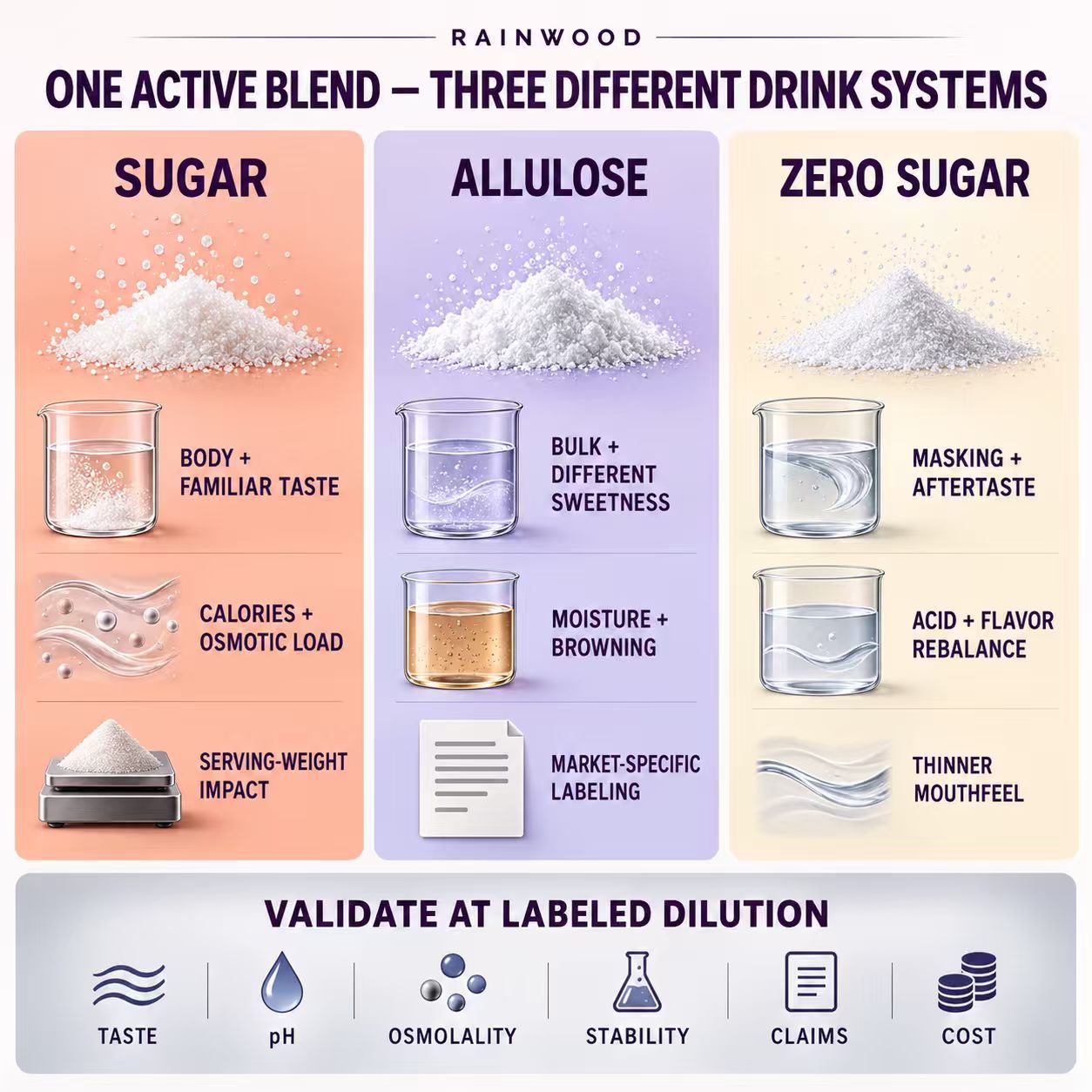
A carbohydrate can provide sweetness, body, energy, and a reason for the customer to drink the full bottle. It also adds osmotic load and calories, and it may change the market classification or nutrient-content claims. A zero-sugar formula removes those calories but often needs more intense sweeteners, acids, flavors, and masking agents.
Use our creatine electrolyte carbohydrate-system guide to compare the whole drink rather than the word “sugar” alone.
Sugar: familiar taste, visible label consequences
Sucrose, dextrose, and other carbohydrates can make a salty mineral drink easier to consume. The trade-off is energy content, sweetness, serving weight, and a different label profile. If the product is intended for prolonged exercise, the carbohydrate may have a performance or fueling rationale, but that rationale should be separated from creatine and hydration claims.
The buyer loss appears when a brand markets “zero sugar” but uses enough carbohydrate-derived carrier or syrup solids to create a disclosure problem, or when the sugar level makes the product unsuitable for the intended customer. Define the target calories and carbohydrate amount before the flavor is finalized.
Allulose and alternative carbohydrates need their own checks
Allulose and other reduced-calorie carbohydrates can contribute bulk and sweetness, but they can affect hygroscopicity, browning, tolerance, and the way the powder dissolves. Do not assume that replacing sucrose gram-for-gram preserves the same taste, water activity, or package stability.
Confirm the target market’s labeling treatment and regulatory status for the chosen carbohydrate. A formula acceptable in one jurisdiction may require a different declaration elsewhere. Keep the legal review separate from the sensory pilot.
Read the solubility and osmolality guide for creatine electrolyte drinks because carbohydrate choice changes more than sweetness.
Zero sugar is not zero formulation work
High-intensity sweeteners can create a fast sweetness peak, lingering aftertaste, or interaction with magnesium and potassium bitterness. Polyols can add body but may affect gastrointestinal tolerance at higher amounts. Acids can sharpen flavor while changing pH and stability. Flavors may need different ratios when the drink has no sugar to carry aroma.
Test the product in the actual water volume, at cold and room temperatures, after standing, and with the intended shaker. Ask users whether the drink is too sweet, too salty, too sour, or too thin. A formula that wins a tasting panel at first sip may fail after the customer drinks a full bottle during training.
Osmolality and concentration decisions
Every carbohydrate and sweetener contributes to the total dissolved-solids profile. The product should be evaluated at the labeled dilution. If customers can use half a bottle or double the water, the taste and mineral concentration change. Do not claim “rapid hydration” simply because the powder is sugar-free or contains multiple electrolytes.
Build a preparation table:
| Scenario | Water | Carbohydrate | Sodium | Creatine | Sensory result |
|---|---:|---:|---:|---:|---|
| Label direction | Target volume | Planned amount | Planned amount | Planned amount | Pass or revise |
| Half-volume use | Reduced | Same powder | Same powder | Same powder | Concentration check |
| Double-volume use | Increased | Same powder | Same powder | Same powder | Dilution check |
This table shows why the serving direction belongs in product development, not only on the packaging artwork.
The claim and cost trade-off
Sugar may reduce the need for expensive flavor masking. A zero-sugar blend may require more complex sweeteners, flavors, acids, and processing controls. Allulose may increase raw-material cost while supporting a different label position. Compare cost per finished serving and consumer experience, not only cost per kilogram.
Review nutrient-content claims under the target market’s rules. FDA guidance distinguishes nutrient-content, health, and structure/function claims. “Zero sugar,” “low calorie,” and “electrolyte” language should be checked against the final formula and panel, not the early concept sheet.
How RainwoodBio can test carbohydrate systems with the complete blend
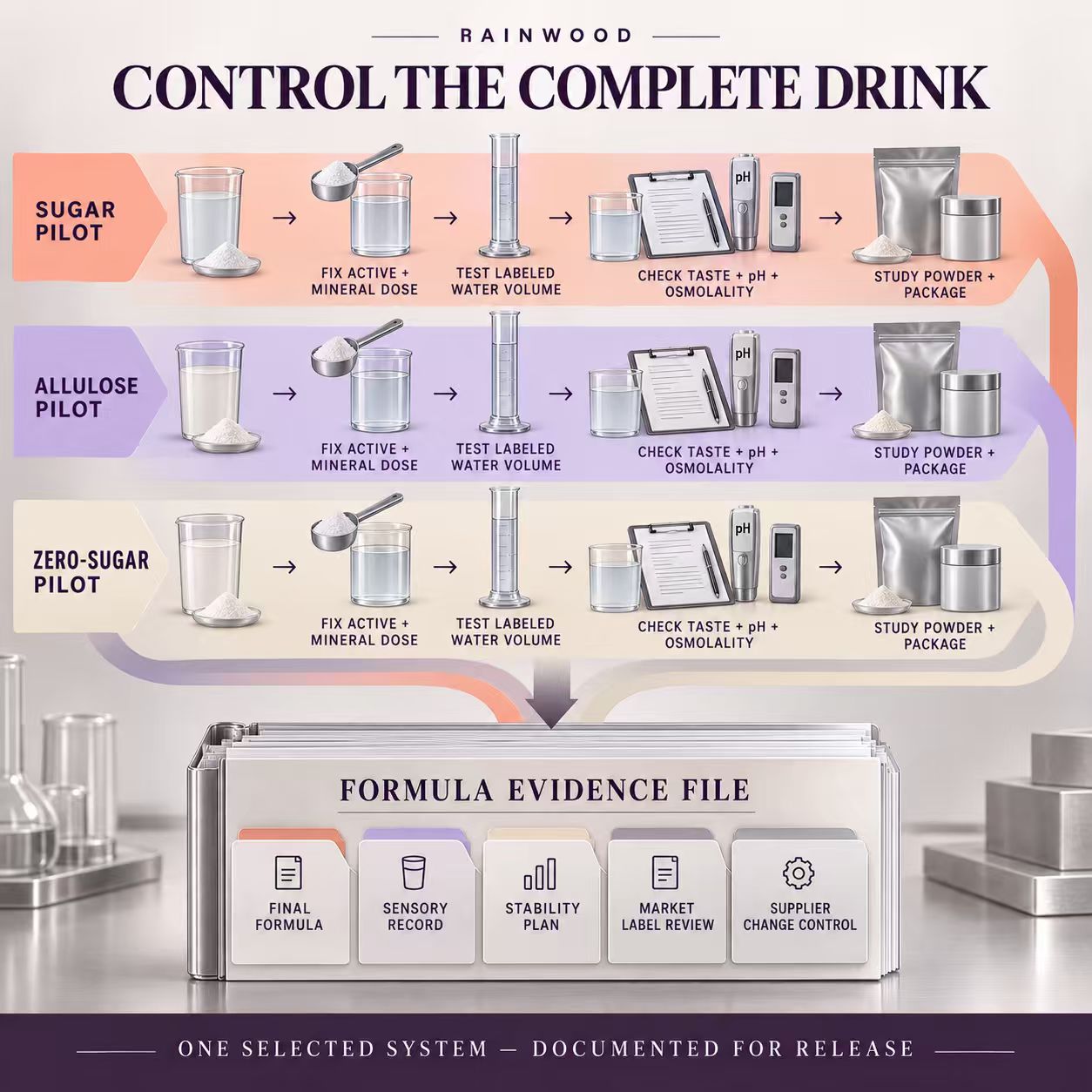
RainwoodBio publishes powder drinks, stick packs, formula development, requirement confirmation, testing and release documentation, packaging, and traceability. For a creatine electrolyte powder, the useful capability is running side-by-side sugar, reduced-sugar, and zero-sugar pilots with the same active dose and mineral profile.
Request a creatine electrolyte sweetening-system feasibility review with your calorie target, flavor concept, water volume, creatine dose, mineral panel, and target market.
The sweetening-system approval gate
Before launch, confirm:
- the carbohydrate or sweetener system is clearly defined;
- sugar, calories, and nutrient claims are calculated from the final formula;
- taste is acceptable at the labeled dilution and after standing;
- osmolality, pH, moisture, and package behavior are reviewed;
- alternative carbohydrates have target-market clearance;
- the formula remains uniform after mixing and filling;
- supplier changes trigger a new sensory and label review.
Send your three candidate formulas, supplier COAs, draft claims, flavor direction, and target market for a creatine electrolyte carbohydrate and label review. RainwoodBio can help show whether the sweetening system supports the product promise or undermines it.
Test the complete drinking occasion
Ask panelists to prepare the serving with the labeled water volume, carry it for the expected training period, and finish the full bottle. Record not only sweetness but also saltiness, acidity, bitterness, mouth dryness, and aftertaste. Repeat the test after the powder has been stored in the final package. A sweetening system that wins a single blind tasting may fail once the customer consumes the drink repeatedly or after the powder absorbs humidity. The best choice is the one that supports repeat use while keeping calories, texture, cost, and claim language under control.
Frequently asked questions
1.Is zero sugar always better for a creatine electrolyte powder?
No. It may fit some audiences, but it can add aftertaste, complexity, and cost. The right choice depends on the use case, calories, taste, and claims.
2.Can allulose replace sugar one-for-one?
Not automatically. Bulk, sweetness, moisture, texture, tolerance, and labeling treatment can differ. Validate the full formula.
3.Does sugar make creatine work better?
Do not make that conclusion from the presence of sugar alone. Any evidence must match the exact formula, dose, and claim.
References
- FDA, Label Claims for Food and Dietary Supplements: https://www.fda.gov/food/nutrition-food-labeling-and-critical-foods/label-claims-food-dietary-supplements
- ISSN position stand on energy drinks and electrolytes: https://pmc.ncbi.nlm.nih.gov/articles/PMC9987737/
- Compositional aspects of hydration beverages: https://pmc.ncbi.nlm.nih.gov/articles/PMC10781183/
- RainwoodBio OEM information: https://www.rainwoodbio.com/oem
This article is for B2B procurement and educational purposes. Sweetener selection, stability, safety, labeling, analytical, and regulatory requirements must be confirmed for the exact formula, market, and destination.