 EN
EN

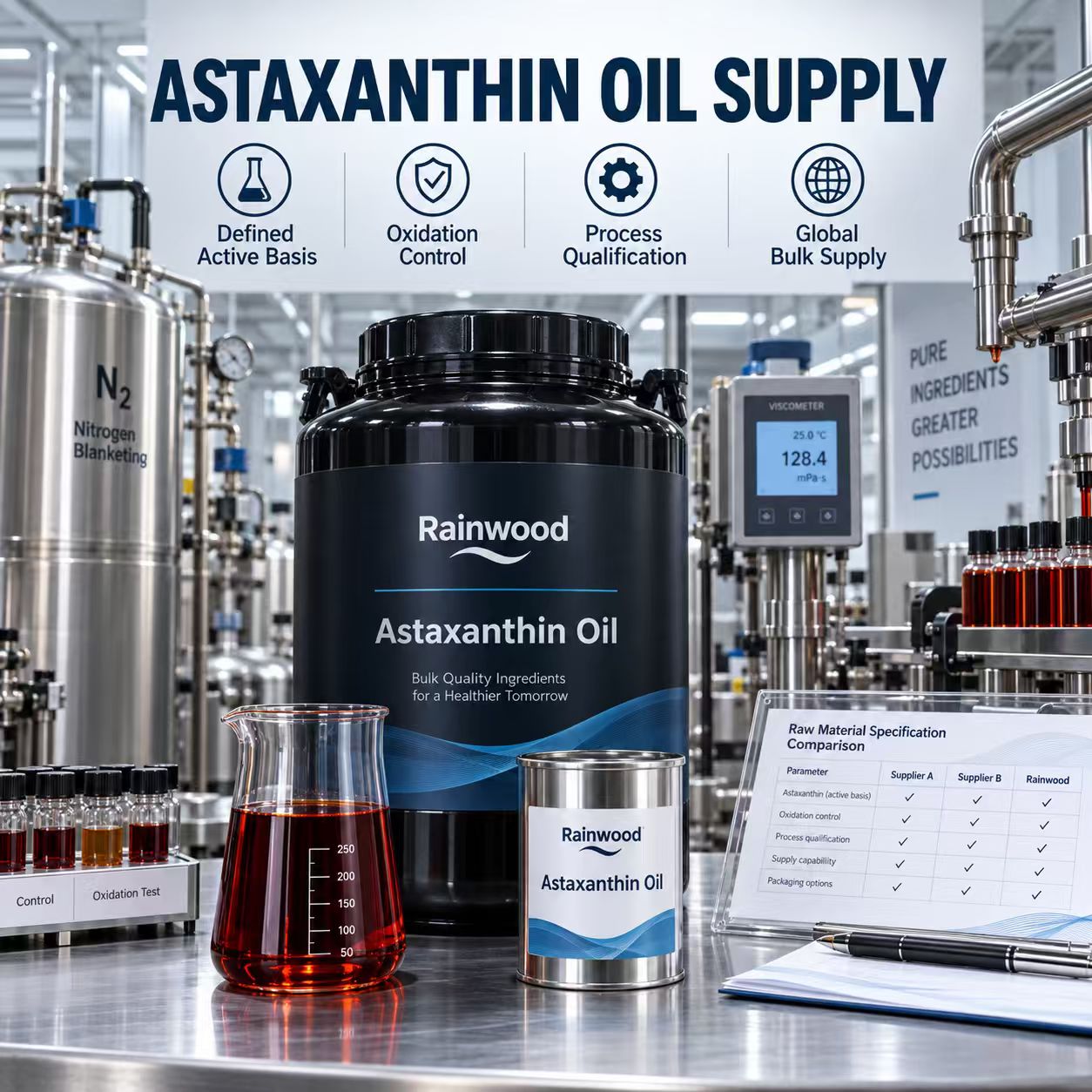
Meta title: Cheap Astaxanthin Oil? Normalize Carrier and Oxidation Costs
Meta description: A cheap astaxanthin oil quote may exclude carrier quality, antioxidants, oxidation tests, packaging, and replacement risk. Compare the complete delivered cost.
Supplier A quotes astaxanthin oil 15% below Supplier B. The quotation lists only “oil, 10%.” After arrival, the product needs nitrogen handling, a different pump temperature, a new softgel fill setting, and additional oxidation testing.
The lower invoice may still win. But it is not a lower cost until the two materials carry the same commercial specification and risk allocation.
Use the astaxanthin oil bulk specification to normalize the quote before approving the cheaper drum.
Start with active amount, not oil weight
Calculate the effective astaxanthin per kilogram and per finished unit. The number should reflect the agreed total astaxanthin basis, carrier fraction, and as-received condition.
`active cost per gram = delivered oil cost ÷ grams of astaxanthin delivered`
Then add:
- carrier oil and antioxidant system;
- package and headspace;
- temperature-controlled or protected transport;
- incoming verification;
- softgel or beverage process changes;
- retest and stability testing;
- expected loss, waste, or replacement.
USP’s monograph uses a free-astaxanthin equivalent on an anhydrous basis for astaxanthin esters, so the basis must be visible in the comparison. [USP Astaxanthin Esters](https://doi.org/10.31003/USPNF_M7359_03_01)
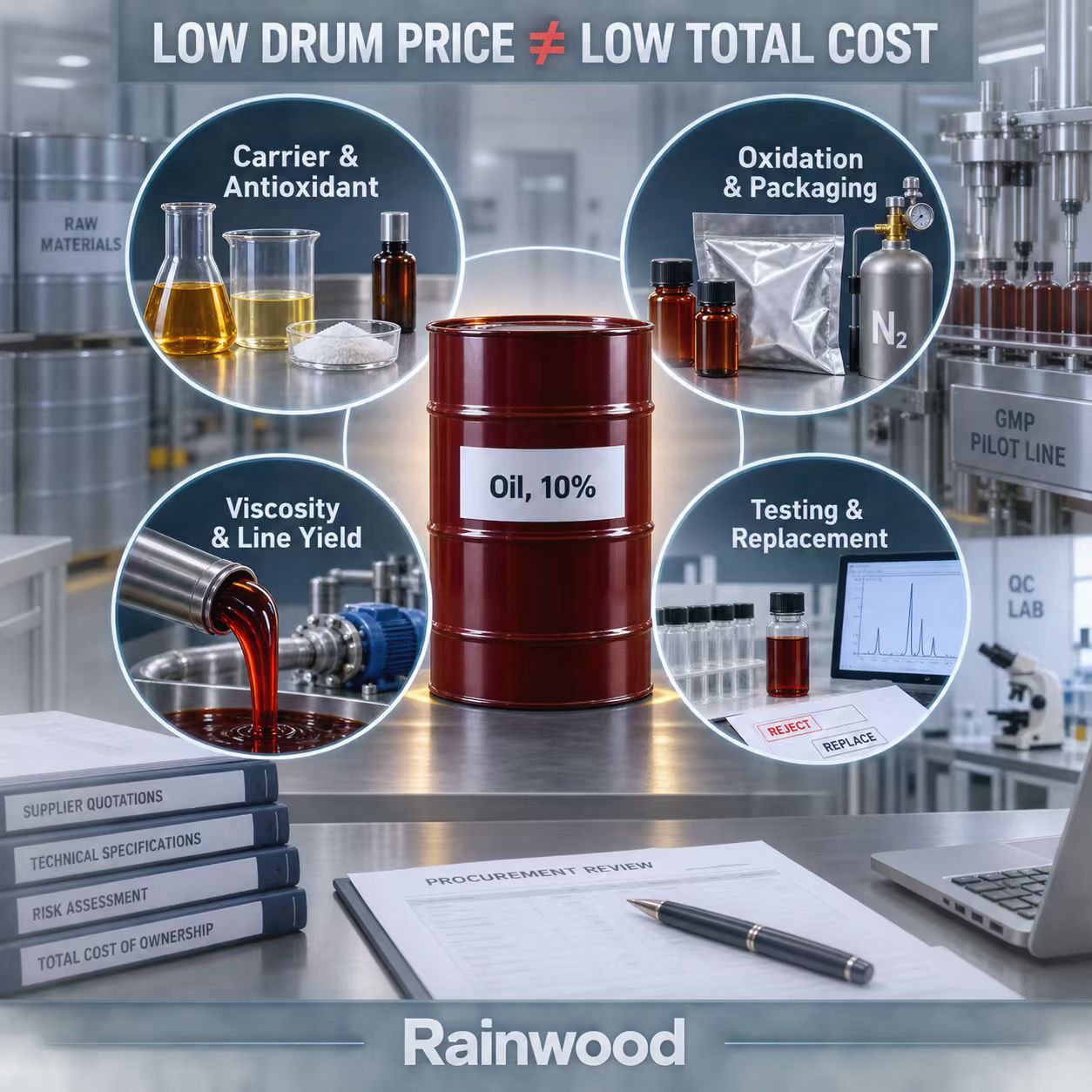
Oxidation control can be hidden in the carrier and package
Astaxanthin oil is sensitive to oxygen, light, and heat. The carrier oil can have its own oxidation profile, and an antioxidant system can affect stability, label declarations, and market suitability.
Ask for:
- carrier oil identity and specification;
- antioxidant identity and concentration;
- peroxide value and other agreed oxidation indicators;
- headspace and filling conditions;
- container material and light barrier;
- storage temperature and maximum open time;
- stability data using the same package.
Do not accept “stabilized oil” without the mechanism and acceptance limits.
Read the astaxanthin oil stability and packaging guide before comparing only the active percentage.
One supplier may transfer testing to you
“COA included” can mean an internal assay only. Another quote may include assay, identity, oxidation, carrier checks, viscosity, and lot-specific documentation. Normalize the test package:
| Cost item | Quote A | Quote B | Project requirement |
|---|---:|---:|---|
| Identity and assay | | | Defined form and basis |
| Oxidation indicators | | | Agreed limits |
| Carrier oil | | | Approved source and grade |
| Viscosity and density | | | Process fit |
| Packaging | | | Light and oxygen barrier |
| Incoming verification | | | First-lot or periodic |
| Stability support | | | Finished format |
The table reveals whether the low price comes from efficiency or from moving the risk into your QA budget.
Viscosity changes labor and yield
An oil that pumps poorly can slow a softgel line, create fill variation, or leave more material in the transfer system. A different carrier or storage temperature may require preheating, recirculation, or a different hose and pump configuration.
Include in the cost model:
- unloading and drum handling;
- temperature conditioning;
- pump setup and cleaning;
- line speed and yield;
- fill-weight rejects;
- residual oil and disposal;
- maintenance or equipment changes.
Use the astaxanthin liquid-fill feasibility checklist when the quote will be converted into a softgel product.
How RainwoodBio can support quote normalization
RainwoodBio’s public workflow describes requirement confirmation, supplier management, testing and release, packaging, logistics, and traceability. These are company-published capabilities. Ask for a quote that separates active oil, carrier, antioxidants, testing, packaging, format development, and delivery assumptions.
Explore the astaxanthin oil and private-label development service if you need the oil quote compared with a finished softgel option.
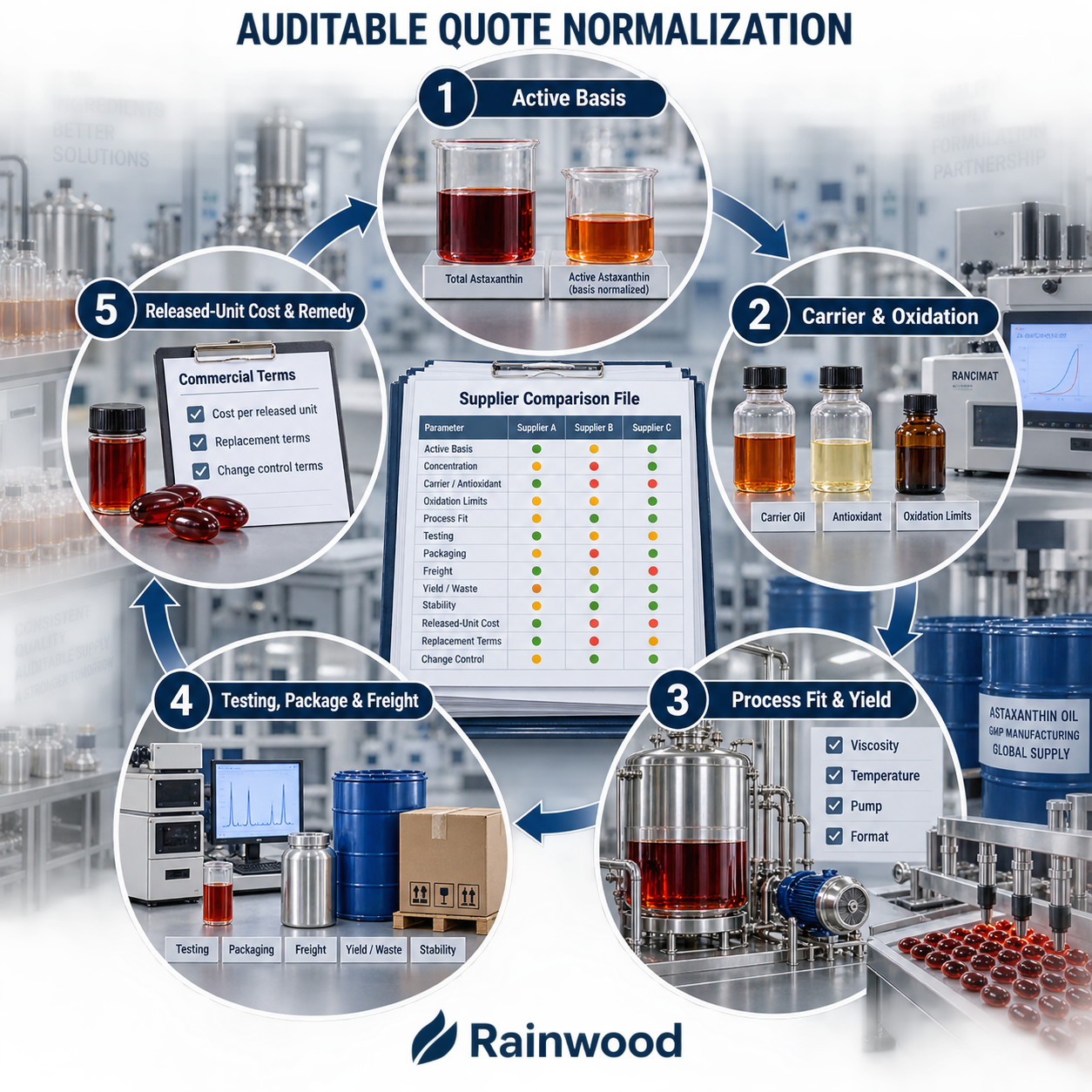
Approval gate for the cheapest oil
Approve only when:
- active basis and concentration match;
- carrier and antioxidant are accepted;
- oxidation limits and methods are equivalent;
- viscosity and filling assumptions are documented;
- package and transport protect the oil;
- all verification and stability costs are included;
- replacement and change-control terms are written.
Request an astaxanthin oil quotation and risk review. Send RainwoodBio both quotations, COAs, target softgel fill, market, package, annual quantity, and delivery route so the team can calculate the real landed cost.
Ask who owns the failure scenario
Before selecting the low quote, write down what happens if the oil arrives above the agreed oxidation limit, cannot pump at the line temperature, or loses potency during storage. Does the supplier replace the drum, pay the verification cost, or ask the buyer to accept a deviation? The answer belongs in the commercial terms, not in an informal chat.
Also ask how long the supplier can hold a matching lot and whether the same carrier and antioxidant system will be available for the next order. An oil can be technically acceptable today and commercially difficult to repeat if the source changes between campaigns.
Normalize the delivered unit before finance approves
Compare the cost per released softgel or serving after testing, packaging, yield, rework, freight, and replacement assumptions. A lower drum price is not a lower commercial cost if the oil requires extra conditioning or fails the first-lot stability gate.
Require an equivalent failure remedy
If two quotes have different test scope or package assumptions, the cheaper supplier should explain how nonconforming oil will be replaced or credited. A commercial remedy is part of the real cost of the material.
Include the supplier’s response time, complaint process, and replacement lead time in the comparison. A cheap oil that takes a month to replace can cost more than a higher-priced oil with a documented corrective path.
Make the quote review auditable
Save the original quotations, technical sheets, calculations, test requests, supplier answers, and final decision. When finance or QA asks why the cheapest drum was not selected, the file should show which risk and cost differences changed the ranking.
A signed comparison protects the buyer when the supplier later changes the carrier, test scope, delivery terms, replacement policy, packaging, or minimum order quantity.
Keep that comparison with the approved purchase specification and finance model.
Frequently asked questions
1.Is the lowest astaxanthin oil price usually the best deal?
No. Compare active amount, carrier, oxidation protection, testing, packaging, process cost, and failure risk.
2.Does a high peroxide value prove the oil is unusable?
It is a warning that must be interpreted against the agreed specification, method, carrier, storage history, and finished-product impact.
3.Should every oil shipment receive an oxidation test?
Set the frequency based on qualification, supplier history, risk, and market requirements, with expanded testing after changes or unusual results.
References
- USP Astaxanthin Esters: https://doi.org/10.31003/USPNF_M7359_03_01
- Astaxanthin delivery and stability review: https://pmc.ncbi.nlm.nih.gov/articles/PMC13210799/
- RainwoodBio OEM service: https://www.rainwoodbio.com/oem
- RainwoodBio homepage: https://www.rainwoodbio.com/
This article is for B2B procurement and educational purposes. Product, analytical, safety, labeling, and regulatory requirements should be confirmed for the exact ingredient, finished product, and destination market.