 EN
EN
Meta title: What a 99% Biotin COA Still Does Not Prove Global Buyers
Meta description: A 99% biotin result is not a complete release decision. Use this importer COA scorecard to verify identity, grade, lot linkage, methods, and risks.
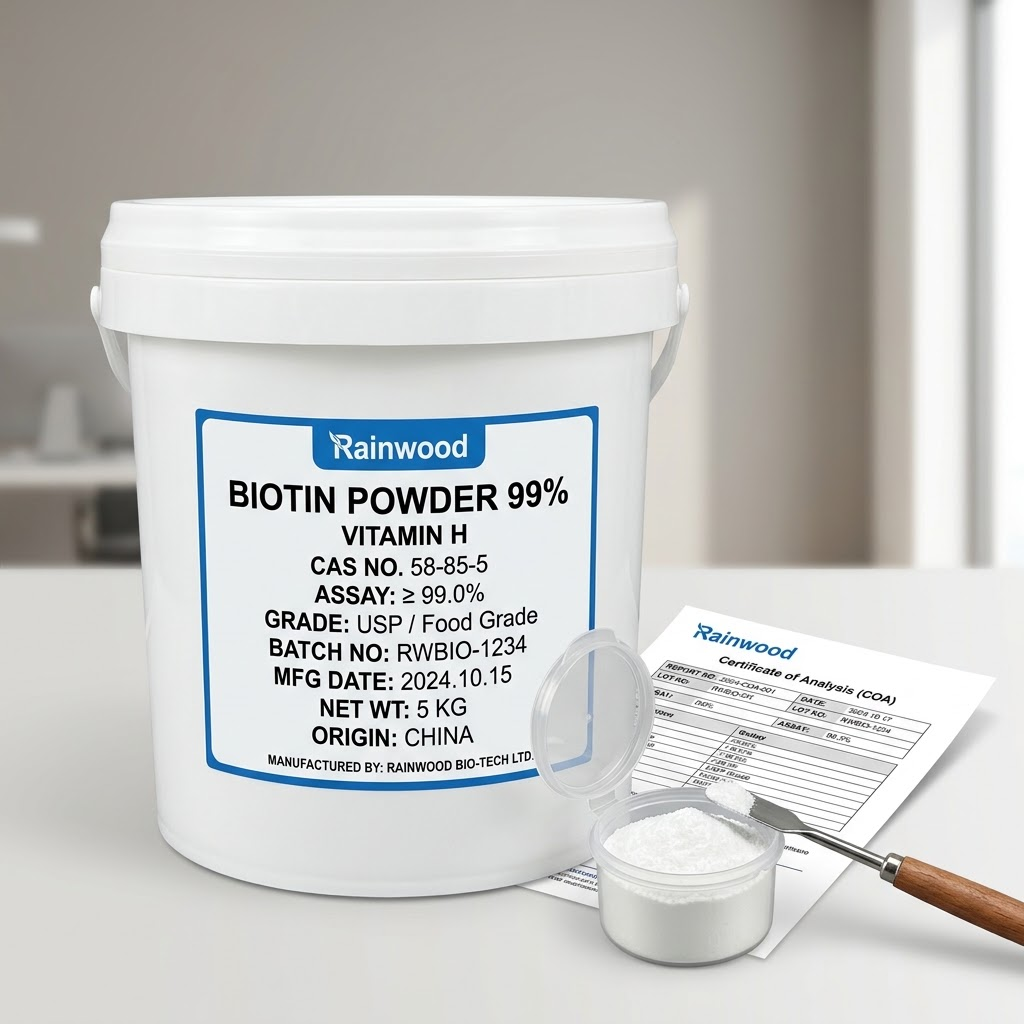
The drum says biotin. The COA says 99%. The sales email says food grade. Your warehouse is ready to release the lot.
Yet none of those three statements automatically proves that the document, sample, shipment, and specification all describe the same acceptable material.
For a raw-material importer or distributor, the dangerous question is not “Does the COA look professional?” It is “Does this evidence answer every decision required to release this exact lot for this exact customer?”
A clean page can still leave expensive gaps. Put the lot on hold until the identity, specification, document connection, and use-specific risks are clear.
Assay answers one question under defined conditions
An assay result estimates how much of the measured substance is present under the stated method and calculation basis. It does not, by itself, prove every other attribute you need.
“99%” alone does not tell you:
- whether the material is the exact identity and grade ordered;
- whether it is pure biotin or a different concentration or preparation;
- which method, reference standard, sample preparation, and calculation basis were used;
- whether the result belongs to the received lot;
- whether relevant contaminants meet your destination and customer requirements;
- whether the powder's physical properties suit the intended manufacturing process;
- whether the finished product will deliver the label amount uniformly.
USP publishes a Biotin monograph and reference standard. That is useful identity and specification context, but the buyer must still connect the required standard to a signed specification and lot-specific evidence. A monograph title printed on a COA is not a substitute for method suitability, actual results, and document control.
Start with RainwoodBio's published 99 percent biotin powder information, but request the current specification and lot documents for the proposed order.
Identity and assay must not be collapsed into one line
Your specification should state the exact ingredient and grade. It should distinguish identity testing from quantitative assay and explain what each acceptance decision requires.
An instrument acronym is not a complete answer. “HPLC” may describe a valuable analytical technique, but buyers still need to know the method, system suitability, reference material, sample preparation, specificity, calculation, limits, and actual result. The same principle applies to other techniques.
Ask the supplier:
1. What evidence establishes the exact identity of this material?
2. What does the assay measure, and on what basis is the percentage reported?
3. Which current specification version governed release?
4. Which laboratory performed the work, and is the report supplier-generated or independent?
5. Can the chromatographic or other supporting record be supplied when your risk review requires it?
Do not demand fashionable tests without a purpose. Select methods because they answer a defined risk for the material, process, customer, and market.
The COA must be connected to the shipment
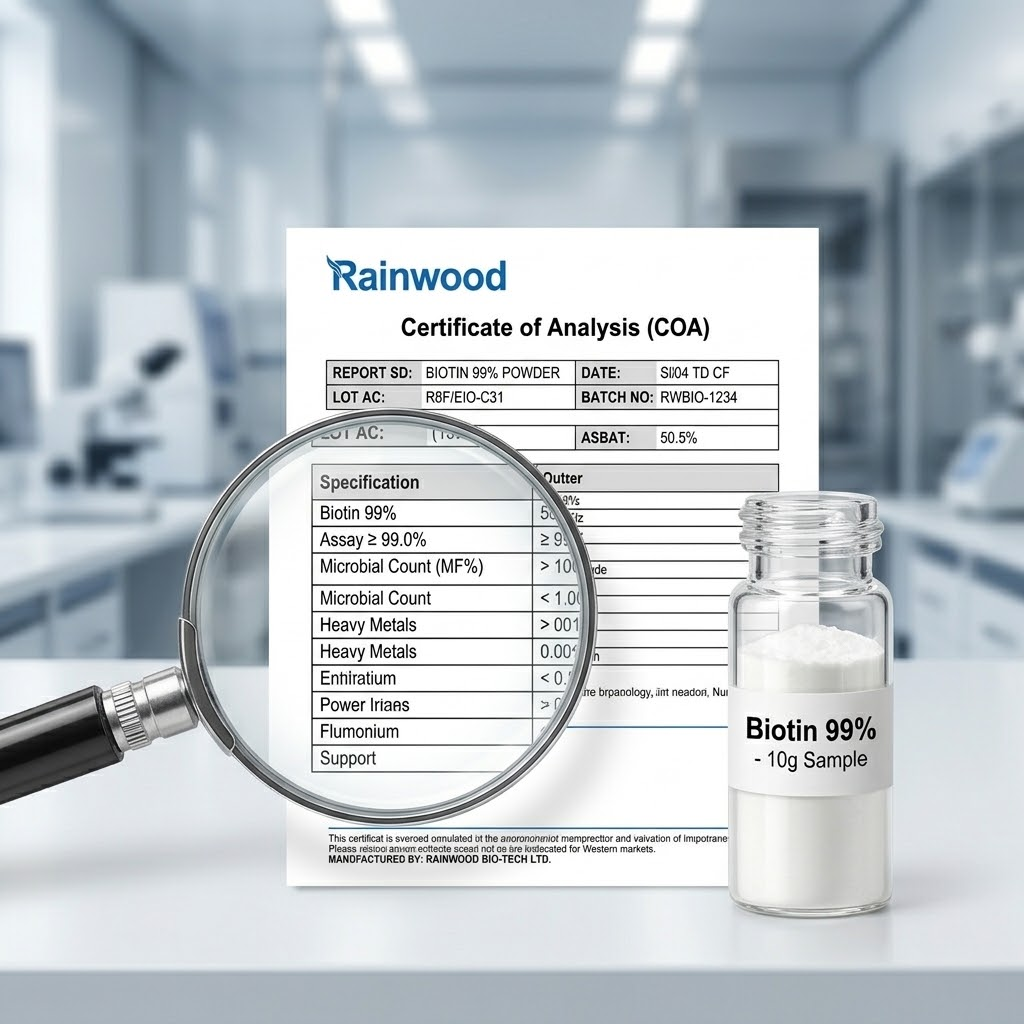
A technically impressive COA is commercially weak if its lot connection cannot be demonstrated.
Match the following before release:
- supplier and actual manufacturer identity where required;
- product name, code, grade, and concentration;
- batch or lot number on the COA, container labels, packing list, and sample;
- manufacturing, testing, release, and retest or expiry dates;
- quantity, packaging configuration, and seal information;
- authorized document version and sign-off;
- any third-party report to the exact submitted sample and lot.
If a third-party report exists, determine who sampled the material, where it was sampled, and whether the sample represents the shipment. “Third-party tested” is not a complete chain of custody.
In the U.S. dietary-supplement context, 21 CFR 111.75 requires at least one appropriate identity test or examination for each dietary ingredient unless a specific regulatory exemption applies, and it places conditions on relying on a supplier COA for other component specifications. The practical message for international buyers is simple: supplier qualification and COA reliance must be designed and documented, not assumed.
“Food grade” needs a written specification
Grade language can become a shortcut for many unstated expectations. Your customer may care about microbiological limits, elemental impurities, residual solvents, allergens, genetically modified source statements, irradiation, country of origin, dietary positioning, or market-specific documents. Not every requirement applies to every material or market.
Build the contaminant and document plan from reasonably foreseeable risks for the actual source and process. Then place the selected limits, methods, and reporting expectations in the approved specification.
Avoid two extremes:
- accepting “complies” without seeing limits and actual results where results are required;
- copying an enormous generic panel that is unrelated to the material and still misses the customer’s real risk.
A risk-based plan is stronger because every requirement has a reason, an owner, and an acceptance decision.
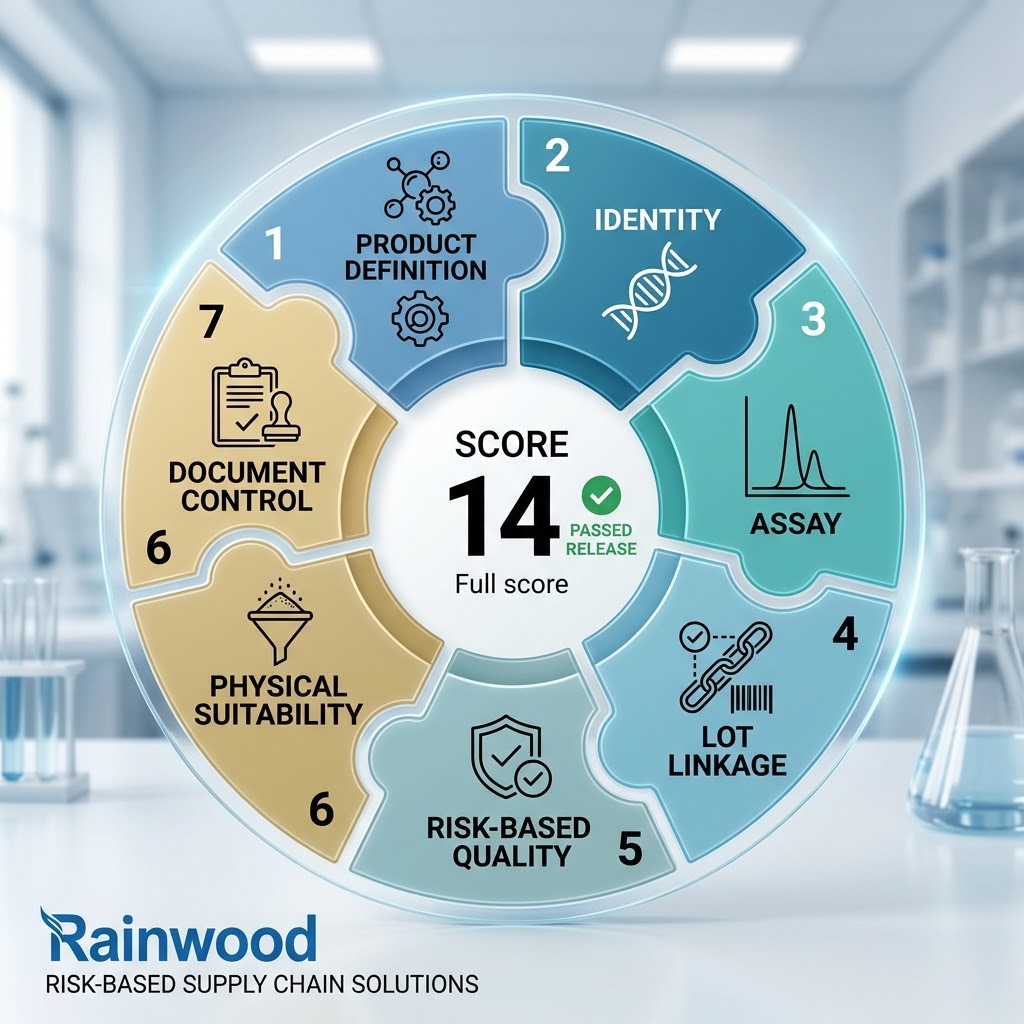
The seven-gate biotin COA release scorecard
Score each gate 0 for missing, 1 for incomplete, or 2 for clear and project-matched.
| Release gate | What earns a full score |
|---|---|
| Product definition | Exact name, grade, concentration, carrier status, code, and signed specification |
| Identity | Fit-for-purpose identity evidence with method and acceptance criteria |
| Assay | Defined analyte, method, basis, limit, and actual lot result |
| Lot linkage | COA, labels, shipment records, sample, and external reports match |
| Risk-based quality | Agreed purity and contaminant limits reflect source, process, use, and market |
| Physical suitability | Relevant moisture, particle, density, flow, or handling data are available |
| Document control | Dates, versions, laboratory, authorization, and change status are clear |
A score below 12 is not proof of adulteration. It is a warning that your release decision contains unresolved assumptions. Convert every missing point into a supplier question, a test, a hold, or a contractual requirement.
Review RainwoodBio's published supplier and documentation workflow as company context, then ask which records apply to the exact biotin product and lot.
How RainwoodBio can support a document-first order
RainwoodBio publishes a 99% biotin powder and describes requirement confirmation, supplier management, testing and release, documentation, and traceability. These published capabilities can frame a stronger project without being overstated as batch proof.
For your order, turn the framework into named deliverables:
- approved product specification before the purchase order;
- lot-linked COA and agreed supporting documents before shipment;
- risk-based identity, assay, and contaminant plan;
- retain, deviation, rejection, and change-notification expectations;
- a finished-product plan when RainwoodBio also supports OEM production.
If a certificate is important, verify the entity, site, issuer, validity, scope, and product-category coverage separately. A company-level certificate should never be presented as proof that one biotin lot passed a particular test.
Explore the company's OEM testing and release project steps when the purchased input will become a finished supplement.
Do not release until these questions have answers
- What exact material and concentration did we order?
- Which identity decision is separate from the assay result?
- Does every document and label match the received lot?
- Which methods, limits, and actual results govern release?
- Which contaminants and physical attributes matter for this use?
- What has been independently confirmed, and what remains supplier-declared?
- What happens if destination testing disagrees or a source changes?
If your current COA cannot answer them, another logo or stamp will not fix the gap. You need a release package designed around the purchase decision.
Request a biotin COA and specification gap review. Send RainwoodBio the supplier COA, proposed specification, target country, application, annual quantity, packaging, and customer test requirements; the team can return a marked gap list and supplier question sheet.
Frequently asked questions
1.Does 99% assay prove that the material is biotin?
Not by itself. Identity and assay are related but different decisions. The evidence package should include an appropriate identity approach plus a defined quantitative method and lot result.
2.Is a supplier COA acceptable for import release?
That depends on the jurisdiction, use, specification, supplier-qualification program, and tests involved. In U.S. dietary-supplement manufacturing, reliance on supplier COAs for certain specifications is conditional, while dietary-ingredient identity testing has a specific requirement.
3.Does “USP grade” on a quotation prove compendial compliance?
No. Ask which current monograph and specification apply, then review identity, assay, other required attributes, methods, actual results, sampling, and lot linkage. The wording must be supported by the complete evidence.
4.Should every possible contaminant appear on every COA?
Not necessarily. Establish a risk-based plan for the source, process, material, customer, use, and destination. The plan may combine supplier controls, periodic qualification, and lot testing as permitted by applicable requirements.
References
- USP-NF Biotin monograph: https://doi.usp.org/USPNF/USPNF_M9515_02_01.html
- 21 CFR 111.70, specifications: https://www.ecfr.gov/current/title-21/chapter-I/subchapter-B/part-111/subpart-E/section-111.70
- 21 CFR 111.75, determining whether specifications are met: https://www.ecfr.gov/current/title-21/chapter-I/subchapter-B/part-111/subpart-E/section-111.75
- RainwoodBio biotin powder page: https://www.rainwoodbio.com/-private-label-biotin-vitamin-h-powder-food-grade-biotin-vitamin-h
- RainwoodBio About Us page: https://www.rainwoodbio.com/about-us
- RainwoodBio OEM page: https://www.rainwoodbio.com/oem
*This article is for international B2B procurement and educational purposes. Identity, methods, specifications, sampling, testing, safety, import, labeling, and regulatory requirements must be confirmed for the exact material, lot, finished product, and destination market.*