 EN
EN

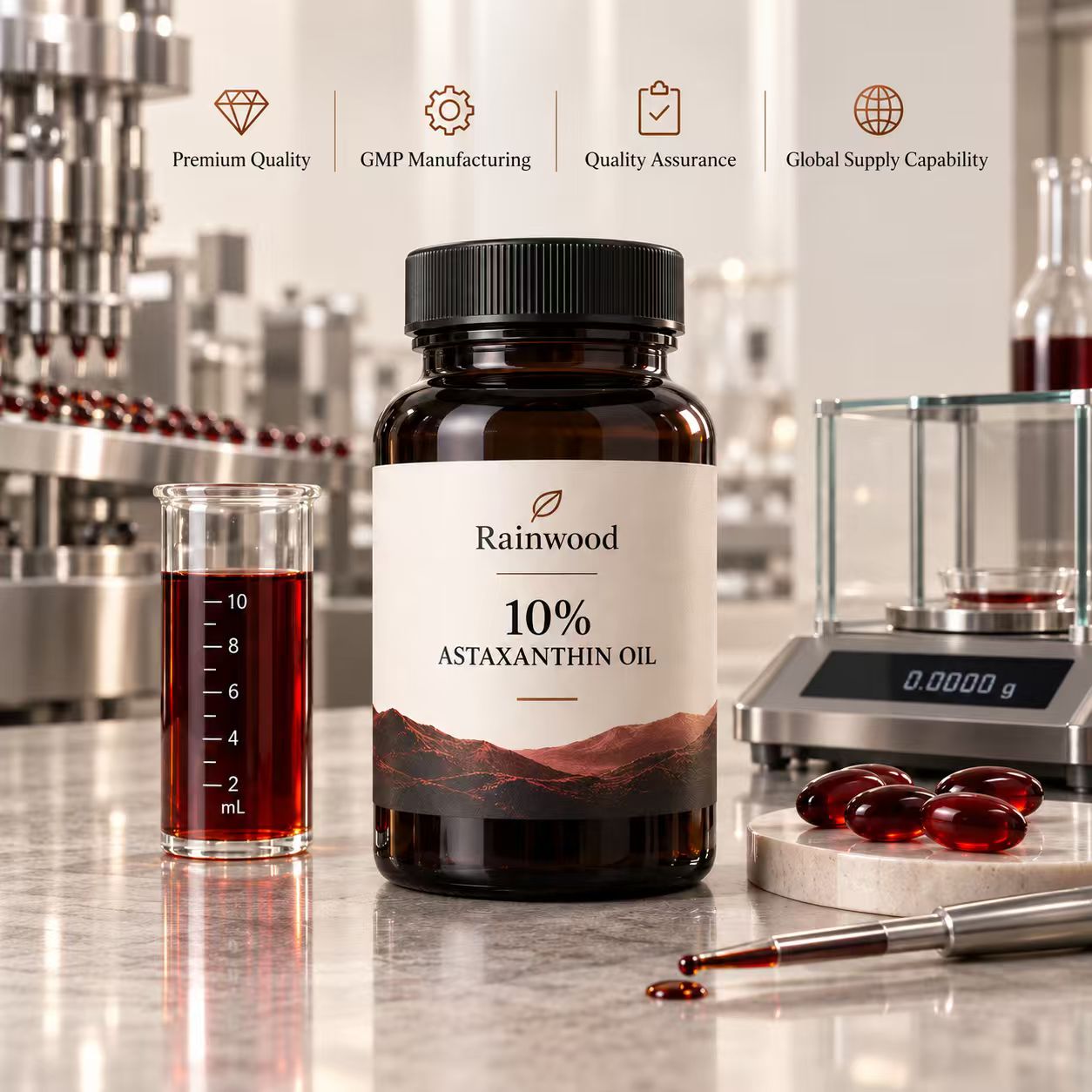
Meta title: 10% Astaxanthin Oil: Convert the Dose Correctly
Meta description: A 10% astaxanthin oil label is incomplete without the analyte, basis, density, carrier, and fill-weight calculation. Check the dose before tooling.
The softgel brief says “10 mg astaxanthin.” Purchasing orders 100 mg of 10% oil per capsule. The supplier reports 10% astaxanthin esters on an anhydrous basis, while the formula team assumed 10% free astaxanthin as received.
The mistake multiplies across every softgel, label, stability pull, and quotation. Dose math must start with the oil’s analytical definition.
Review the astaxanthin oil concentration specification before approving the fill weight.
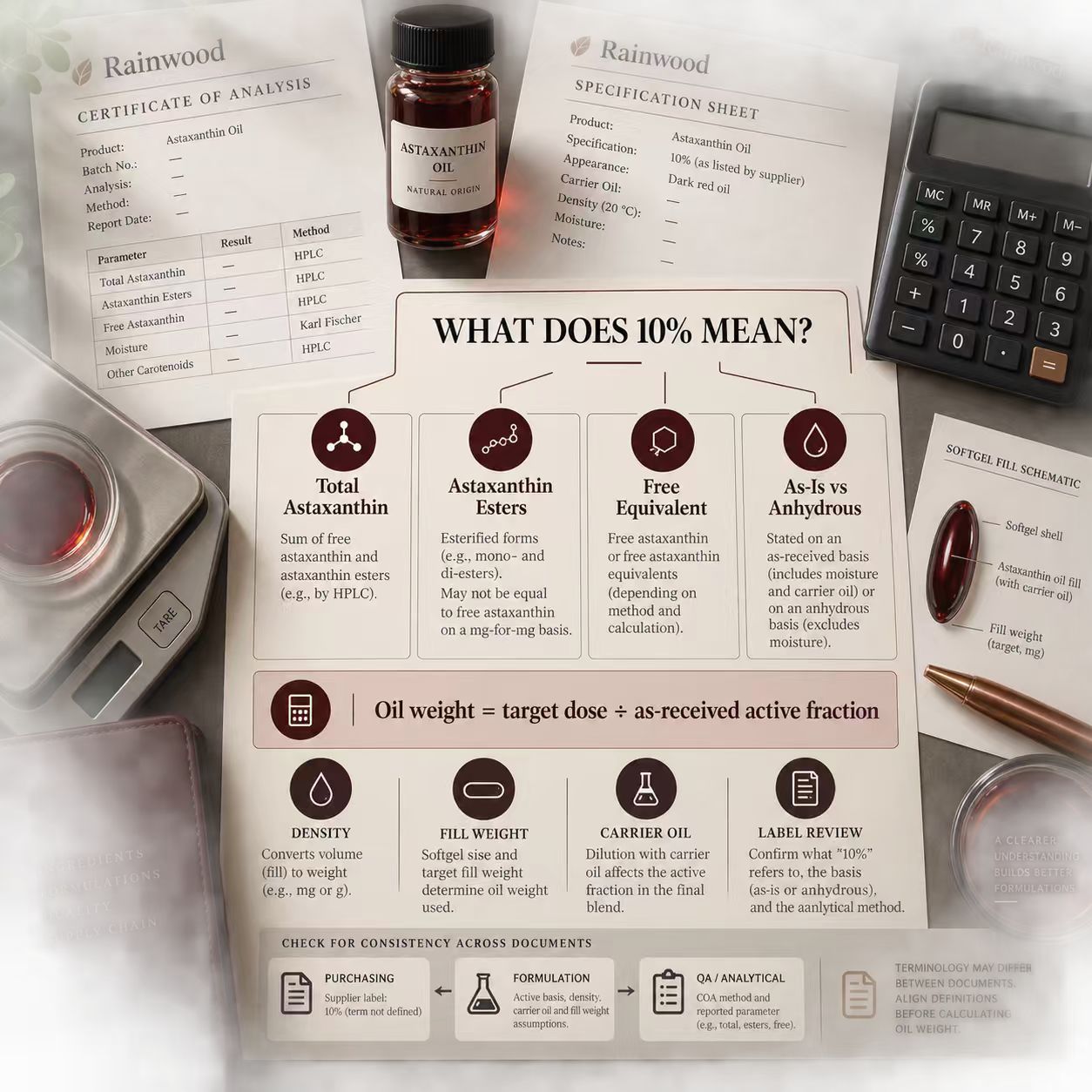
Define what “10%” measures
The percentage may refer to total astaxanthin, astaxanthin ester content, free astaxanthin equivalent, or a supplier-specific calculation. USP’s astaxanthin esters monograph calculates total astaxanthin as free astaxanthin on the anhydrous basis. [USP Astaxanthin Esters](https://doi.org/10.31003/USPNF_M7359_03_01)
Your purchase specification should state:
- analyte and form;
- free-equivalent calculation;
- as-is or anhydrous basis;
- carrier oil percentage;
- density at the fill temperature;
- assay method and reference standard;
- acceptance range;
- lot and package identity.
If the supplier cannot answer these questions, the number is not ready for the master formula.
Convert the target dose with the correct fraction
Use a transparent calculation:
`oil weight per softgel = target astaxanthin dose ÷ as-received active fraction`
Then check whether the result fits the softgel size and total fill. If the oil is 10% on an anhydrous basis but carries 3% water or volatile material, the as-received active fraction is not the same as 0.10.
Document rounding and overage rules. A small calculation difference can become a meaningful label or batch-release difference when the daily dose is multiplied by millions of units.
Read the astaxanthin softgel dose and tooling guide before ordering the die.
Density controls the physical fill, not the label claim
Softgel machines dose volume or weight under defined conditions. Density changes can alter the volume occupied by the same mass of oil, the fill-weight setting, and the amount of headspace inside the shell.
Measure:
- density at room and fill temperatures;
- viscosity and flow;
- fill-weight variation;
- air entrainment;
- settling or separation;
- line temperature and hold time.
Do not use a water-equivalent volume assumption for a viscous astaxanthin oil.
Carrier oil changes the formula identity
The carrier is part of the finished product. MCT, sunflower, olive, algae, and other oils can affect nutrition facts, allergen review, sensory profile, oxidation, shell compatibility, and market positioning.
Ask whether the oil contains:
- antioxidants;
- emulsifiers or surfactants;
- other carotenoids;
- flavor or odor masking;
- processing aids;
- undeclared diluents.
Then map the composition into the “other ingredients” panel and the finished-product specification.
Use the astaxanthin oil carrier and label review before printing the softgel bottle.
A good dose calculation still needs finished-product verification
The master formula predicts the target. The finished-product test shows what was actually filled and retained. For a softgel, test:
1. fill-weight uniformity;
2. astaxanthin potency using a suitable method;
3. free and ester form if relevant;
4. shell integrity and leakage;
5. oxidation or stability indicators;
6. disintegration or release where required;
7. label and serving math.
Keep the raw oil result separate from the finished softgel result. One does not replace the other.
How RainwoodBio can support the dose conversion
RainwoodBio’s current website lists custom softgels and describes requirement confirmation, sample development, production control, testing and release, packaging, and traceability. These are company-published capabilities. Ask for a dose worksheet that shows oil concentration basis, density, fill weight, capsule size, overage, and finished-product release tests.
Explore the astaxanthin softgel OEM feasibility review before the formula is frozen.
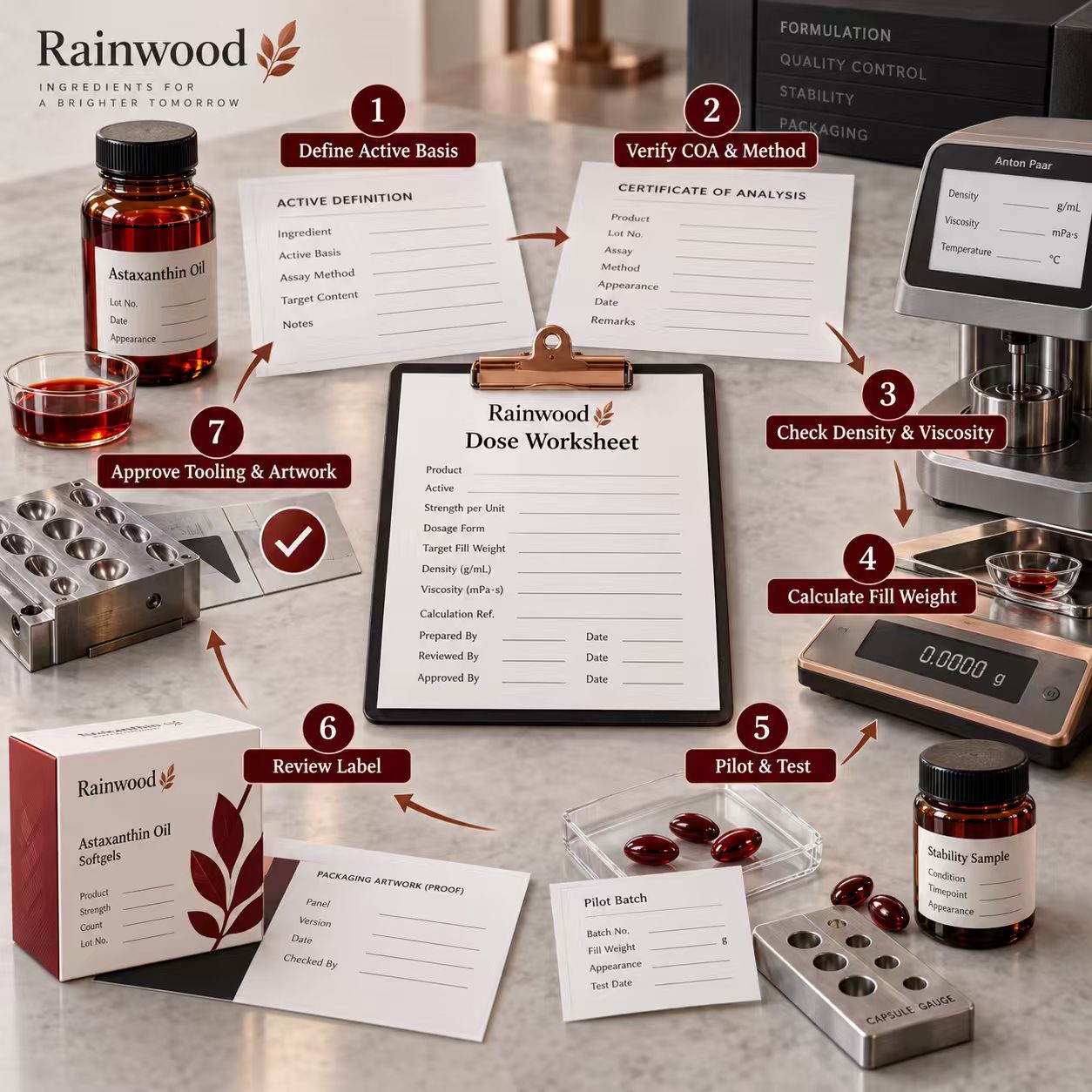
Approval gate before tooling and artwork
Require:
- an agreed active-basis definition;
- a complete dose calculation;
- density and viscosity data;
- approved carrier and antioxidant composition;
- pilot fill-weight and potency results;
- shell compatibility and stability checks;
- finished label review.
Request an astaxanthin oil dose-calculation review. Send RainwoodBio your target mg per serving, oil COA, density, softgel size, carrier restrictions, market, and annual quantity so the team can verify the fill math.
Lock the equation before the label is designed
Put the active-basis equation, rounding rule, overage, and end-of-shelf-life target into the approved formula record. Have formulation, QA, regulatory, and purchasing sign the same version. If the supplier revises the concentration or changes from anhydrous to as-is reporting, the dose calculation must be reopened before the next order.
For a multi-ingredient softgel, show the astaxanthin amount separately from the carrier oil and other actives. For a liquid fill, specify whether the machine controls mass or volume and how density is corrected when the fill temperature changes. For an oil adsorbed onto a powder carrier, calculate the active fraction after adsorption and verify blend uniformity.
Keep a worked example in the technical dossier. A future buyer, auditor, or replacement supplier should be able to reproduce the calculation from the COA, density, target dose, and formula version without asking which spreadsheet was used at launch.
Add a second-person verification step
Ask the supplier to calculate one worked example from the lot COA and send it with the quotation. The example should show active fraction, density, target dose, fill mass, overage, and rounding. QA can then verify the finished result without rebuilding the supplier’s assumptions.
Recheck the calculation after any supplier change
An updated COA, carrier, antioxidant, density, or assay method can change the amount of oil required per unit. Trigger a new calculation before production rather than carrying forward the old spreadsheet.
The approved formula should also show the carrier oil separately from the active so that a future supplier comparison does not obscure the dose.
Final check before artwork and production
Have QA verify the supplier’s active basis, formulation verify the dose equation, regulatory review the market wording, and purchasing confirm that the quoted material matches the approved specification. If any owner is using a different percentage definition, stop the artwork approval until the discrepancy is resolved.
Frequently asked questions
1.Does 100 mg of 10% astaxanthin oil always deliver 10 mg astaxanthin?
Only if the 10% is defined on the same basis used in the calculation and the oil is dosed as expected. Confirm the analyte, basis, moisture, and method.
2.Can density change the declared astaxanthin amount?
Density does not change the chemical assay, but it can change the fill volume and the amount of oil delivered by a volume-based process.
3.Is carrier oil part of the label review?
Yes. The carrier and other excipients can affect the ingredient declaration, nutrition information, allergens, and market compliance.
References
- USP Astaxanthin Esters: https://doi.org/10.31003/USPNF_M7359_03_01
- USP FCC Astaxanthin Esters from *Haematococcus pluvialis*: https://doi.org/10.31003/USPFCC_F102276_03_01
- RainwoodBio homepage: https://www.rainwoodbio.com/
- RainwoodBio OEM service: https://www.rainwoodbio.com/oem
This article is for B2B procurement and educational purposes. Product, analytical, safety, labeling, and regulatory requirements should be confirmed for the exact ingredient, finished product, and destination market.