 EN

Executive Summary & B2B Formulation Guidance
A 100 mg CoQ10 label can hide premix, purity, and serving errors. Use a practical calculation to protect margin, dose accuracy, and compliance.
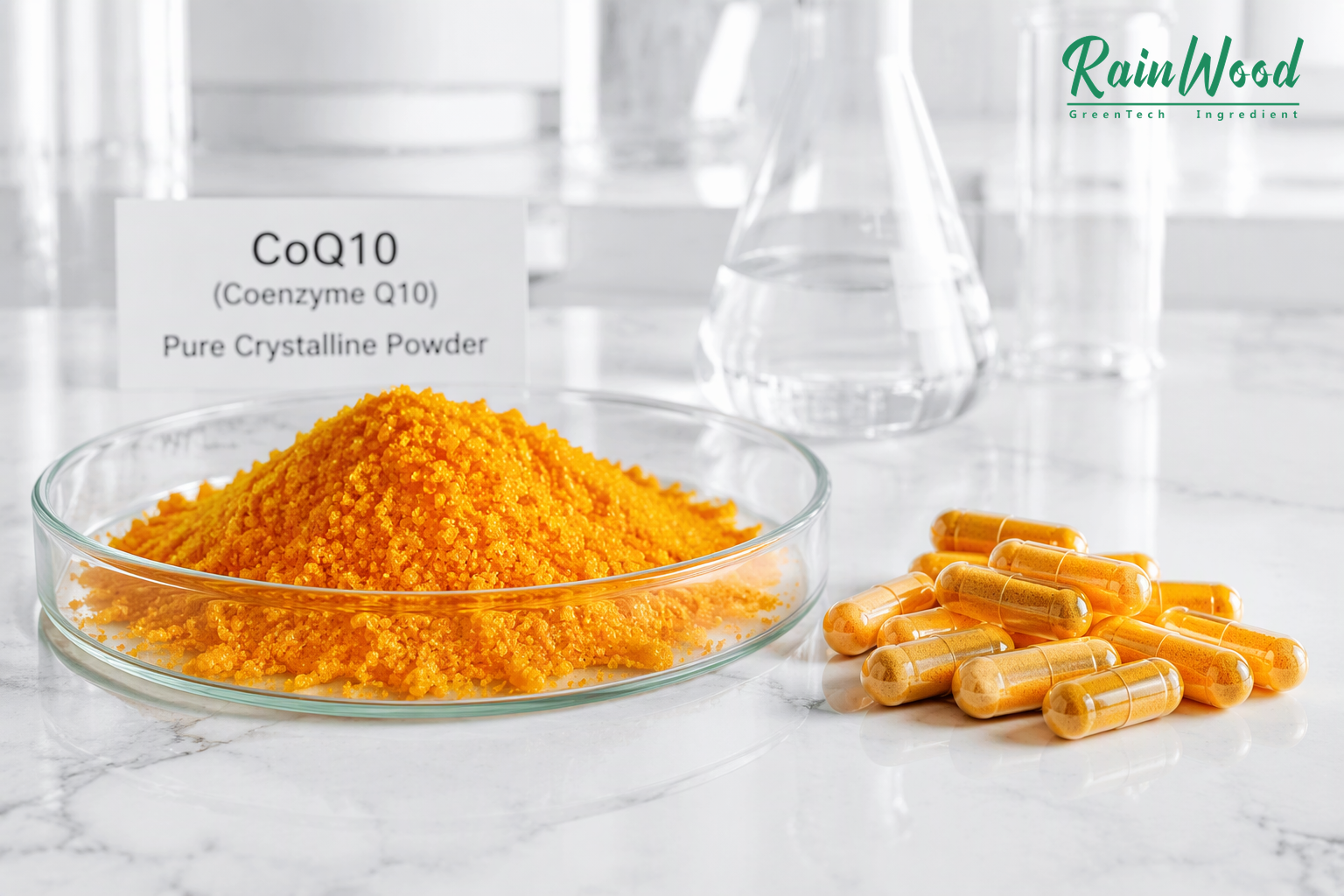
Figure 1: Analytical Comparison of CoQ10 Pure Crystalline Active vs Size 00 Encapsulated Formula
The artwork says “CoQ10 100 mg.” Procurement sees a powder quotation. Production sees a fill-weight target. Finance sees a cost per bottle. These four teams may believe they are discussing the same number while actually using four different bases. The result is a label that overstates the active, a capsule that cannot hold the planned dose, or a quotation that looks cheap until the real input weight is calculated.
Start with active CoQ10, not powder weight
The first question is whether 100 mg refers to CoQ10 active, a carrier-based premix, or total material. If a raw material is 98% CoQ10, 102.04 mg of powder is theoretically needed to supply 100 mg active before process loss. If the material is a 20% premix, the theoretical input becomes 500 mg before overage and manufacturing loss. A supplier that quotes only “100 mg powder” has not yet provided a usable formulation input.
Use the ingredient identity checklist to record active form, purity, carrier, and basis. Then calculate the amount per capsule, serving, bottle, and daily use. Do not allow the product page to use a consumer-friendly number that the master formula cannot reproduce.
A simple calculation exposes the hidden cost
Use this formula:
Required raw material = declared active per unit ÷ assay fraction ÷ expected process recovery
For a 100 mg target, a 98% raw powder, and 95% expected recovery, the theoretical input is about 107.4 mg per unit. That is before any stability overage. If the product uses two capsules per serving, the daily active is 200 mg, not 100 mg. If the supplier reports 100 mg per serving but the artwork says 100 mg per capsule, the commercial promise has already diverged.
The dose calculation worksheet should show the calculation version, raw-material lot, assay result, overage assumption, capsule fill, and finished-product target. Keep the sheet with the formula and artwork approval.
Purity and assay are not the same input
“99% purity” may be a supplier specification, but the buyer still needs to know what was measured, by which method, and whether the result covers the declared redox form. An assay can report a high CoQ10 response while failing to distinguish a carrier, a degradation product, or the wrong form if the method is not fit for purpose. The method section should state the standard, detector, sample preparation, and reporting basis.
Ask whether the number is a minimum, typical value, or release result. Typical values are useful for formulation planning but cannot replace a guaranteed minimum. If the label depends on activity through expiry, release testing alone may not support the final claim. A stability plan must connect the finished unit to the printed shelf life.
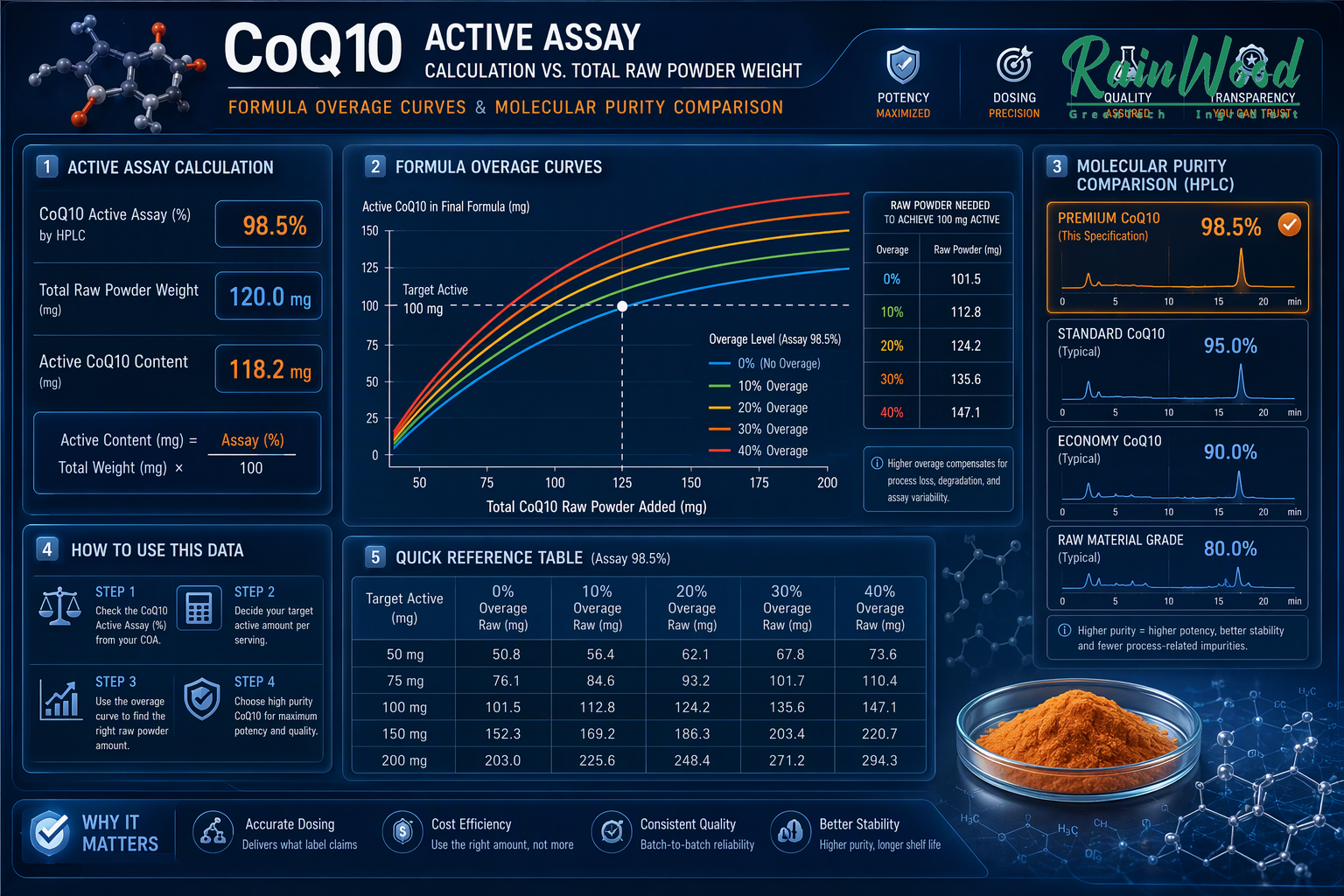
Figure 2: 3D Infographic of CoQ10 Active Assay Calculation, Purity Fractions, and Formulation Overage Loading
Overage is not a substitute for process control
CoQ10 brands often discuss overage as if adding more powder solves every problem. It does not. Too much overage can increase cost, change capsule fill, create a label mismatch, and still fail if oxygen or light is entering the package. If an oil suspension separates, a high theoretical input cannot correct nonuniform filling.
Define why overage is used: assay variability, processing recovery, redox conversion, or end-of-shelf-life protection. Set a range and a decision rule. Test finished units from representative locations in the run. Record the relationship between raw-material input, fill-weight variation, finished CoQ10 content, and package condition.
Serving math must match the sales channel
Amazon customers may compare “100 mg per capsule,” while a practitioner brand may compare “200 mg per daily serving.” A distributor may calculate a bottle's total active content. Each statement can be correct only if the serving size is clear. Make the front label, Supplement Facts panel, product page, invoice, and sales sheet use the same base.
If a softgel contains 100 mg active in an oil fill, do not compare it directly with a 100 mg hard capsule that contains a 50% premix without normalizing the active amount. If a gummy contains a lower unit dose, the daily count and sugar matrix may change the economics. The format decision should be made after dose math, not before it.
How RainwoodBio can support the calculation
RainwoodBio publishes requirement confirmation, raw-material supplier management, production control, testing and release, and compliance documentation as part of its project workflow. For CoQ10, the buyer should request a controlled worksheet that links the active form, raw-material assay, formula input, finished-unit target, and intended label. This is a project-specific control; it should not be presented as proof of every batch until the relevant records are reviewed.
RainwoodBio also lists hard capsules, softgels, tablets, and powder sachets among its OEM formats. Compare the calculation against the real format using the RainwoodBio OEM format options and agreed quality and release criteria.
Approval checklist before artwork
Confirm the following in writing:
- Is the declared amount active CoQ10 or total premix?
- Does the form match the label: ubiquinone or ubiquinol?
- What is the minimum release assay and method?
- What process recovery and overage assumptions are used?
- Is the amount per capsule, serving, or daily dose?
- Can the selected capsule, tablet, gummy, or softgel hold the real input?
- Is finished-product testing planned?
- Does the stability study support the printed expiry?
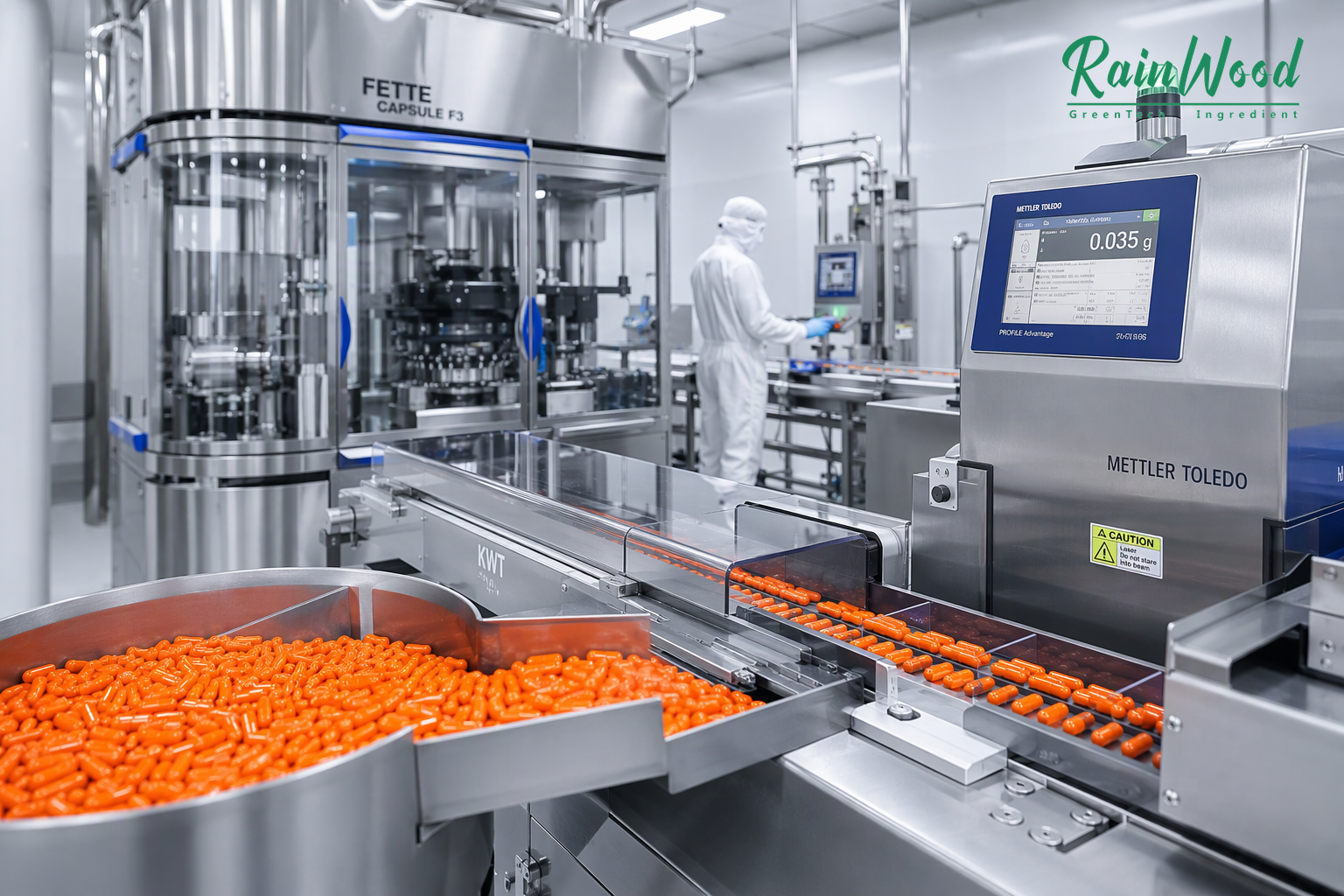
Figure 3: cGMP Pharmaceutical Cleanroom with Automated High-Speed Capsule Encapsulation and Checkweighing Line
Make the worksheet a commercial control
The final worksheet should be reviewed by procurement, formulation, quality, production, and the person approving the label. Each reviewer is checking a different risk: price basis, physical feasibility, release method, process loss, or customer wording. Record the version, raw-material lot, supplier, formula, and date beside the calculation.
When a supplier sends a new COA, do not simply replace the old number in the spreadsheet. Check whether the form, assay basis, carrier, and method are unchanged. If the result moves, recalculate the input, bottle cost, and daily serving before the next production order. This small discipline prevents a formula change from being hidden inside a procurement update.
Send your COA, formula, label, target market, and quotation for a CoQ10 dose and quotation review. RainwoodBio can use those inputs to identify whether the quoted amount is active CoQ10, a premix, or an unverified commercial assumption.
Frequently asked questions
Does 100 mg of a 98% raw material equal 100 mg on the label?
Not automatically. The formulation must account for assay basis, process recovery, overage, and the finished-product release target.
Should the label show active CoQ10 or powder weight?
That depends on the market and product specification, but the declared consumer amount must be clear and supported by the approved formula and testing plan.
Is a higher overage always safer?
No. It can increase cost and create new formulation or label problems. First identify the mechanism of loss and control the package and process.
References
- Stability of Reduced and Oxidized Coenzyme Q10 in Finished Products: https://pubmed.ncbi.nlm.nih.gov/33673604/
- Quality Control Assessment of Commercial CoQ10 Supplements: https://pmc.ncbi.nlm.nih.gov/articles/PMC2170950/
- RainwoodBio OEM service: https://www.rainwoodbio.com/oem
- RainwoodBio contact page: https://www.rainwoodbio.com/contact-us
*This article is for B2B procurement and educational purposes. Product identity, dosage, analytical, safety, labeling, and regulatory requirements must be confirmed for the exact ingredient, finished product, and destination market.*
Table of Contents
- Start with active CoQ10, not powder weight
- A simple calculation exposes the hidden cost
- Purity and assay are not the same input
- Overage is not a substitute for process control
- Serving math must match the sales channel
- How RainwoodBio can support the calculation
- Approval checklist before artwork
- Make the worksheet a commercial control
- Frequently asked questions
- References