 EN
Executive Summary & B2B Formulation Guidance
Prepare a defensible CoQ10 dossier for Amazon and EU buyers with identity, assay, label, claims, stability, traceability, and finished-product records.
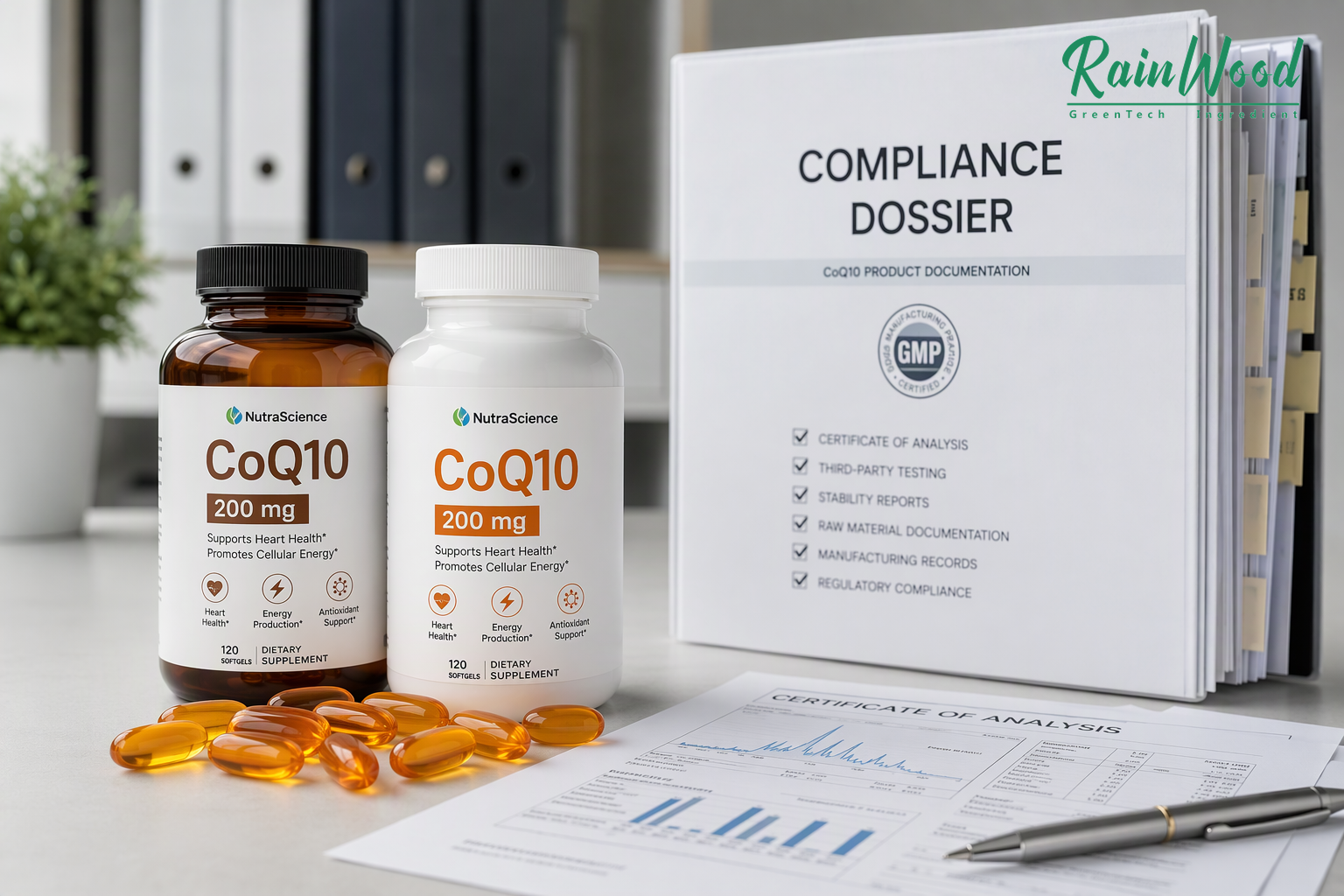
Figure 1: Global Regulatory Compliance Dossier Binder and Export-Ready Finished CoQ10 Dietary Supplements
The product page is ready, but the dossier is not. Amazon asks for documents, an EU distributor asks about ingredient status, and the importer wants the COA, label, and finished-product evidence to tell the same story. A CoQ10 file fails when it contains many documents that are not connected to the exact form, batch, format, or claim.
Start with the destination market and product identity
CoQ10 may be sold as ubiquinone, ubiquinol, a derivative, a premix, a softgel fill, or a powder complex. The target market may treat a new derivative or delivery system differently from a familiar ingredient. EU food-supplement operators are responsible for checking novel-food status and national requirements; the European Commission describes the Novel Food Catalogue as non-binding orientation rather than a universal approval.
Use the ingredient identity record to define the exact material, source, redox form, carrier, and finished product. Do not submit a generic CoQ10 brochure where the market asks for the purchased form.
The dossier should connect the evidence chain
Build the file in layers: specification, supplier qualification, COA, method, source and manufacturing statement, contaminants, microbiology, allergen or dietary statements, stability, packaging, finished-product release, label, claims, and traceability. Each document should show the product code, lot, version, entity, date, and scope where applicable.
If the study uses a branded ubiquinol or a special delivery system, identify that exact material. A study on one formulation cannot automatically support another product. The claim evidence file can map study material to commercial ingredient, batch, finished format, and claim.
Amazon review can expose a label inconsistency
The product title may say 100 mg ubiquinol while the Supplement Facts panel says CoQ10, the COA says total CoQ10, and the listing image shows a different serving. This creates a preventable mismatch. Review all public and private documents together.
Ask the brand to provide the final label, product photos, listing copy, COA, specification, and finished-product release record. Confirm the amount per capsule, serving, and day. If the product is a premix, confirm whether the active amount or total powder weight is displayed.
EU review needs a jurisdiction-aware approach
EU food-supplement rules include harmonized principles but national enforcement and notification practices can matter. Novel-food status, permitted forms, labeling, health claims, warnings, and maximum levels may require country-specific review. Do not write “EU approved” as a substitute for a real file.
If a novel derivative or novel delivery system is used, ask the operator to confirm the legal route and supporting documentation in the first Member State of sale. The market-specific dossier checklist should identify what is known, what is market-specific, and what still needs professional review.
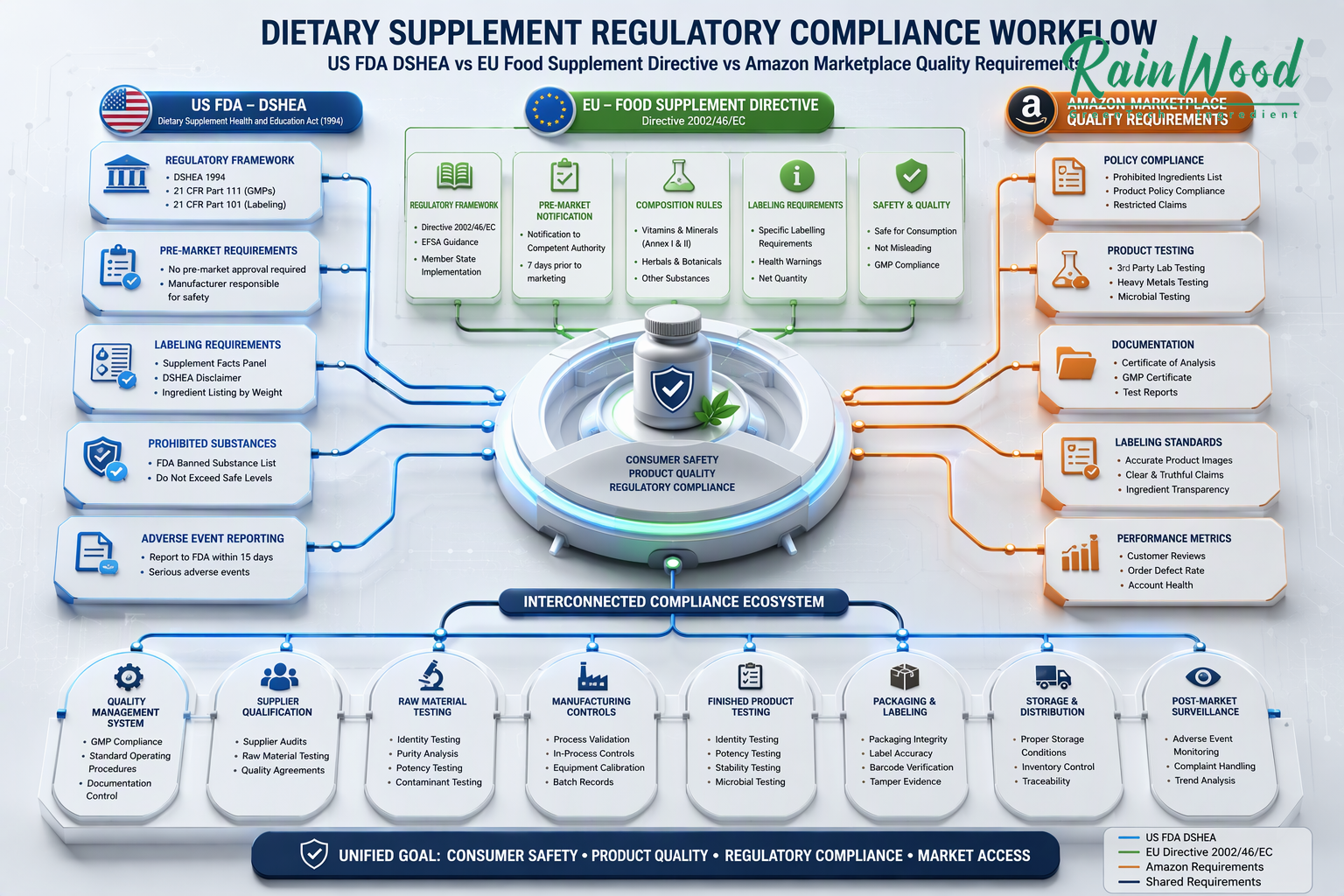
Figure 2: Cross-Border Regulatory Compliance Workflow: US FDA DSHEA vs EU Novel Food vs Amazon Supplement Policy
Finished-product proof is not the raw COA
A raw-material COA can support incoming release, but it does not prove that the softgel, tablet, gummy, or sachet contains the declared active through expiry. The finished product may introduce heat, oxygen, moisture, carrier, shell, compression, or segregation effects.
Ask for finished-product assay, content uniformity, redox form where relevant, stability, package, storage, and complaint or traceability procedures. The finished-product stability and packaging plan helps prevent a raw expiry date from being copied onto a finished product.
Keep claims narrower than the evidence
CoQ10 research covers different outcomes, including biomarker and condition-specific studies. Avoid treatment, prevention, cure, or guaranteed-outcome language. A general antioxidant or energy-support statement may still require target-market review and must be consistent with the formula and evidence.
Create a claim-to-source table and review every bullet, image, testimonial, FAQ, email, and distributor sheet. Include the reviewer and document version. A disclaimer is not permission to make a disease claim.
How RainwoodBio can support dossier preparation
RainwoodBio publishes requirement confirmation, compliance documentation, testing and release, product registration support, warehousing, logistics, and traceability management. For a CoQ10 project, the buyer should request a market-specific dossier list tied to exact identity, format, quantity, and target channel. Current certificate scope, product evidence, and batch records still need to be verified for the project.
RainwoodBio lists capsules, softgels, tablets, gummies, and powder sachets. Use the RainwoodBio OEM format options and RainwoodBio quality and release process information to align the dossier with the finished format.
Dossier approval checklist
Before listing or shipment, confirm:
- exact form, source, carrier, and finished format;
- supplier and manufacturer identity;
- current specification and method;
- lot-linked COA and finished-product release;
- contaminants, microbiology, allergen, and dietary statements;
- package, storage, stability, and expiry basis;
- target-market ingredient and novel-food review;
- label, claims, warnings, and customer-service script;
- traceability, complaint, recall, and change control.
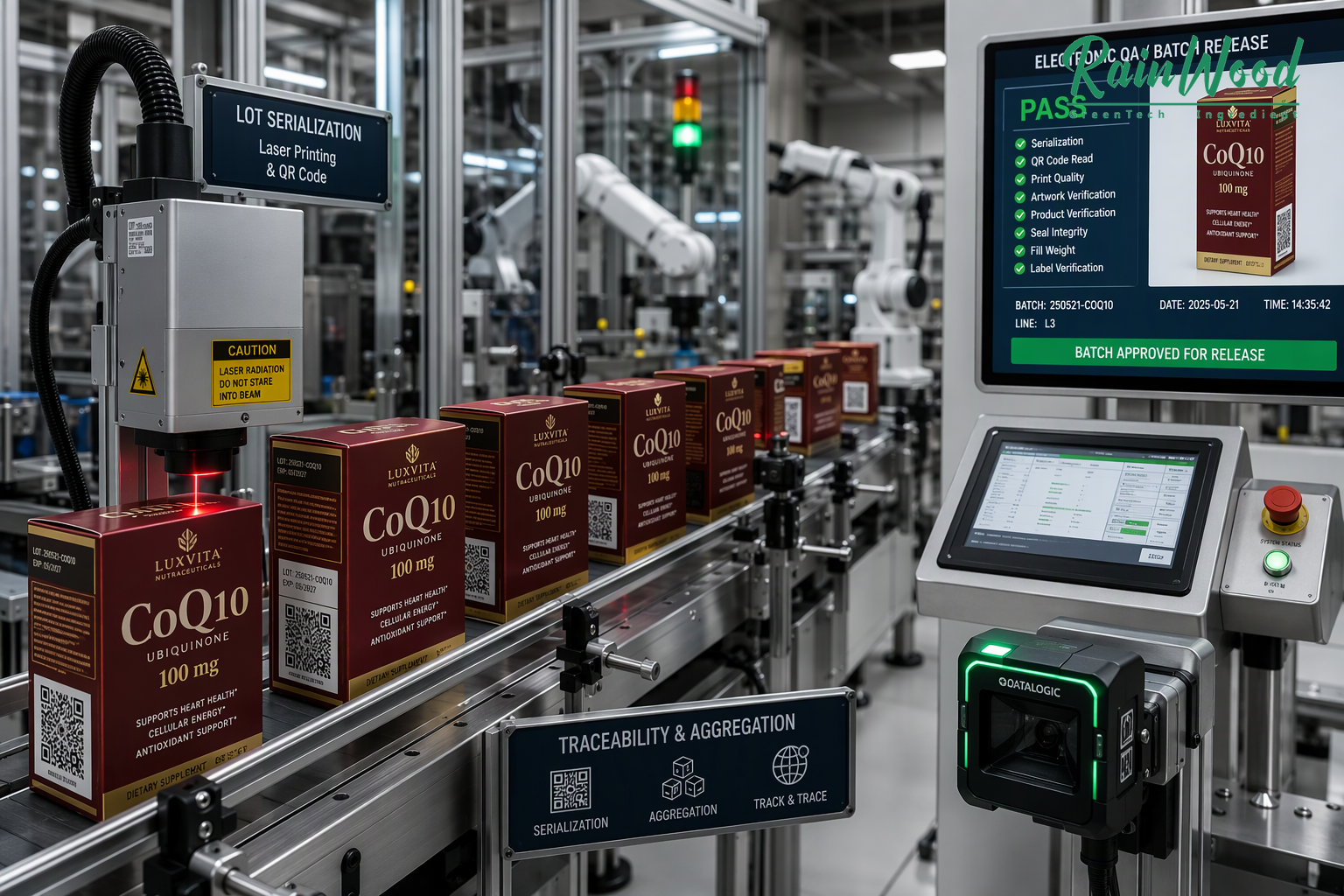
Figure 3: Automated Lot Serialization, QR Traceability Laser Printing, and QA Batch Release Inspection
Create a document index that a buyer can audit
Give every file a controlled name such as product code, document type, lot, version, and date. Keep the label, COA, specification, method, stability report, package record, and finished-product release linked in one index. If a marketplace or distributor asks a question, the team should be able to locate the relevant document without searching through personal email accounts.
Mark each document as current, superseded, provisional, or pending. A pending document should have an owner and expected date; it should not be silently treated as proof. Review the index when the redox form, dose, carrier, format, package, target market, or claim changes. This approach also helps the buyer see which items RainwoodBio can prepare and which items require an external market or regulatory review.
Send the dossier index, label, formula, COA, target market, and channel request for a CoQ10 market dossier review review before listing or shipment. Include the first shipment date and the buyer's document deadline so launch-critical gaps are separated from later improvements. Add the marketplace account, importer, and final package version so the review is tied to the real submission rather than a draft product. Keep a copy of the submitted version for future audits.
Frequently asked questions
Is a supplier COA enough for an Amazon listing?
Usually not. The listing may require consistent identity, label, finished-product, safety, and market documentation.
Is CoQ10 automatically accepted in every EU country?
No. Ingredient form, delivery system, claims, and national practices may require country-specific review.
Can a raw-material stability statement prove the finished bottle expiry?
No. Finished format and package stability should support the printed expiry.
References
- European Commission Novel Food Overview: https://food.ec.europa.eu/food-safety/novel-food_en
- European Commission Novel Food Status Catalogue: https://food.ec.europa.eu/food-safety/novel-food/novel-food-status-catalogue_en
- European Commission Food Supplements: https://food.ec.europa.eu/food-safety/labelling-and-nutrition/food-supplements_en
- RainwoodBio homepage: https://www.rainwoodbio.com/
*This article is for B2B procurement and educational purposes. Market access, labeling, safety, claims, and regulatory status must be confirmed for the exact ingredient, finished product, and destination jurisdiction.*
Table of Contents
- Start with the destination market and product identity
- The dossier should connect the evidence chain
- Amazon review can expose a label inconsistency
- EU review needs a jurisdiction-aware approach
- Finished-product proof is not the raw COA
- Keep claims narrower than the evidence
- How RainwoodBio can support dossier preparation
- Dossier approval checklist
- Create a document index that a buyer can audit
- Frequently asked questions
- References