 EN

Executive Summary & Buyer Guidance
How to evaluate inositol blends with folic acid, chromium, or alpha lipoic acid by dose, compatibility, evidence, and stability.
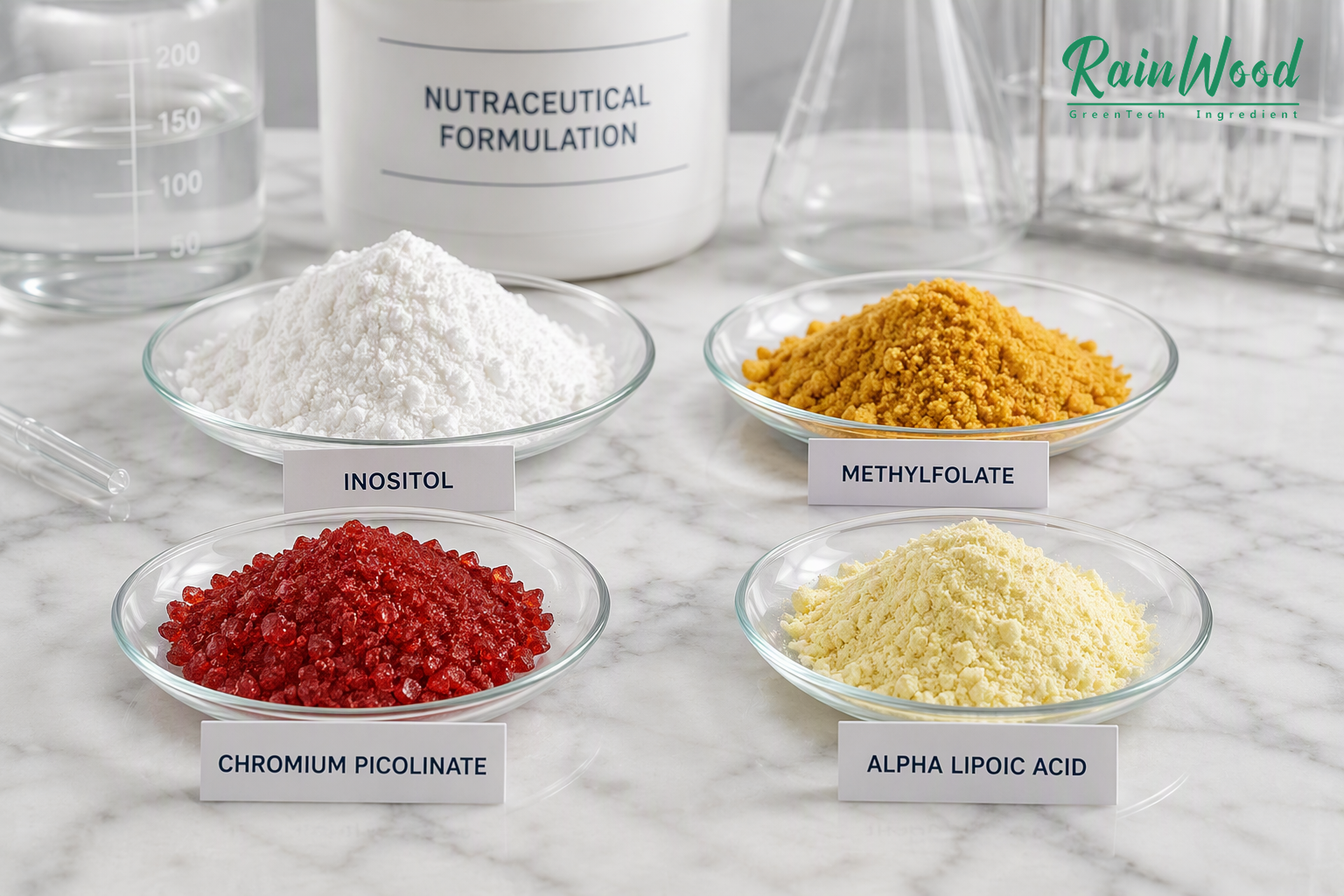
Figure 1: Synergistic Nutraceutical Raw Materials: Inositol, Methylfolate, Chromium Picolinate, and Alpha Lipoic Acid
More ingredients can make the product harder to prove
Myo-inositol and D-chiro-inositol are often blended with folic acid, methylfolate, chromium, alpha lipoic acid, vitamins, botanicals, or other nutrients. The formula may look more complete and command a higher price. It also becomes harder to control. Every added ingredient changes the dose calculation, blend uniformity, taste, stability, label, and claim review.
The commercial mistake is approving each raw material separately and assuming the finished formula is automatically stronger. A good folate COA, a good inositol COA, and a good chromium COA do not prove that the sachet has the correct amount of every active after blending, storage, and filling.
Different ingredients create different physical risks
High-dose myo-inositol dominates the powder weight. D-chiro-inositol may be a low-percentage active. Folic acid or methylfolate may be used at a much smaller amount, while chromium may arrive in a carrier-based form. Alpha lipoic acid can affect odor, taste, and formulation behavior. These differences make direct addition risky without a premix and a defined mixing order.
Particle size, density, moisture, and electrostatic behavior can drive segregation. An ingredient can remain chemically stable while separating physically from the rest of the blend. The inositol blend uniformity guide explains why low-dose components need a deliberate process.
Label math can become misleading
The formula should show active amount and input amount separately. A chromium salt or carrier-based nutrient may weigh more than the declared active. A folate ingredient may have a different chemical form and label convention. If the brand claims a 40:1 inositol ratio, the ratio should be calculated from myo and D-chiro active amounts, not from the total premix weight.
Show the amount per sachet, serving, and daily use. If the customer takes two sticks, the formula must remain within the intended market and claim framework. The inositol sachet dose guide can help buyers audit the per-unit calculation.
Evidence does not transfer automatically across the blend
A study of myo-inositol alone does not prove the same outcome for a formula containing D-chiro-inositol, folate, chromium, and alpha lipoic acid. A study of a particular branded folate form does not automatically support a generic form. An in-vitro mechanism does not establish a human benefit for the finished sachet.
Build an evidence matrix that identifies which ingredient, dose, form, population, endpoint, and duration were studied. Then decide which claims are supported for the actual product and target market. Avoid using the combined ingredient list to imply a clinical synergy that has not been tested.
The buyer loss from an overloaded formula
An overfilled sachet may taste poor, dissolve slowly, or require a larger package. A formula with too many actives can fail blend uniformity or create a label that is difficult for customers to understand. A retailer may request separate evidence for every claim. The brand then pays for reformulation, new artwork, additional testing, and a slower launch.
There is also a customer-service risk. If the product page describes “hormone balance” while the label lists several nutrients, customers may expect a medical outcome that the supplier cannot substantiate. More ingredients do not solve a positioning problem.
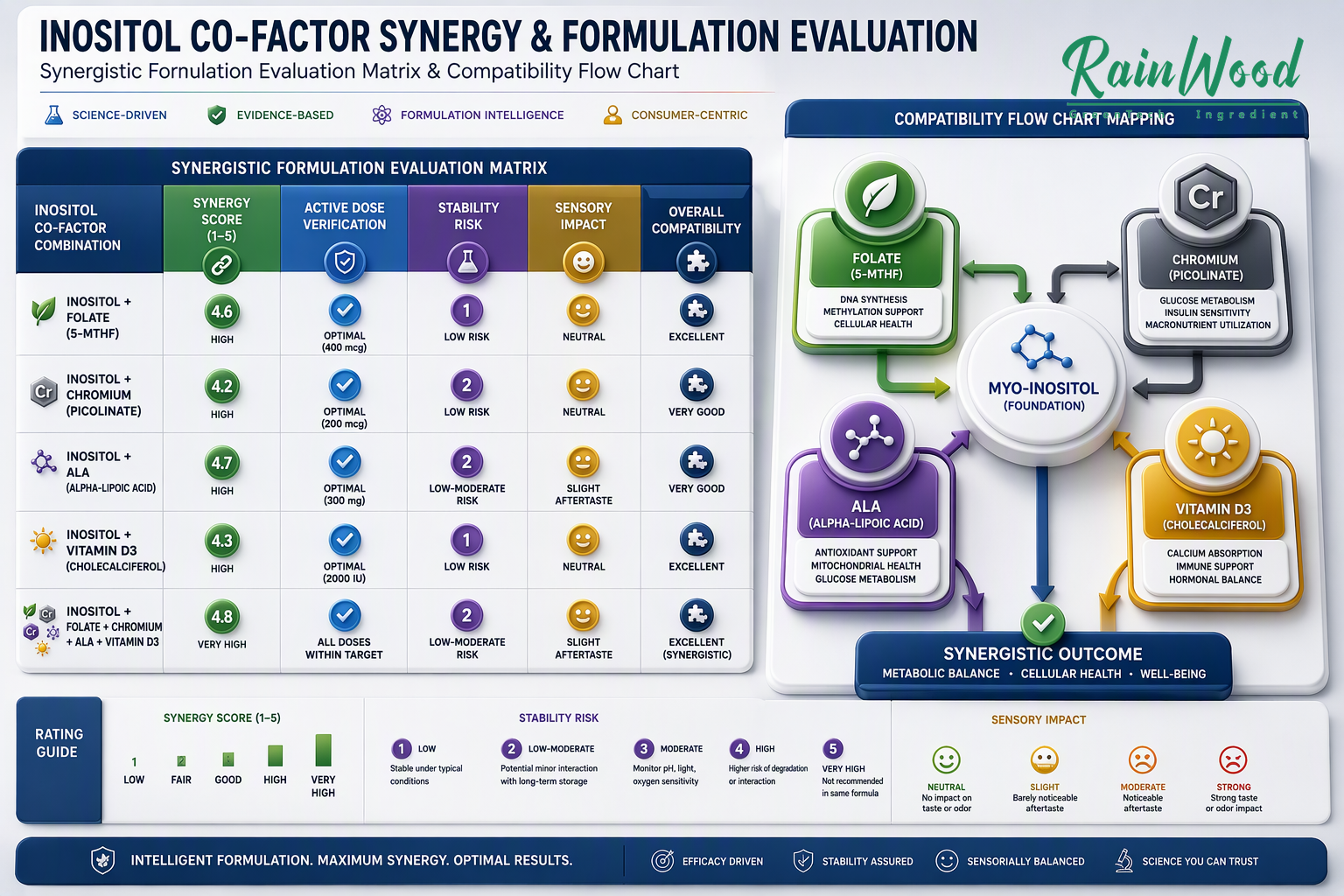
Figure 2: Multi-Ingredient Formulation Compatibility Matrix and Chemical Stability Interaction Map
Test the actual finished blend
Request a pilot using the final forms, carriers, flavor, and package. Test myo-inositol and D-chiro-inositol separately, plus the critical added nutrients. Check water, appearance, taste, dissolution, unit weight, and the relevant stability attributes. Sample the first, middle, and last portions of the run.
For a sachet, inspect seal integrity and moisture barrier. For capsules, check fill weight and unit count. For tablets, test compression and disintegration. A raw-material panel is not a finished-product release panel.
How RainwoodBio can support a multi-ingredient design
RainwoodBio publishes requirement confirmation, supplier and raw-material management, process control, quality testing and release, and OEM formats including powder sachets, capsules, and tablets. These controls are relevant to a complex inositol blend. The buyer should request product-specific formula, method, uniformity, stability, package, and market evidence.
Blend approval gate
Before approving the formula, ask:
- Which exact form and active amount of each ingredient is used?
- Does the 40:1 ratio exclude carriers and excipients?
- Which components need a premix?
- Can the selected format hold the total dose and flavor?
- What finished-unit tests prove the label?
- Which claims are supported by direct evidence?
Request a inositol Blend Feasibility Review with the draft formula, target dose, package, market, and claim list.
Use a formula change gate for every added ingredient
When a buyer adds folate, chromium, alpha lipoic acid, or a botanical, reopen the formula review rather than adding one line to the old artwork. Confirm active form, potency, carrier, particle size, water, taste, compatibility, and method recovery. Check whether the new ingredient changes the daily serving, box count, or target-market warnings.
Then make a small pilot and compare it with the original product. Test blend uniformity, dissolution, taste, appearance, water, and stability in the intended package. If the new ingredient creates a new claim, add it to the claim-to-evidence matrix before publication. A formula that is technically richer can still be commercially weaker if customers cannot understand it or the supplier cannot release it consistently.
Keep companion ingredients from hiding the inositol story
The label should make the two inositol forms and their active amounts easy to find. If a long list of nutrients pushes the ratio into a small-print area, the product becomes harder to compare and easier to misunderstand. Use a short technical summary for distributors that explains the formula purpose, active amounts, and evidence boundaries without turning a multi-ingredient list into a clinical promise.

Figure 3: Precision Double-Cone Powder Micro-Blending and Humidity-Controlled Cleanroom Packaging Line
Give the buyer a reason for every active
For each companion ingredient, state its formulation role, target amount, testing method, and evidence boundary. If the only reason to add it is that competitors list it, reconsider the formula. A shorter blend with a clear dose and reliable sachet can be more credible than a crowded formula that no one can verify.
Frequently asked questions
Does adding folate make an inositol product more credible?
Not by itself. Credibility comes from correct identity, dose, evidence, testing, and compliant communication.
Can one COA cover the full blend?
The final product needs a matrix-appropriate release plan. Individual raw-material COAs do not prove finished-unit uniformity.
Is a proprietary blend acceptable?
It may be permitted in some markets, but the buyer still needs internal dose visibility and appropriate label review.
Should the formula use all popular companion ingredients?
No. Each ingredient should solve a defined buyer problem and fit the dose, format, evidence, and market.
Conclusion
An inositol blend becomes stronger when every added ingredient has a reason, a measurable dose, a compatible process, and a defensible claim. More ingredients are not automatically more premium; they are more responsibility.
Disclaimer: This article is for B2B formulation and procurement planning. It is not medical advice and does not establish that any ingredient blend treats, prevents, or cures disease.
References
- https://pubmed.ncbi.nlm.nih.gov/38163998/
- https://pmc.ncbi.nlm.nih.gov/articles/PMC11309080
- https://www.fda.gov/food/dietary-supplements-guidance-documents-regulatory-information/dietary-supplement-labeling-guide
- https://www.rainwoodbio.com/oem
Explore RainwoodBio Inositol & Custom Formulation Capabilities
- Custom Powder Stick Packs & Single-Serve Sachets – High-speed automated stick pack packaging for 40:1 Myo/D-Chiro Inositol formulas with nitrogen flush.
- Custom Hard Capsules & Veggie Encapsulation – Precision cGMP encapsulation for high-potency inositol blends with folates and co-factors.
- OEM / ODM Contract Manufacturing Services – End-to-end formulation development, pilot batch scaling, and global regulatory compliance dossiers.
- Contact RainwoodBio Technical Sales – Request CoA, stereoisomer testing protocols, pilot samples, or commercial quotation.
Ready to Formulate Your Myo & D-Chiro Inositol Product?
RainwoodBio provides cGMP-certified Myo-Inositol and D-Chiro-Inositol raw materials, verified 40:1 ratio stick pack packaging, and full regulatory documentation for US, EU, and global market entry.
Request CoA, Samples & QuoteTable of Contents
- More ingredients can make the product harder to prove
- Different ingredients create different physical risks
- Label math can become misleading
- Evidence does not transfer automatically across the blend
- The buyer loss from an overloaded formula
- Test the actual finished blend
- How RainwoodBio can support a multi-ingredient design
- Blend approval gate
- Use a formula change gate for every added ingredient
- Keep companion ingredients from hiding the inositol story
- Give the buyer a reason for every active
- Frequently asked questions
- Conclusion
- References