 EN

Executive Summary & Buyer Guidance
Why a printed 40:1 ratio cannot prove every inositol sachet is uniform and how to test blend, fill, and active distribution.
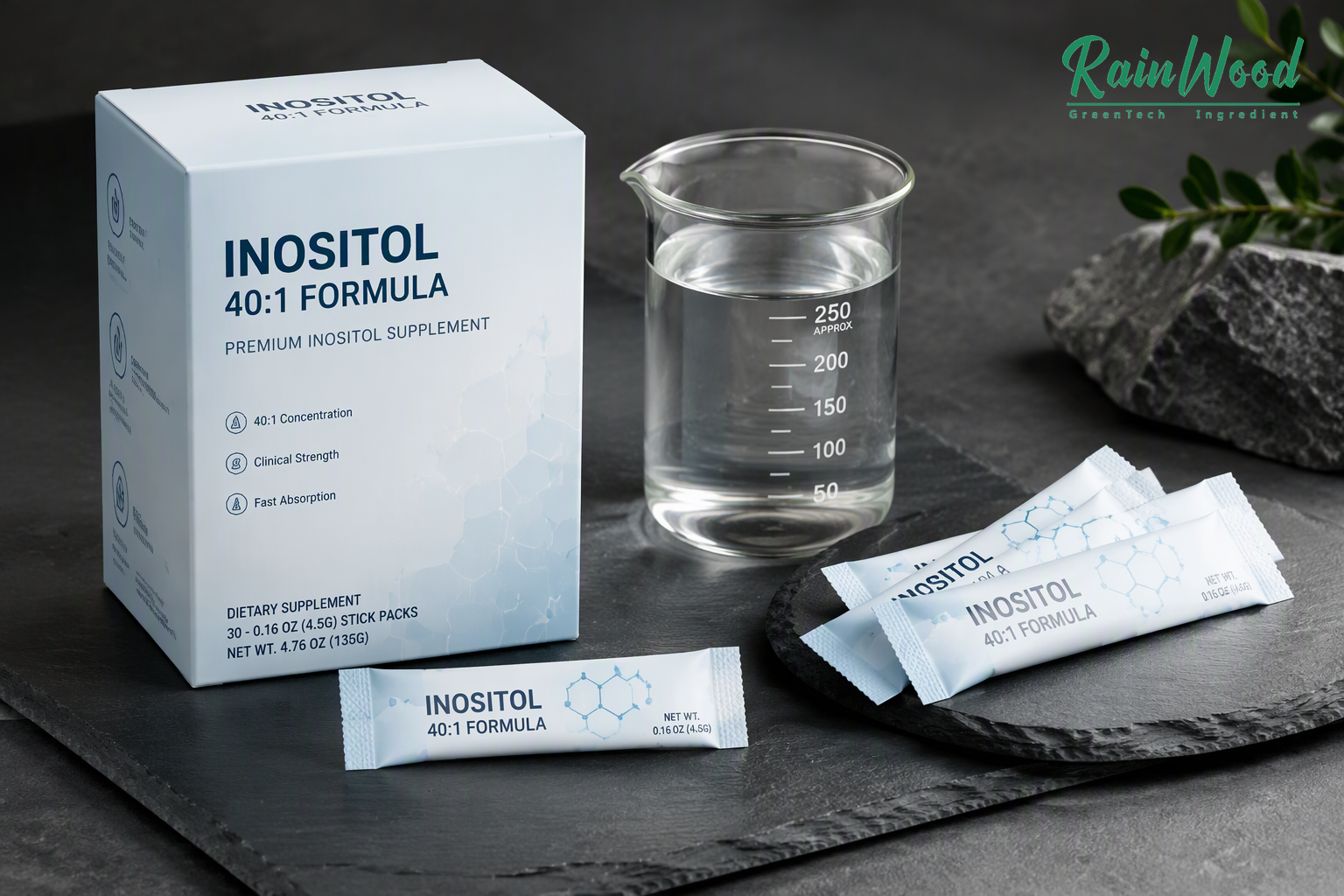
Figure 1: Premium Single-Serve 40:1 Inositol Powder Sachets and Reconstituted Crystal Clear Solution
The label can be identical while the sachets are not
A carton of inositol sticks shows the same 40:1 claim on every unit. The powder looks uniform, and the average fill weight passes. The buyer assumes the product is controlled. But if D-chiro-inositol is present at a low percentage, a total-weight average can hide a meaningful difference between individual sticks.
Sachet uniformity is a process question. It depends on particle properties, premix design, mixing, discharge, hopper residence time, filling equipment, vibration, moisture, and sampling. The buyer should ask how the supplier proves the active ratio across the run rather than accepting the printed formula as proof.
Why low-percentage actives are difficult
D-chiro-inositol may represent a small amount relative to myo-inositol. Differences in particle size, density, electrostatic behavior, and moisture can cause the components to separate. The blend may be uniform at the end of mixing and less uniform after transfer or during hopper holding.
A supplier may prefer a quick total-weight check because it is inexpensive and easy. The buyer needs a method that can quantify the low-dose component in individual units or a justified sample composite. The D-chiro-inositol identity testing guide explains why the method must be specific to the component being controlled.
Total weight is not active uniformity
Net fill is necessary but insufficient. Two sachets can weigh the same while containing different amounts of D-chiro-inositol and myo-inositol. A finished-product COA that reports only average weight or total inositol cannot prove the printed ratio.
Define separate acceptance criteria for net fill, myo-inositol, D-chiro-inositol, and the calculated ratio. Explain whether the ratio is assessed per unit, as a mean, or by a statistical sampling rule. The test method, sample preparation, and calculation should be suitable for the flavored or multi-ingredient matrix.
The buyer loss from a false pass
The most expensive moment to discover nonuniformity is after the powder is sealed. Reopening and reworking sachets can damage film, create contamination risk, and consume more labor than the original production. If a batch is released and later challenged, the brand may need to test retained units, investigate customer complaints, or replace inventory.
The brand also loses the credibility of its ratio story. A product marketed as precisely balanced should be supported by a precise release plan. The absence of evidence is not the same as evidence of failure, but it is a commercial weakness that buyers and retailers can see.
How to build a uniformity plan
Define the blend process first. Record raw-material lot, particle and moisture information, premix potency, mixing order, time, equipment, load, discharge, transfer, and hopper residence. Then define the sample plan across the blend and filling run.
Test beginning, middle, and end units, and consider multiple containers or cartons after packing. Review individual results and distribution, not only the mean. Retain samples for future complaints and trend results across lots. The inositol stick-pack guide describes the package and seal controls that support this testing.
Confirm method recovery in the finished matrix
Flavor, acidulant, folate, chromium, and carrier ingredients can interfere with extraction or detection. The laboratory should verify recovery and specificity in the finished blend. If D-chiro-inositol is close to the method's reporting limit, confirm that the method has enough sensitivity for the declared amount.
If the supplier uses a premix, test the premix before final blending and the final product after filling. These are different control points. A passing premix result cannot prove that a later transfer did not create segregation.
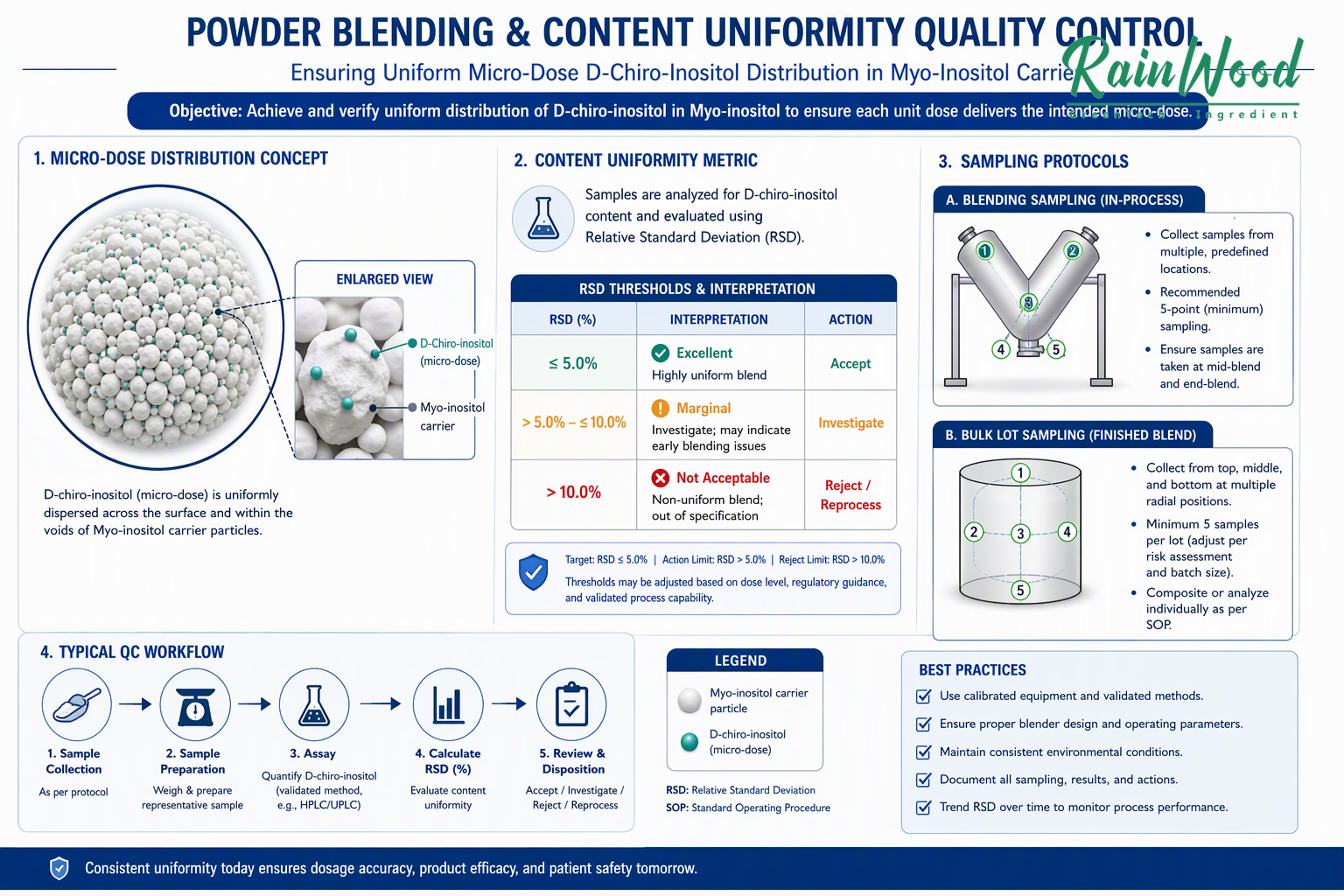
Figure 2: Micro-Dose Active Ingredient Segregation Dynamics and RSD Blending Uniformity Acceptance Criteria
How RainwoodBio can support a unit-level release process
RainwoodBio publishes requirement confirmation, raw-material and supplier management, production process control, testing and release, and powder stick-pack OEM capability. These published capabilities can support a controlled inositol sachet program. The buyer should request product-specific sampling, methods, results, and release criteria rather than relying on a generic process statement.
Uniformity approval gate
Require:
- active amounts and ratio basis;
- premix and mixing record;
- sampling locations and number of units;
- D-chiro-inositol method and recovery;
- net-fill and active-uniformity limits;
- deviation and rework rules;
- retained-unit plan.
Request a inositol Sachet Uniformity Review with the batch size, equipment, formula, and proposed COA.
Make the sampling plan part of the purchase order
The sampling plan should state how many units are taken, from which cartons, at what points in the run, and how they are tested. If the buyer accepts a composite sample, record why that design is appropriate and what unit variation it could hide. For a new supplier or new equipment, individual-unit testing is often more informative during the first lots.
Trend the results over time. A batch that passes today can still reveal a process drift when compared with six later lots. Track D-chiro-inositol, myo-inositol, total fill, water, and complaint data together. This gives the brand an early warning before a ratio problem becomes a marketplace issue.
Release the product by risk, not by convenience
If the low-dose component is critical to the label, set a tighter first-lot control than for a mature, well-trended process. Review individual-unit results before releasing the carton. If the process shows a consistent pattern, investigate the equipment and premix rather than accepting a wider limit simply to avoid a failed batch. The release decision should protect the buyer's printed promise.
Include packaging in the uniformity investigation
If units vary after filling, check the powder transfer, seal, vibration, carton packing, and transport history before blaming the formula. A package that causes caking can create apparent dose variation even when the blend was uniform at discharge. Keep one retained set from each stage when investigating a high-value lot.

Figure 3: Automated Multi-Lane High-Speed Powder Sachet Packaging with In-Line Nitrogen Flush and Checkweighing
Keep a visual reference with the analytical record
Photograph the blend and finished sachets at defined points, but treat images as supporting evidence only. A visual reference can help connect a later color, caking, or fill complaint to the lot while the laboratory confirms the active distribution.
Frequently asked questions
Does an average assay prove unit consistency?
No. The average can hide individual sachets outside the intended range.
Can the supplier combine several sticks for testing?
It can be part of a validated plan, but the design must not hide meaningful unit-to-unit variation.
Is more mixing always safer?
No. Excessive mixing or transfer can create additional segregation and particle damage.
Should uniformity be checked only at the beginning?
No. The process can change during discharge and filling, so the run should be sampled across its duration.
Conclusion
The 40:1 print on a box is a formula statement, not a uniformity result. Prove the low-dose D-chiro-inositol component through process control, suitable methods, unit-level sampling, and a documented release decision.
Disclaimer: This article is for B2B quality and procurement planning. It is not medical advice and does not establish that an inositol ratio treats, prevents, or cures disease.
References
- https://pmc.ncbi.nlm.nih.gov/articles/PMC11309080
- https://pubmed.ncbi.nlm.nih.gov/38163998/
- https://www.rainwoodbio.com/oem
Explore RainwoodBio Inositol & Custom Formulation Capabilities
- Custom Powder Stick Packs & Single-Serve Sachets – High-speed automated stick pack packaging for 40:1 Myo/D-Chiro Inositol formulas with nitrogen flush.
- Custom Hard Capsules & Veggie Encapsulation – Precision cGMP encapsulation for high-potency inositol blends with folates and co-factors.
- OEM / ODM Contract Manufacturing Services – End-to-end formulation development, pilot batch scaling, and global regulatory compliance dossiers.
- Contact RainwoodBio Technical Sales – Request CoA, stereoisomer testing protocols, pilot samples, or commercial quotation.
Ready to Formulate Your Myo & D-Chiro Inositol Product?
RainwoodBio provides cGMP-certified Myo-Inositol and D-Chiro-Inositol raw materials, verified 40:1 ratio stick pack packaging, and full regulatory documentation for US, EU, and global market entry.
Request CoA, Samples & QuoteTable of Contents
- The label can be identical while the sachets are not
- Why low-percentage actives are difficult
- Total weight is not active uniformity
- The buyer loss from a false pass
- How to build a uniformity plan
- Confirm method recovery in the finished matrix
- How RainwoodBio can support a unit-level release process
- Uniformity approval gate
- Make the sampling plan part of the purchase order
- Release the product by risk, not by convenience
- Include packaging in the uniformity investigation
- Keep a visual reference with the analytical record
- Frequently asked questions
- Conclusion
- References