 EN
Executive Summary: Comprehensive regulatory and market-entry roadmap for selling NAD+ supplements in the US, EU, and Amazon, covering NDI status, Novel Food compliance, and CoA testing.
Explore premium Liposomal NMN Powder, Liposomal NR Raw Material, and turnkey Custom OEM Supplement Capsules with verified analytical testing and complete regulatory dossiers.
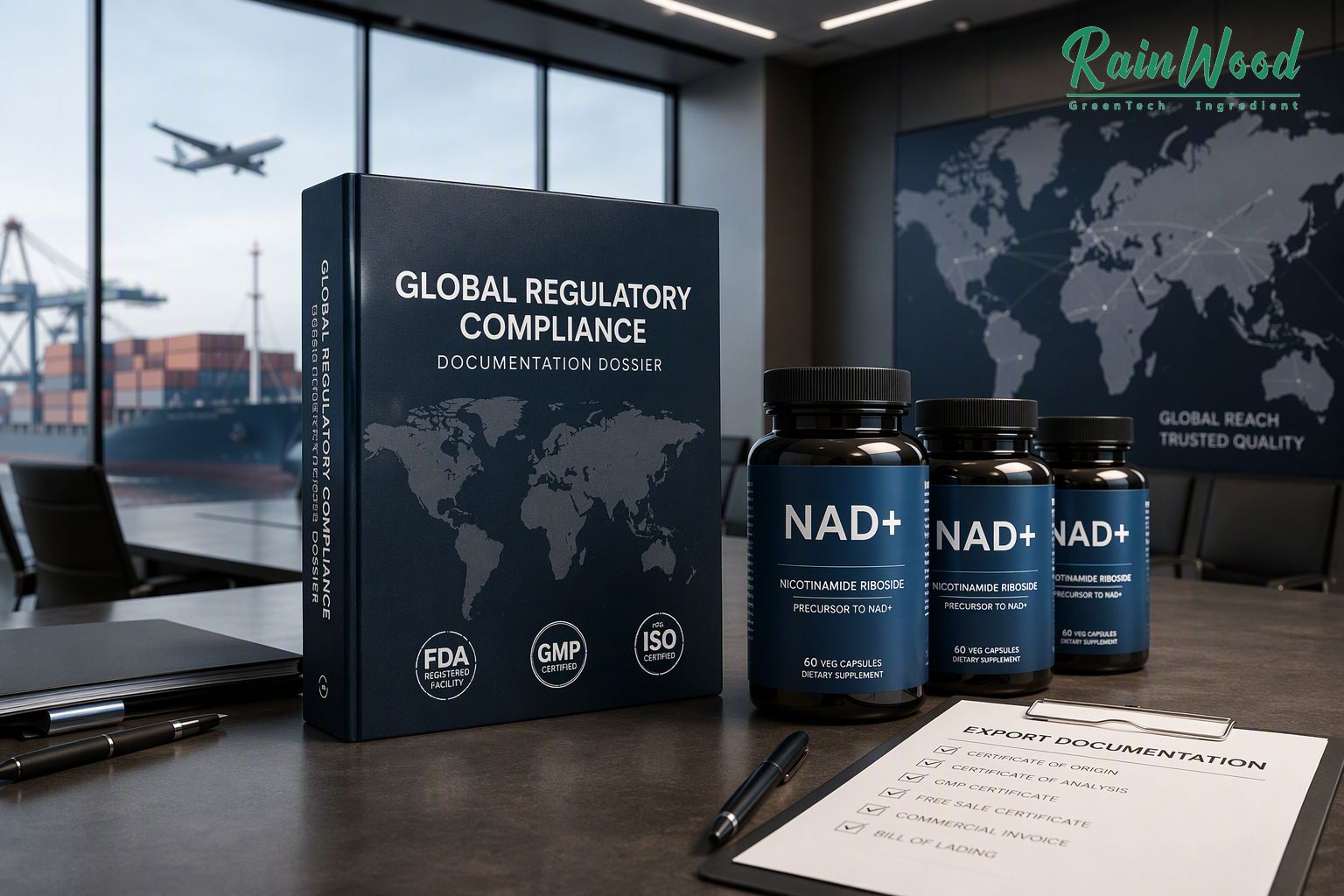
Can You Sell NAD+ in the US, EU, and Amazon? Build the Dossier First—Shaanxi Rainwood Biotech cGMP Manufacturing Standard
A sellable NAD+ product needs more than a supplier COA
NAD+ products attract attention because they sit at the intersection of energy, aging, performance, and wellness. That attention can tempt brands to launch quickly with a name, a label, and a certificate of analysis. Market entry is more demanding. A product sold in the United States, the European Union, or through Amazon must be supported by a coherent dossier: exact identity, ingredient and finished-product specifications, manufacturing records, label review, permitted claims, stability, and traceability.
The market question is not simply “Can NAD+ be sold?” It is “Can this exact product, in this exact form, with these exact claims and documents, be sold through this route?” The answer can differ by country, product category, dosage form, and platform policy. A direct NAD+ ingredient must also be distinguished from NR, NMN, NADH, and other related substances before the regulatory analysis starts.
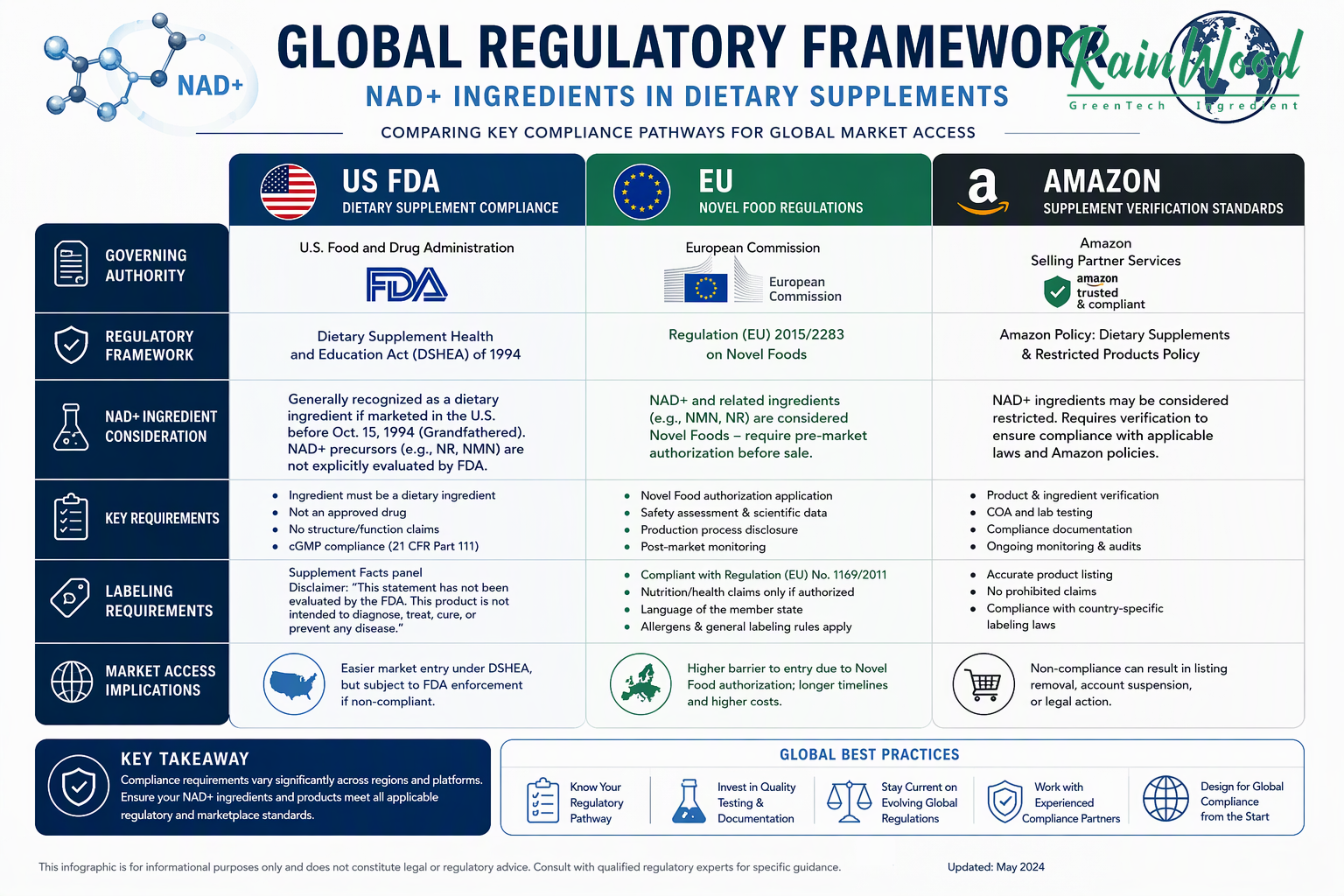
Figure 1: Multi-Jurisdiction Regulatory Architecture for NAD+—FDA 21 CFR 111, EU Novel Food classification, and Amazon supplement policy benchmarks.
The first mistake is using one global file
A US dietary supplement file, an EU food-supplement file, and an Amazon listing may share core evidence, but they are not interchangeable. The target market determines the required notifications, labeling conventions, permitted wording, language, responsible-party information, and supporting records. Platform review may ask for documents that are not the same as a government submission.
The buyer should create a market matrix before finalizing the package. List the destination country, legal product category, ingredient status, dosage form, daily amount, target consumer, label language, claims, responsible entity, and required supporting documents. Add a column for what is confirmed and what still needs specialist review.
The NAD+ identity guide is a useful starting point because a regulatory or marketplace reviewer cannot assess an ingredient that is described only by a broad marketing family. Name the exact substance and form in the technical file.
The commercial loss of launching before the dossier is ready
The obvious loss is a rejected listing or delayed customs clearance. The brand may also have to destroy printed packaging, revise a product page, remove prohibited claims, or refund orders after a platform challenge. Advertising spend can be wasted while the product is offline. A retailer may lose confidence if the supplier cannot deliver a consistent specification package.
The more serious loss is an inconsistent public story. If the website says direct NAD+ but the COA says a precursor, or the label declares one amount while the test basis implies another, the brand has created a trust problem that a discount cannot fix.
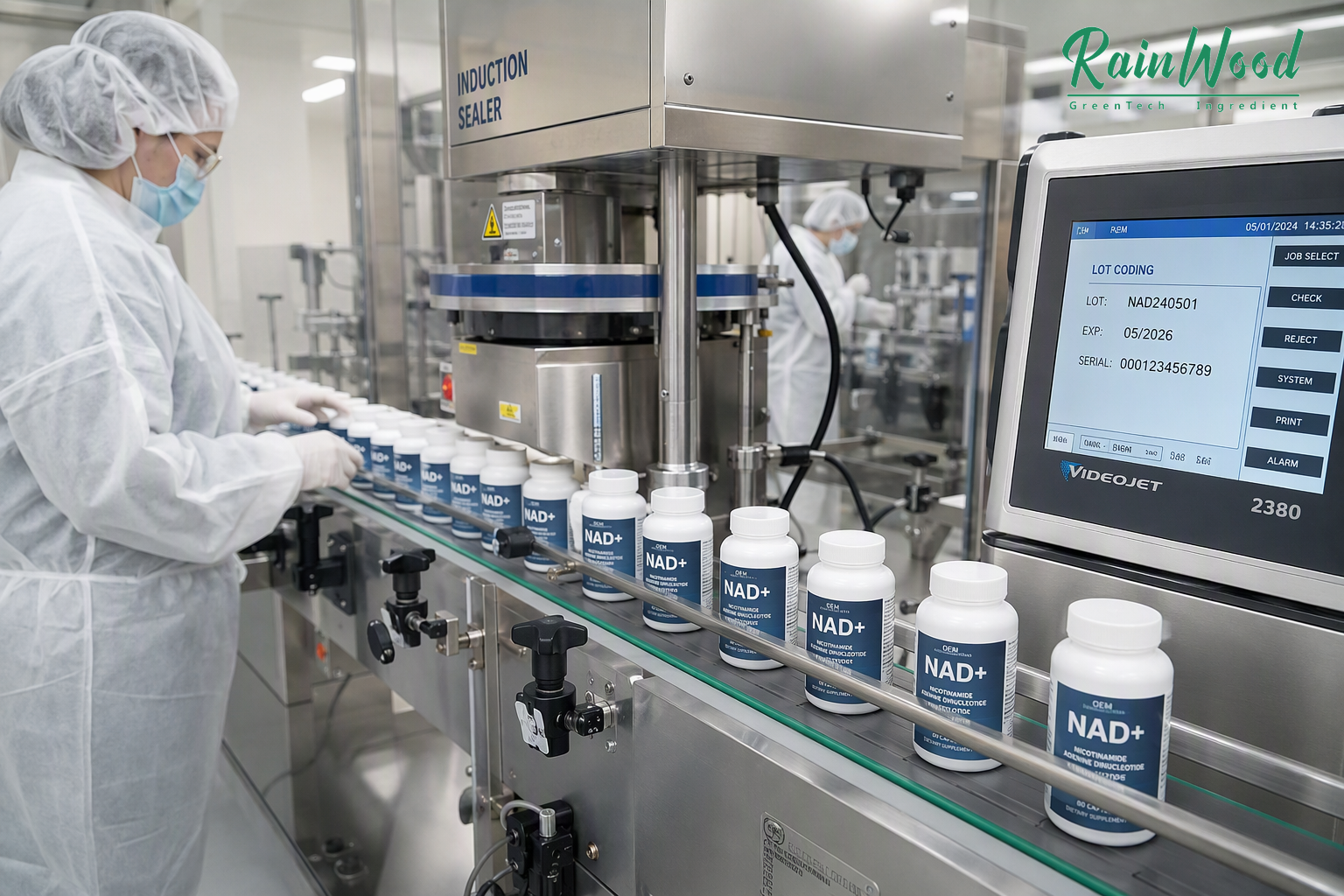
Figure 2: cGMP Batch Traceability and Packaging Integrity—automated serialization and tamper-evident sealing for global distribution.
Build the technical file around the exact product
Start with an identity statement: direct NAD+, exact chemical form, CAS or other recognized identifier where applicable, and distinction from related compounds. Include a specification covering assay basis, identity, related substances, water, residual solvents, metals, microbiological attributes where relevant, appearance, storage, and shelf life. Link every result to a lot and method.
Add supplier qualification records, manufacturing and packaging details, allergen and contaminant assessments, traceability procedures, and deviation or complaint handling. For an OEM finished product, include the master formula, process flow, batch record, finished-product COA, packaging specification, and stability plan. Do not assume that a raw-material COA proves the finished capsule or sachet.
The product format changes the dossier. Capsules and tablets need unit-dose and performance information. Sachets need seal and moisture-barrier evidence. Powder products need flow and fill controls. The NAD+ format guide explains why format is a quality and compliance decision, not only a design choice.
Claims need a separate evidence review
“Energy,” “cellular function,” “healthy aging,” and “anti-aging” do not carry the same regulatory or advertising risk. A claim can be interpreted differently depending on wording, placement, imagery, target market, and whether it implies disease treatment or prevention. Human studies on NAD+ precursors should not automatically be presented as proof for a direct NAD+ product. The 2026 systematic review of NAD+ supplementation emphasizes that human oral evidence is concentrated in precursor studies and that outcomes remain heterogeneous.
Before approving a listing, map each front-panel and product-page phrase to a permitted claim basis or remove it. Review testimonials, before-and-after language, practitioner quotes, and search keywords as part of the same process. A disclaimer does not rescue a claim that is otherwise misleading.
The FDA labeling guide is a useful starting reference for US dietary-supplement labeling, but it does not replace a jurisdiction-specific review. EU and Amazon requirements should be checked against current rules and the exact product category.
Stability and shelf life are market-entry evidence
A product may pass release testing and still fail during transport or warehouse storage. NAD+ stability depends on the material form, water, temperature, light, pH environment, package barrier, and opening practice. A listing that promises a long shelf life should be supported by data from the actual package and dosage form. Use the NAD+ stability guide to build the right study questions.
For a bottle, document closure, desiccant, and opening exposure. For a sachet, document laminate and seal performance. For a powder drink, document moisture pickup after opening and the time between mixing and consumption if that matters to the product instructions. Do not copy the raw-material shelf life onto the finished label without finished-product evidence.
What an OEM supplier should be ready to show
RainwoodBio publicly describes requirement confirmation, raw-material supplier management, process control, testing and release, traceability, warehousing/logistics coordination, and OEM formats including capsules, tablets, powder drinks, softgels, powders, and sachets. Those are useful building blocks for a market-entry dossier. The buyer should request the exact NAD+ evidence, confirm certificate scope and validity, and have a qualified regulatory reviewer assess the destination market.
Ask for a document index with version control. Identify who owns each document, how long records are retained, and how changes to supplier, process, package, or label are communicated. This is more useful than receiving a large unstructured folder after the product has already been listed.
An Amazon-ready checklist
Before publishing, confirm that the product title, bullets, images, label, COA, and technical file describe the same substance, form, amount, and serving size. Check that the product category, ingredient declaration, warnings, lot coding, and responsible-party information are consistent. Prepare a current certificate, product specification, manufacturing evidence, and any platform-requested documents. Keep a controlled record of claims and keywords so marketing edits do not quietly change the compliance risk.
If Amazon or a retailer asks for documents, answer with a coherent package rather than unrelated screenshots. A clear document index signals control.
Frequently asked questions
#
Does a US-compliant label make the product EU-ready?
No. Shared quality evidence can help, but ingredient status, claims, language, notification, and responsible-party requirements may differ.
#
Can an Amazon listing use “anti-aging NAD+”?
Do not assume it is acceptable. Claims need current platform and market review, and disease or therapeutic implications create additional risk.
#
Is a raw NAD+ COA enough for customs or a retailer?
Usually not. The exact document set depends on the shipment, market, category, and buyer requirements.
#
Who should approve the claim set?
A qualified regulatory or legal reviewer for the target market, using the actual formula, label, evidence, and sales channel.
Conclusion
Market entry is a dossier project before it is a listing project. Lock identity, form, formula, format, package, stability, claims, and document ownership before you print or advertise. If you need a product-file gap review for a US, EU, or Amazon launch, send the draft label and supplier documents through the contact form.
Disclaimer: This article is general commercial information, not legal or regulatory advice. It does not establish that any NAD+ product is approved, safe, effective, or lawful in a particular market.
References
- https://www.fda.gov/food/dietary-supplements-guidance-documents-regulatory-information/dietary-supplement-labeling-guide
- https://pubmed.ncbi.nlm.nih.gov/41655607/
- https://pubmed.ncbi.nlm.nih.gov/37068054/
Partner with a Qualified NAD+ & Cellular Nutrition Manufacturer
Shaanxi Rainwood Biotech Co., Ltd. supplies high-purity NAD+, Liposomal NMN, Liposomal NR, and comprehensive contract manufacturing solutions with complete batch COAs, third-party HPLC verification, and fast global shipping.
Table of Contents
- A sellable NAD+ product needs more than a supplier COA
- The first mistake is using one global file
- The commercial loss of launching before the dossier is ready
- Build the technical file around the exact product
- Claims need a separate evidence review
- Stability and shelf life are market-entry evidence
- What an OEM supplier should be ready to show
- An Amazon-ready checklist
- Frequently asked questions
- Does a US-compliant label make the product EU-ready?
- Can an Amazon listing use “anti-aging NAD+”?
- Is a raw NAD+ COA enough for customs or a retailer?
- Who should approve the claim set?
- Conclusion
- References