 EN
Executive Summary: Why 98% NAD+ assay is not enough. Critical buyer's checklist covering redox state, degradation limits, water content, residual solvents, and CoA verification.
Explore premium Liposomal NMN Powder, Liposomal NR Raw Material, and turnkey Custom OEM Supplement Capsules with verified analytical testing and complete regulatory dossiers.
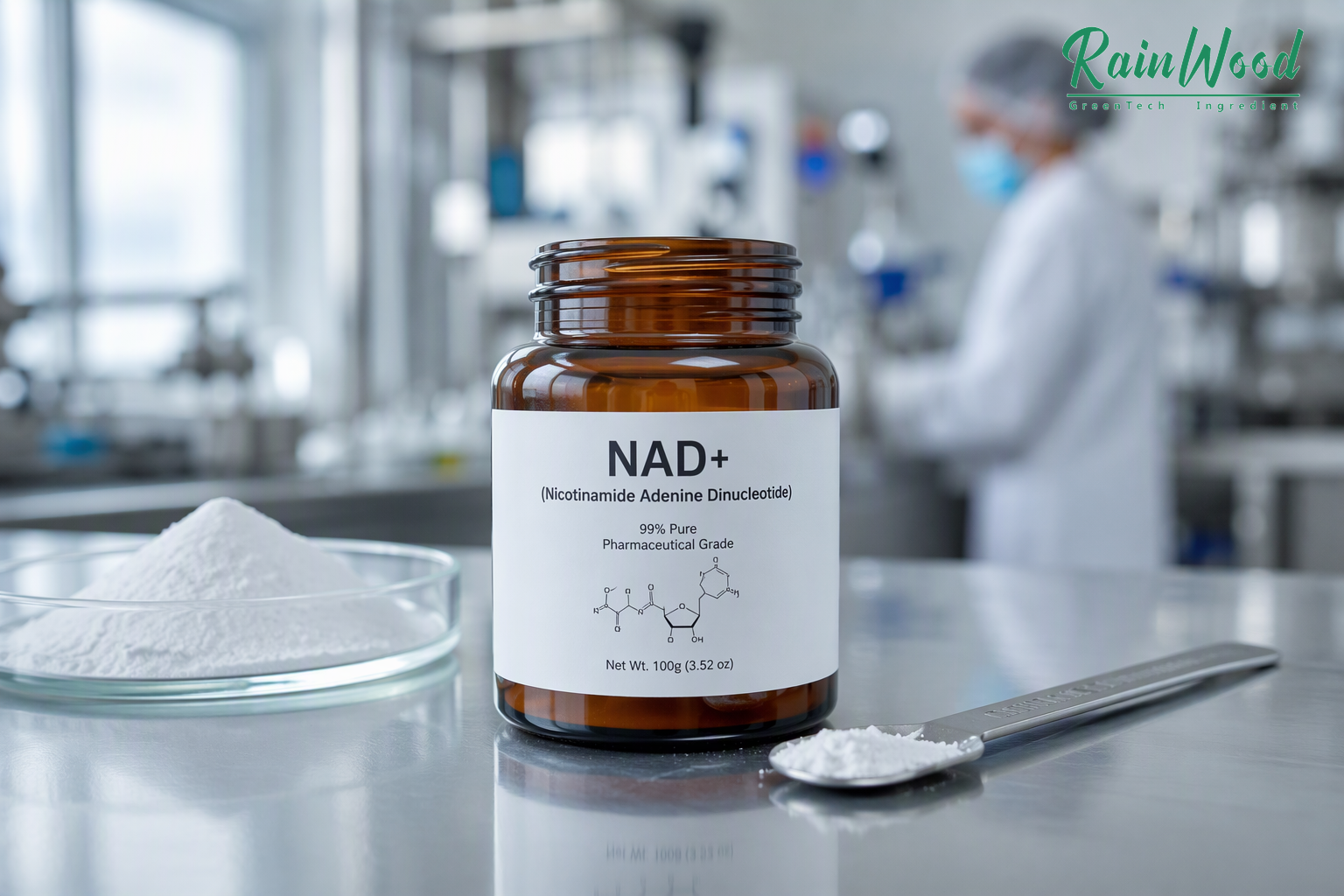
98% NAD+ Is Not the Whole Specification: Buyer's Quality Guide—Shaanxi Rainwood Biotech cGMP Manufacturing Standard
The quotation highlights “NAD+ 98%.” The buyer assumes the remaining 2% is irrelevant. The quality team later asks about NADH, nicotinamide, NMN, ADP-ribose, residual solvents, water, metals, and microbial limits. None appear in the specification.
For NAD+, purity is a starting point. The complete specification must identify the molecule, redox state, assay basis, related substances, physical form, stability, packaging, safety tests, and batch release requirements.
Define what the purity number means
Use our NAD+ purity and specification checklist NAD+ powder product page to record:
- HPLC or other assay method;
- reference standard;
- as-is or dry-basis reporting;
- free acid or salt form;
- NAD+ versus NADH control;
- related NAD metabolites;
- residual solvents and water;
- heavy metals and microbiology;
- lot and retained-sample linkage.
Two suppliers can both quote 98% and still offer materially different grades if their methods and impurity limits differ.
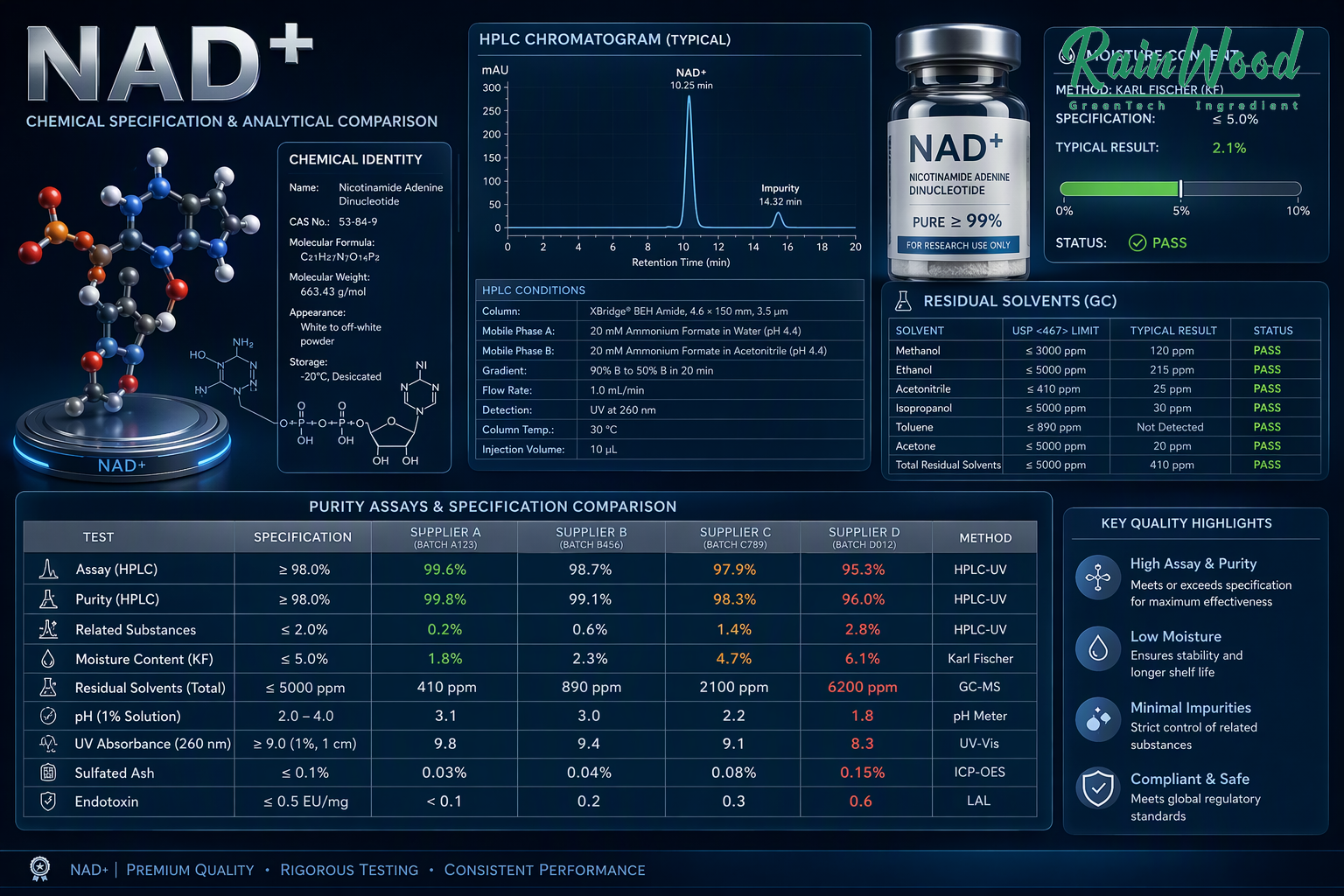
Figure 1: NAD+ Chemical Purity & Specification Matrix—assessing active assay, related nucleotides, degradation limits, and moisture thresholds.
Related substances are a process fingerprint
NAD+ can be affected by synthesis, enzymatic production, purification, pH, light, heat, moisture, and storage. The remaining percentage may include process intermediates, redox-related forms, degradation products, salts, or other nucleotides. Ask the supplier to identify likely impurities and set limits appropriate to the route and market.
Read the NAD+ COA and analytical-method guide NAD+ COA guide before approving an assay without a related-substance section.
Water and residual solvents influence both cost and behavior
Water changes active concentration, flow, caking, and effective cost per gram. Residual solvents require a route-specific panel and defined limits. Confirm whether the assay is reported as-is or on a dry basis, and whether the net content is active material or includes water and counterions.
Do not infer pharmaceutical control from a large percentage. Grade is a package of identity, methods, process controls, documentation, and intended use.
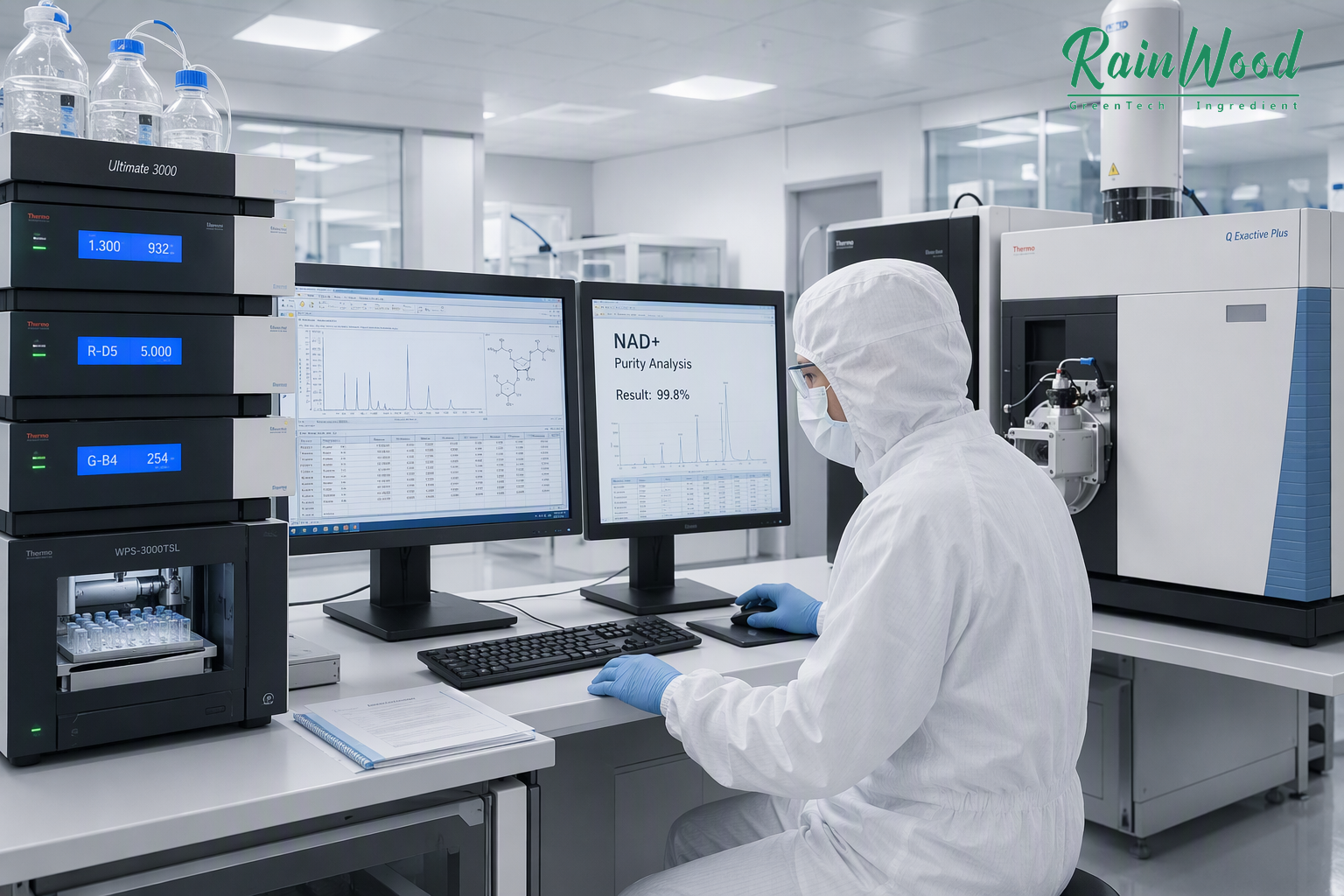
Figure 2: Analytical Release Testing Protocols for Bulk NAD+—HPLC chromatography, residual solvents, and heavy metals qualification.
Physical properties belong in the format brief
NAD+ powders may differ in particle size, density, moisture, flow, color, and electrostatic behavior. These attributes affect capsules, tablets, sachets, blends, and solutions. A chemically pure powder can still create fill variation or caking.
| Format | Useful physical checks | |---|---| | Capsules | Flow, density, fill-weight variation | | Tablets | Compressibility, sticking, disintegration | | Sachets | Fill accuracy, caking, reconstitution | | Solutions | pH, clarity, container closure, in-use stability |
Use the NAD+ dosage-form feasibility guide NAD+ format guide when the raw material will become a finished supplement.
Build a specification table with release decisions
| Attribute | Specification question | |---|---| | Identity | Does the method confirm NAD+? | | Redox | Is NADH limited or measured? | | Assay | What basis and reference standard apply? | | Related substances | Which degradants or nucleotides are controlled? | | Safety | Which solvent, metal, and microbial limits apply? | | Physical | Will the material run in the chosen format? | | Stability | What package and storage evidence exists? | | Change control | Which source or process changes require approval? |
Use the table in the purchase order, sample approval, COA review, and final release record.
How RainwoodBio can turn purity into a usable NAD+ file
RainwoodBio publicly describes raw-material supplier management, GMP process control, quality testing and release, compliance documentation, packaging, logistics, and traceability. For NAD+, the relevant benefit is translating a headline assay into a release package that procurement, quality, and formulation teams can apply to the same lot.
Confirm the exact grade, method, laboratory, manufacturing site, certificates, stability data, and batch evidence available for your order. Public quality-system information does not replace product-specific evidence.
What a buyer should request before approval
Ask the supplier to return the specification as a controlled document, not only as a sales PDF. It should show the product code, exact form, method references, acceptance limits, test basis, package, storage, and revision date. Request a representative lot COA and ask which results are release results versus typical values. If a line is not tested on every lot, the document should say so and explain the verification frequency.
Check the relationship between the raw material and the finished product. A powder that passes a high-purity assay can still create a poor capsule if its flow or density is unsuitable. A material with a low water result can still be vulnerable after the drum is opened in a humid room. A clean incoming COA does not replace blend uniformity, finished-unit assay, or stability testing. The NAD+ finished product format guide shows how the release question changes after formulation.
For a private-label buyer, also record the commercial consequences of a failed attribute. If water exceeds the limit, can the lot be dried or must it be replaced? If related substances rise, who pays for confirmatory testing? If bulk density changes, can the filling process be adjusted without changing the declared dose? These decisions belong in the quality agreement before the first order.
The specification approval gate
Before purchase, verify:
- identity and redox state are defined;
- assay basis and method are clear;
- related substances and process residues are controlled;
- water, solvents, metals, and microbiology are addressed;
- physical requirements match the dosage form;
- COA and retained sample are lot-linked;
- changes trigger a documented review.
Request a NAD+ specification and release-file review contact form. Send the COA, specification, quotation, format, serving size, target market, and proposed claims. RainwoodBio can help you decide whether 98% is a meaningful specification—or only a sales headline.
A purity number should end the shortcut, not the review
When a supplier highlights 98% or 99%, ask what occupies the remaining percentage and how it was measured. The answer may include water, salts, process-related compounds, unreacted material, degradation products, or analytical uncertainty. The commercial importance depends on the finished format and target market, but the buyer should know which possibilities are controlled and which are simply not reported.
Also ask whether the specification is a release limit or a marketing range. A range that appears on a brochure may not be the same as the acceptance limit used for the lot. Tie the approved number to a method, a reference standard, and a sample plan. This turns the headline purity into a decision that can be repeated by quality teams and external laboratories.
Frequently asked questions
#
Is 98% NAD+ enough for a private-label product?
Not by itself. Review identity, redox form, related substances, safety, physical properties, stability, and lot documentation.
#
Does higher purity guarantee better stability?
No. Stability depends on the material, package, formula, storage, and degradation controls.
#
Should NAD+ specifications include NADH?
If the product is specified as oxidized NAD+, define how the reduced form and relevant degradation are assessed.
References
- JHFC, NAD+ Testing Standards: https://www.jhfc.or.jp/en/downloads/nad-testing
- NAD+ analytical characterisation monograph: https://compoundedevidence.com/monographs/nad-plus/analytical/
- GoldBio NAD COA example: https://goldbio.com/documents/2727/N-030-COA_Sample.pdf
- RainwoodBio OEM information: https://www.rainwoodbio.com/oem
*This article is for B2B procurement and educational purposes. Purity, identity, redox state, impurities, safety, stability, labeling, and regulatory requirements must be confirmed for the exact NAD+ material and destination market.*
Partner with a Qualified NAD+ & Cellular Nutrition Manufacturer
Shaanxi Rainwood Biotech Co., Ltd. supplies high-purity NAD+, Liposomal NMN, Liposomal NR, and comprehensive contract manufacturing solutions with complete batch COAs, third-party HPLC verification, and fast global shipping.
Table of Contents
- Define what the purity number means
- Related substances are a process fingerprint
- Water and residual solvents influence both cost and behavior
- Physical properties belong in the format brief
- Build a specification table with release decisions
- How RainwoodBio can turn purity into a usable NAD+ file
- What a buyer should request before approval
- The specification approval gate
- A purity number should end the shortcut, not the review
- Frequently asked questions
- Is 98% NAD+ enough for a private-label product?
- Does higher purity guarantee better stability?
- Should NAD+ specifications include NADH?
- References