 EN
Executive Summary: Technical evaluation of NAD+ physical presentations: crystalline powder, lyophilized freeze-dried cake, and liquid solutions. Compare stability, cold chain, and packaging.
Explore premium Liposomal NMN Powder, Liposomal NR Raw Material, and turnkey Custom OEM Supplement Capsules with verified analytical testing and complete regulatory dossiers.
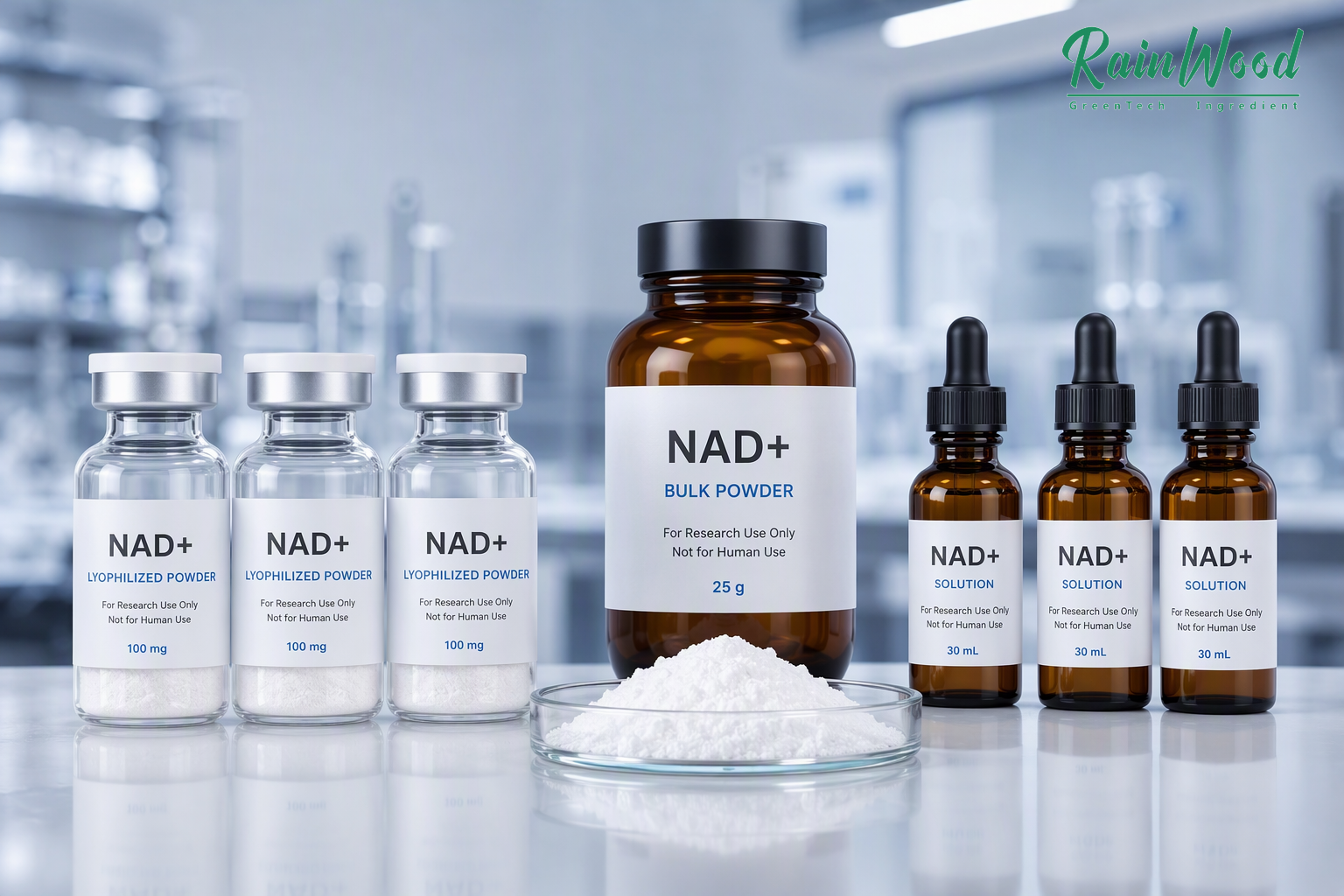
NAD+ Powder, Lyophilized Powder, or Solution? Choose the Right Presentation—Shaanxi Rainwood Biotech cGMP Manufacturing Standard
The supplier offers NAD+ as crystalline powder, lyophilized powder, or solution. The product team chooses the presentation based on the catalog photograph. Later, the stability plan shows that the solution has a different pH and in-use risk, while the powder requires strict moisture and oxygen control.
Presentation is not decoration. It changes the material’s exposure, assay basis, reconstitution, package, shipping, dose calculation, and release file. Choose the presentation from the actual customer use and stability evidence.
Powder gives flexibility but exposes handling risk
Use our NAD+ presentation and format checklist NAD+ powder product page to define:
- crystalline or amorphous powder;
- particle size and bulk density;
- moisture and flow limits;
- oxygen and light exposure;
- fill weight and unit dose;
- package barrier and opening pattern;
- reconstitution or blending requirement.
A powder may suit capsules, tablets, blends, or sachets, but each route needs application testing. A supplier’s free-flowing sample does not prove the same behavior after shipping or repeated opening.
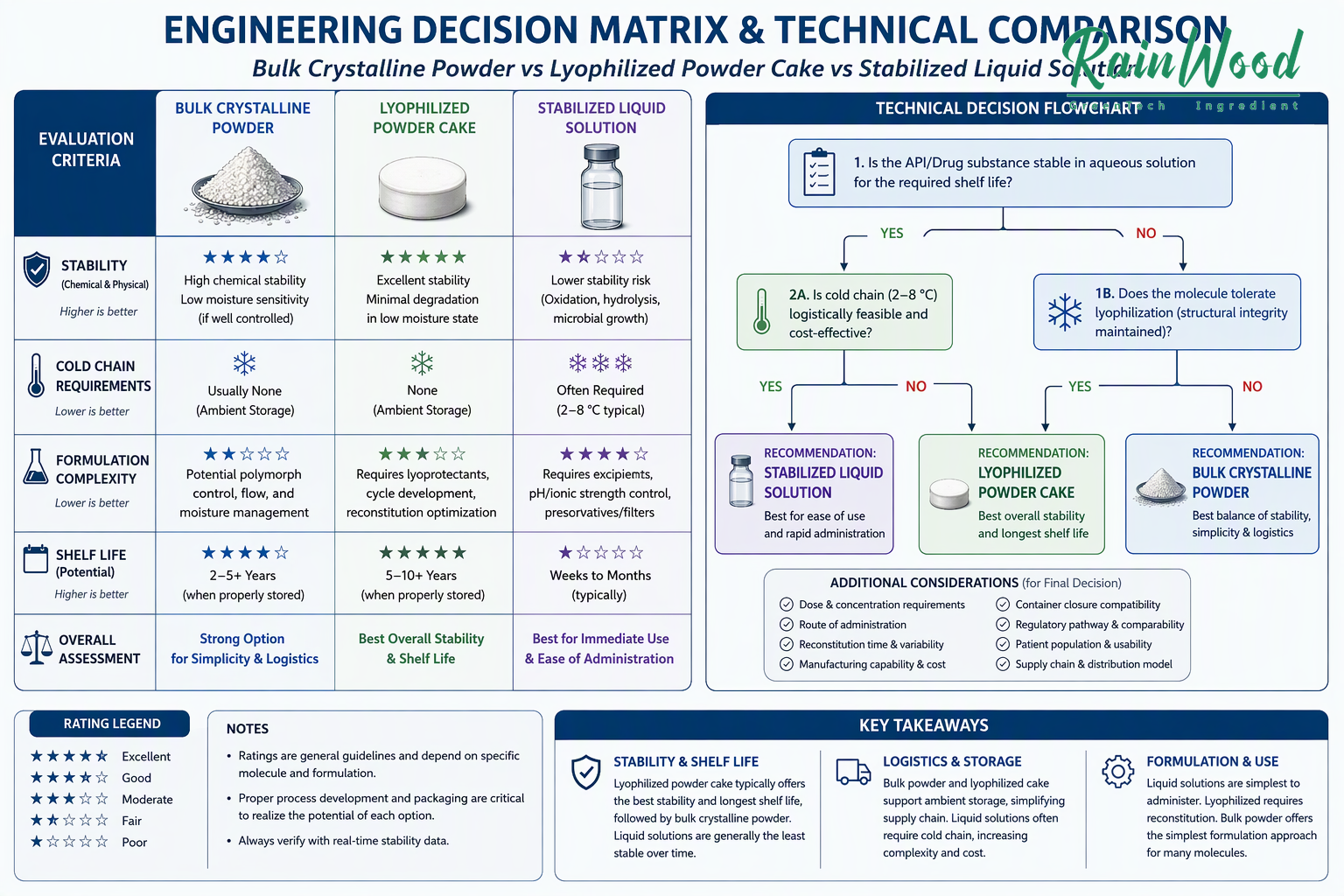
Figure 1: Engineering Decision Matrix—evaluating crystalline powder, lyophilized vials, and liquid solutions across stability and cold-chain constraints.
Lyophilized material has a different package story
Lyophilization can produce a porous, low-density presentation that may reconstitute differently from a crystalline powder. It may require a vial, stopper, special headspace, or handling instruction. Confirm whether the presentation is intended for research, manufacturing, or consumer use.
Ask for residual moisture, reconstitution time, container closure, and storage evidence. Do not assume a lyophilized research vial is a suitable private-label supplement ingredient without a finished-product and regulatory review.
Read the NAD+ stability and packaging guide NAD+ stability guide before selecting a lyophilized format.
Solutions create pH and in-use questions
An NAD+ solution must be evaluated at its concentration, pH, buffer, light exposure, oxygen level, container closure, and in-use period. A solution can look clear while the chemical profile changes. Repeated withdrawals and headspace replacement create different conditions from a sealed vial.
Define whether the solution is a bulk intermediate, a finished oral product, or a research preparation. The label, storage, and claims cannot be copied across those categories.
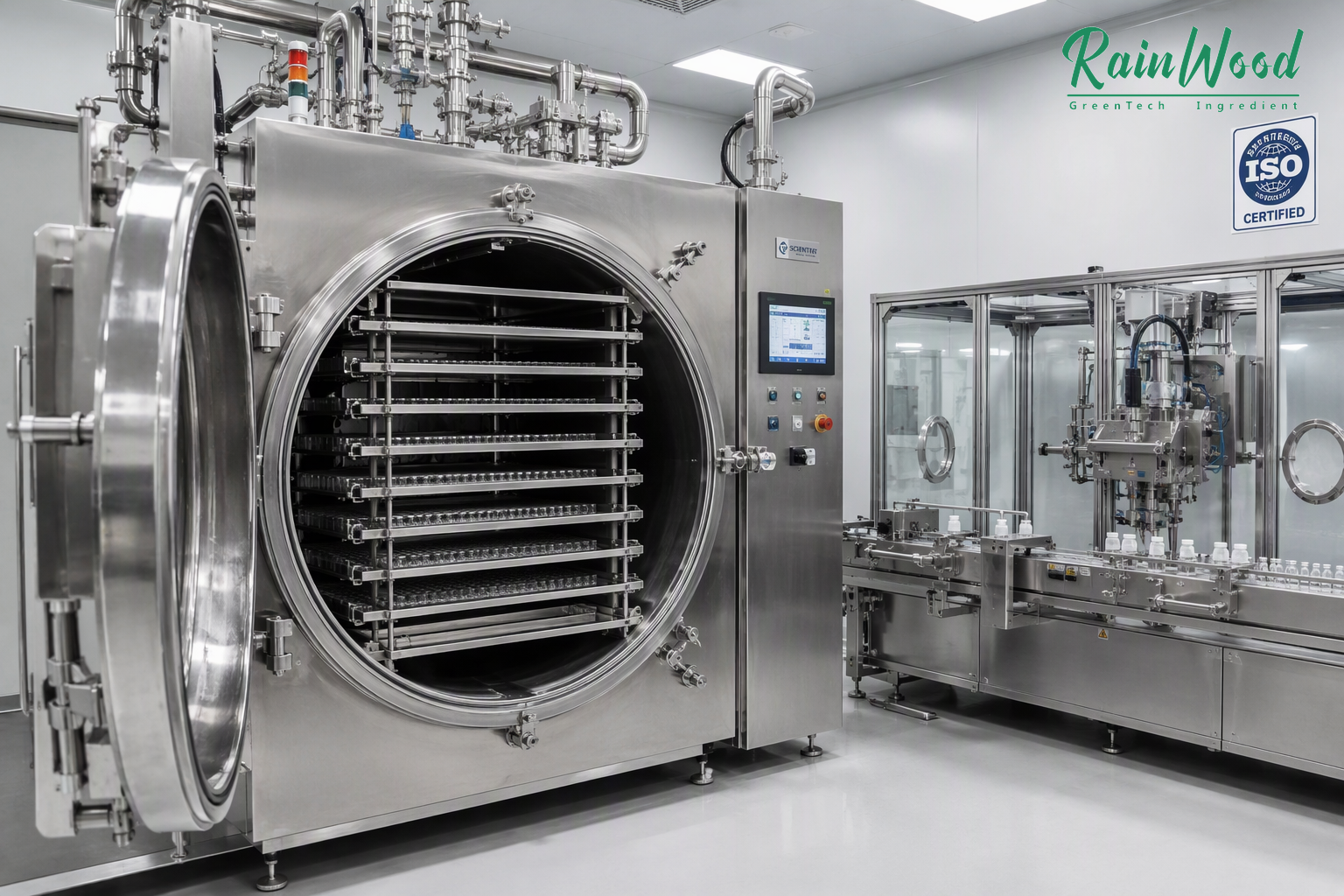
Figure 2: Industrial Lyophilization & Freeze-Drying Cleanroom Infrastructure for High-Purity Sensitive Bio-actives.
Compare presentations on customer use and landed cost
| Presentation | Strength | Main risk | |---|---|---| | Powder | Flexible dosing and filling | Moisture, flow, caking | | Lyophilized | Porous, controlled presentation | Package, reconstitution, density | | Solution | Ready to use | pH, oxygen, in-use stability |
Add package, freight, filling, storage, and waste to the comparison. The most expensive presentation may still be better if it protects the commercial promise; the cheapest may fail after opening.
Dose basis changes with presentation
For a solution, dose may be expressed per milliliter; for a powder, per capsule or serving mass. Confirm concentration, active basis, water content, and volume tolerance. A customer should not need to convert between salt-inclusive mass, active NAD+ amount, and solution volume.
Use the NAD+ dose and capsule-cost guide NAD+ dose and cost guide before finalizing a serving statement.
How RainwoodBio can evaluate presentation with the finished format
RainwoodBio publicly describes powdered drinks, capsules, tablets, softgels, packaging, custom samples, testing and release, logistics, and traceability. For NAD+, the relevant control is comparing presentation, package, dose, and stability in the exact finished route rather than selecting a catalog form alone.
Confirm the exact production equipment, package, storage, pilot method, and batch evidence available for your NAD+ presentation. Public format capability does not guarantee that every presentation is suitable for consumer sale.
Make the package decision before the production quote
Ask how the proposed presentation will be filled, sealed, stored, and used. Powder may need a moisture-barrier liner and a defined open-time limit. Lyophilized material may need protection from breakage and a clear reconstitution instruction. A solution may need light protection, a controlled pH range, a validated filling process, and a rule for use after opening. These requirements can change the minimum order, lead time, freight class, and finished-product shelf life.
Request a small pilot in the intended package rather than approving a laboratory presentation. Compare net fill, dose uniformity, appearance, odor, water, assay, and package integrity after transport simulation where appropriate. If the buyer's customers will open a multi-dose bottle repeatedly, include an in-use study. If the product is a single-use sachet, include seal testing and unit-to-unit checks.
The commercial question is not which presentation looks most sophisticated. It is which presentation protects the specified quality while remaining practical for the buyer's use, shipping route, and target price. The NAD+ stability guide should be reviewed alongside the format decision because package and stability are one system.
The presentation approval gate
Before ordering, verify:
- intended use and product category are clear;
- powder, lyophilized, or solution identity is documented;
- assay basis and active amount are aligned;
- package and storage control the relevant exposure;
- finished-format performance is tested;
- shipping and in-use conditions are represented;
- presentation changes trigger a new stability review.
Request a NAD+ powder, lyophilized, or solution feasibility review contact form. Send the COA, presentation details, formula, package, storage target, dose, market, and shipping plan. RainwoodBio can help select a presentation that protects the product and the customer experience.
Compare presentations with a use-case scorecard
Score each option against five practical questions: How is the dose measured? How long is the material exposed after opening? What barrier does the package provide? What does the customer do before use? What evidence will the market reviewer expect? Powder may win on shipping and formulation flexibility but lose on humidity and dose handling. Lyophilized material may offer a strong technical story but require careful reconstitution instructions. Solution may simplify dosing while increasing pH, closure, and microbial-control demands.
Use the scorecard in the quotation stage. It exposes costs that a raw-material price hides and gives the OEM partner a clear reason for the chosen format. A buyer can then explain the choice to a distributor as a controlled product decision, not a cosmetic preference.
Do not let the package hide the handling requirement
The package should tell operators how to receive, open, sample, reseal, and store the material. Add a maximum open time when justified, identify the required closure, and state whether a desiccant or light protection is essential. Clear instructions make the supplier's stability evidence usable on the factory floor rather than leaving it inside a technical file.
Frequently asked questions
#
Is lyophilized NAD+ always more stable?
Not automatically. Stability depends on residual moisture, package, storage, exposure, and the finished use.
#
Can a NAD+ solution be sold as a normal supplement without extra review?
Do not assume so. Product category, pH, preservatives, package, dose, and market requirements must be evaluated.
#
Is powder easier to formulate than solution?
Often it is more flexible, but powder handling, moisture, taste, and dose uniformity create their own risks.
References
- JHFC, NAD+ Testing Standards: https://www.jhfc.or.jp/en/downloads/nad-testing
- NAD+ analytical characterisation monograph: https://compoundedevidence.com/monographs/nad-plus/analytical/
- Cayman Chemical NAD+ COA example: https://cdn.caymanchem.com/cdn/downloadCofa/Cayman-CofA-16077-0803651.pdf
- RainwoodBio OEM information: https://www.rainwoodbio.com/oem
*This article is for B2B procurement and educational purposes. Presentation, dose, stability, safety, packaging, labeling, and regulatory requirements must be confirmed for the exact NAD+ product and destination market.*
Partner with a Qualified NAD+ & Cellular Nutrition Manufacturer
Shaanxi Rainwood Biotech Co., Ltd. supplies high-purity NAD+, Liposomal NMN, Liposomal NR, and comprehensive contract manufacturing solutions with complete batch COAs, third-party HPLC verification, and fast global shipping.
Table of Contents
- Powder gives flexibility but exposes handling risk
- Lyophilized material has a different package story
- Solutions create pH and in-use questions
- Compare presentations on customer use and landed cost
- Dose basis changes with presentation
- How RainwoodBio can evaluate presentation with the finished format
- Make the package decision before the production quote
- The presentation approval gate
- Compare presentations with a use-case scorecard
- Do not let the package hide the handling requirement
- Frequently asked questions
- Is lyophilized NAD+ always more stable?
- Can a NAD+ solution be sold as a normal supplement without extra review?
- Is powder easier to formulate than solution?
- References