 EN

Executive Summary & Buyer Guidance
Compare capsules, tablets, powders, and sachets for high-dose inositol and myo plus D-chiro products before choosing an OEM format.
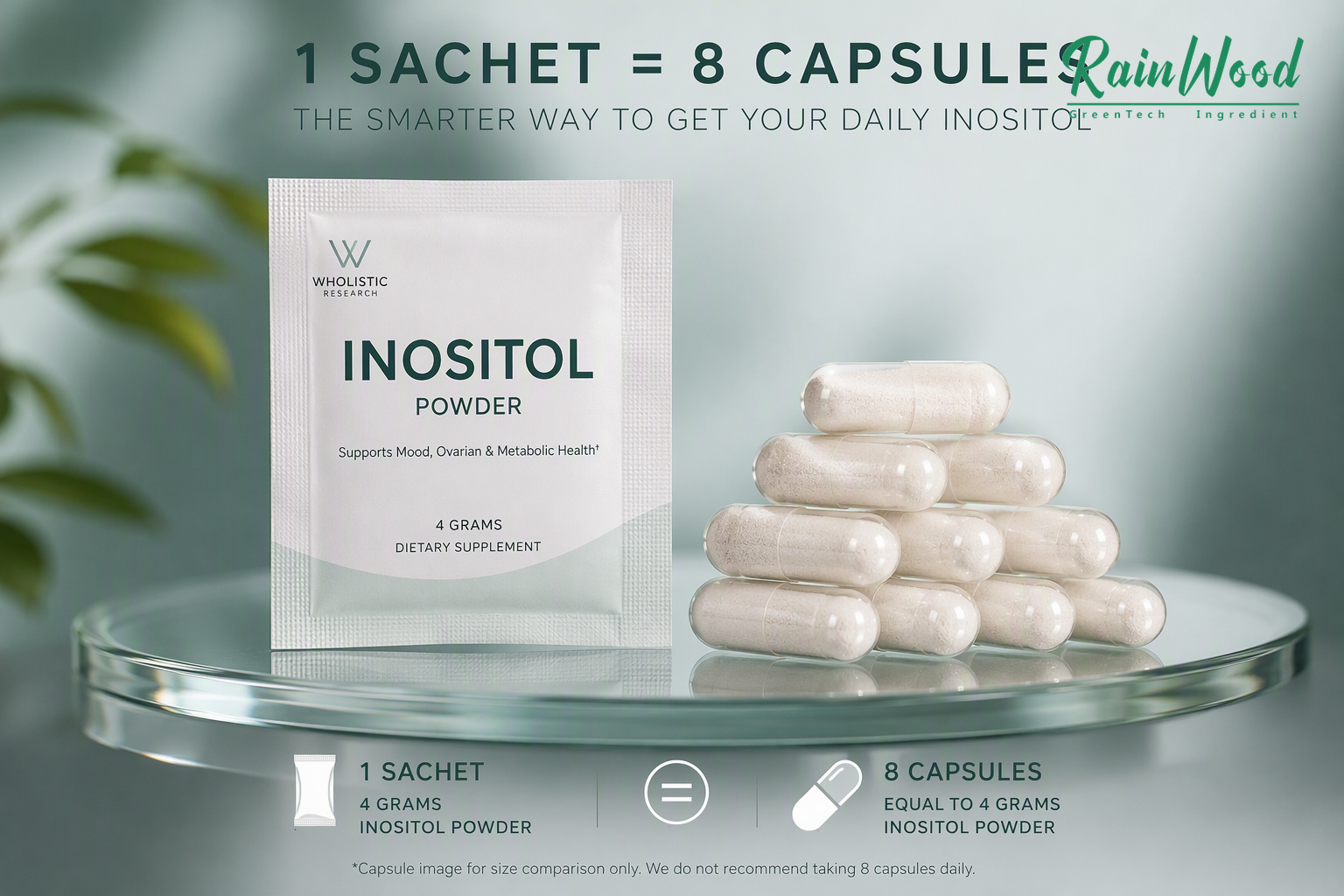
Figure 1: Serving Size Volume Comparison: Single 4g Inositol Powder Stick Pack vs Eight Size 00 Hard Capsules
The dosage form can decide whether the product is commercially viable
Many brands choose capsules because they look familiar and are easy to list online. Then the formula team calculates the intended daily amount and discovers that the serving requires several large capsules. Another brand chooses a sachet for convenience but underestimates the moisture barrier, flavor, seal, and filling controls required. The format is not a cosmetic decision. It determines dose capacity, cost, production risk, customer experience, and the evidence file.
Inositol products make this choice particularly visible because myo-inositol is often used at a gram-level amount, while D-chiro-inositol may appear in a much smaller amount in a ratio formula. A product can be technically correct but commercially awkward if the format cannot deliver the intended serving without excessive units.
Capsules reduce taste but consume capacity
Capsules hide taste and can be convenient for a single ingredient or a lower serving. They also create a hard capacity limit. The buyer must calculate bulk density, capsule size, target fill weight, manufacturing tolerance, and the amount of every companion ingredient. A 40:1 product may need several capsules to deliver the myo-inositol portion, even though the D-chiro-inositol portion is small.
More capsules affect the bottle count, serving directions, shipping weight, and perceived value. They can also increase the chance that a customer misses part of the serving. The inositol dose calculation guide explains why total daily dose should be calculated before artwork and packaging.
Sachets solve capacity but add powder controls
A sachet can deliver a larger amount in one unit and is easy to position as a daily ritual. It also exposes the product to new risks: flavor masking, dissolution, moisture pickup, dust at the seal, fill-weight tolerance, film barrier, and shipping compression. A high-dose blend may need a large sachet, a multi-sachet serving, or a water volume that affects the user experience.
For a myo-inositol and D-chiro-inositol formula, the supplier must show how the low-dose D-chiro component remains evenly distributed across the bulk blend and final sachets. A printed 40:1 ratio does not prove that every stick contains that ratio. The inositol blend uniformity guide focuses on this specific risk.
Tablets create a different set of trade-offs
Tablets can be compact and stable, but high-dose inositol may require a large tablet, multiple units, or a specialized formulation. Compression can alter disintegration, mouthfeel, and handling. Flavoring and chewability may require additional excipients that change the active concentration and label calculation.
Ask for hardness, friability, disintegration, and weight-variation data where relevant. Do not assume that a powder suitable for a sachet will compress directly into a reliable tablet. Treat tablet feasibility as a separate pilot review using the proposed formula and process.
Compare the economics beyond raw material price
Calculate active amount per serving, number of units per serving, servings per package, package cost, filling yield, testing, shipping weight, and expected customer reorder behavior. A capsule may have lower flavor-development cost but higher unit count. A sachet may cost more in film and filling but support a clearer single-dose experience. A tablet may require tooling and process development but offer a compact carton.
Include the cost of failed units, line cleaning, moisture-control measures, and stability testing. If the product includes a low-dose D-chiro-inositol component, include the cost of premixing, sampling, and finished-unit verification. A simple price-per-kilogram comparison does not show the real cost of delivery.
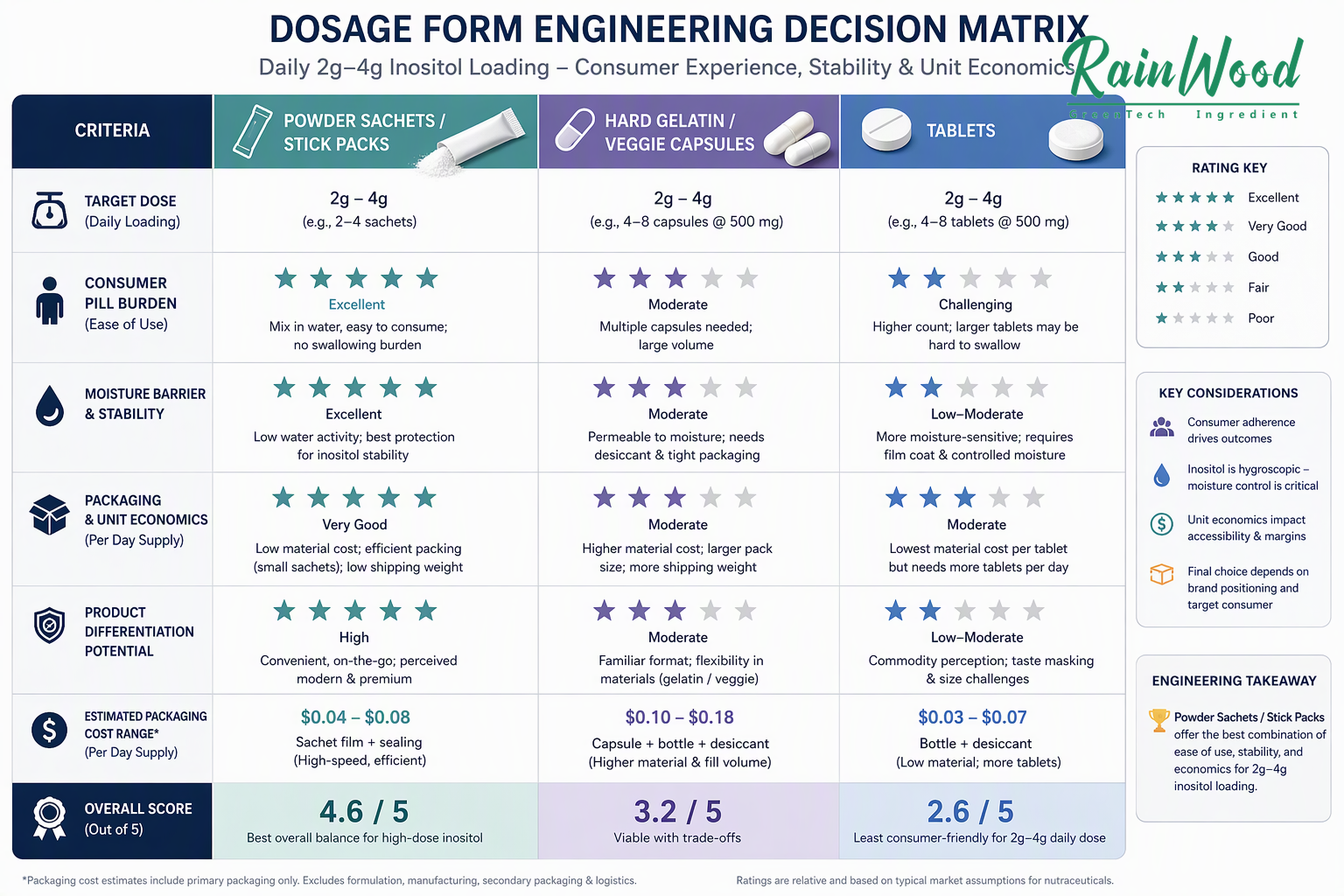
Figure 2: Dosage Form Selection Matrix: Daily Active Loading, Pill Burden, Moisture Barrier, and Cost Comparison
Choose the format by buyer and channel
Amazon customers may value capsules because they are familiar and easy to subscribe to. A fertility-focused brand may prefer sachets because the customer expects a daily powder routine. A practitioner channel may want a technical label with precise amounts and flexible serving directions. A distributor may prefer the format that survives its logistics route and has clear case-pack economics.
The format must also fit the destination market. A claim or warning that is acceptable for a general wellness product may require different review when the product is positioned around PCOS, fertility, or pregnancy. Use inositol market dossier guide before committing to a package.
Pilot the actual format
Request a pilot using the approved inositol form, target ratio, carrier, flavor, equipment, and package. Measure weight variation and active uniformity across the run. Inspect capsule fill, tablet performance, or sachet seals. Hold units for stability under the intended storage conditions. If the product is mixed with water, include dissolution, taste, and in-use observations.
Do not approve a bottle mock-up with a different powder, a laboratory capsule, or an unsealed sample pouch. A presentation sample is not evidence of a commercial format.
How RainwoodBio can support the format decision
RainwoodBio publishes OEM support for hard capsules, powder stick packs, tablets, softgels, and other dosage forms, together with requirement confirmation, process control, testing and release, and documentation. This gives a buyer a route to compare formats with one project partner. The specific inositol product still needs a pilot, formula, package, market review, and finished-product specification.
Format approval gate
Before selecting capsules or sachets, answer:
- How much active is needed per day?
- How many units can the customer realistically use?
- What powder or compression risks arise in production?
- What package protects the product after opening?
- Which format best supports the target market and claim set?
Request a inositol Format Comparison and provide the target serving, formula, customer channel, package preference, and monthly volume.
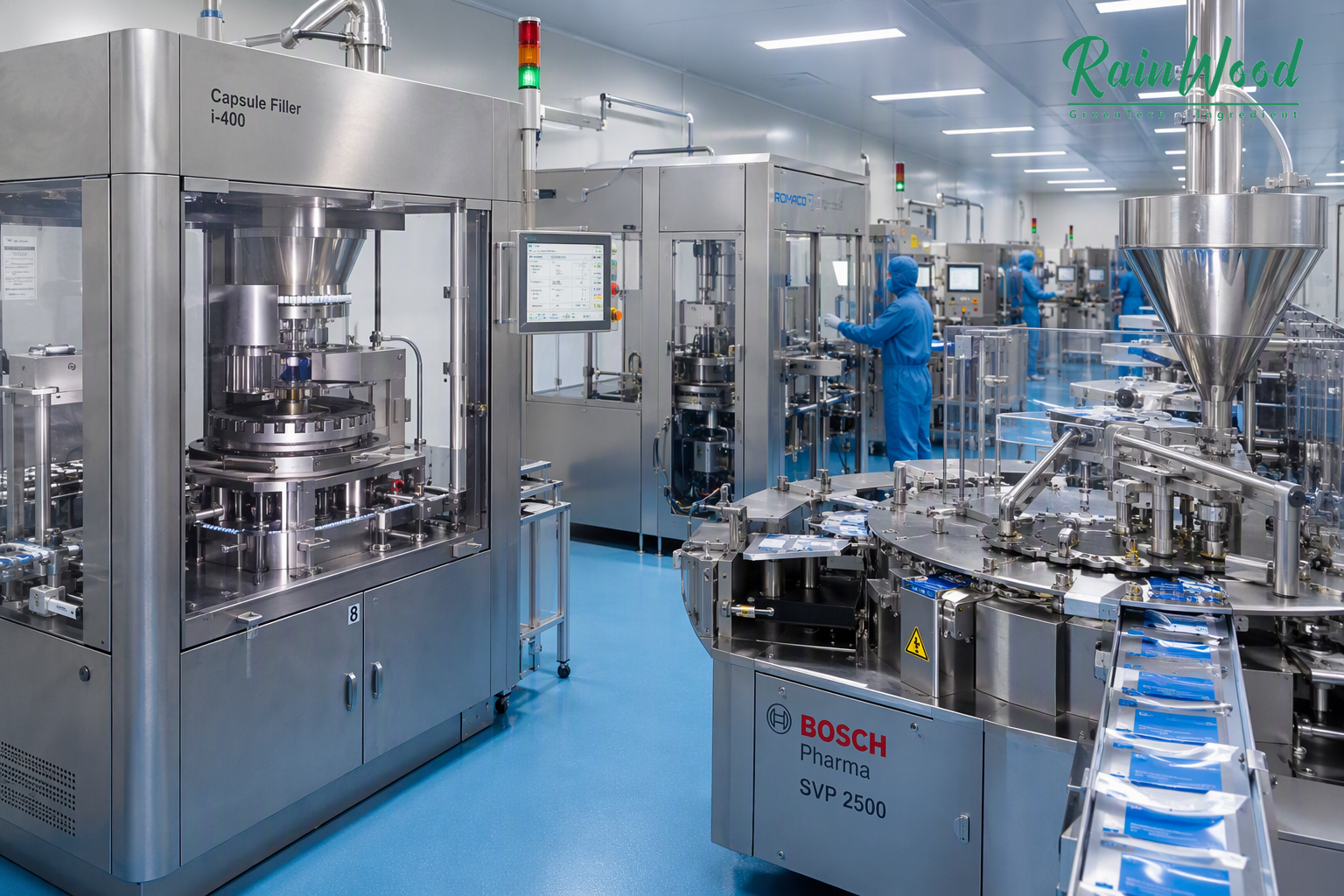
Figure 3: High-Speed Commercial Capsule Encapsulation and Automated Powder Sachet Packaging Cleanrooms
Evaluate customer use as a quality attribute
Ask how the customer will measure, carry, open, and finish the daily serving. A sachet may be convenient but require water and a clean seal. Capsules may be portable but require several units. A tablet may be compact but create swallowing or disintegration concerns. Record these observations in the format brief and use them to set the customer instructions.
Then connect customer use to complaint control. If a sachet clumps after opening, if a capsule bottle is left in a humid bathroom, or if a multi-unit serving is confusing, the brand should know which package, instruction, or formulation control can be improved. Format choice is stronger when it reduces foreseeable complaints rather than simply copying the most visible competitor.
Frequently asked questions
Are sachets always better for high-dose inositol?
Not always. They may solve capsule capacity but add flavor, moisture, seal, and filling requirements.
Can a capsule formula use the same ratio as a sachet?
The ratio may be the same, but the total serving, excipients, fill weight, and finished-product testing can differ.
Is a tablet more stable than a powder?
Not automatically. Stability depends on form, excipients, process, package, and storage conditions.
Should the package be chosen before the formula?
The formula and format should be developed together because each imposes capacity and stability constraints.
Conclusion
Choose the format that can deliver the intended inositol dose consistently, comfortably, and economically. Capsules, tablets, and sachets each solve one problem and create another; the right choice is the one supported by a real pilot and a finished-product specification.
Disclaimer: This article is for B2B formulation and procurement information. It is not medical advice and does not establish that inositol products treat, prevent, or cure disease.
References
- https://pubmed.ncbi.nlm.nih.gov/38163998/
- https://www.fda.gov/food/dietary-supplements-guidance-documents-regulatory-information/dietary-supplement-labeling-guide
- https://www.rainwoodbio.com/oem
Explore RainwoodBio Inositol & Custom Formulation Capabilities
- Custom Powder Stick Packs & Single-Serve Sachets – High-speed automated stick pack packaging for 40:1 Myo/D-Chiro Inositol formulas with nitrogen flush.
- Custom Hard Capsules & Veggie Encapsulation – Precision cGMP encapsulation for high-potency inositol blends with folates and co-factors.
- OEM / ODM Contract Manufacturing Services – End-to-end formulation development, pilot batch scaling, and global regulatory compliance dossiers.
- Contact RainwoodBio Technical Sales – Request CoA, stereoisomer testing protocols, pilot samples, or commercial quotation.
Ready to Formulate Your Myo & D-Chiro Inositol Product?
RainwoodBio provides cGMP-certified Myo-Inositol and D-Chiro-Inositol raw materials, verified 40:1 ratio stick pack packaging, and full regulatory documentation for US, EU, and global market entry.
Request CoA, Samples & QuoteTable of Contents
- The dosage form can decide whether the product is commercially viable
- Capsules reduce taste but consume capacity
- Sachets solve capacity but add powder controls
- Tablets create a different set of trade-offs
- Compare the economics beyond raw material price
- Choose the format by buyer and channel
- Pilot the actual format
- How RainwoodBio can support the format decision
- Format approval gate
- Evaluate customer use as a quality attribute
- Frequently asked questions
- Conclusion
- References