 EN
Executive Technical Summary
This supply chain audit guide examines raw material origins for inositol ingredients. Learn how to verify botanical extraction claims (Carob Pod vs Corn Steep Liquor) using isotopic analysis, residual solvent profiling, and verifiable traceability documentation.
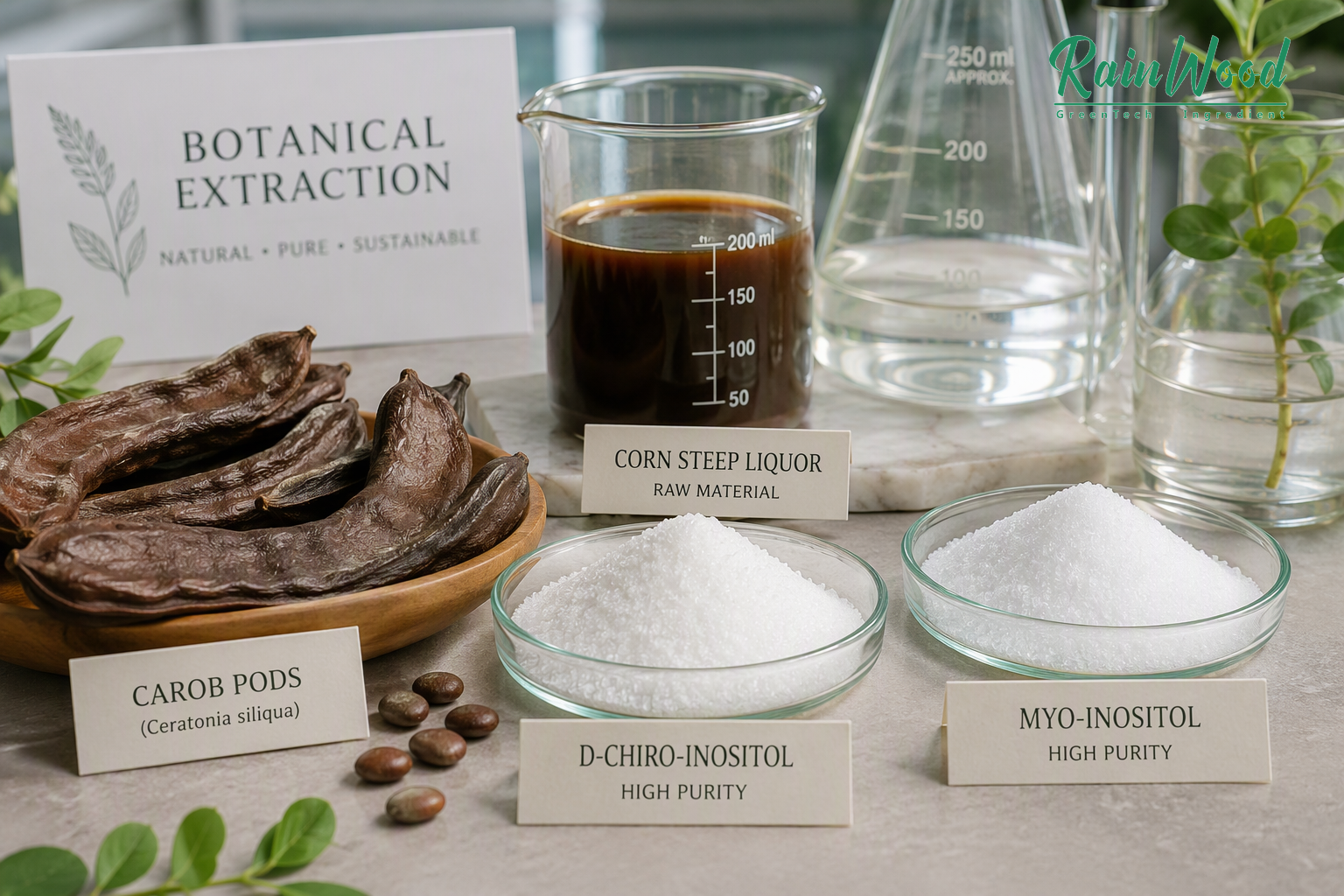
Figure 1: Botanical carob pods and raw crystalline inositol extracts undergoing laboratory purity verification.
“Naturally sourced” is not a finished specification
Inositol products often use source language to create a premium story: plant-derived, fermentation-derived, naturally occurring, or clean-label. Such wording can help a brand position a product, but it does not answer the buyer's most important questions. Which form is present? How is it purified? What remains from the process? Is the source consistent from lot to lot? Can the finished product still support the label and intended market?
The source story matters only when it connects to identity, impurities, traceability, and performance. A buyer should not reject a synthetic or fermentation route merely because it sounds less natural, and should not accept a natural story as proof of quality. The correct procurement decision comes from the actual grade and evidence.
Source can affect the risk profile
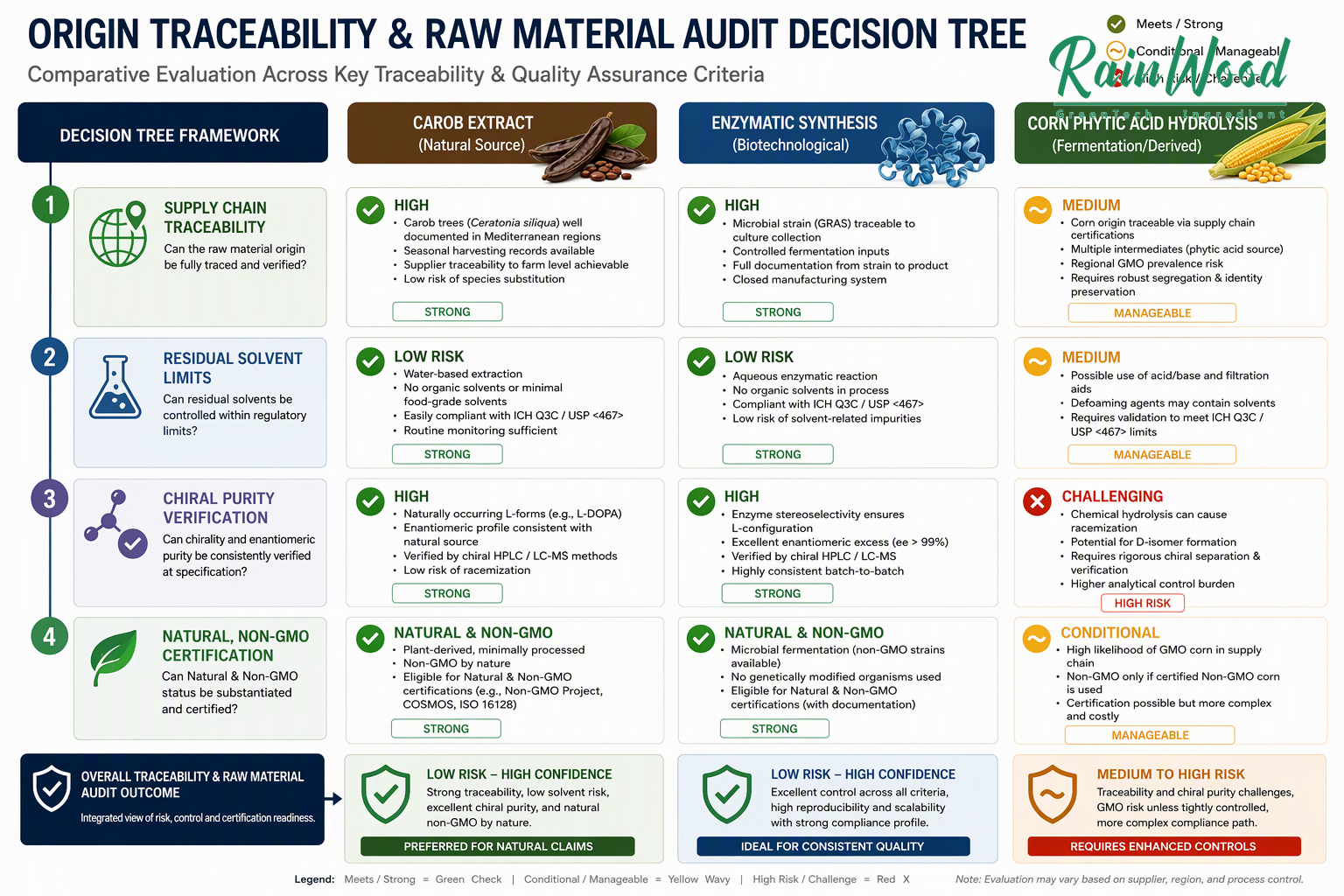
Figure 2: Origin traceability and raw material audit decision tree comparing extraction, hydrolysis, and synthesis routes.
Different production routes can create different residuals, water profiles, particle properties, and impurity patterns. A fermentation route may require control of nutrients, organisms, downstream purification, and process residues. A chemical or conversion route may require control of reaction by-products, solvents, catalysts, and stereochemical composition. The buyer does not need to assume that one route is always better; the buyer needs the supplier to disclose the route sufficiently to define relevant controls.
For D-chiro-inositol, source and conversion information can be especially important because the product is a specific stereoisomer rather than a generic total-inositol material. The D-chiro-inositol identity testing guide explains why source claims do not replace form-specific testing.
The buyer loss from a story without traceability
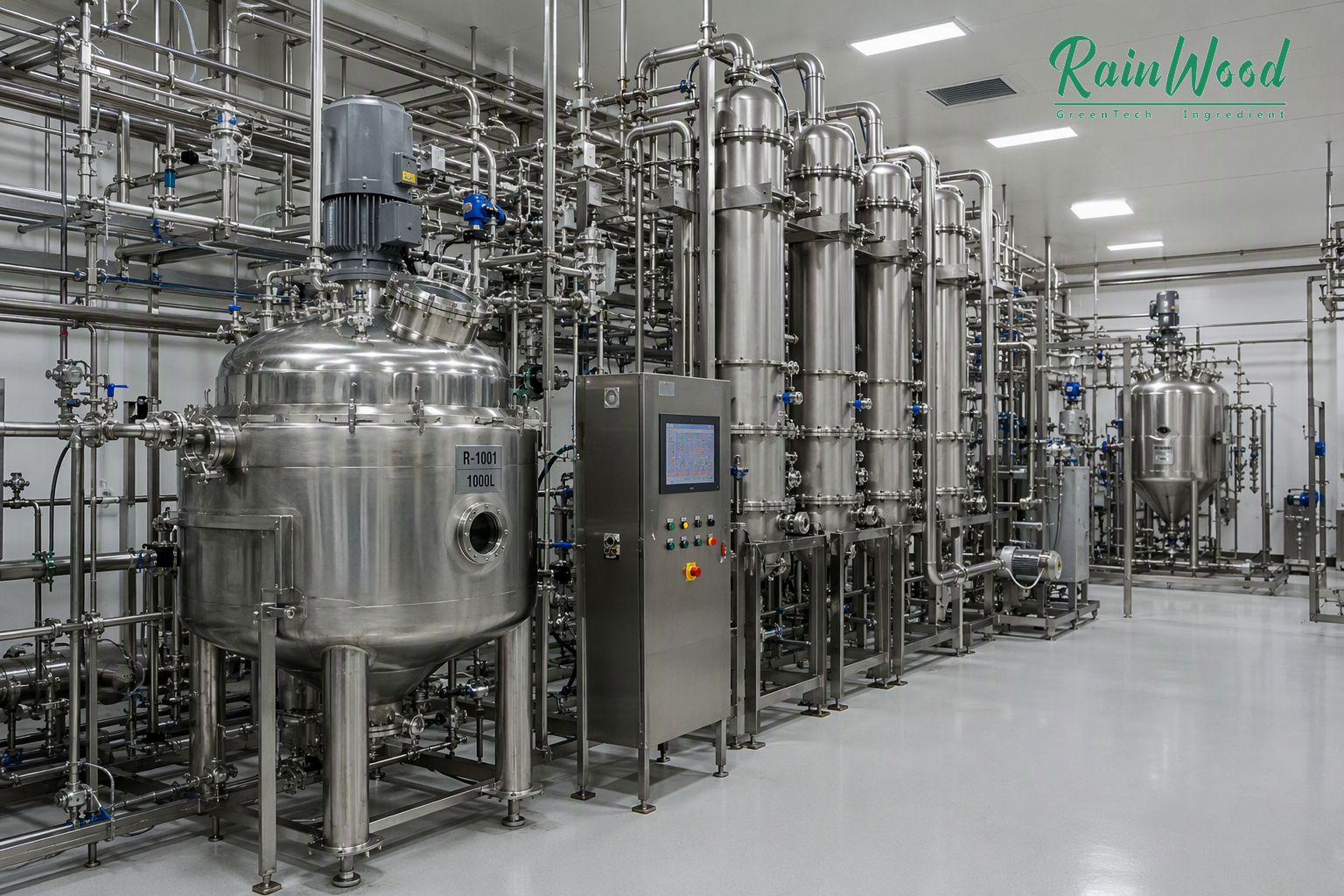
Figure 3: Industrial botanical extraction and crystallization facility operating under cGMP and ISO standards.
If the source changes without notification, the powder may look similar while its water, flow, impurities, or assay behavior changes. The brand may then face a failed pilot, a new stability study, or a label and claim review. If the source story was central to the marketing, the change may also require new artwork and customer communication.
Traceability matters during a complaint. A retailer or distributor may ask which raw-material lot entered which finished batch. If the supplier cannot connect source, lot, package, and production record, the investigation becomes slow and expensive. The cost is not only laboratory testing; it is lost confidence and delayed replacement.
What to request from the supplier
Ask for the exact source description, manufacturing site, raw-material and process-aid controls, specification, lot COA, allergen statement where relevant, residual solvent or contaminant assessment, and change-control policy. Request a flow summary that explains where identity is established and where purification occurs. The detail should be sufficient to identify the risks without forcing the supplier to disclose confidential trade secrets.
If “natural” is used on the label or website, ask what the term means in the target market and what documents support it. A marketing definition may not match a regulatory definition. The same product can require different language in different jurisdictions.
Source and formula performance
For high-dose myo-inositol, compare bulk density, particle size, dissolution, taste, and flow between approved sample and commercial lot. For low-dose D-chiro-inositol, compare the identity method, assay, and premix behavior. A source change can affect the final sachet even if the supplier continues to report the same headline purity.
Run a pilot in the intended format. The inositol sachet format comparison explains why powder properties and package design belong in the source decision. Retain the approved sample and a commercial-lot reference for future comparison.
How RainwoodBio can support source control
RainwoodBio publicly describes raw-material procurement and supplier management, requirement confirmation, production process control, testing and release, compliance documentation, and warehousing/logistics traceability. These published capabilities are relevant to a brand that wants source changes to be visible and controlled. Product-level evidence is still required for the selected inositol form, manufacturing route, lot, and finished format.
Source approval gate
Before approving a source story, ask:
- Does the exact form match the label and evidence?
- Is the source stable and traceable from lot to finished batch?
- Which process residues or contaminants are relevant?
- What change requires buyer approval?
- Can the supplier reproduce the approved sample at commercial scale?
Request a source and traceability review with the source statement, COA, specification, target market, and intended claim language.
Keep source language consistent across the sales chain
The source statement should appear consistently in the technical file, label review, product page, distributor sheet, and customer-service answer. If the supplier cannot support a phrase such as “plant-derived” or “fermentation-derived,” remove it or narrow it rather than leaving a sales team to interpret it.
When the source changes, compare identity, impurity profile, water, flow, taste, stability, and claim wording. A source change may be acceptable, but it should be treated as a controlled change with a retained sample and a new risk review. Traceability makes that decision faster and more defensible.
Separate origin, manufacturing, and marketing language
“Natural,” “fermentation-derived,” and “plant-based” can describe different parts of a supply story. Ask whether the phrase refers to the starting material, the manufacturing route, the final purified molecule, or a finished blend. Use only the wording that the technical and regulatory file can support for the target market. This prevents a true but incomplete source statement from becoming misleading packaging.
Ask for notification before the source changes
The supplier should notify the buyer before changing source, site, purification, package, or analytical method. The buyer can then decide whether a new sample, COA, stability pull, or label review is needed. Advance notice is more valuable than a replacement after the first commercial lot has already arrived.
Keep a retained source reference
Retain a sealed sample from every approved source and compare it with later lots for identity, appearance, water, flow, and key impurities. This gives the buyer a practical reference when a supplier says a source change is equivalent.
Frequently asked questions
Is fermentation-derived inositol automatically better?
No. It may offer a useful source story, but quality depends on identity, purification, specification, and lot evidence.
Can source be omitted from a B2B specification?
The level of detail depends on the market and supplier agreement, but the buyer should know enough to assess risks and change control.
Does a source change always require a new product?
Not always, but it requires a documented equivalence review and may require new testing, stability, or label assessment.
What is the most important source document?
No single document is enough. Combine source description, specification, lot COA, traceability, change control, and finished-product evidence.
Conclusion
Source language can help sell an inositol product, but source evidence is what protects the buyer. Tie every story to the exact form, process risks, lot record, and finished-product performance before using it in a premium claim.
**Disclaimer:** This article is for B2B procurement and formulation planning. It is not medical advice and does not establish that inositol products treat, prevent, or cure disease.
References
- https://pubmed.ncbi.nlm.nih.gov/38163998/
- https://pmc.ncbi.nlm.nih.gov/articles/PMC11309080
- https://www.rainwoodbio.com/
- https://www.rainwoodbio.com/oem
Partner with RainwoodBio for Certified Inositol Formulations
Whether you require high-purity Myo-Inositol, chiral-verified D-Chiro-Inositol, or precision 40:1 single-dose stick pack manufacturing, our cGMP facilities provide full batch traceability and analytical COA verification.
Table of Contents
- “Naturally sourced” is not a finished specification
- Source can affect the risk profile
- The buyer loss from a story without traceability
- What to request from the supplier
- Source and formula performance
- How RainwoodBio can support source control
- Source approval gate
- Keep source language consistent across the sales chain
- Separate origin, manufacturing, and marketing language
- Ask for notification before the source changes
- Keep a retained source reference
- Frequently asked questions
- Conclusion
- References