 EN

Executive Technical Summary
A detailed B2B evaluation comparing single-serve powder sachets versus hard vegetarian capsules for daily inositol delivery (2000mg-4000mg). Analyzes consumer adherence, manufacturing economics, barrier packaging performance, and commercial margins.
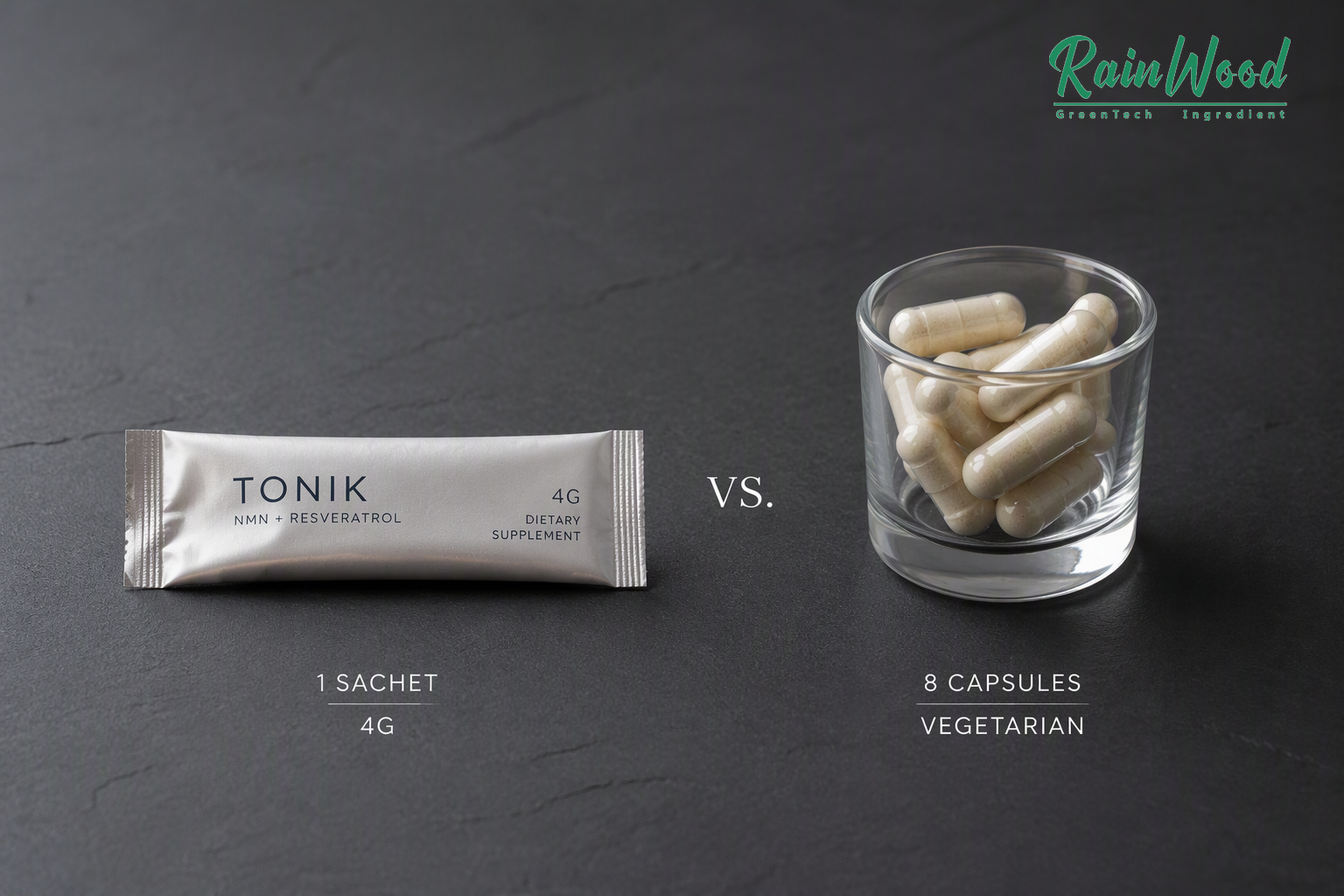
Figure 1: Daily serving volume comparison: a single 4g powder sachet versus eight large size 00 vegetarian capsules.
The best format depends on the dose, not the trend
Myo-inositol and D-chiro-inositol products are often copied from popular marketplace formats. A brand sees a sachet and assumes powder is the best route. Another sees a capsule and assumes it is easier to manufacture. The correct answer depends on active amount, ratio, customer routine, package, target market, and evidence.
A 40:1 combination can be placed in either format, but the commercial consequences differ. Sachets can hold a larger amount in one unit and make the ratio visible. Capsules can hide taste and fit a familiar supplement routine but may require several units per serving. Both formats need a finished-product specification.
Sachets make the daily amount visible
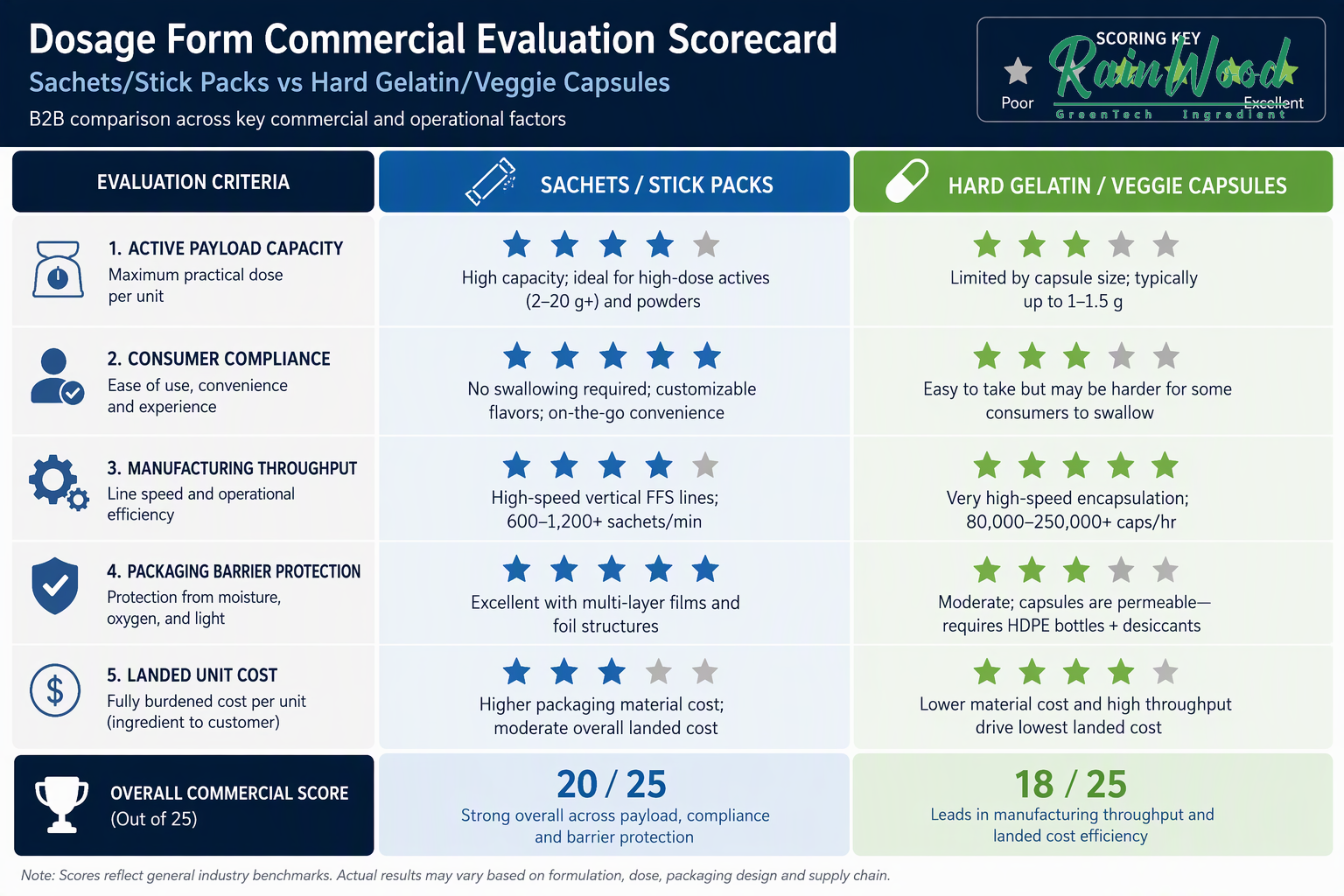
Figure 2: Commercial evaluation matrix comparing Powder Sachets vs Veggie Capsules across 5 critical parameters.
A powder sachet can show the customer exactly how many grams of myo-inositol and milligrams of D-chiro-inositol are delivered. It may support a daily drink ritual and reduce capsule count. It also needs flavor, dissolution, moisture barrier, seal integrity, and active-uniformity control.
The low-dose D-chiro component can segregate in a large blend, and powder can contaminate the seal. The inositol sachet uniformity guide explains why the single-dose format must be tested beyond average fill weight.
Capsules make taste easier but dose harder

Figure 3: Side-by-side encapsulation and multi-track powder pouch packaging lines in cGMP manufacturing facility.
Capsules can simplify taste and avoid flavor development, but inositol often requires a substantial amount per serving. The buyer must calculate capsule size, bulk density, shell count, fill variation, bottle count, and customer compliance. A daily serving of several capsules may change the brand's positioning and monthly cost.
Capsules also introduce a different moisture and flow path. The blend must feed consistently into the capsule machine, and the shell and package must protect the powder through shelf life. Use inositol capsule feasibility comparison to compare the equipment and fill requirements.
Compare the real cost
For sachets, include film, flavor, filling, seal inspection, moisture protection, carton packing, and transport. For capsules, include shells, filling, bottle or blister, unit count, weight, and possible additional capsule quantities. Compare cost per active serving and days of supply, not only cost per kilogram.
If the product uses a 40:1 ratio, calculate the active D-chiro-inositol amount in each format. A capsule product may use a smaller serving but a higher unit count. A sachet may deliver more myo-inositol per unit but require stronger moisture protection. The inositol sachet dose guide shows how this math changes the commercial comparison.
Match the format to the buyer
Amazon customers may prefer capsules because they are familiar and easy to subscribe to. A brand targeting daily powder routines may prefer sachets. A practitioner channel may value precise active amounts and a technical dossier. A distributor may prioritize case-pack efficiency and shelf stability.
The format also affects claims and customer expectations. A sachet positioned as a daily ritual should explain water volume, timing, and storage after opening. A capsule should explain unit count and serving. Neither should imply a medical outcome that the product and evidence cannot support.
Pilot both formats when the decision is uncertain
Use the same approved raw materials and ratio in a capsule pilot and sachet pilot. Compare active uniformity, flow, fill, taste, dissolution, package, stability, and customer instructions. The best format may not be the one with the lowest manufacturing cost; it may be the one with fewer complaints and clearer product communication.
Record why the selected format won. This decision record helps when a retailer asks about the product design or when a future supplier proposes a format change.
How RainwoodBio can support a format comparison
RainwoodBio publishes OEM support for powder stick packs, hard capsules, tablets, and other formats, together with requirement confirmation, process control, testing and release, packaging, and traceability. These capabilities allow a brand to compare formats before locking artwork. The buyer should still request a product-specific pilot and stability file.
Format approval gate
Ask:
- What active amount can each unit deliver?
- How many units will the customer use daily?
- Which format better protects the ratio and package?
- What tests prove taste, flow, fill, uniformity, and stability?
- Which format fits the target market, price, and claim?
Request a inositol Sachet versus Capsule Review with the formula, target serving, channel, package, and monthly volume.
Let the customer economics decide the winner
Create a side-by-side concept sheet showing daily units, days per package, active amount, storage instruction, preparation time, shipping weight, and target price. Include the likely complaint: capsule count for one concept, taste or dissolution for the other. Ask the buyer which trade-off is acceptable instead of calling one format universally better.
Then run a small pilot in both formats. Compare not only production yield but also the clarity of the label and the ease of the daily routine. A format that costs slightly more to manufacture may produce fewer returns and better repeat purchase behavior if the customer understands and completes the serving.
Include reorder and storage behavior in the business case
Compare how customers store an opened bottle of capsules with how they store a box of single-use sticks. Include warehouse space, carton handling, breakage, humidity exposure, and the number of units needed for a repeat order. A sachet may offer a strong daily experience but require more film and carton space; a capsule may be easier to ship but create a heavier serving count.
Consider a staged launch
If the buyer is uncertain, launch one validated format first and collect complaint, reorder, and fulfillment data before adding the second. A staged approach can reduce inventory risk while the brand learns whether customers value one-dose convenience or capsule familiarity more.
Confirm the operational burden with the factory
Ask how each format affects cleaning, line changeover, sampling, storage, and complaint investigation. A format that looks simple to the consumer can be demanding for production. Understanding that burden early helps the buyer set a realistic MOQ and launch schedule.
Make the choice reversible only before artwork
Once film, cartons, capsules, and listings are printed, a format change becomes expensive. Run the comparison and pilot before artwork approval so the buyer can change direction while the decision is still low cost.
Frequently asked questions
Are sachets more accurate than capsules?
Not automatically. Both require appropriate filling, sampling, and active-uniformity testing.
Can a capsule use a 40:1 ratio?
Yes, but capsule capacity, serving count, density, and blend behavior must be confirmed.
Is taste the only reason to choose capsules?
No. Capsules also change dose capacity, packaging, customer routine, and production controls.
Should a brand launch both formats?
Only when the buyer segments, economics, evidence, and production plan justify two controlled products.
Conclusion
Sachets and capsules solve different problems. Choose the format that delivers the active ratio consistently, fits the customer routine, and can be supported by a credible finished-product file.
**Disclaimer:** This article is for B2B formulation and procurement information. It is not medical advice and does not establish that inositol products treat, prevent, or cure disease.
References
- https://pubmed.ncbi.nlm.nih.gov/38163998/
- https://www.fda.gov/food/dietary-supplements-guidance-documents-regulatory-information/dietary-supplement-labeling-guide
- https://www.rainwoodbio.com/oem
Partner with RainwoodBio for Certified Inositol Formulations
Whether you require high-purity Myo-Inositol, chiral-verified D-Chiro-Inositol, or precision 40:1 single-dose stick pack manufacturing, our cGMP facilities provide full batch traceability and analytical COA verification.
Table of Contents
- The best format depends on the dose, not the trend
- Sachets make the daily amount visible
- Capsules make taste easier but dose harder
- Compare the real cost
- Match the format to the buyer
- Pilot both formats when the decision is uncertain
- How RainwoodBio can support a format comparison
- Format approval gate
- Let the customer economics decide the winner
- Include reorder and storage behavior in the business case
- Consider a staged launch
- Confirm the operational burden with the factory
- Make the choice reversible only before artwork
- Frequently asked questions
- Conclusion
- References