 EN

Executive Technical Summary
This engineering guide examines the mechanics of particle segregation in 40:1 inositol powder blends. Discover how particle size distribution (D50) matching, pre-mix geometric dilution, and validated V-blender parameters eliminate stratification and ensure <5% RSD content uniformity.
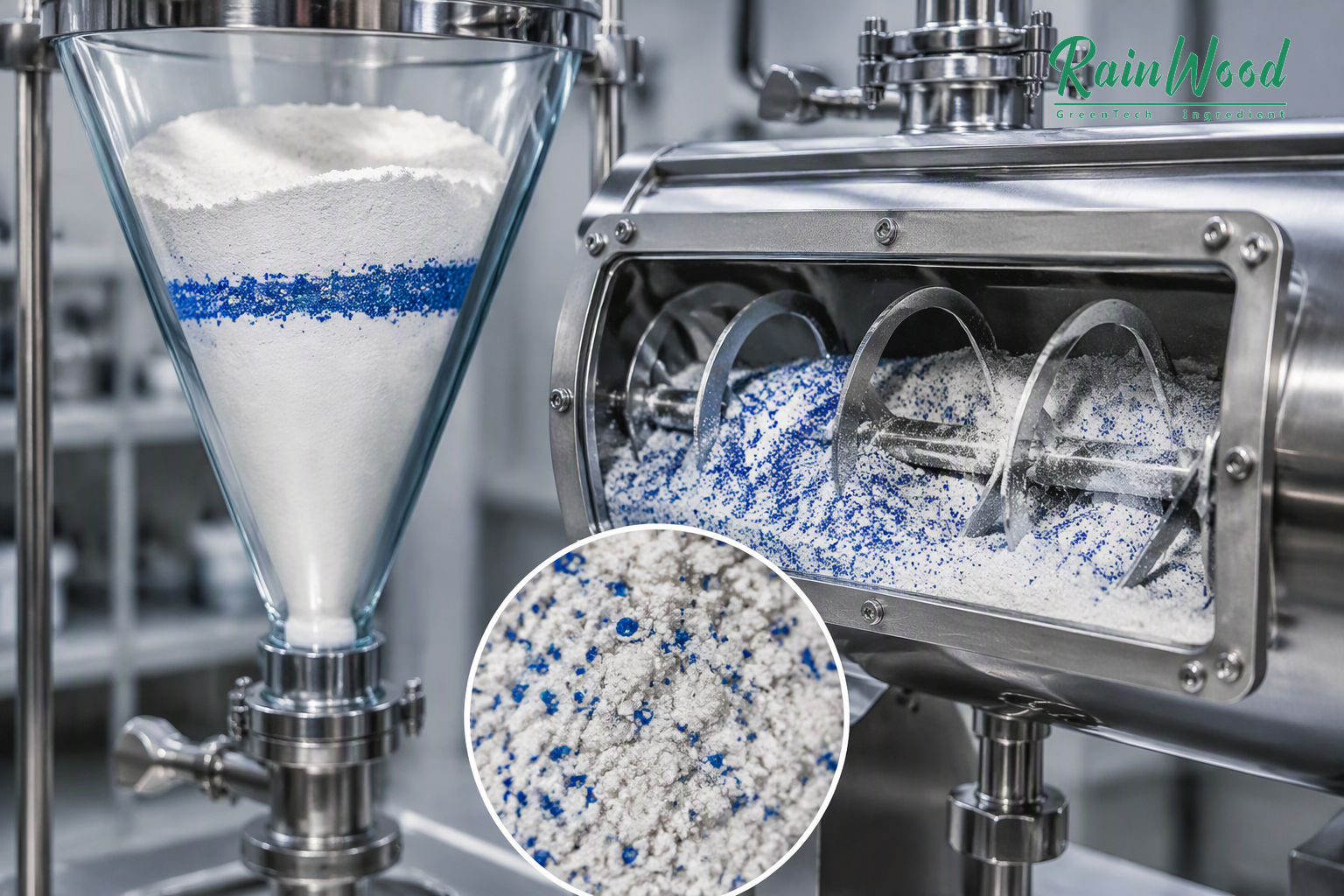
Figure 1: Microscopic powder blending dynamics and particle stratification analysis in dietary supplement manufacturing.
The smallest ingredient can create the biggest release problem
In a 40:1 myo-inositol to D-chiro-inositol product, D-chiro-inositol may represent only a small fraction of the total powder. That makes the formula look simple on paper and difficult in production. If the two powders differ in particle size, density, shape, moisture, or electrostatic behavior, the low-dose component can move through the blend differently from the dominant myo-inositol fraction.
The finished sachet may still look identical from the outside. A routine total-weight check may pass. The problem appears only when the buyer tests individual units or samples different points in the filling run. This is why a ratio printed on the label is not a substitute for a blend-uniformity plan.
How segregation can occur
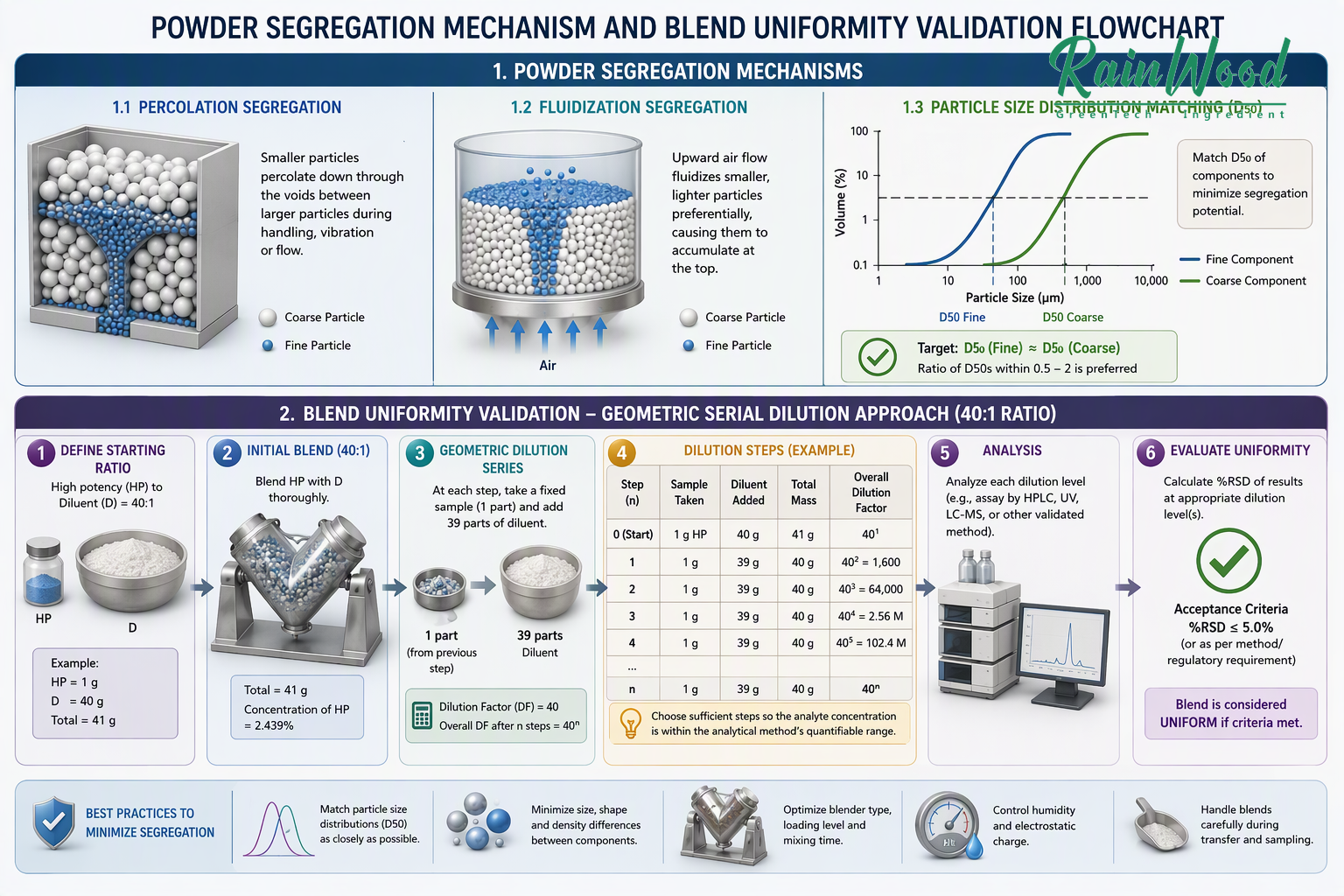
Figure 2: Powder segregation mechanics and geometric serial dilution workflow for 40:1 micro-dose blends.
Segregation can happen during charging, mixing, transfer, vibration, hopper holding, auger feeding, or transport. Larger or denser particles may settle while finer particles migrate. Electrostatic charge can make one component adhere to equipment or liners. Repeated movement can separate a blend that was uniform immediately after mixing.
The supplier's incentive is often operational speed. A direct addition may be faster than preparing a controlled premix, and a simple total-weight check is cheaper than testing individual active distribution. The buyer's loss appears later as inconsistent dose, a failed release result, or a customer complaint.
Use the inositol ratio guide to distinguish theoretical ratio math from the physical control needed to make that ratio real in every unit.
Why a premix can help but does not prove uniformity
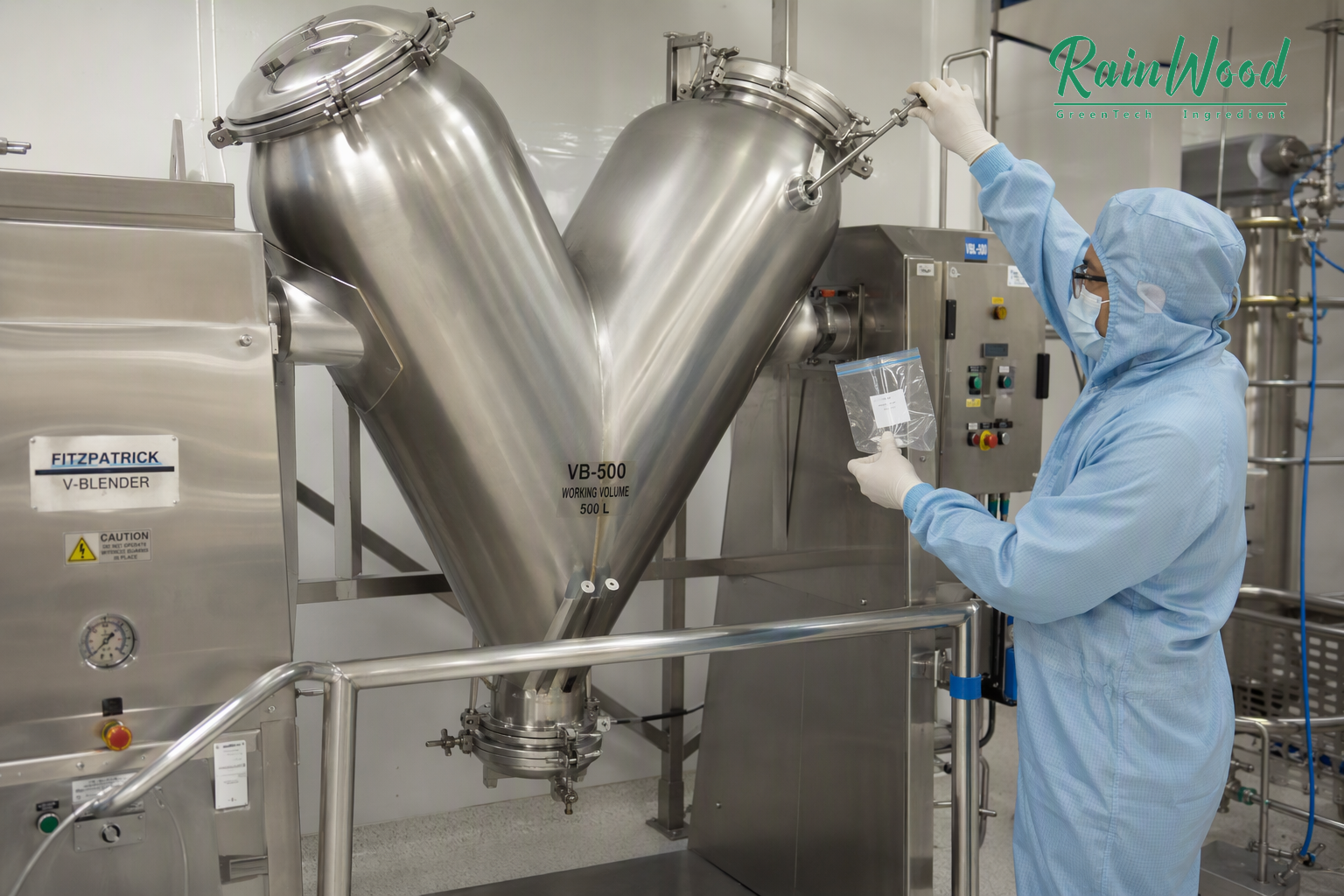
Figure 3: In-process quality control multi-point thief sampling from cGMP pharmaceutical V-blender.
A premix can dilute D-chiro-inositol into a compatible carrier before it is added to the larger myo-inositol batch. The carrier, dilution factor, mixing time, order of addition, and transfer route must be defined. A premix can improve distribution, but it introduces another material and another calculation. The active amount in the premix must be visible, and the premix must be tested before it is released into the final blend.
Do not accept “thoroughly mixed” as a quality attribute. Ask for the mixing equipment, load range, time, sampling locations, and acceptance limit. The correct plan depends on the batch size and equipment. A process that works in a small laboratory bowl may not work in a commercial blender with a different fill level and discharge path.
The buyer loss from an uneven 40:1 product
An under-dosed sachet can create a label-accuracy problem, while an over-dosed sachet can create a different quality and claim concern. If the brand sells a monthly box, one failed run can affect thousands of units. Rework may be impossible once the powder is sealed. The brand then pays for investigation, testing, new packaging, and delayed fulfillment.
The reputation loss is sharper when the product is sold as a precisely engineered ratio. Customers and professional buyers expect the ratio to mean something more than a marketing headline. A supplier that cannot explain sampling and uniformity weakens the entire product story.
How to verify uniformity
Create a sampling plan that covers the start, middle, and end of blending and filling. Test individual sachets or a justified composite, not only a large mixed sample that can hide variation. For a low-dose D-chiro-inositol component, the analytical method must be sensitive and specific enough for the declared amount. Record the sample location, unit number, result, and acceptance criterion.
Review blend density, particle size, moisture, and flow before and after the pilot. Inspect hopper residence time and transfer vibration. Compare the first and last cartons after transport simulation if the product is sold in stick packs. The inositol sachet uniformity guide provides a dedicated checklist for this release decision.
Keep ratio math and fill-weight math separate
The blend can have a correct theoretical ratio but still fail because the fill weight varies. Calculate the active amount per sachet from the master formula, assay adjustment, overage, and target net weight. Then verify actual units. A passing net-weight average does not prove the active component is evenly distributed.
If the formula uses a carrier, distinguish carrier weight from active D-chiro-inositol. If the sachet contains flavor, acid, or a micronutrient, confirm that the extraction and assay method can separate the target from the matrix.
How RainwoodBio can support a controlled blend
RainwoodBio publishes requirement confirmation, raw-material supplier management, GMP/process control, quality testing and release, and OEM powder stick-pack capability. These are relevant to a 40:1 inositol project when the brand needs a documented premix and filling process. The buyer should request product-specific evidence: master formula, mixing record, sampling plan, finished-unit results, and package specification.
Uniformity approval gate
Before approving a commercial run, require:
- defined active amounts and ratio basis;
- premix or direct-addition process;
- mixing and transfer parameters;
- start-middle-end sampling;
- D-chiro-inositol method and limit;
- net-fill and active-uniformity results;
- deviation and rework decision rules.
Request a inositol Blend Uniformity Review with the formula, equipment, batch size, and proposed testing plan.
Confirm the process after transport, not only after mixing
If the blend is moved through a vibrating feeder, pneumatic line, or long transfer route, sample after the transfer step. A blend can pass a mixer check and segregate before it reaches the filling hopper. Record the hold time and the number of hopper refills because each change can affect distribution.
Use a retained set of first, middle, and last sachets to compare with the bulk blend. If results trend in one direction, investigate discharge and hopper behavior before changing the formula. Adding more mixing may not solve a problem created later in the process.
Use process capability instead of one passing batch
After the first release, trend the individual-unit results and investigate any drift toward the specification limit. Compare results with mixer load, transfer time, hopper refill, and moisture. The goal is to show that the process remains capable under normal production conditions, not only that one carefully watched batch passed.
Document the low-dose component as a critical attribute
The quality agreement should identify D-chiro-inositol as a critical active when the product claim depends on it. This tells production, laboratory, and release teams that a passing total powder weight cannot close the investigation. Critical attributes need a method, sampling plan, limit, and response.
Frequently asked questions
Can visual inspection detect segregation?
Usually not. The powder and sachets may look identical while the low-dose component varies.
Is a composite sample enough?
It may hide unit-to-unit differences. Individual-unit testing or a justified sampling design is safer for a low-dose active.
Can more mixing always solve the problem?
No. Excessive mixing can create heat, attrition, or segregation during discharge. The process needs optimization, not simply more time.
Does a passing average prove every sachet passes?
No. Average results can conceal outliers. Review the distribution and sampling plan.
Conclusion
The low-dose D-chiro-inositol component deserves more attention than the dominant myo-inositol powder. Control the premix, flow path, sampling, method, and finished units so the 40:1 promise is measurable rather than decorative.
**Disclaimer:** This article is for B2B quality and procurement planning. It is not medical advice and does not establish that inositol products treat, prevent, or cure disease.
References
- https://pmc.ncbi.nlm.nih.gov/articles/PMC11309080
- https://pubmed.ncbi.nlm.nih.gov/38163998/
- https://www.rainwoodbio.com/oem
Partner with RainwoodBio for Certified Inositol Formulations
Whether you require high-purity Myo-Inositol, chiral-verified D-Chiro-Inositol, or precision 40:1 single-dose stick pack manufacturing, our cGMP facilities provide full batch traceability and analytical COA verification.
Table of Contents
- The smallest ingredient can create the biggest release problem
- How segregation can occur
- Why a premix can help but does not prove uniformity
- The buyer loss from an uneven 40:1 product
- How to verify uniformity
- Keep ratio math and fill-weight math separate
- How RainwoodBio can support a controlled blend
- Uniformity approval gate
- Confirm the process after transport, not only after mixing
- Use process capability instead of one passing batch
- Document the low-dose component as a critical attribute
- Frequently asked questions
- Conclusion
- References