 EN
Executive Technical Summary
A comprehensive procurement guide detailing the stereochemical and biological differences between generic NF Inositol, Myo-Inositol, and D-Chiro-Inositol. Learn how to prevent mislabeling and establish definitive CAS, chiral HPLC, and optical rotation criteria in your raw material specifications.
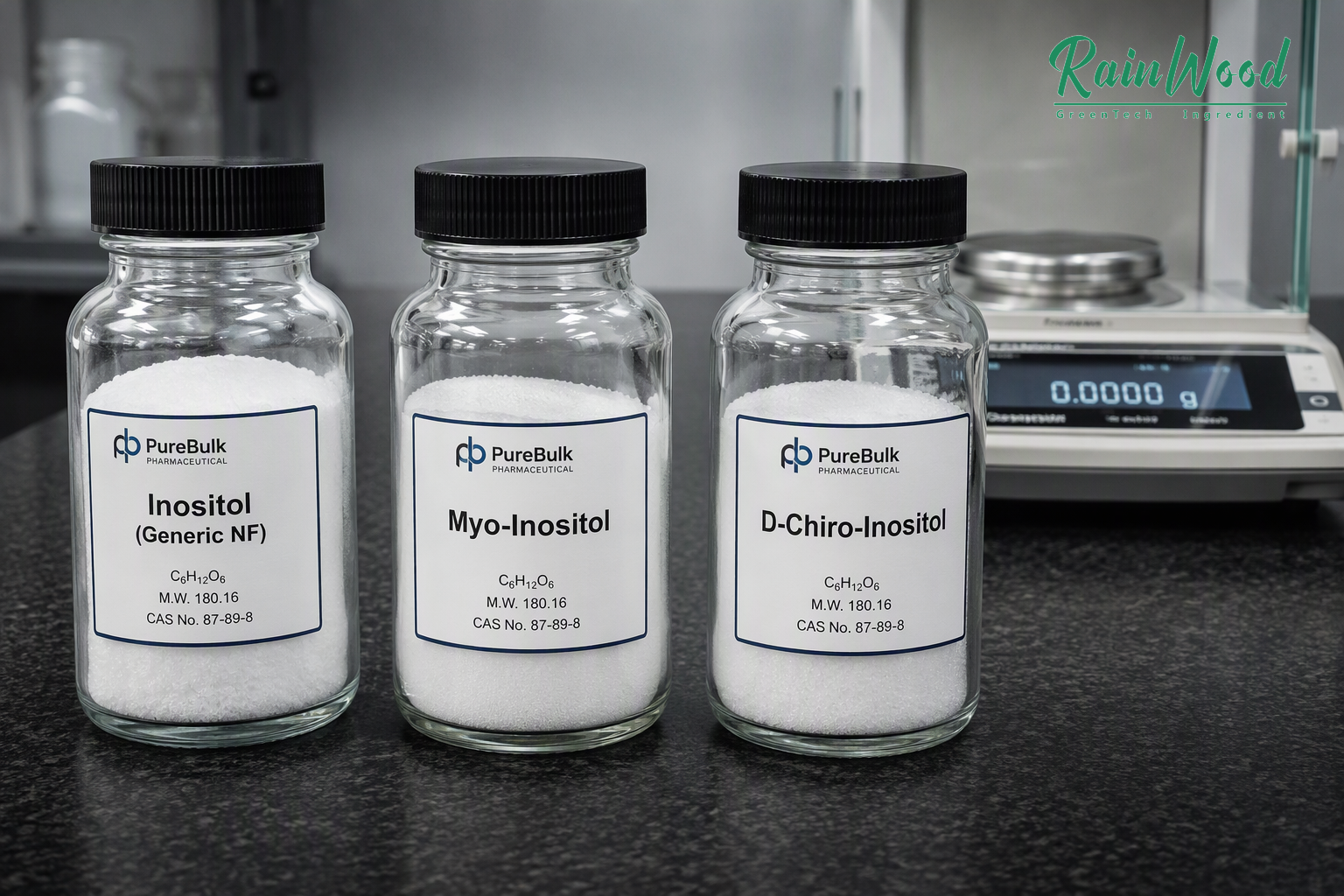
Figure 1: Analytical comparison of generic Inositol, Myo-Inositol, and D-Chiro-Inositol reference standards.
The name on the quotation can hide three different products
A supplement buyer types “inositol” into a sourcing request and receives three quotations that look almost identical. One supplier offers generic inositol. Another offers myo-inositol. A third offers D-chiro-inositol. The prices differ, the dosage claims differ, and the certificates appear polished. If the purchase order does not identify the exact form, the buyer has not yet compared products.
Inositol is a family name used in commercial conversation. Myo-inositol is one stereoisomer and is the form most often encountered in bulk supplement products. D-chiro-inositol is another stereoisomer, usually discussed in formulas that combine it with myo-inositol. Related names may appear in scientific articles, labels, distributor catalogs, and marketplace listings. They are not interchangeable just because they share the word “inositol.”
The first procurement control is simple: write the exact chemical identity, form, serving amount, and intended use into the product brief before asking for a price. This protects the brand from a cheap quote that answers a different question.
Why identity matters to the formula
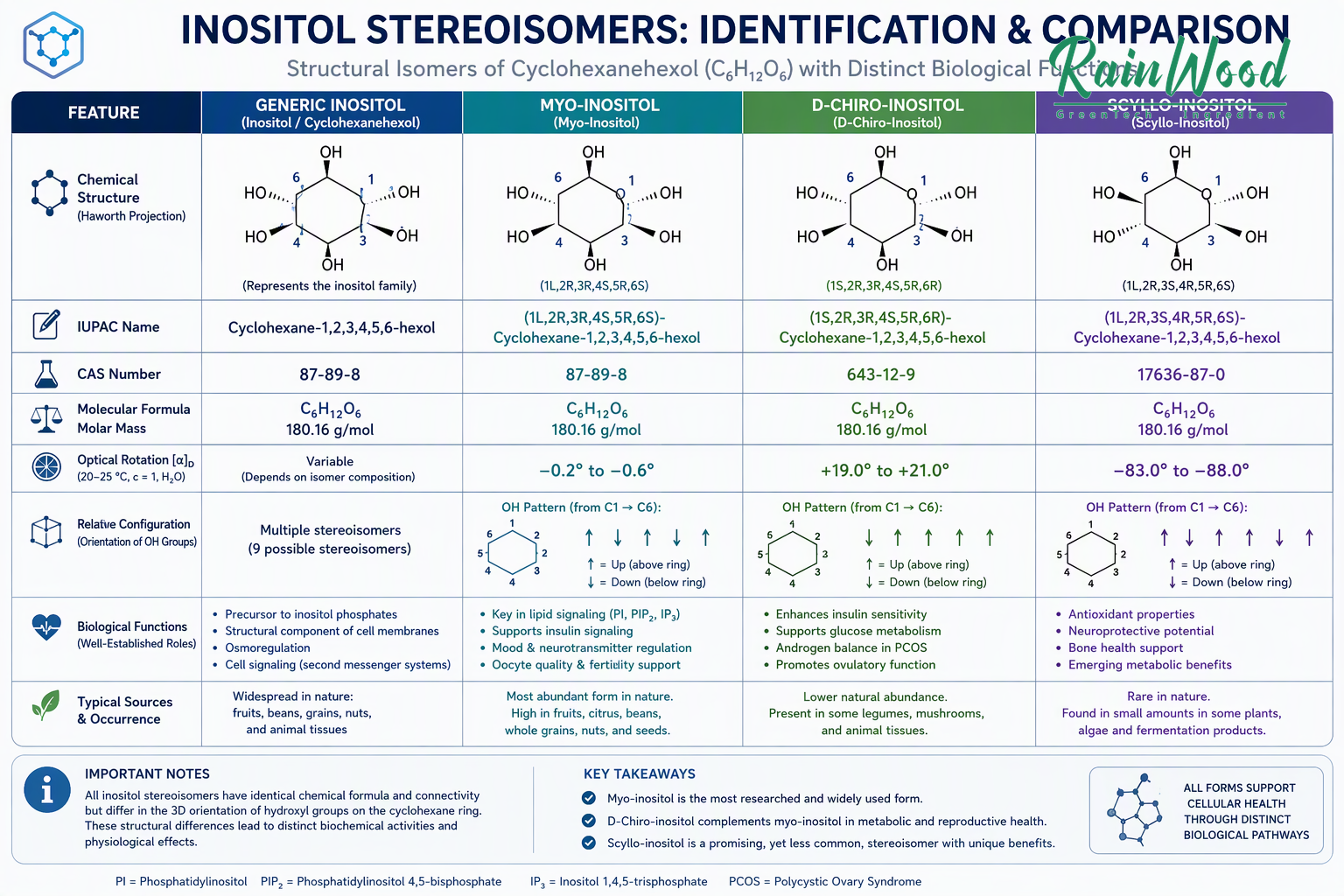
Figure 2: Stereochemical structure and chemical nomenclature comparison across major inositol stereoisomers.
The form affects the formula math. A 40:1 myo-inositol to D-chiro-inositol formula requires a large amount of myo-inositol and a much smaller amount of D-chiro-inositol. A product that uses only myo-inositol has a different bulk weight, blend design, and label. A product using D-chiro-inositol alone has a different evidence and claim discussion again.
The form also affects testing. A total inositol assay may show how much inositol-like material is present without proving the ratio of stereoisomers. A chromatographic method suitable for one form may not answer a chiral identity question for another. The D-chiro-inositol COA guide explains why a high assay number does not automatically prove the correct isomer.
For a finished sachet, identity must be connected to the amount in every unit. The formula, master batch record, COA, and label should all use the same basis. If a supplier changes from D-chiro-inositol to a generic inositol input, the product is not equivalent even if the total powder weight is unchanged.
The commercial loss when the ingredient name is vague

Figure 3: Chiral HPLC separation and mass spectrometry confirmation of inositol isomer peak purity.
An identity error can force a private-label brand to reprint labels, cancel a launch, or explain a difference between the advertised formula and the delivered material. If the product is sold for a sensitive reproductive-health audience, the customer-service and regulatory consequences can be larger. The brand may also discover that its scientific references concern myo-inositol plus D-chiro-inositol while its actual formula contains only generic inositol.
The loss continues through inventory. A raw material that cannot support the approved product brief may be unusable for the intended SKU but difficult to return. The buyer then pays for replacement material, new testing, and a new production schedule. A clear identity line at the beginning is cheaper than a correction after packaging.
Build an identity block into the purchase order
The identity block should include the exact name, common synonyms that are acceptable, synonyms that are not acceptable, CAS or other identifier where applicable, stereochemical form, assay basis, appearance, storage, and the intended dosage format. For a blend, list the amount of every active per serving and the ratio calculation.
Ask the supplier to show how the identity is confirmed. Request the method name, reference standard, chromatogram or report format where appropriate, and the limit for related forms. A method label such as HPLC is not enough by itself; the buyer needs to know whether the method separates and quantifies the question that matters.
Use the same identity block in the quotation, sample label, COA, master formula, artwork, and finished-product release. If one document says “inositol” and another says “D-chiro-inositol,” stop the approval process until the discrepancy is explained.
A practical buyer comparison
Compare three offers using the same columns: exact form, amount per serving, ratio if applicable, identity method, assay basis, related-substance control, water, package, shelf life, MOQ, lead time, and finished-product support. Then calculate the actual amount of active delivered per unit. A low price per kilogram may be irrelevant if the product needs a different amount of raw material or a more protective package.
For high-dose myo-inositol, also record flow and bulk density. For low-dose D-chiro-inositol, record premix design and blend uniformity. For a powder sachet, record net fill tolerance, moisture-barrier film, seal integrity, and the number of units per box. The inositol sachet dose guide focuses on this per-stick calculation.
Evidence and claims must follow the exact material
Human studies and reviews often describe myo-inositol, D-chiro-inositol, a combination, or a particular ratio. The evidence cannot be transferred casually to another form or to a new multi-ingredient product. The 2024 systematic review informing the international PCOS guideline update concluded that evidence is limited and outcomes vary by intervention and endpoint. That does not make the ingredient commercially unusable; it means the buyer should keep the study material, commercial ingredient, finished formula, and claim connected.
Avoid using “NAD booster”-style category language for inositol. If the label contains a specific stereoisomer, name it accurately. If the formula contains both forms, state the amounts rather than relying on a ratio alone.
How RainwoodBio can support identity control
RainwoodBio publishes a process that includes requirement confirmation, raw-material supplier management, production and process control, quality testing and release, compliance documentation, and traceability. It also publishes OEM support for capsules, powder stick packs, tablets, and other formats. These are relevant controls when a brand needs the exact inositol form to remain consistent from raw material to finished unit. The specific project still needs product-level evidence for the selected form, method, lot, formula, and package.
Identity approval gate
Before approving an inositol supplier, ask:
- Is the exact stereochemical form named on every document?
- Does the identity method answer the form and ratio question?
- Is the assay on an as-is or dry basis?
- Are myo-inositol and D-chiro-inositol reported separately when both are present?
- Does the finished product label match the master formula and COA?
- What happens if the supplier changes source, form, or test method?
Request an inositol Specification Review and send the quotation, sample COA, target market, serving size, and format so the team can normalize the offers before you commit to packaging.
Frequently asked questions
Is “inositol” the same as myo-inositol?
Not necessarily. “Inositol” may be used as a broad or incomplete description. The buyer should request the exact form and identity evidence.
Is D-chiro-inositol a completely different ingredient family?
It is a different stereoisomer within the inositol family. It should be specified and tested as its own form rather than treated as generic inositol.
Can a 40:1 ratio prove product quality?
No. The ratio is only one formula attribute. Identity, individual assay, blend uniformity, stability, and finished-unit testing still matter.
What should be fixed first: the ratio or the daily dose?
Define the intended product, market, and evidence first, then lock the per-serving amounts and ratio in the specification.
Conclusion
The safest inositol purchase begins with a precise name. Lock the stereoisomer, amount, ratio, method, and format before comparing price or writing a claim. When the identity is clear, the supplier can be evaluated on evidence instead of presentation.
**Disclaimer:** This article is for B2B procurement and educational purposes. It is not medical advice and does not establish that inositol or D-chiro-inositol treats, prevents, or cures any disease.
References
- https://pubmed.ncbi.nlm.nih.gov/38163998/
- https://pmc.ncbi.nlm.nih.gov/articles/PMC11309080/
- https://www.fda.gov/food/dietary-supplements-guidance-documents-regulatory-information/dietary-supplement-labeling-guide
- https://www.rainwoodbio.com/
Partner with RainwoodBio for Certified Inositol Formulations
Whether you require high-purity Myo-Inositol, chiral-verified D-Chiro-Inositol, or precision 40:1 single-dose stick pack manufacturing, our cGMP facilities provide full batch traceability and analytical COA verification.
Table of Contents
- The name on the quotation can hide three different products
- Why identity matters to the formula
- The commercial loss when the ingredient name is vague
- Build an identity block into the purchase order
- A practical buyer comparison
- Evidence and claims must follow the exact material
- How RainwoodBio can support identity control
- Identity approval gate
- Frequently asked questions
- Conclusion
- References