 EN
Executive Summary: Strategic marketing and regulatory guide for NAD+ supplement brands. Formulate defensible structure/function claims across cellular energy, mitochondrial support, and healthy aging.
Explore premium Liposomal NMN Powder, Liposomal NR Raw Material, and turnkey Custom OEM Supplement Capsules with verified analytical testing and complete regulatory dossiers.
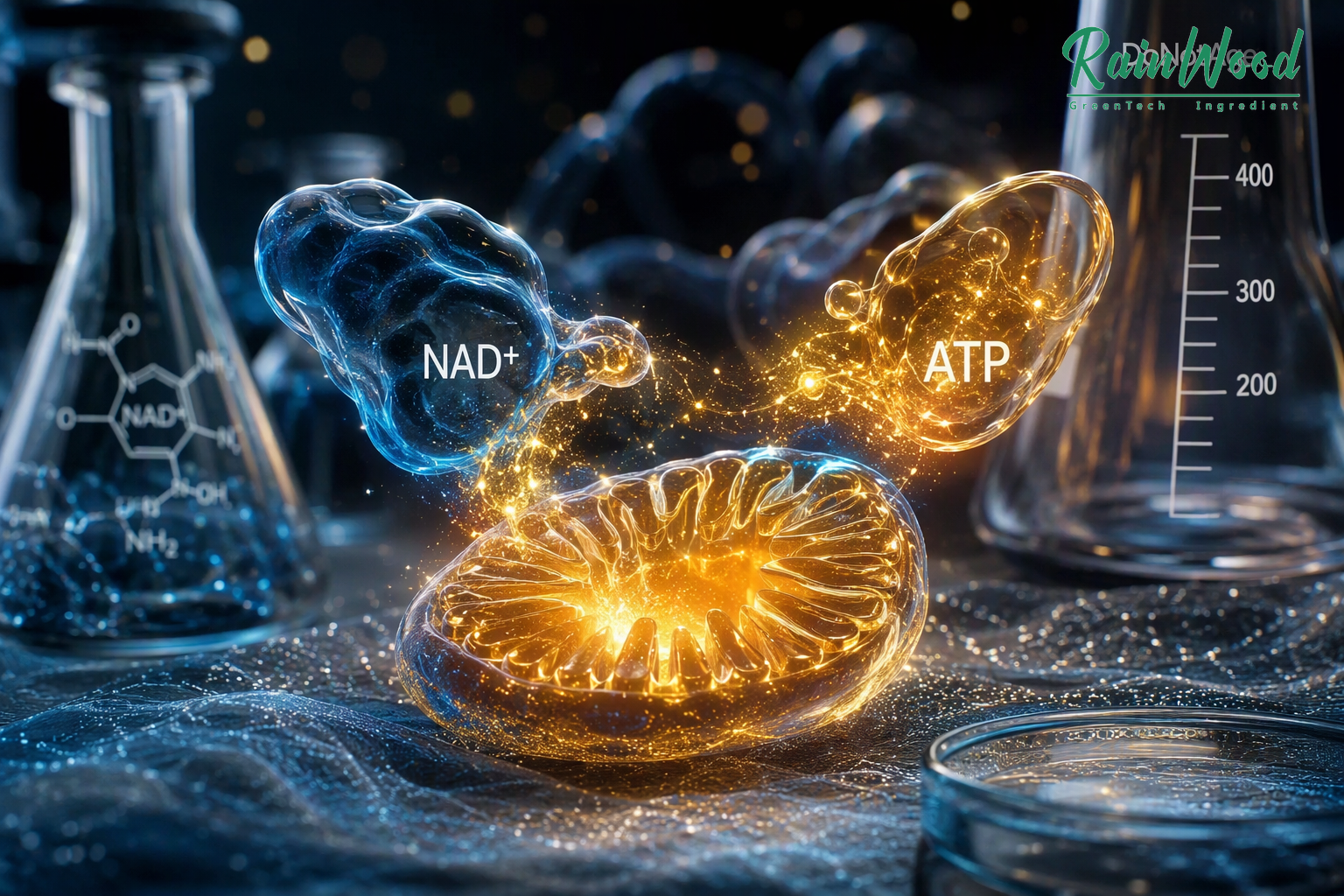
Energy, Cellular Function, or Anti-Aging: Choose a Defensible NAD+ Claim—Shaanxi Rainwood Biotech cGMP Manufacturing Standard
The most attractive NAD+ claim can create the largest problem
NAD+ is associated with cellular redox reactions, energy metabolism, DNA repair pathways, and aging biology. Those associations create powerful marketing language: energy, cellular function, longevity, anti-aging, recovery, and performance. They also create a serious evidence problem. A mechanistic explanation is not the same as a human outcome, a precursor study is not automatically a direct-NAD+ study, and a general wellness phrase can become a disease or therapeutic implication when placed beside a dramatic image or testimonial.
The goal is not to make the claim as loud as possible. The goal is to make it specific enough to attract the right buyer and defensible enough to survive a retailer, platform, regulator, or scientifically informed customer asking, “What exactly does this product prove?”
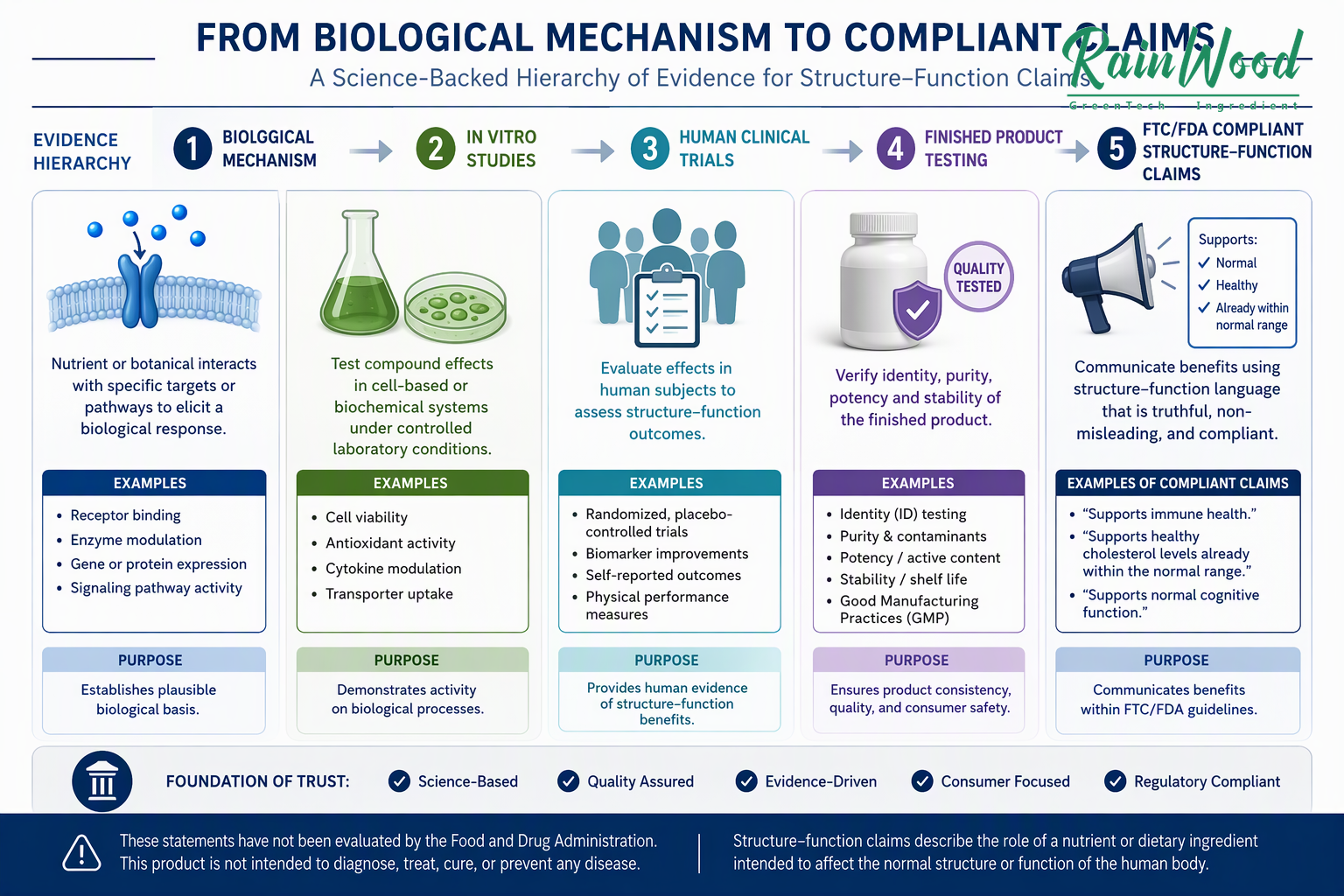
Figure 1: Evidence Hierarchy for NAD+ Marketing Claims—linking molecular biological mechanisms to substantiated structure/function claims.
Separate four layers of evidence
Layer one is chemistry. The product must actually contain the named NAD+ form at the declared amount, with identity and purity supported by an appropriate method. Layer two is mechanism. NAD+ biology can explain why researchers are interested in the molecule, but mechanism alone does not demonstrate a consumer benefit. Layer three is human evidence. Studies may involve NR or NMN precursors rather than direct NAD+, different doses, different populations, and different endpoints. Layer four is the finished product. Capsule excipients, stability, dose, bioavailability, and manufacturing can change what the consumer actually receives.
Confusing these layers is how a technically interesting ingredient becomes an overpromised product. The NAD+ identity guide and NAD+ COA guide address the first layer. This article focuses on translating the evidence into a commercial claim.
What each claim family implies
“Supports cellular function” is broad, but it still needs a clear basis and should not imply treatment of a disease or correction of a medical deficiency. “Energy” may be understood as a general wellness or exercise claim, yet wording, dosage, imagery, and testimonials can turn it into a promise about fatigue or a medical condition. “Performance” may require product- and population-specific evidence. “Healthy aging” and “longevity” can suggest disease prevention or lifespan extension if the surrounding copy is aggressive. “Anti-aging” is especially risky because consumers may interpret it as a visible or biological reversal promise.
The correct claim is determined by the entire communication, not one isolated phrase. A compliant headline can be undermined by a testimonial saying the product reversed a condition. A disclaimer cannot erase a direct treatment promise. Review the title, bullets, images, FAQ, blog links, social posts, and search keywords together.
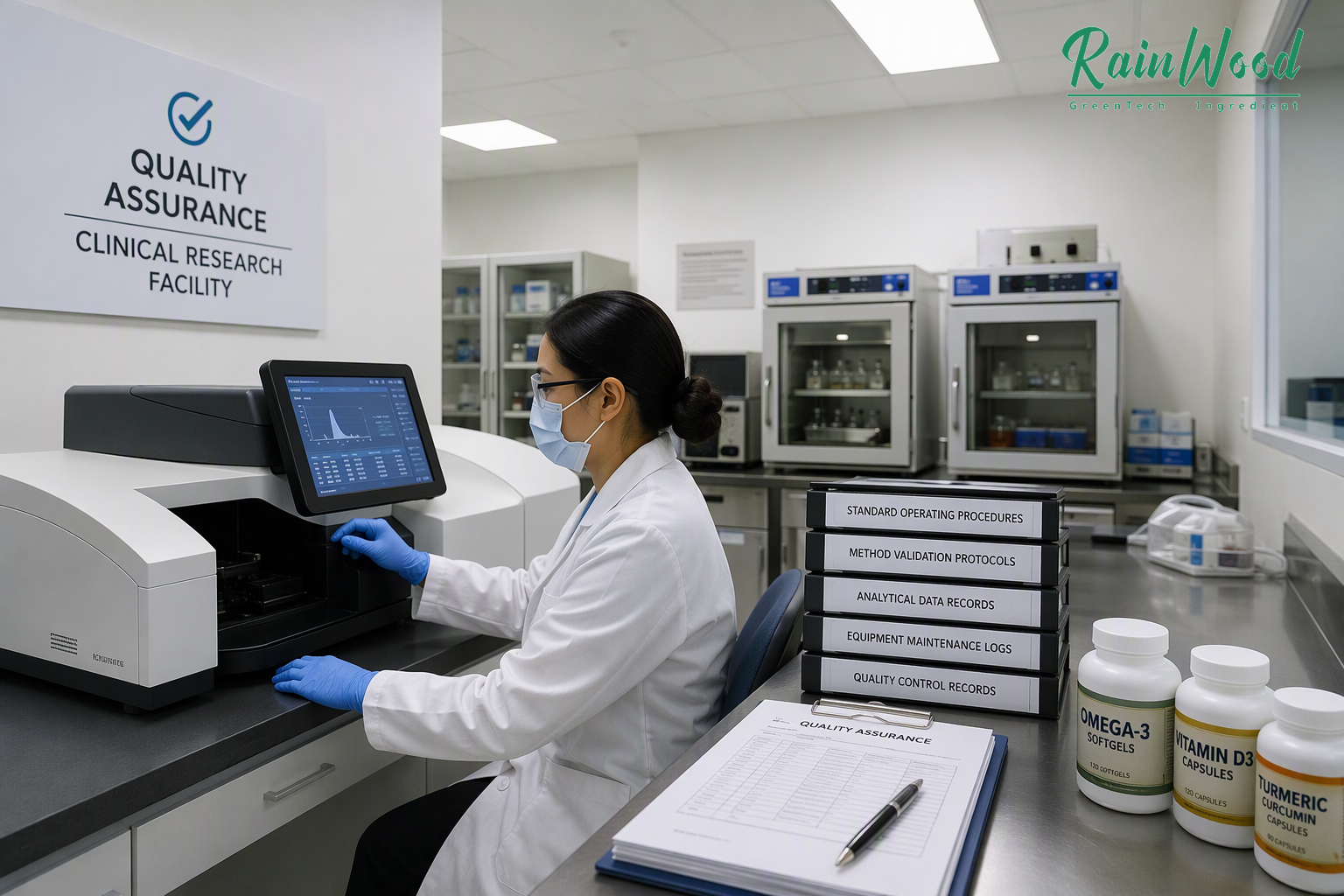
Figure 2: Clinical Verification and Analytical Substantiation Protocols for Dietary Supplement Brand Positioning.
The buyer loss from overclaiming
Overclaiming can trigger listing removal, advertising rejection, customer complaints, retailer delisting, or a forced packaging revision. It can also attract the wrong customer: people seeking a medical solution rather than a compliant wellness product. When the product cannot meet that expectation, refunds and poor reviews follow.
For a B2B brand, the damage reaches the supplier relationship. A retailer may ask for clinical evidence that the supplier never promised. The brand then discovers that its strongest sales copy was built on indirect research, a precursor study, or a laboratory hypothesis rather than its own finished product.
Make the claim match the actual NAD+ product
First confirm whether the product contains direct NAD+, NADH, NR, NMN, or a blend. Do not use “NAD+” as a category label when the formula contains only a precursor. Second, confirm the declared dose, form, serving size, and stability through shelf life. Third, identify the evidence population and endpoint. Fourth, remove language that implies treatment, prevention, cure, reversal, or guaranteed outcomes.
For a finished capsule or sachet, the claim should be supported by the finished-product specification and not only by a raw-material brochure. The NAD+ stability guide is relevant because a degraded or variable product cannot support a precise claim even if the initial formula looked strong. The NAD+ format guide helps explain why the consumer format belongs in the evidence discussion.
A stronger content structure for B2B brands
Lead with the buyer's decision: what product are you building and what evidence will your retailer or customer expect? Explain the chemistry in plain language. Identify the boundary between mechanism and outcome. Show the verification path: identity, assay, related substances, dose, stability, and finished-unit testing. Then give the buyer a realistic claim framework and a document list.
This approach is more persuasive than an exaggerated promise because it signals control. A brand that can explain what is known, what is still uncertain, and how the product is verified appears more professional to distributors and private-label buyers.
How RainwoodBio supports a defensible process
RainwoodBio publicly describes requirement confirmation, supplier and raw-material management, GMP/process control, testing and release, traceability, and OEM formats. Those capabilities can support a disciplined route from product concept to finished batch. The company should not be presented as proof of an NAD+ clinical outcome unless product-specific evidence exists. Buyers should request the exact form, lot data, finished-product testing, stability package, and claim-review inputs for the proposed product.
Use a claim matrix that connects each phrase to its evidence source, market, placement, and review status. Keep a version-controlled record so a sales edit does not accidentally create a medical claim.
A practical claim filter
Ask five questions. Is the statement about the ingredient, the mechanism, or a human outcome? Is the evidence about direct NAD+ or a related precursor? Does the study match the dose, form, duration, and population? Does the finished product remain within specification through shelf life? Could an ordinary consumer read the wording as treatment or prevention?
If any answer is unclear, narrow the wording or pause the claim. The short-term loss is a softer headline; the long-term gain is a product page that can be supported when a serious buyer asks for evidence.
Frequently asked questions
#
Can a brand say NAD+ supports energy?
Possibly, depending on jurisdiction, context, evidence, and wording. The entire communication should be reviewed, and it should not imply treatment of fatigue or disease.
#
Can precursor studies support a direct NAD+ claim?
They may provide scientific context but do not automatically prove the same result for direct NAD+. The distinction must be clear.
#
Is “anti-aging” a safe marketing term?
Do not assume so. It can imply reversal, prevention, or a clinical outcome. Use a qualified review for the target market and channel.
#
What evidence should a supplier provide?
At minimum, exact identity and form, lot-specific quality data, finished-product specification, stability support, and documents that allow the brand to review claims honestly.
Conclusion
The strongest NAD+ marketing is not the most dramatic sentence. It is the sentence that matches the exact molecule, dose, finished product, human evidence, and market rules. If you want to develop a claim set that is commercially attractive and evidence-led, send the draft label and formula through the contact form for a product-specific review discussion.
Disclaimer: This article is for educational and commercial planning. It is not medical advice, legal advice, or proof that NAD+ treats, prevents, or cures any disease.
References
- https://pubmed.ncbi.nlm.nih.gov/41655607/
- https://pubmed.ncbi.nlm.nih.gov/37068054/
- https://pubmed.ncbi.nlm.nih.gov/34041853/
- https://www.fda.gov/food/dietary-supplements-guidance-documents-regulatory-information/dietary-supplement-labeling-guide
Partner with a Qualified NAD+ & Cellular Nutrition Manufacturer
Shaanxi Rainwood Biotech Co., Ltd. supplies high-purity NAD+, Liposomal NMN, Liposomal NR, and comprehensive contract manufacturing solutions with complete batch COAs, third-party HPLC verification, and fast global shipping.
Table of Contents
- The most attractive NAD+ claim can create the largest problem
- Separate four layers of evidence
- What each claim family implies
- The buyer loss from overclaiming
- Make the claim match the actual NAD+ product
- A stronger content structure for B2B brands
- How RainwoodBio supports a defensible process
- A practical claim filter
- Frequently asked questions
- Can a brand say NAD+ supports energy?
- Can precursor studies support a direct NAD+ claim?
- Is “anti-aging” a safe marketing term?
- What evidence should a supplier provide?
- Conclusion
- References